Denario’s creativity isn’t random. It’s structured conflict. An “idea maker” proposes a new project. An “idea hater” attacks it testing for novelty, feasibility, and clarity.
They argue, refine, iterate, and only the strongest idea survives. Machine brainstorming with
@godofprompt
-

Using multi-agent systems for structured idea generation
By
–
-
Denario AI system automates scientific research documentation
By
–
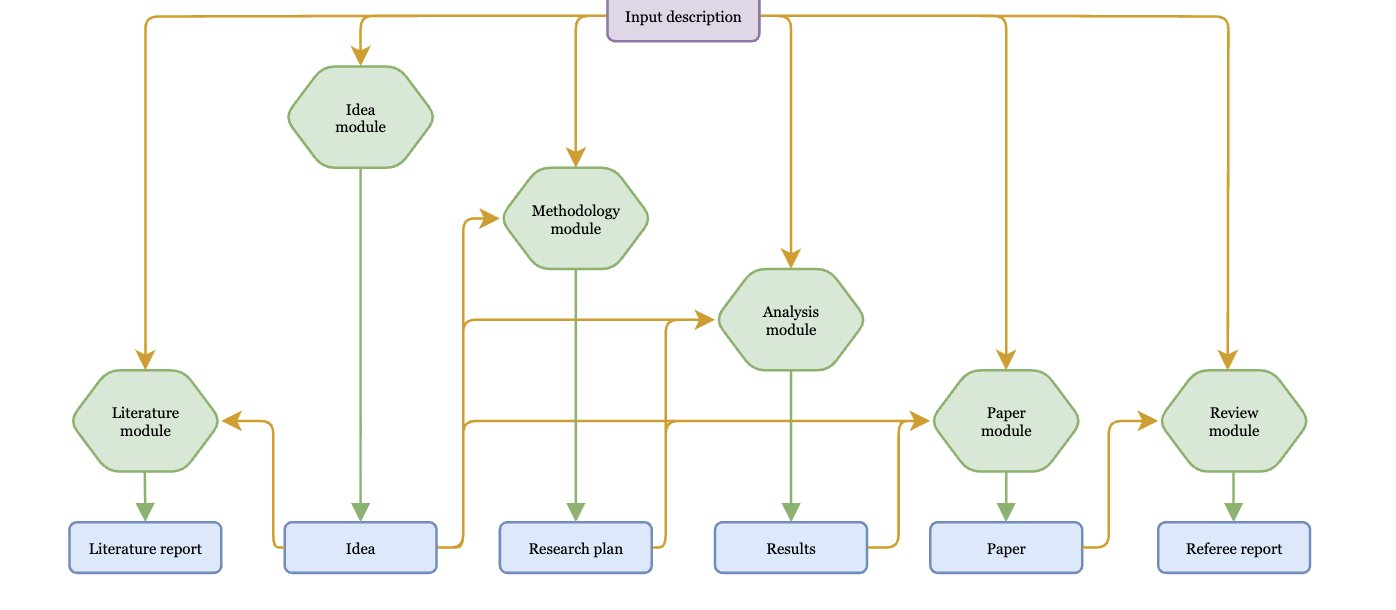
Inside Denario, every research step becomes an artifact. The system writes out its own http://
idea.md, http://
methods.md, http://
results.md, paper.pdf, even http://
referee.md. It’s not just automating work it’s creating a transparent scientific record -
Denario AI Agent System: Goal Decomposition and Autonomous Research Management
By
–
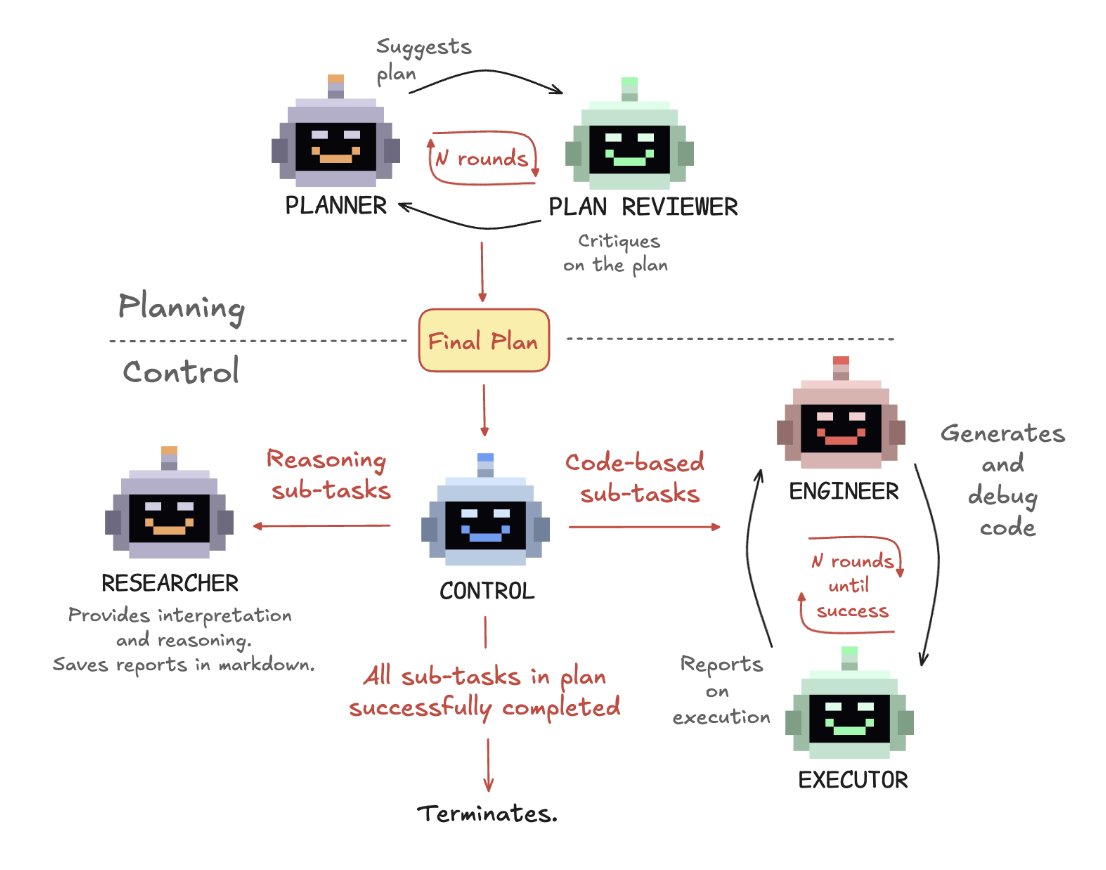
Here’s where it gets wild. Denario doesn’t just “run tasks.” It plans decomposing goals into subtasks, assigning agents, and managing feedback like a robotic PI (principal investigator). It monitors progress, detects failure, retries, adjusts, and decides when the research is
-
Efficiency and Intelligence in AI Agent Development
By
–
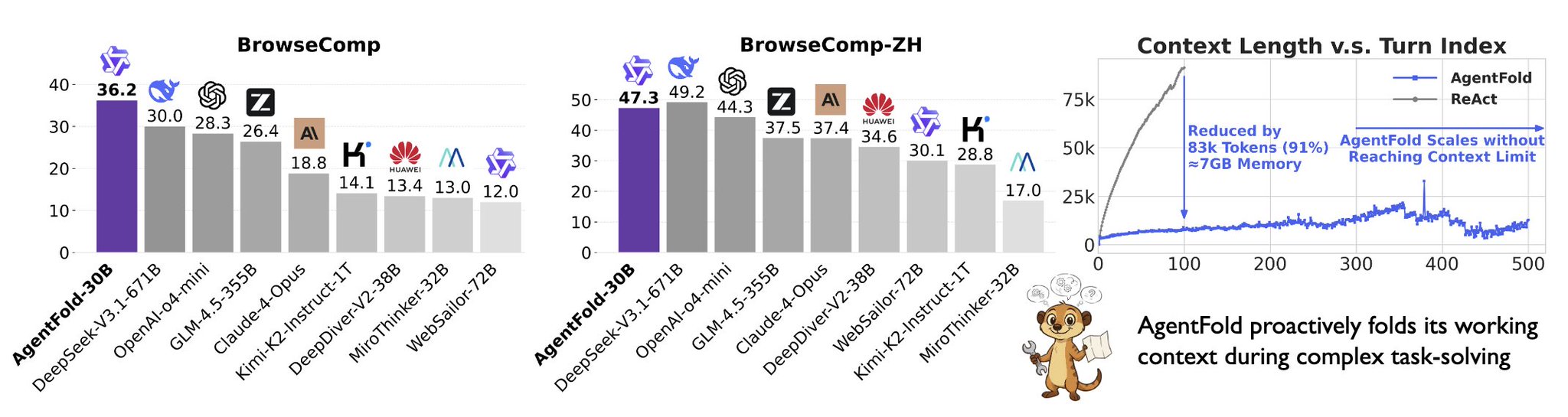
By the end of testing, it was beating every open-source agent in the field and holding its own against proprietary systems built with 10x the resources. Turns out intelligence isn’t about size. It’s about how well you manage what you already know.
-

AI models demonstrating reflection and iterative problem-solving
By
–
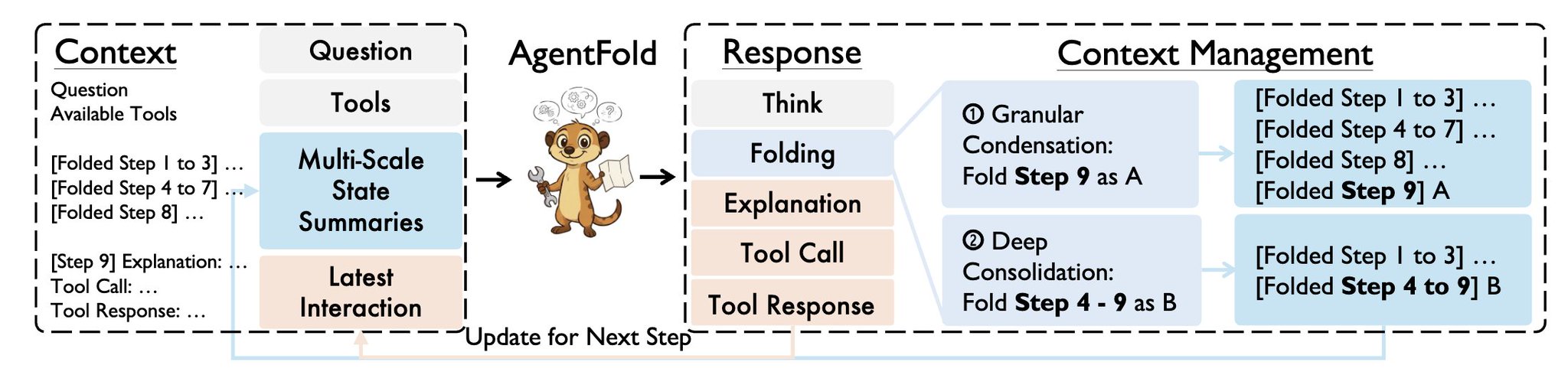
It even knows when it’s wasting time. After 11 failed attempts in one example, it folded the entire dead end into one sentence, learned the lesson, and moved on. That’s not just optimization that’s reflection.
-
Breakthrough in Scalable Reasoning Across Model Depth
By
–
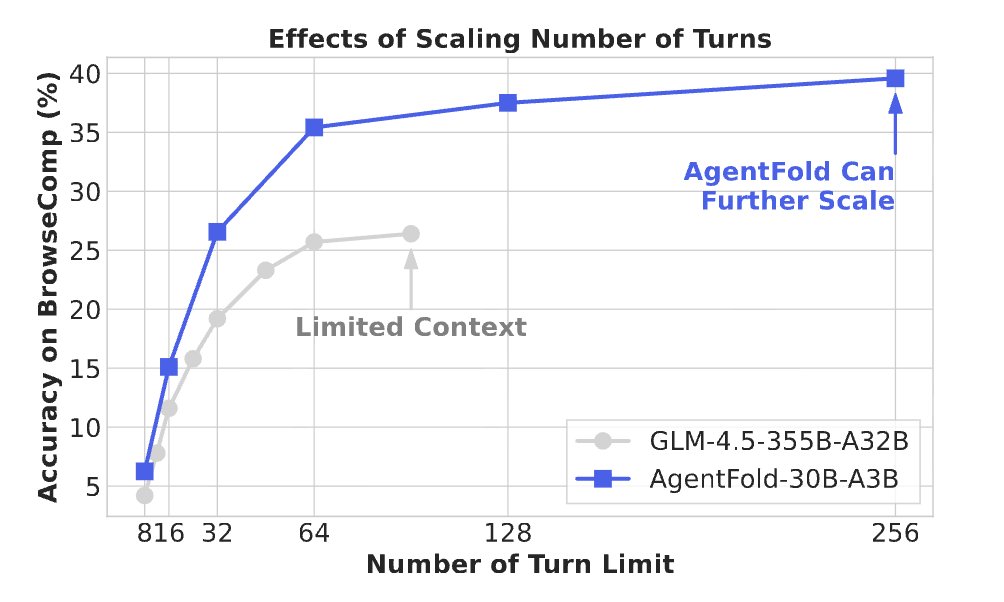
Here’s where it gets wild other models plateau after 64 steps. This one keeps getting better all the way up to 256 turns. It learns across depth, not just width the first real sign of scalable reasoning.
-

Optimizing AI Agent Context Management and Token Efficiency
By
–
Most agents collapse when their context fills up.
This one doesn’t. Even after 100 turns, its entire memory grows from ~3.5K to just ~7K tokens. That’s like running a 500-page research project and still remembering only what matters. And instead of stacking logs endlessly like -
Autonomous AI Agent Logic for Note Curation and Information Compression
By
–
Instead of drowning in its own notes, the agent actively curates them. Every turn it asks: what’s worth keeping, and what can I compress? It runs a loop that looks almost human think → fold → explain → act and builds its own hierarchy of ideas.
-
New 30B Model Outperforms Larger LLMs via Innovative Memory Folding
By
–
This small 30B model just outperformed systems over 20x larger including DeepSeek-V3.1-671B and OpenAI’s o4-mini. The secret? It doesn’t just store memory it folds it. A self-managing memory system that keeps its thoughts organized while solving 500-step problems.
-
Alibaba’s AgentFold introduces a human-style memory system for web agents
By
–
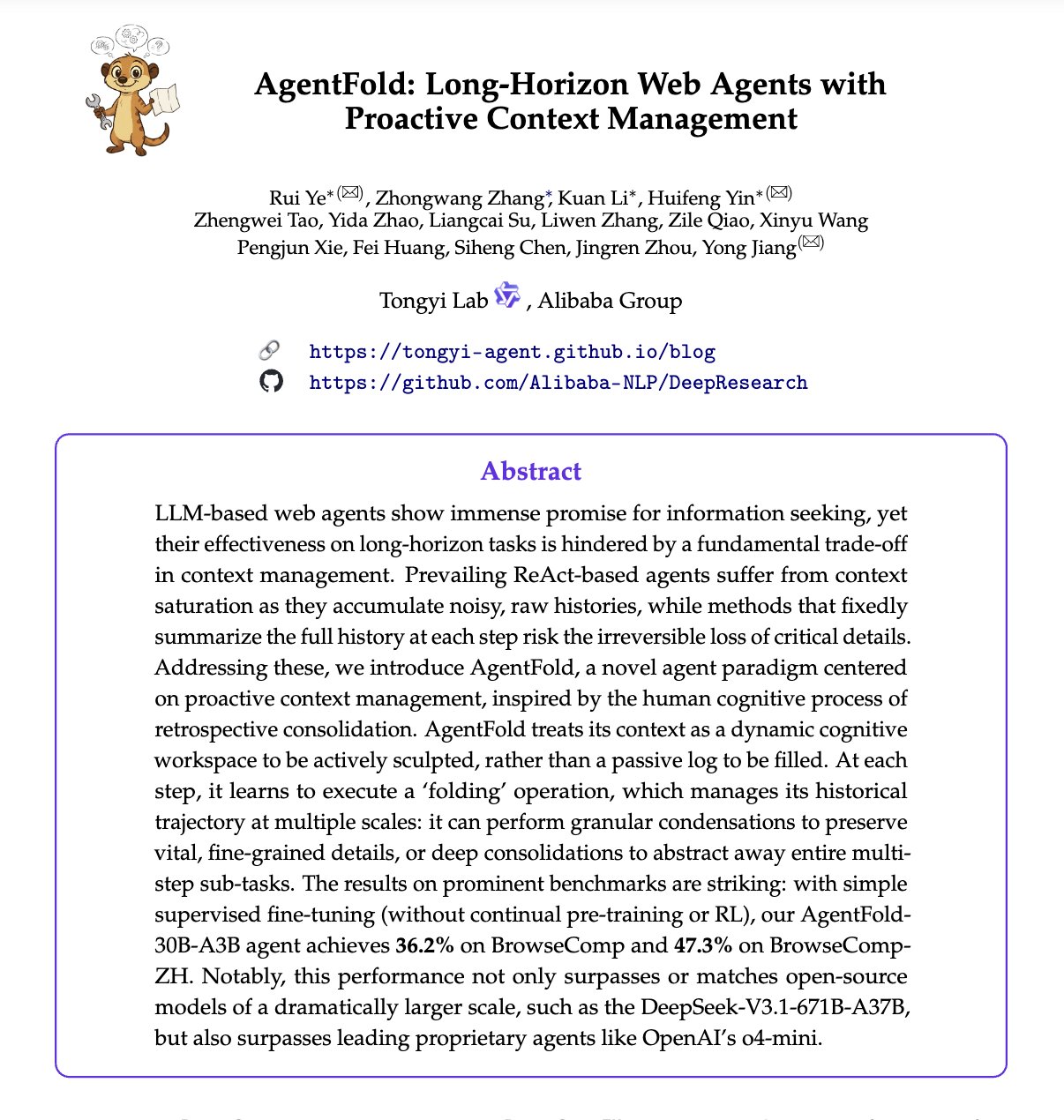
Alibaba just dropped a monster paper in agent research. It’s called AgentFold, and it basically gives web agents a human-style memory system that manages itself. Here’s why it’s wild Current agents either: ∙ keep everything (context bloat, chaos)
∙ or summarize too