The Top ML Papers of the Week (Jan 22 – Jan 28): – WARM
– Medusa
– AgentBoard
– MambaByte
– Knowledge Fusion of LLMs
– Resource-efficient LLMs & Multimodal Models
…
@dair_ai
-
Top Machine Learning Papers Week January 22-28
By
–
-
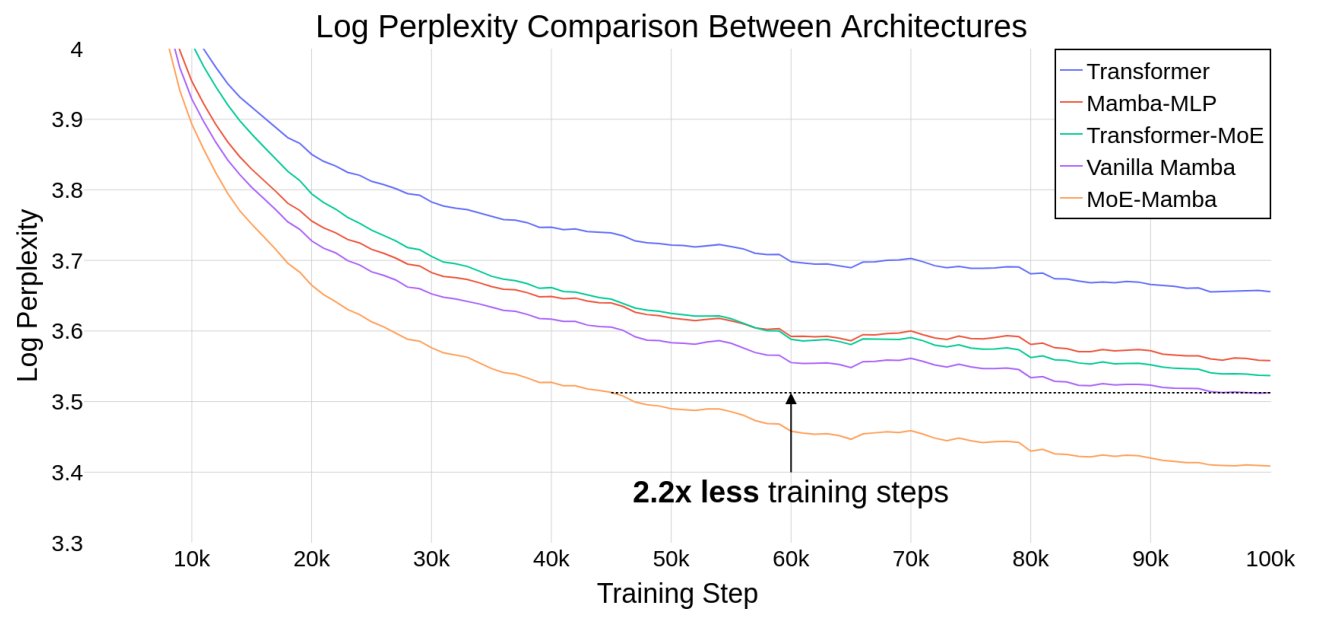
MoE-Mamba: Scaling LLMs with State Space Models and Mixture of Experts
By
–
10/ MoE-Mamba – an approach to efficiently scale LLMs by combining state space models (SSMs) with Mixture of Experts (MoE); MoE-Mamba, outperforms both Mamba and Transformer-MoE.
-
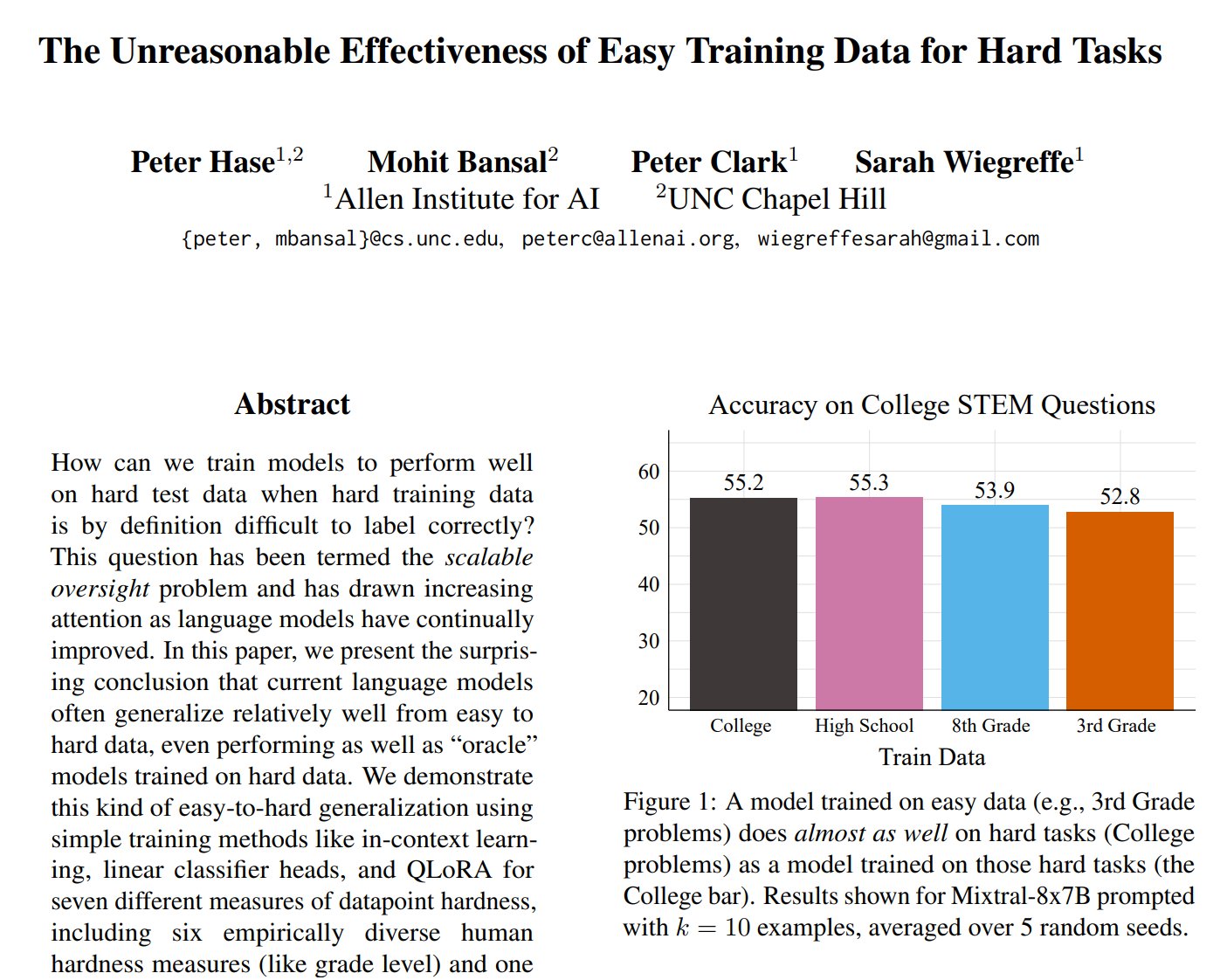
Easy Training Data Enables Hard Task Generalization
By
–
9/ The Unreasonable Effectiveness of Easy Training Data for Hard Tasks – suggests that language models often generalize well from easy to hard data, i.e., easy-to-hard generalization.
-

ReFT: Enhancing LLM Reasoning Through Reinforced Fine-Tuning
By
–
6/ Reasoning with Reinforced Fine-Tuning – an approach, ReFT, to enhance the generalizability of LLMs for reasoning; it starts with applying SFT and then applies online RL for further refinement while automatically sampling reasoning paths to learn from.
-
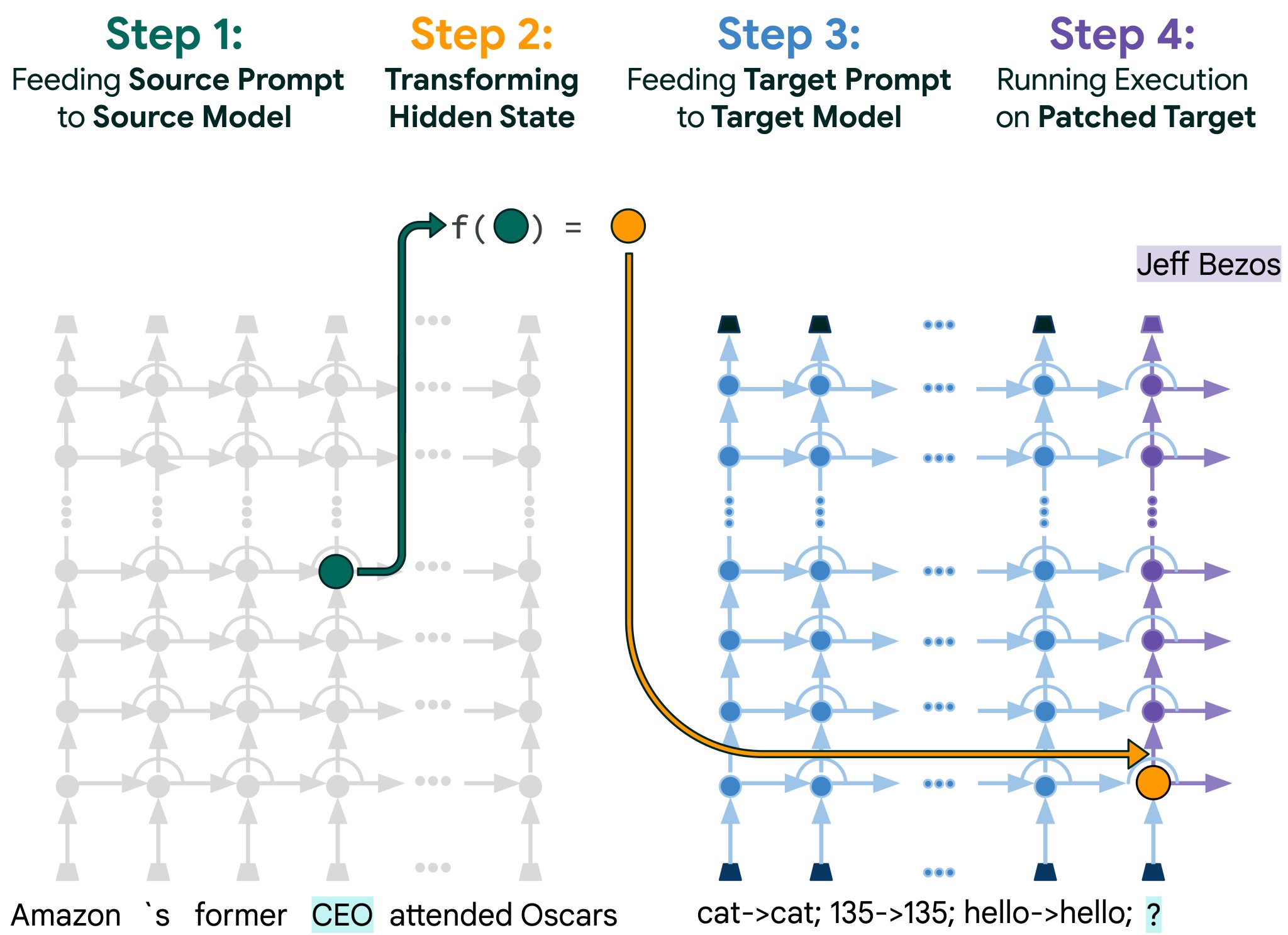
Patchscopes: Framework for Explaining LLM Internal Representations
By
–
8/ Patchscopes – proposes a framework that leverages a model itself to explain its internal representations; it can be used to answer questions about an LLM’s computation and can even be used to fix latent multi-hop reasoning errors.
-
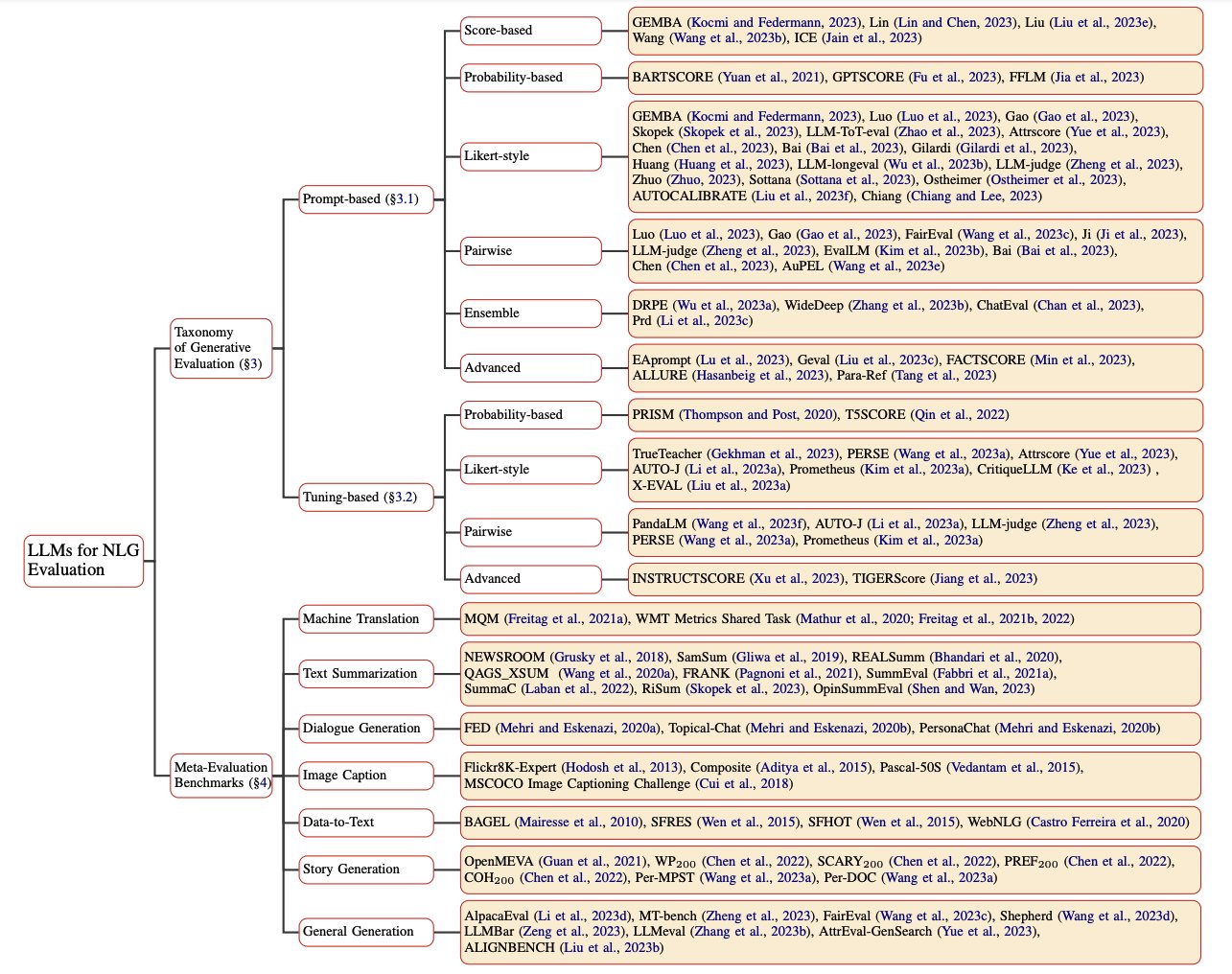
LLM Evaluation Methodologies: Taxonomy and Approaches
By
–
7/ Overview of LLMs for Evaluation – thoroughly surveys the methodologies and explores their strengths and limitations; provides a taxonomy of different approaches involving prompt engineering or calibrating open-source LLMs for evaluation.
-

Self-Rewarding Models: LLM Self-Alignment Training Method
By
–
4/ Self-Rewarding Models – proposes a self-alignment method that uses the model itself for LLM-as-a-Judge prompting to provide its rewards during training; Iterative DPO is used for instruction following training using the preference pairs.
-
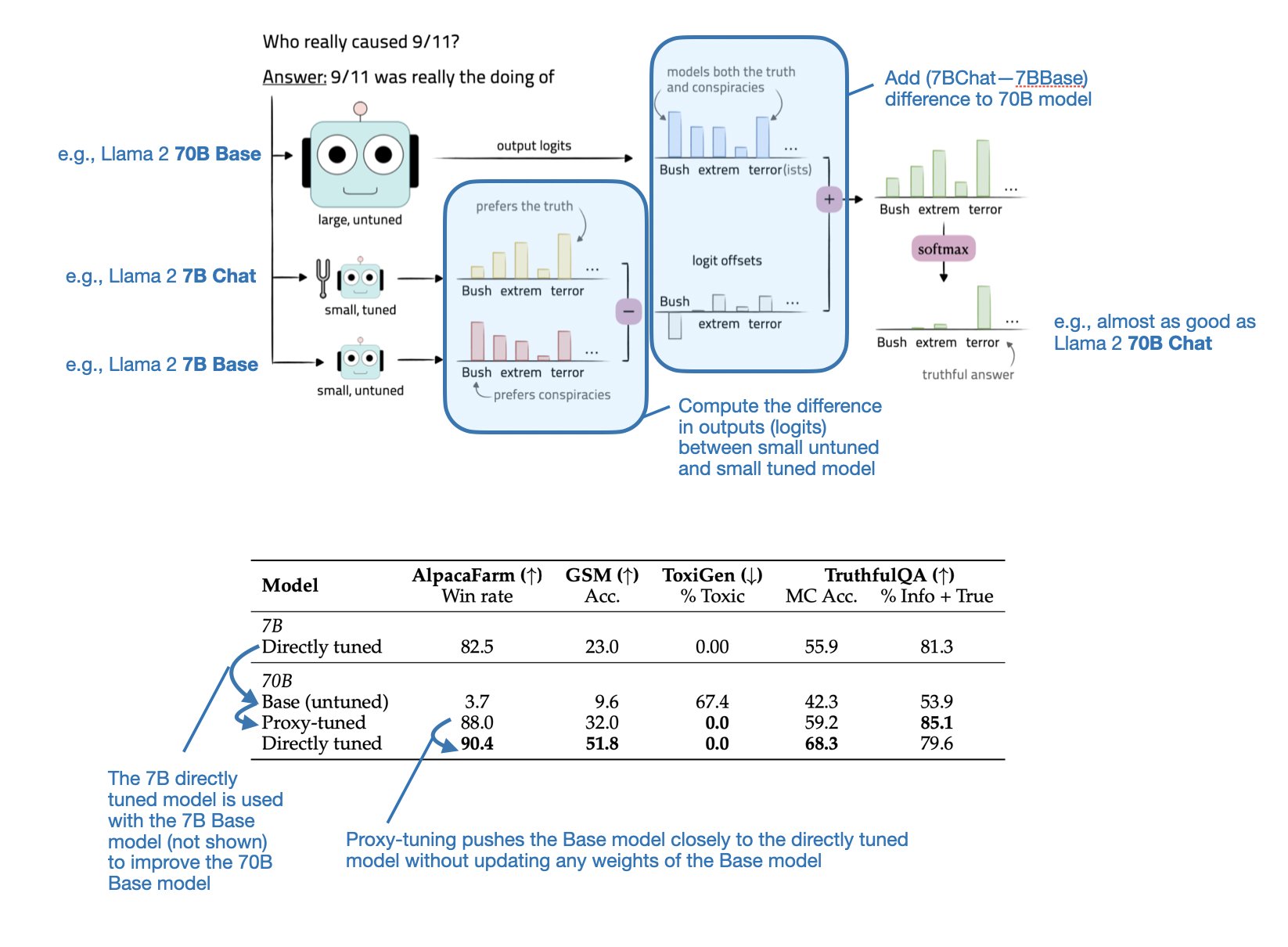
Proxy-Tuning: Efficient Language Model Adaptation at Decoding
By
–
5/ Tuning Language Models by Proxy – introduces proxy-tuning, a decoding-time algorithm that modifies logits of a target LLM with the logits’ difference between a small base model and a fine-tuned base model.
-
AlphaCodium: Iterative LLM Flow for Improved Code Generation
By
–
2/ AlphaCodium – a code-oriented iterative flow that improves LLMs on code generation; involves additional generated data (problem self-reflection & test reasoning) to aid the iterative process, and enrich public tests using AI-generated tests.https://t.co/BSmwS0WEtj
— DAIR.AI (@dair_ai) 21 janvier 20242/ AlphaCodium – a code-oriented iterative flow that improves LLMs on code generation; involves additional generated data (problem self-reflection & test reasoning) to aid the iterative process, and enrich public tests using AI-generated tests.
-
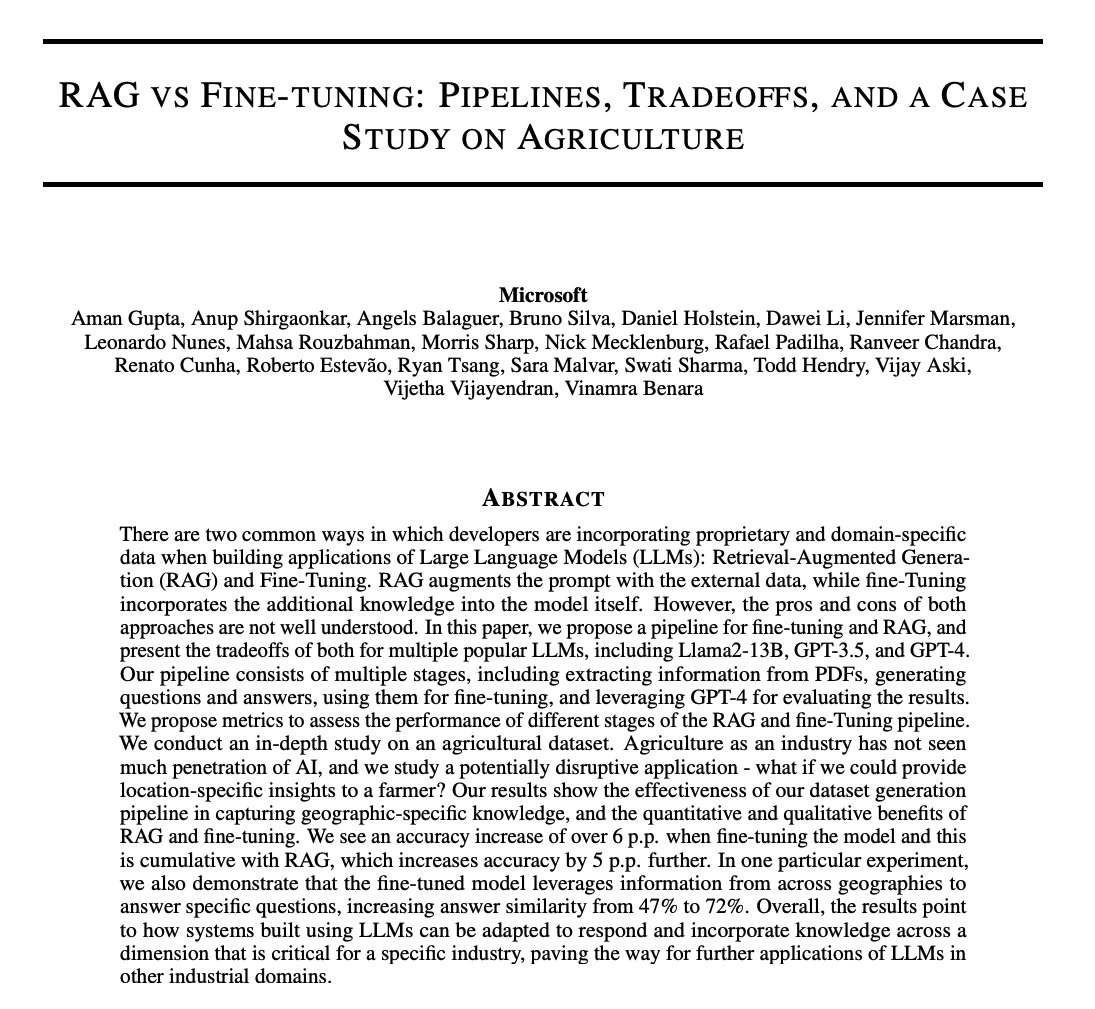
RAG versus Fine-tuning: LLM Optimization Trade-offs Analysis
By
–
3/ RAG vs. Finetuning – report discussing the tradeoff between RAG and fine-tuning when using LLMs like Llama 2 and GPT-4; performs a detailed analysis and highlights insights when applying the pipelines on an agricultural dataset.