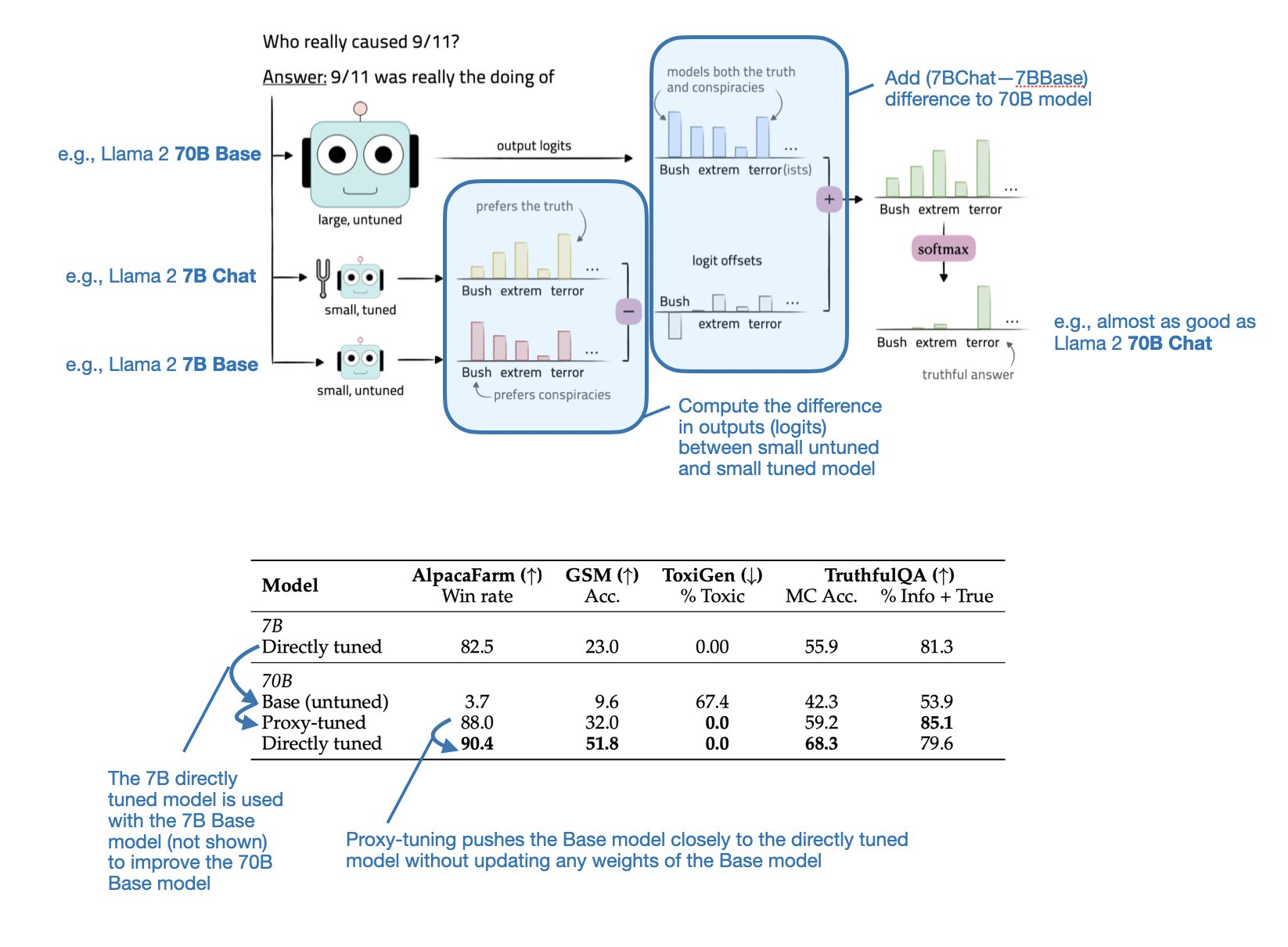
5/ Tuning Language Models by Proxy – introduces proxy-tuning, a decoding-time algorithm that modifies logits of a target LLM with the logits’ difference between a small base model and a fine-tuned base model.
@dair_ai
-

Self-Rewarding Models: LLM Self-Alignment Training Method
By
–
4/ Self-Rewarding Models – proposes a self-alignment method that uses the model itself for LLM-as-a-Judge prompting to provide its rewards during training; Iterative DPO is used for instruction following training using the preference pairs.
-
RAG versus Fine-tuning: LLM Optimization Trade-offs Analysis
By
–
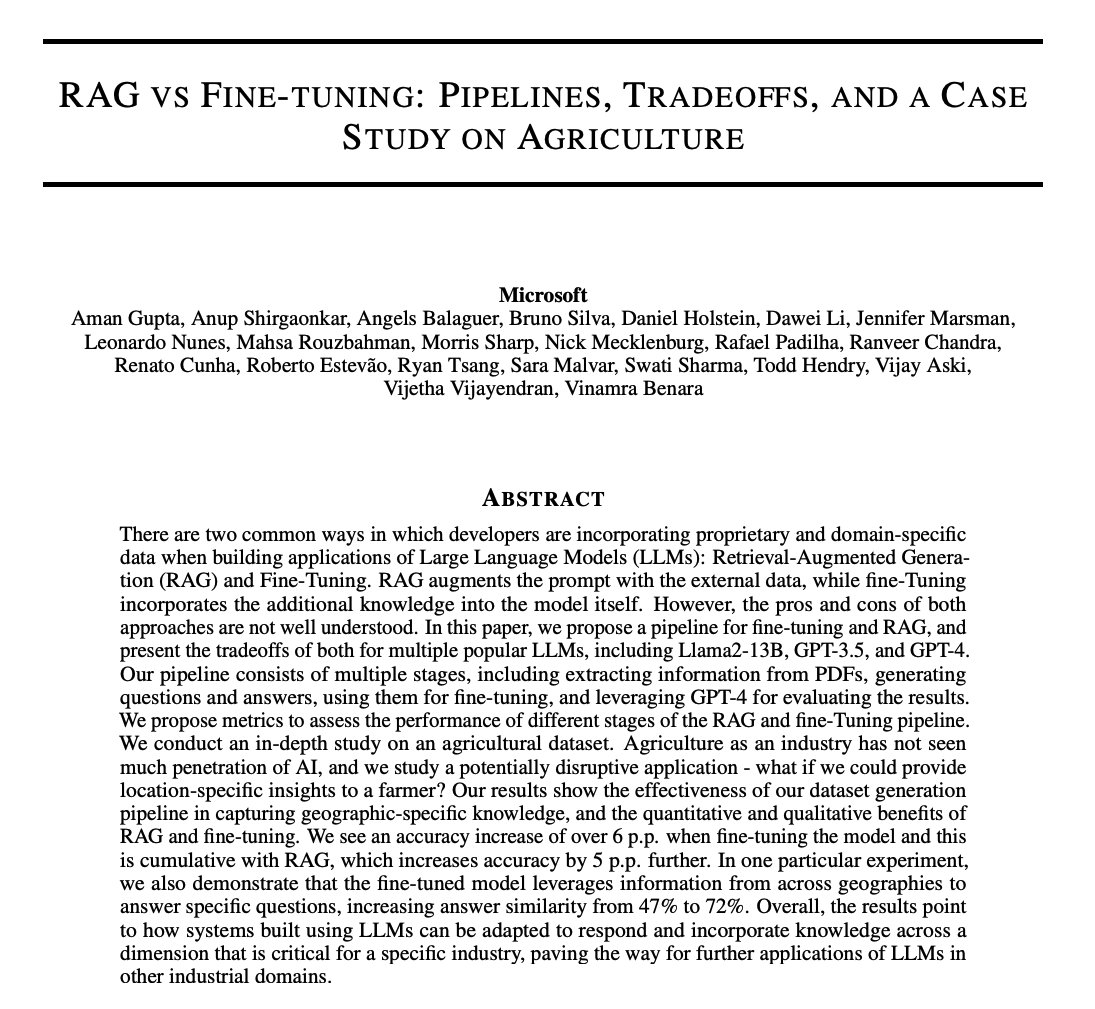
3/ RAG vs. Finetuning – report discussing the tradeoff between RAG and fine-tuning when using LLMs like Llama 2 and GPT-4; performs a detailed analysis and highlights insights when applying the pipelines on an agricultural dataset.
-
AlphaCodium: Iterative LLM Flow for Improved Code Generation
By
–
2/ AlphaCodium – a code-oriented iterative flow that improves LLMs on code generation; involves additional generated data (problem self-reflection & test reasoning) to aid the iterative process, and enrich public tests using AI-generated tests.https://t.co/BSmwS0WEtj
— DAIR.AI (@dair_ai) 21 janvier 20242/ AlphaCodium – a code-oriented iterative flow that improves LLMs on code generation; involves additional generated data (problem self-reflection & test reasoning) to aid the iterative process, and enrich public tests using AI-generated tests.
-
Instruct-Imagen: Multimodal Context Grounding for Heterogeneous Image Generation
By
–
10/ Instruct-Imagen – tackles heterogeneous image generation by first enhancing the model’s ability to ground its generation on an external multimodal context and fine-tunes on image generation tasks with multimodal instructions.https://t.co/3jQa0piXlG
— DAIR.AI (@dair_ai) 7 janvier 202410/ Instruct-Imagen – tackles heterogeneous image generation by first enhancing the model’s ability to ground its generation on an external multimodal context and fine-tunes on image generation tasks with multimodal instructions.
-

Code Training Empowers LLMs: Generation, Reasoning, Agents
By
–
9/ How Code Empowers LLMs – an overview of the benefits of training LLMs with code-specific data. Some capabilities include enhanced code generation, enabling reasoning, function calling, automated self-improvements, and serving intelligent agents.
-
GPT-4V as Generalist Web Agent: 50% Task Completion
By
–
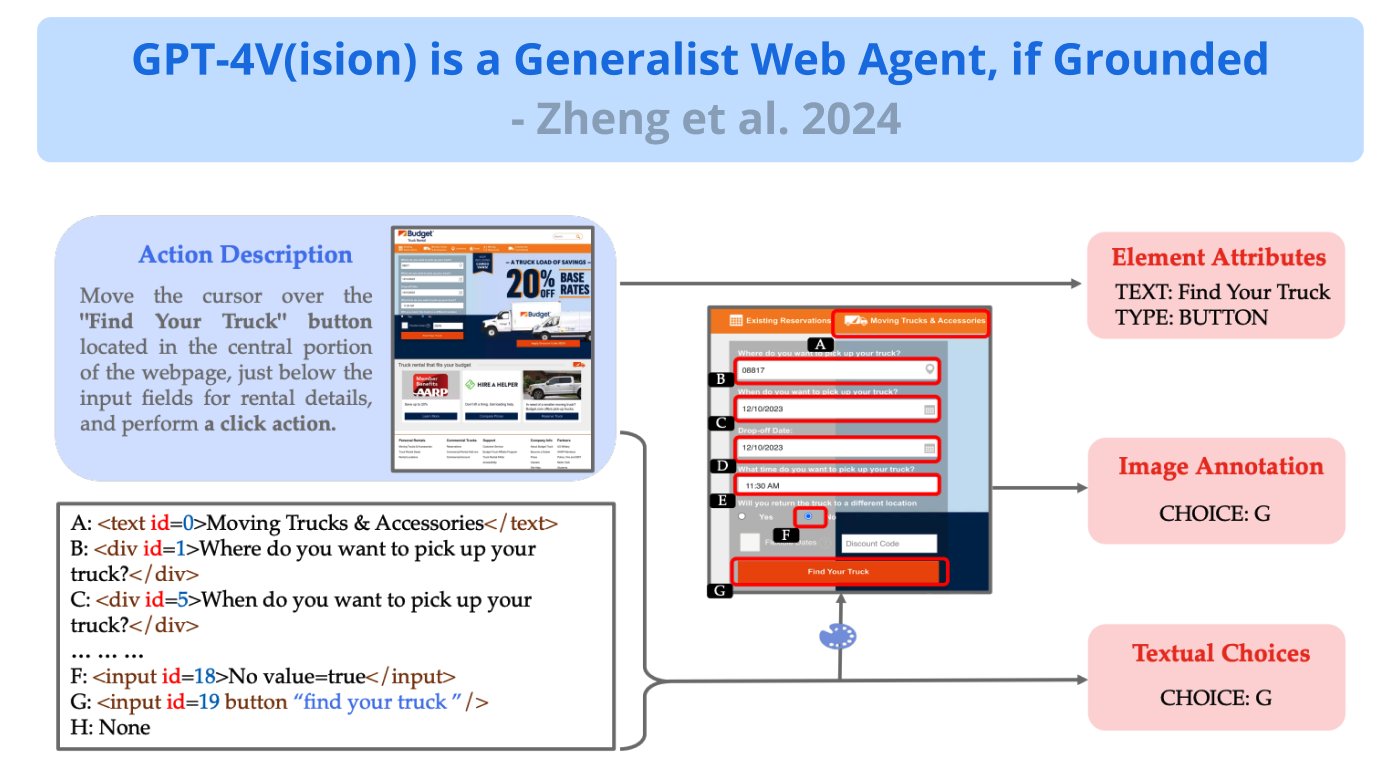
7/ GPT-4V is a Generalist Web Agent – explores the potential of GPT-4V as a generalist web agent; findings suggest that GPT-4V can complete 50% of tasks on live websites – possible through manual grounding of its textual plans into actions.
-
DocLLM: Visual Document Reasoning with Bounding Box Spatial Layout
By
–
8/ DocLLM – an extension to traditional LLMs for reasoning over visual documents; focuses on using bounding box information to incorporate spatial layout structure; demonstrates SoTA on 14 of 16 datasets across several document intelligence tasks.
-

LLM Augmented LLMs: Composing Models for Expanded Capabilities
By
–
5/ LLM Augmented LLMs – explore composing existing foundation models with specific models to expand capabilities; introduce cross-attention between models to compose representations that enable new capabilities.
-
Fast Inference of Mixture-of-Experts Models via Offloading
By
–
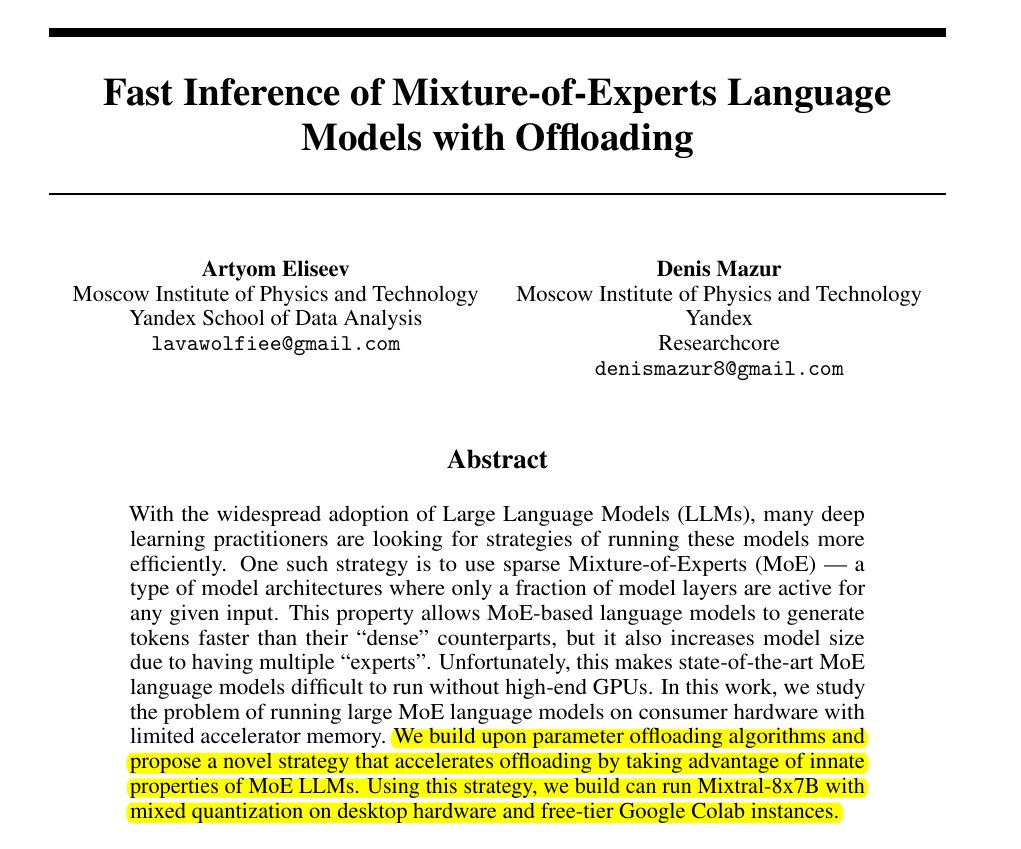
6/ Fast Inference of Mixture-of-Experts – achieves efficient inference of Mixtral-8x7B models through offloading; designs a MoE-specific offloading strategy that enables running Mixtral-8x7B on desktop hardware and free-tier Google Colab instances.