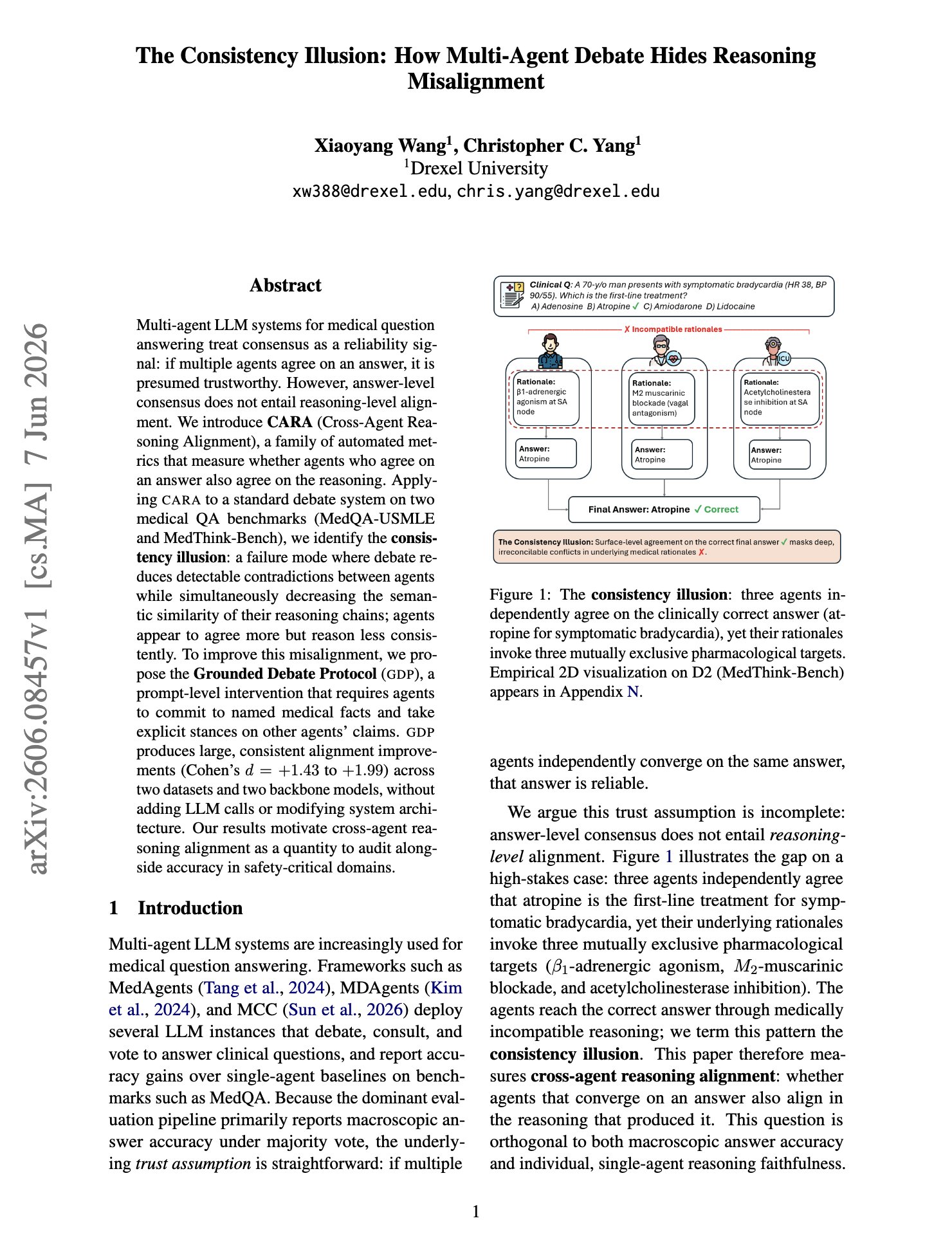
// The Consistency Illusion // Multi-agent debate can make agents agree on the final answer while their underlying reasoning stays misaligned. This work finds that consensus on the output hides disagreement on the path that produced it, and you only ever see the output. A lot
@dair_ai
-

Agentopia: Long-Running Life Simulation for LLM Agent Societies
By
–
// Life Simulation in Agent Societies // One of the more ambitious agent-society testbeds to land this month, and it arrives as a 79-page release. Agentopia drops many LLM agents into a long-running world where they live, interact, and learn over extended horizons. The goal is
-
Top AI Papers of the Week: May 31 – June 7
By
–
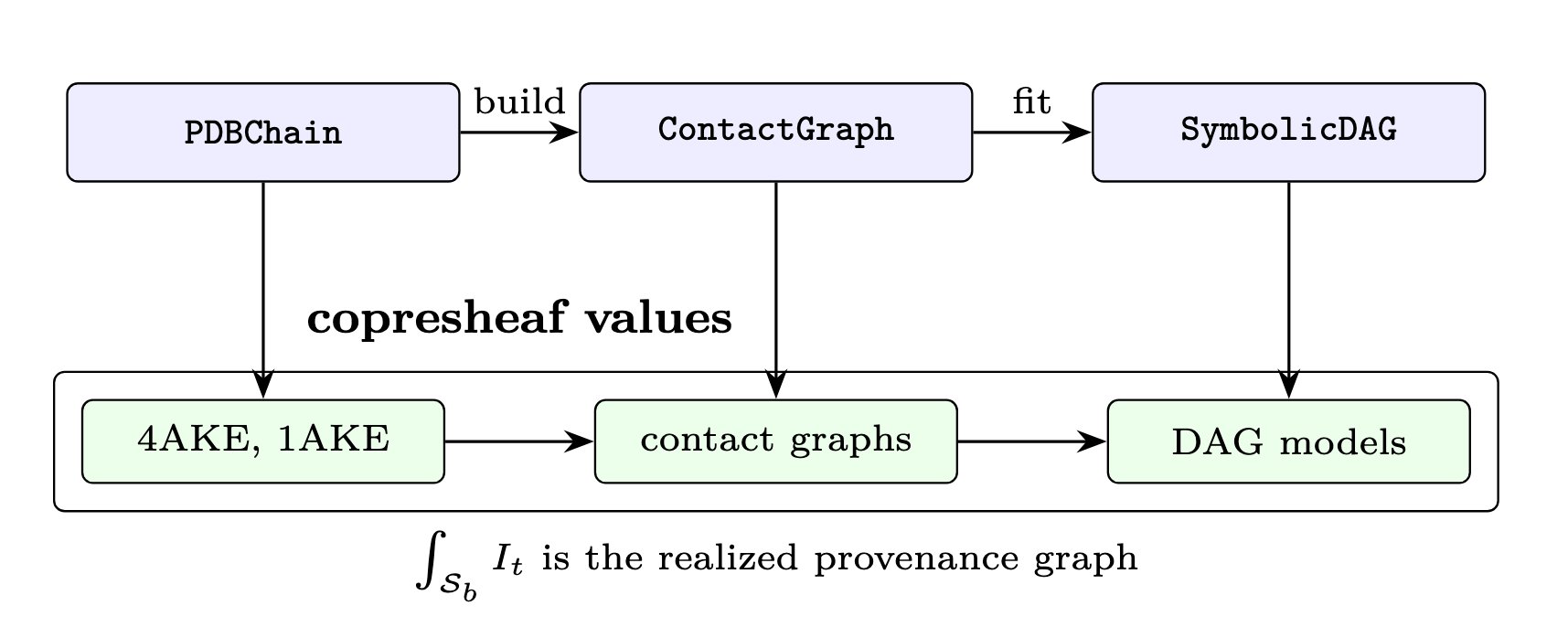
The Top AI Papers of the Week (May 31 – June 7) – LEAP
– AutoLab
– Learn From Your Own Latents
– Reusable Context Engineering
– Self-Revising Discovery Systems
– Scaling Laws for Agent Harnesses
– Disentangling Agent Self-Evolution Read on for more: -

Agents’ Last Exam: A Challenging Benchmark for AI Task Performance
By
–
// Agents' Last Exam // Agents' Last Exam is a living benchmark of over 1,000 economically valuable tasks, built with 250+ industry experts and mapped to the U.S. federal occupational taxonomy. The hardest tier sits at a 2.6% average full pass rate across mainstream harnesses
-
AutoLab: Encoding Persistence in Long-Horizon Agents
By
–
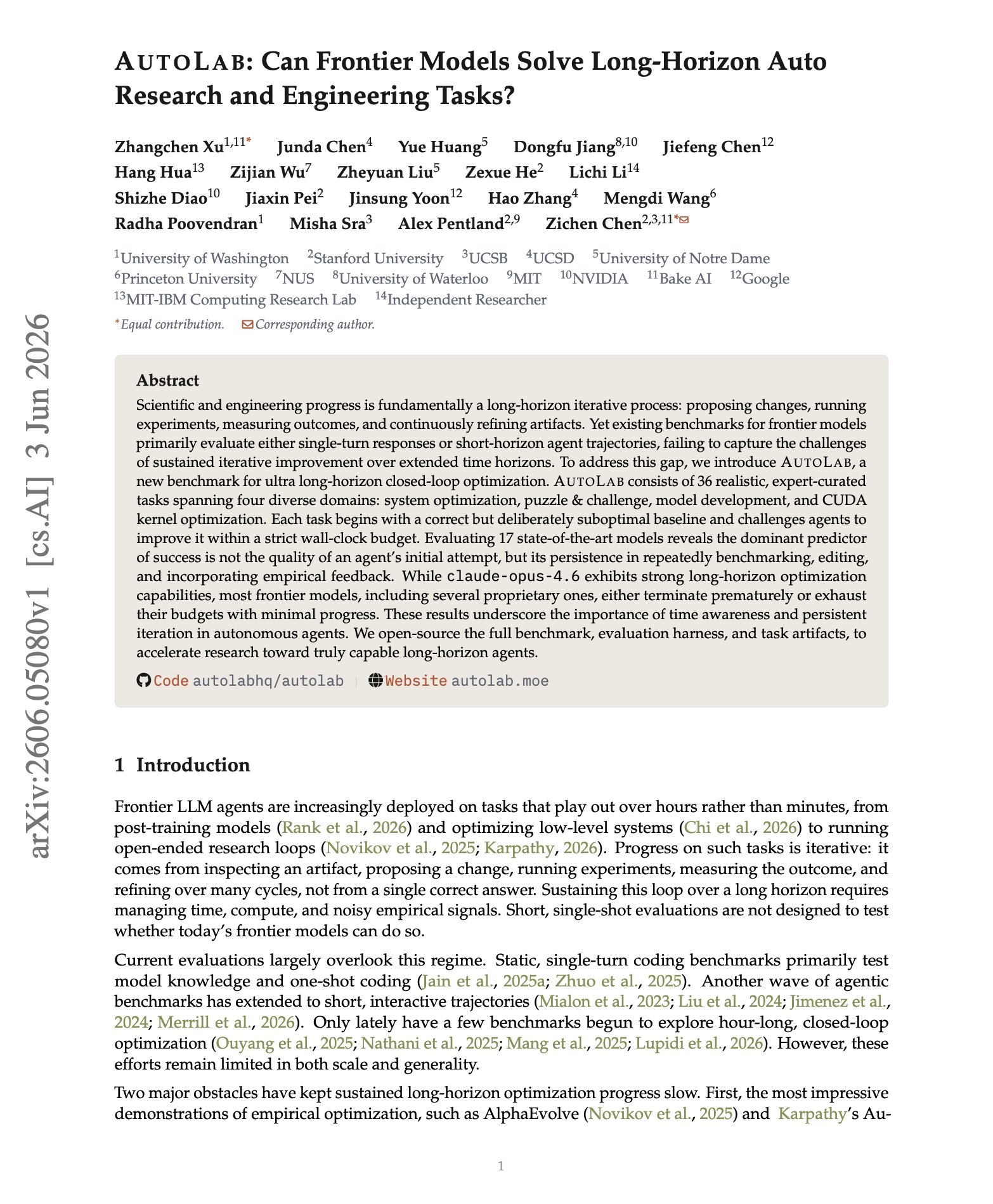
Outstanding paper on long-horizon agents. (bookmark it) Similar to humans, how do you make agents persist on a difficult task, and how is that useful? And which models today work well on this? This new work, AutoLab, explores this question and how encoding persistence in
-
Primer on post-training reasoning data synthesis
By
–
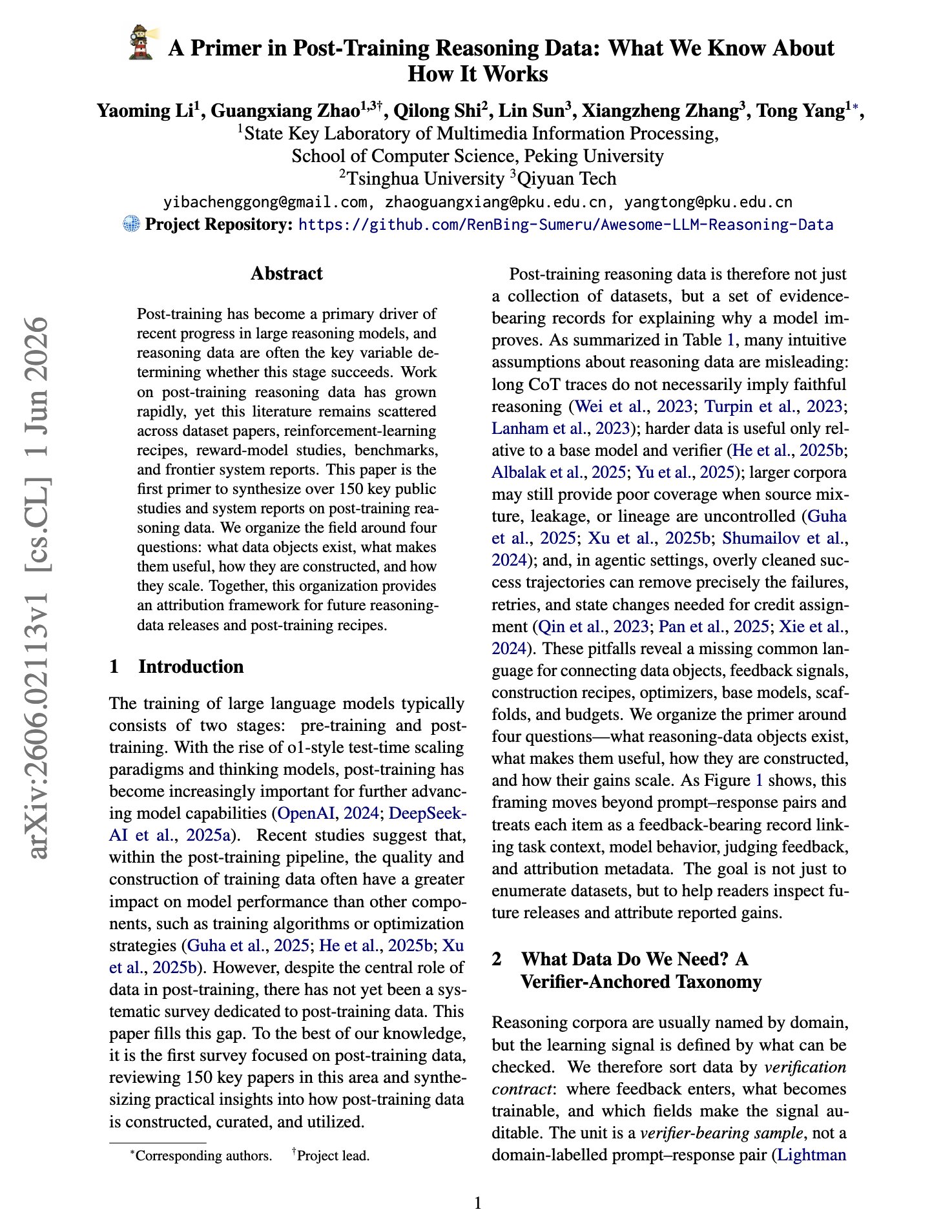
Nice primer on post-training reasoning data. (bookmark it) This is one of the first primers to pull the scattered post-training reasoning-data literature into one place, synthesizing over 150 public studies and system reports that previously lived across dataset papers, RL
-
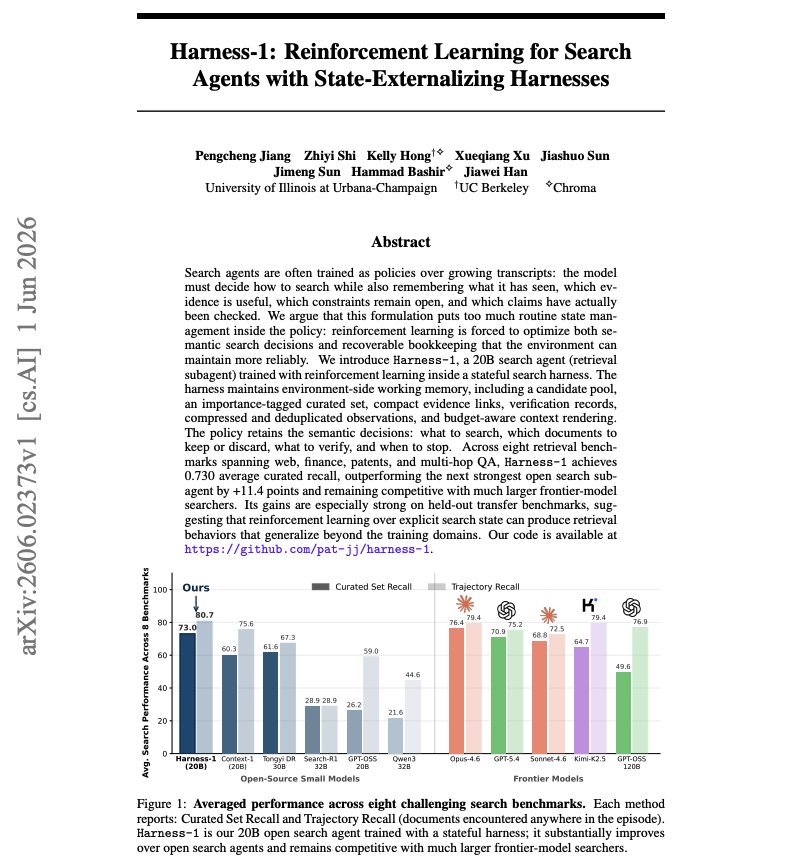
State-Externalizing Harnesses Shift Environment State from Policy to Harness
By
–
// State-Externalizing Harnesses // A new paradigm is emerging on how to effectively build agents and harnesses. If there is a state that the environment can maintain reliably, it probably doesn't belong inside the policy. Move it into the harness, and a 20B model trains
-
Principaux articles IA de la semaine (24-31 mai)
By
–
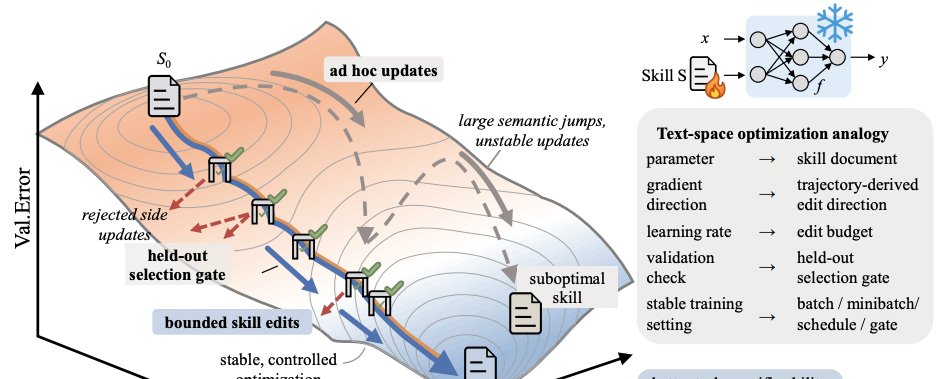
The Top AI Papers of the Week (May 24 – May 31) – SkillOpt
– AutoScientists
– The Efficiency Frontier
– Language Models Need Sleep
– Adapting the Interface, Not the Model
– Forecasting Scientific Progress with AI
– Compiling Agentic Workflows into Weights Read on for more: -
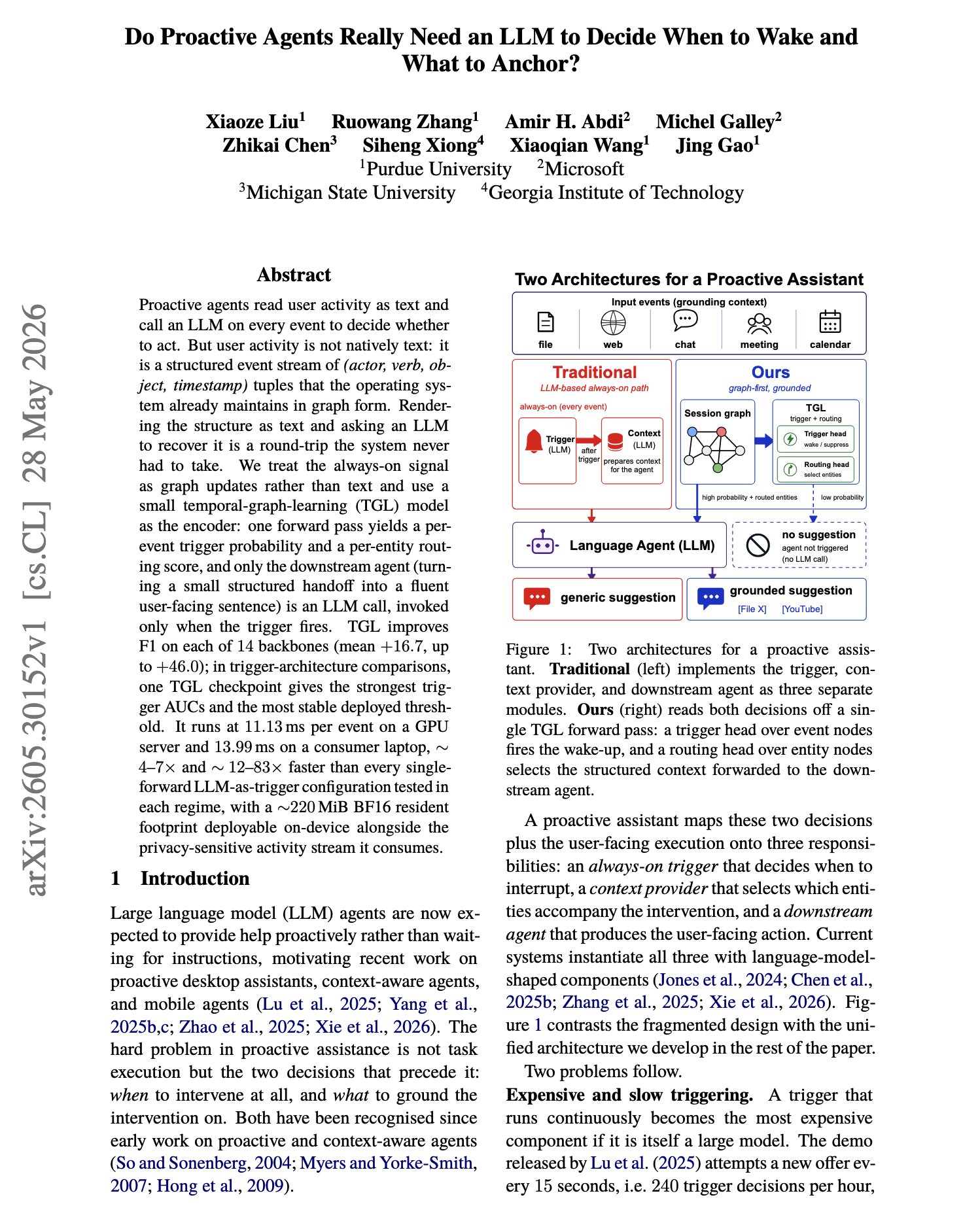
Proactive Agents: LLM Efficiency in Wake Triggers
By
–
Do proactive agents really need an LLM to decide when to wake? The default proactive agent calls an LLM on every event just to decide whether to wake up. That is a lot of expensive inference spent on a yes or no. New research from Microsoft and Purdue asks whether the trigger
-

AutoScientists: Decentralized AI Agents for Scientific Research
By
–
Banger paper from Harvard. AutoScientists drops the central planner entirely. Agents interpret shared experimental data, self-organize around promising directions, evaluate proposals before resource allocation, and document successes AND failures. Decentralized AI co-scientists