
5. Is In-Context Learning Learning? This large study argues yes in a formal sense, then shows where it works and where it breaks.
@dair_ai
-
Stress Testing Deliberative Alignment Against AI Scheming Behavior
By
–
6. Stress Testing Deliberative Alignment for Anti-Scheming Training Builds a broad testbed for covert actions as a proxy for AI scheming, trains o3 and o4-mini with deliberative alignment, and shows big but incomplete drops in deceptive behavior.
-

Physics Foundation Model: Transformer Learning Dynamics from PDEs
By
–
4. Towards a Physics Foundation Model A transformer-based “neural differentiator + numerical integrator” that learns governing dynamics from short spatiotemporal prompts and predicts next states across varied PDE systems.
-
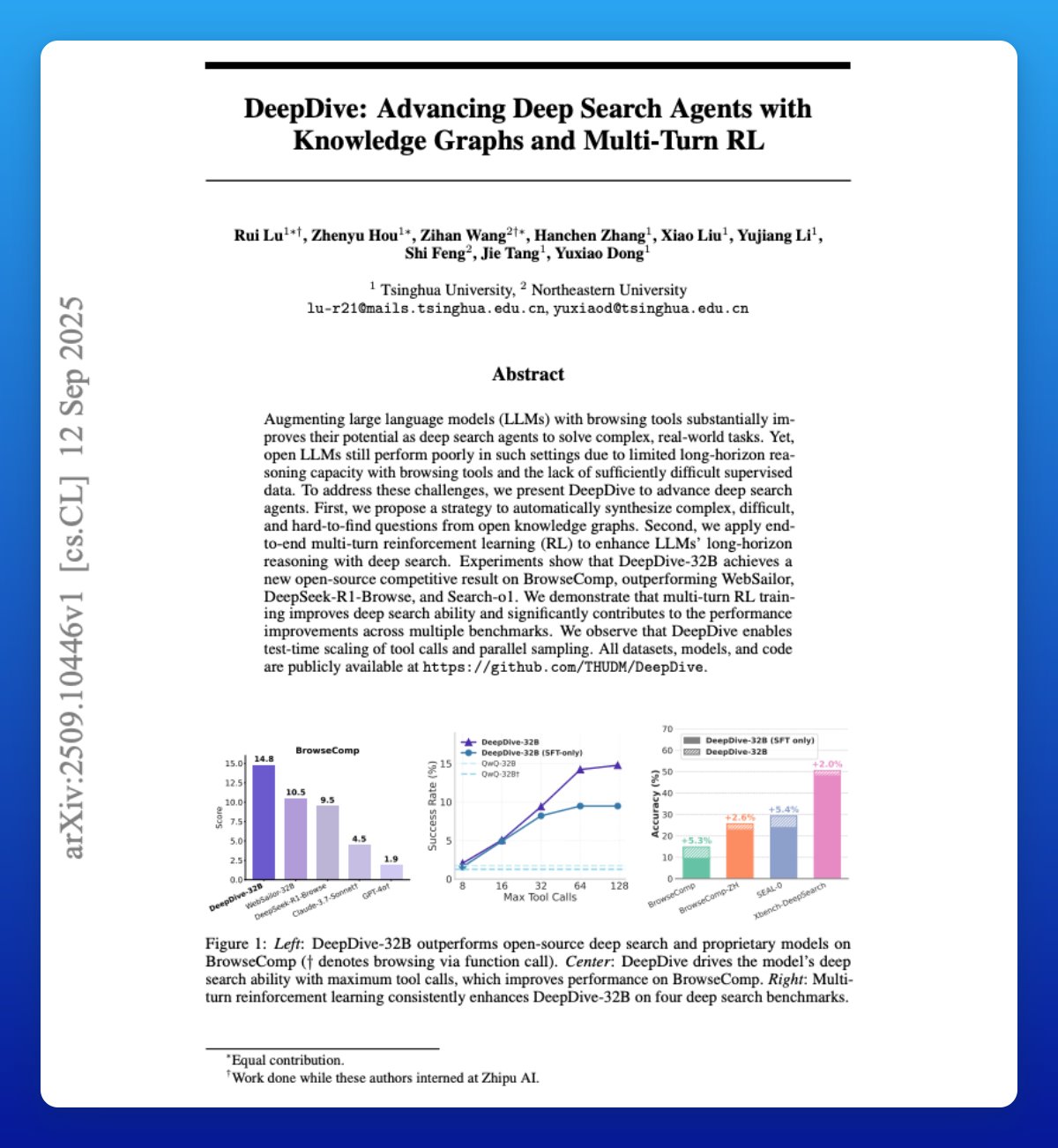
DeepDive: Advanced Web Search Agent with Reinforcement Learning
By
–
3. DeepDive Builds a stronger web-browsing deep search agent by pairing two ingredients: automatically synthesized, hard-to-find questions from knowledge graphs and end-to-end multi-turn RL that teaches the model how to reason, search, and stop.
-

K2-Think: 32B Model Rivals Larger Models on Math
By
–
2. K2-Think A 32B-parameter system built on Qwen2.5 that rivals or beats far larger models on hard math by combining long CoT SFT, RL with verifiable rewards, lightweight test-time scaffolding, and inference optimization.
-
Hermes 4: Hybrid Reasoning Models for Advanced Instruction Following
By
–
10. Hermes 4 Hermes 4 introduces a family of hybrid reasoning models that integrate structured multi-turn reasoning with broad instruction-following.
-
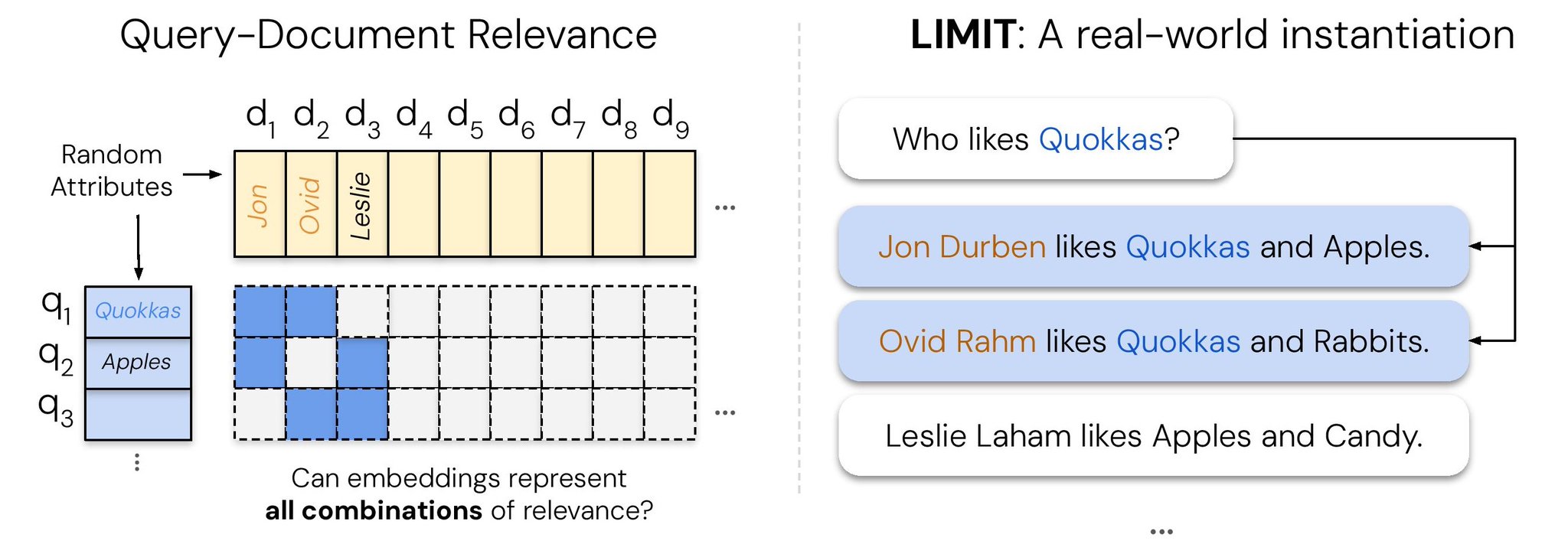
Theoretical Limitations of Embedding-Based Dense Retrievers
By
–
8. On the Theoretical Limitations of Embedding-based Retrieval Finds that single-vector dense retrievers cannot realize all possible top-k relevance combinations once queries demand sufficiently many “mix-and-match” document sets.
-

Self-Evolving AI Agents: Continuous Adaptation Through Feedback
By
–
9. Self-Evolving Agents This survey reviews techniques for building self-evolving AI agents that continuously adapt through feedback loops, bridging static foundation models with lifelong adaptability.
-

Adaptive LLM Routing Framework Learning Online Query Models
By
–
6. Adaptive LLM Routing A routing framework that learns online which model to call for each query while honoring a spend limit.
-

Implicit Reasoning in LLMs: Multi-Step Problem Solving
By
–
7. Implicit Reasoning in LLMs This survey defines implicit reasoning as multi-step problem solving that happens inside a model’s latent states without printing intermediate steps.