
3. Universal Deep Research Proposes a general, model-agnostic deep-research agent that lets users “bring your own model and strategy.”
@dair_ai
-
Brain-Like Representations Emerge in Self-Supervised Vision Transformers
By
–
2. Disentangling the Factors of Convergence between Brains and Computer Vision Models
— DAIR.AI (@dair_ai) 7 septembre 2025
Large self-supervised ViTs trained on natural images develop brain-like internal representations.https://t.co/YBI1egjOHP2. Disentangling the Factors of Convergence between Brains and Computer Vision Models Large self-supervised ViTs trained on natural images develop brain-like internal representations.
-
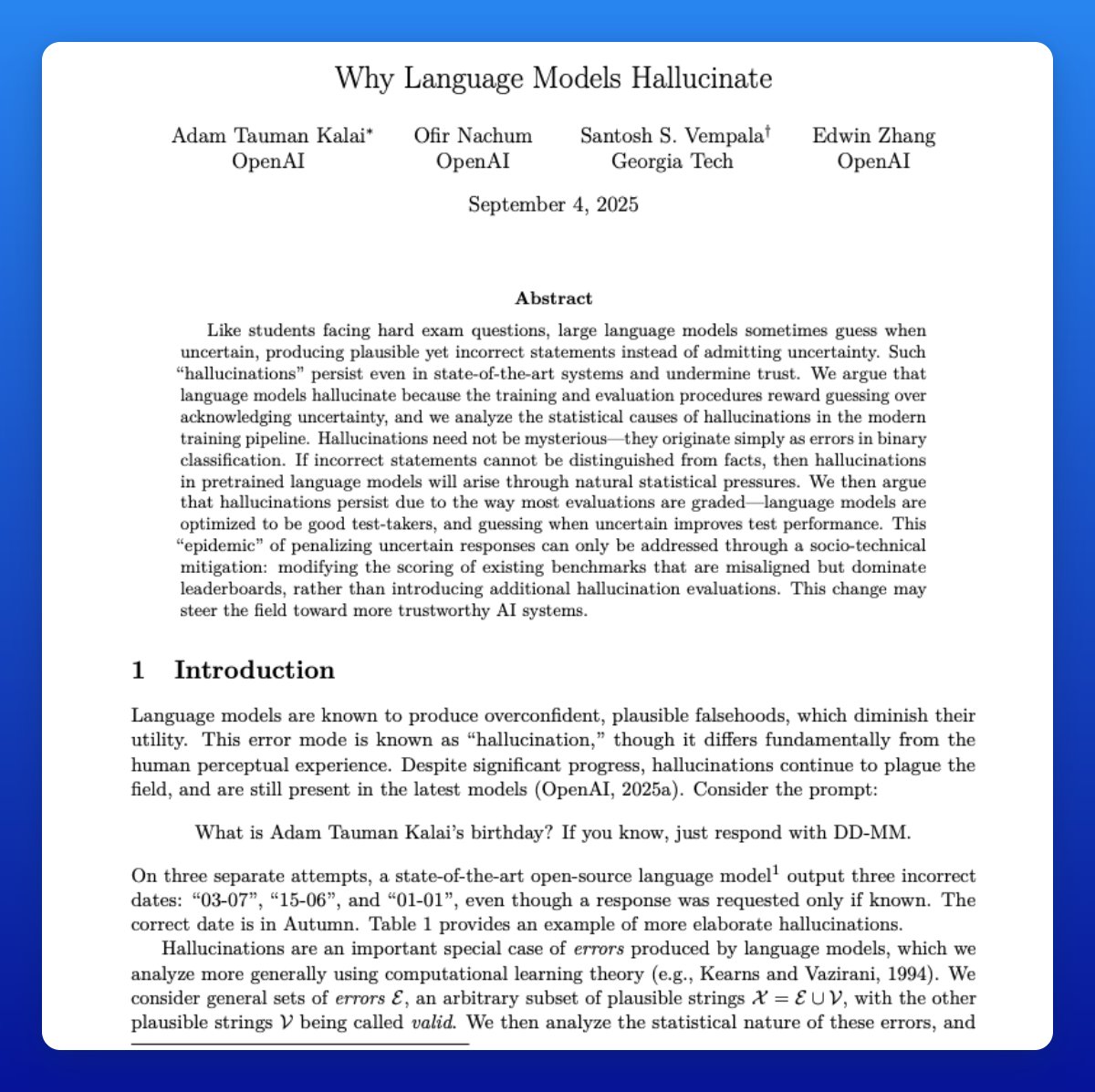
Why Language Models Hallucinate: Training and Evaluation
By
–
1. Why Language Models Hallucinate The paper argues that hallucinations are not mysterious glitches but the predictable result of how LLMs are trained and evaluated.
-
Top AI Papers: Agents, Routing, and LLM Reasoning
By
–
Top AI Papers of The Week (September 1-7): – rStar2-Agent
– Self-Evolving Agents
– Adaptive LLM Routing
– Universal Deep Research
– Implicit Reasoning in LLMs
– Why Language Models Hallucinate
– Limitations of Embedding-based Retrieval Read on for more: -

Agentic Science: AI as Autonomous Research Partner
By
–
10. Agentic Science This survey introduces Agentic Science as the next stage of AI for Science, where AI evolves from a support tool to an autonomous research partner capable of hypothesis generation, experimentation, and iterative discovery.
-

Synthetic Dataset Generation for RAG Systems Multi-Agent Evaluation
By
–
8. Synthetic Dataset Generation for RAG Evaluation with Multi-Agent Systems The paper proposes a modular, three-agent pipeline that auto-generates synthetic QA datasets for evaluating RAG systems while enforcing privacy.
-

LLM Reward Hacking Generalizes to Dangerous Misaligned Behaviors
By
–
9. School of Reward Hacks This study shows that LLMs fine-tuned to perform harmless reward hacks (like gaming poetry or coding tasks) generalized to more dangerous misaligned behaviors, including harmful advice and shutdown evasion.
-
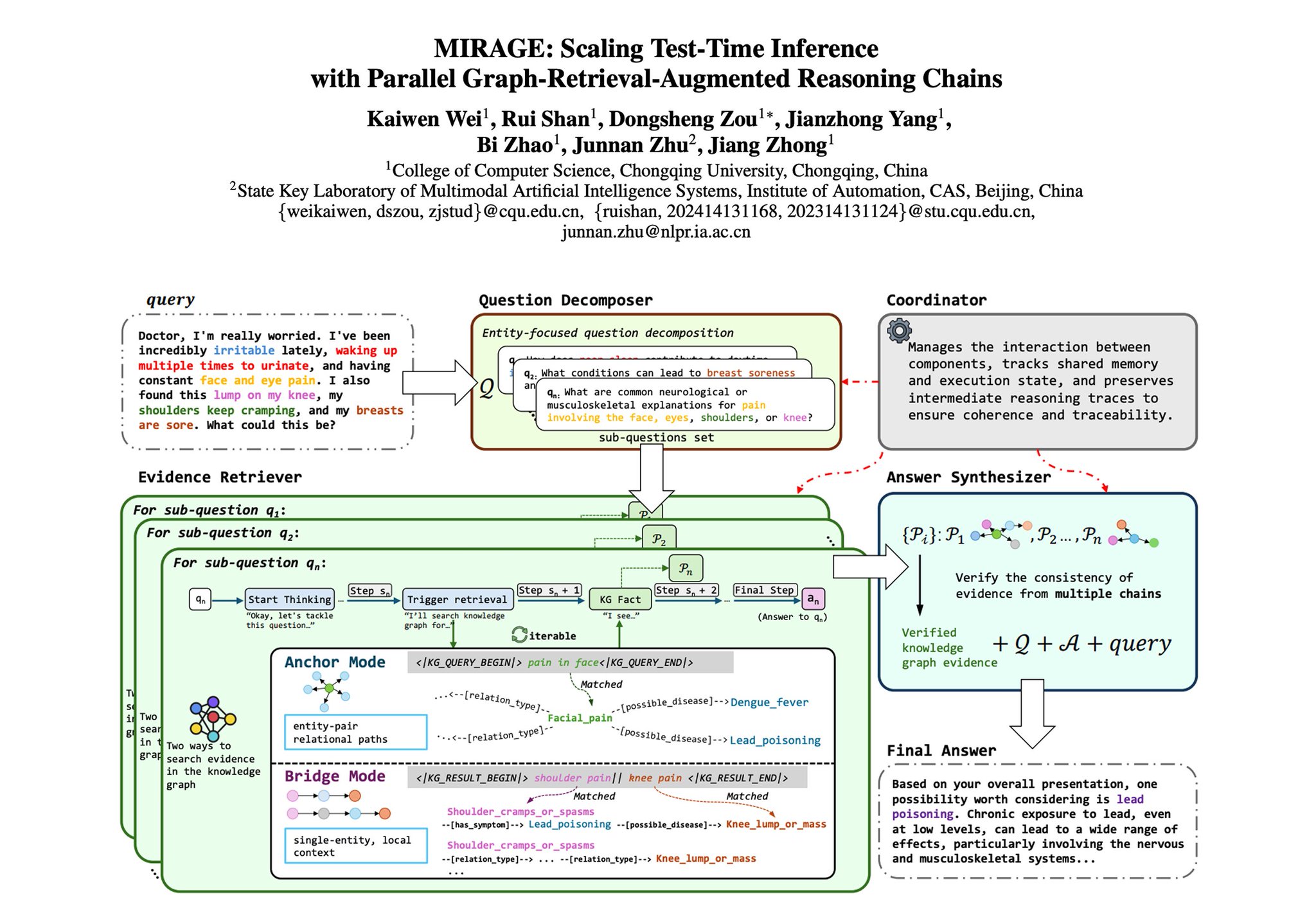
Parallel Graph-Retrieval-Augmented Reasoning for Medical Knowledge
By
–
5. Parallel Graph-Retrieval-Augmented Reasoning A test-time reasoning framework that replaces a single linear chain with multiple parallel, entity-grounded chains over medical knowledge graphs.
-

Evaluating Language Models on Real Unsolved Questions
By
–
7. Assessing Language Models on Unsolved Questions The paper introduces a new evaluation paradigm that tests models on real unsolved questions from the wild, rather than on fixed-answer exams.
-

Memory-R1: Framework Teaching LLM Agents Memory Management
By
–
6. Memory-R1 A framework that teaches LLM agents to decide what to remember and how to use it.