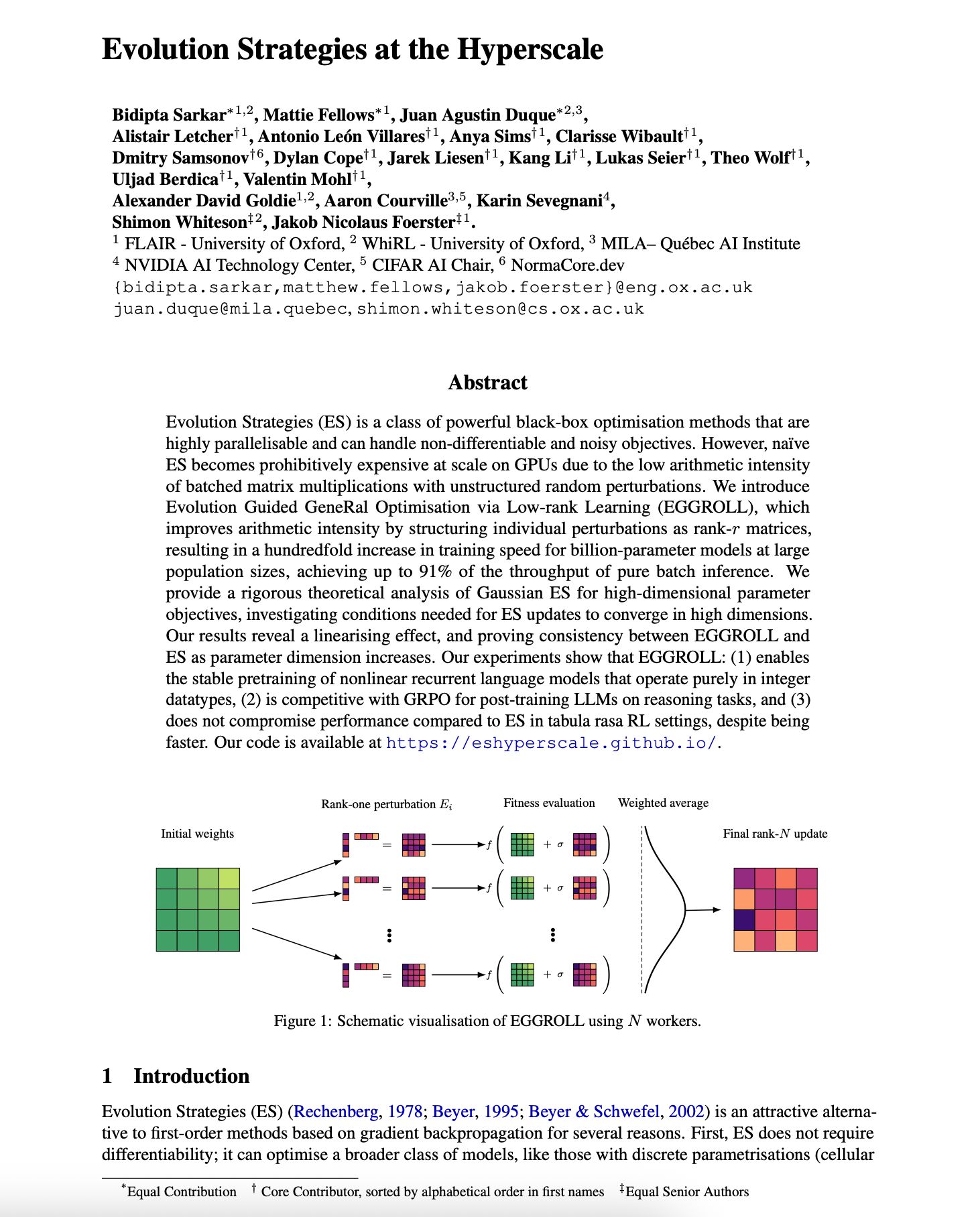
NVIDIA just proved AI doesn't need backpropagation to learn anymore. Training giant neural networks has meant one thing for a decade. You run backpropagation, compute gradients, and update weights with calculus. A new paper from NVIDIA and Oxford breaks that assumption.
@alphasignalai
-
Discussion on LLM runtimes and coding benchmarks
By
–
Yes, of course. The Hermes + Codex runtime swap looks promising for shell/patch workflows, but those "~5% coding gains" are still just Teknium's reply-thread anecdotes until we have proper evals.
-
Technical analysis of attention head visualization and model interpretability
By
–
Its better for high-level debugging, clearly shows flow magnitudes and which heads contribute most. Standard heatmaps still win for fine-grained token-to-token patterns. but on larger models it gets dense/cluttered fast (even with collapsing)
-
New research paper and implementation for Delta-Mem LLM optimization
By
–
Links: > https://
arxiv.org/abs/2605.12357 (paper, ~25 min read)
> https://
github.com/declare-lab/de
lta-Mem
… (repo, ~10 min setup)
> https://
huggingface.co/declare-lab/de
lta-mem_qwen3_4b-instruct
… (Qwen3-4B TSW) Subscribe at http://
AlphaSignal.ai for daily AI signals. Read by 300,000+ subscribers. -
Technical implementation of AI integrity gates and hallucination checks
By
–
You got it right! both happens. The integrity gates at 2.5 and 4.5 run a 7-mode checklist and hard-block on serious stuff like hallucinations or unsupported claims. Milder flags just warn and let you decide at the human checkpoints.
-
New Research Introduces Adversarial Parameter Decomposition for Neural Network Interpretability
By
–
The "model weights are unreadable" excuse just died in one paper.
— AlphaSignal AI (@AlphaSignalAI) 18 mai 2026
Neural networks have billions of parameters.
Nobody really knows what each one does.
A new paper introduces adVersarial Parameter Decomposition.
The method splits a model's weights into small,… pic.twitter.com/izUeHRCQ5fThe "model weights are unreadable" excuse just died in one paper. Neural networks have billions of parameters. Nobody really knows what each one does. A new paper introduces adVersarial Parameter Decomposition. The method splits a model's weights into small,
-
Nous Research Introduces Token Superposition Training for Faster LLM Training
By
–
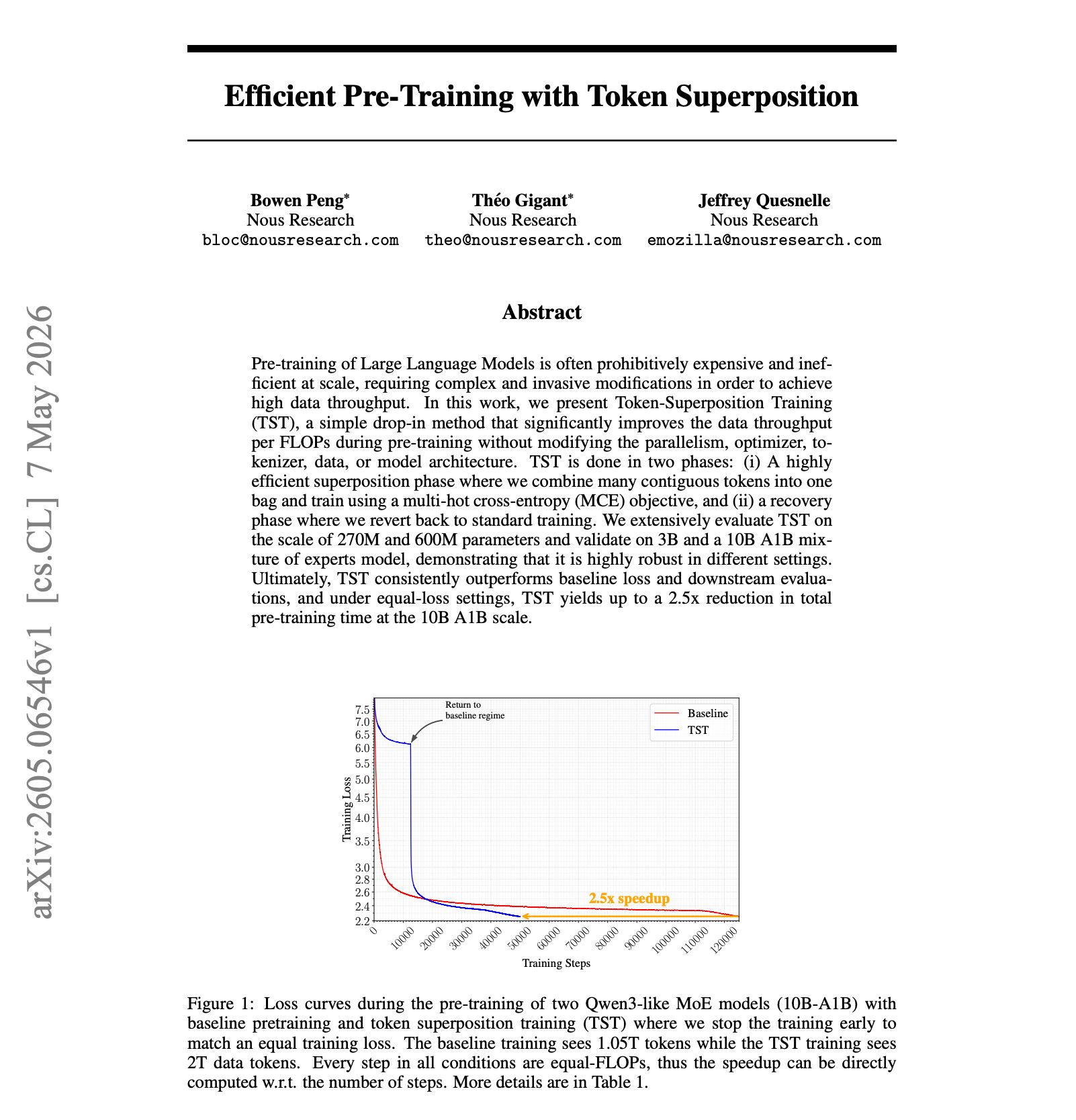
What if you could train LLMs 2-3x faster without changing the final model at all? Most of that money goes into processing one token at a time, billions of times over. Nous Research published a paper introducing Token Superposition Training. It's a drop-in method that cuts
-
Anthropic releases open-source Claude plugin suite for legal professionals
By
–
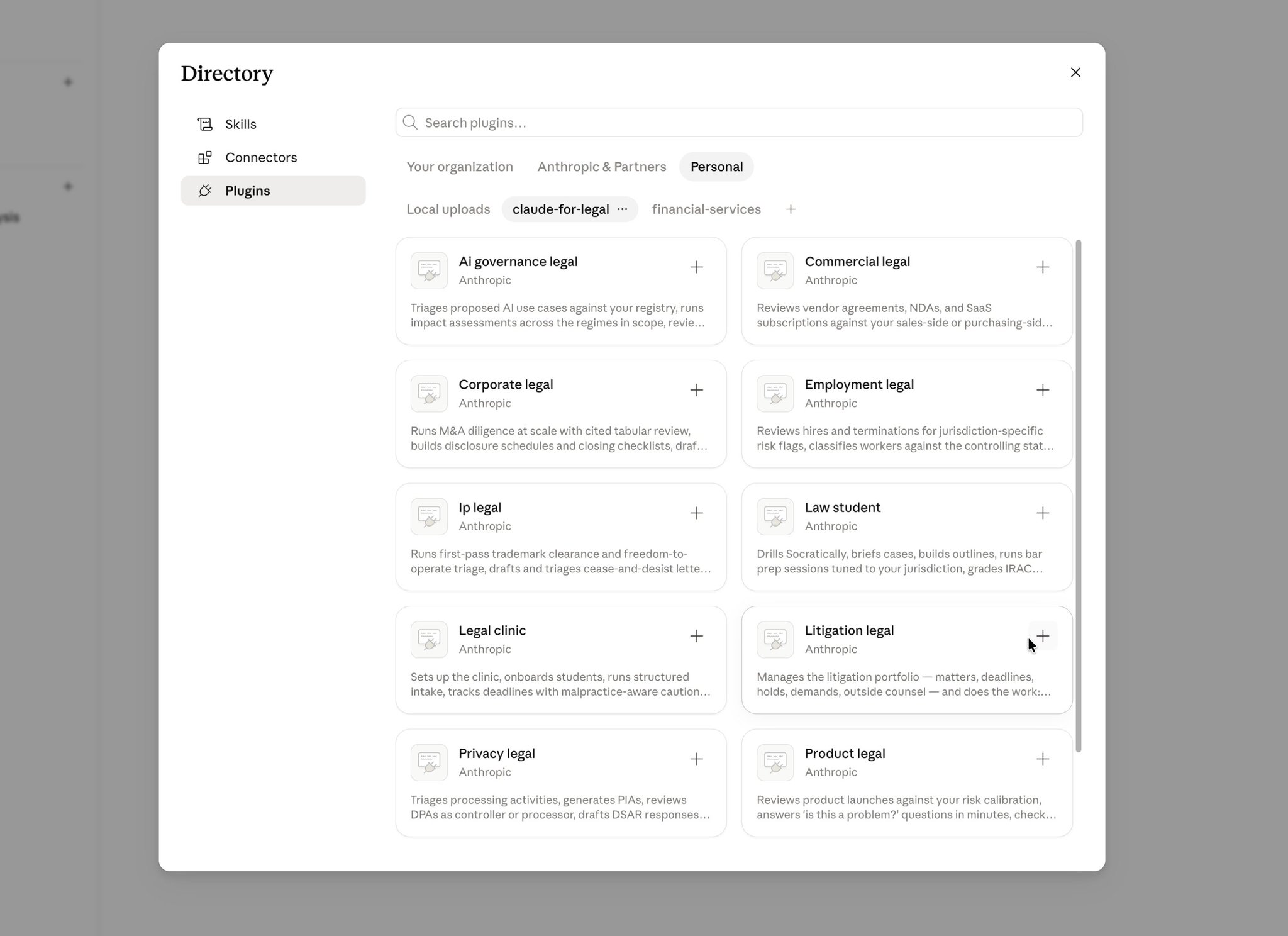
/4 Anthropic ships free open-source legal tool that drafts contracts in minutes. Anthropic just shipped claude-for-legal, a free, open-source plugin suite that turns Claude into a legal assistant. It covers 10+ practice areas, from contracts to litigation to AI governance.
-

NVIDIA-backed sparsity optimization for faster LLM training and inference
By
–
/2 NVIDIA-backed sparsity trick makes LLM training and inference 20% faster on H100s. AI models already do less math than you'd think. Over 95% of neurons stay silent for any given word processed. That's free efficiency, right? Not quite. The problem: GPUs hate irregular work.
-
Running 284B Parameter Models Locally on MacBook Pro
By
–
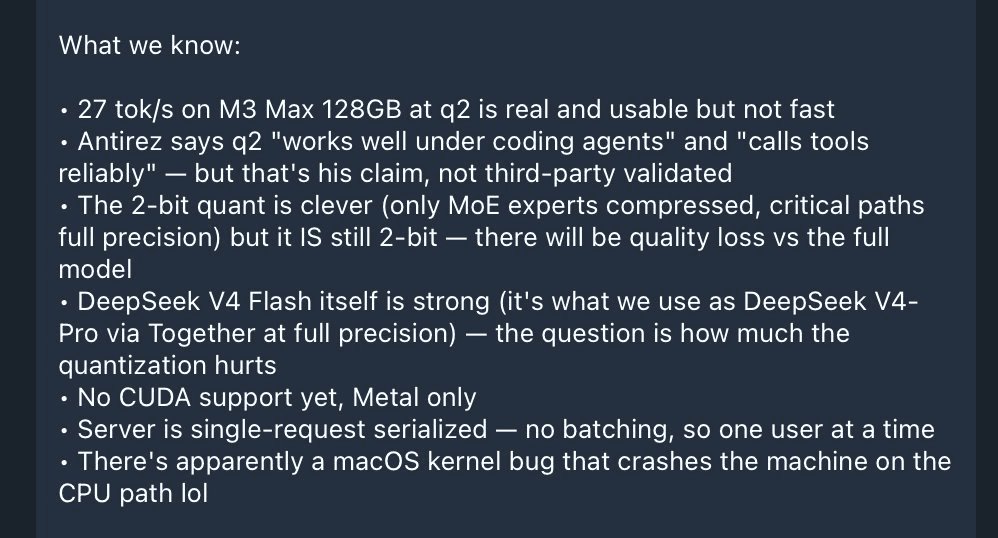
/1 Garry Tan tests a 1M token coding model running locally on a MacBook Pro. Antirez, the person who built Redis, just shipped ds4: a custom engine that runs DeepSeek V4 Flash, a massive 284B parameter AI model, fully on your MacBook. No cloud. No API costs. How is that even