
The way AI agents access fresh context has just been transformed forever. AI agents constantly face a major hurdle: their context becomes outdated. Every codebase update, new Slack message, or fresh PDF requires rebuilding the entire pipeline from the ground up. Cocoindex is an open-source engine that solves this problem.
@alphasignalai
-
Open-source backend réduit les tokens IA de 3x
By
–
An open-source backend layer just cut AI agent tokens by 3x.
— AlphaSignal AI (@AlphaSignalAI) 12 mai 2026
Claude Code burned through 10.4M tokens with 10 errors on a single project.
One change cut that to 3.7M tokens with zero errors.
The fix was adding InsForge as a backend context layer.
It's an open-source platform… pic.twitter.com/RnoconUkANAn open-source backend layer just cut AI agent tokens by 3x. Claude Code burned through 10.4M tokens with 10 errors on a single project. One change cut that to 3.7M tokens with zero errors. The fix was adding InsForge as a backend context layer. It's an open-source platform
-
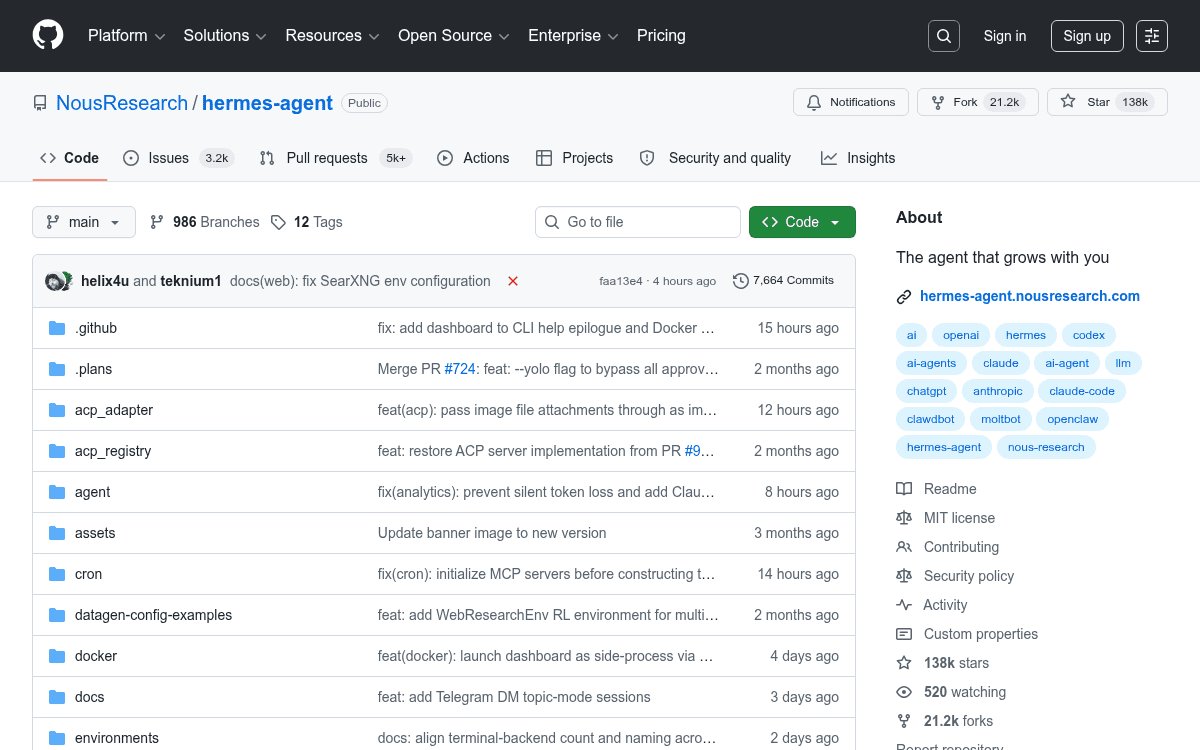
Hermes Agent Creates HTML Videos with HeyGen
By
–
/5 Nous Research's Hermes agent now builds full HTML-native videos with HeyGen. Your AI agent can now generate videos. No editor. No timeline scrubbing. Just a prompt. Nous Research's Hermes Agent just received an official HyperFrames skill from HeyGen. The core concept: videos are just…
-
Anthropic adds self-learning memory and teamwork to Claude
By
–
/4 Anthropic has added self-learning memory and multi-agent teamwork capabilities to Claude. Claude Managed Agents now includes four major upgrades, enabling you to build agents that become smarter over time. Try it out via the /claude-api skill in Claude Code or the open-source repository. Link:
-

Open-slide automatise la création de diapositives avec IA
By
–
/3 Open-slide lets AI agents build polished slide decks from a single prompt. Making slides is boring. open-slide lets your AI coding agent do it for you. Describe what you want, and the agent writes the React code that becomes your deck. You never touch a slide editor. Get
-
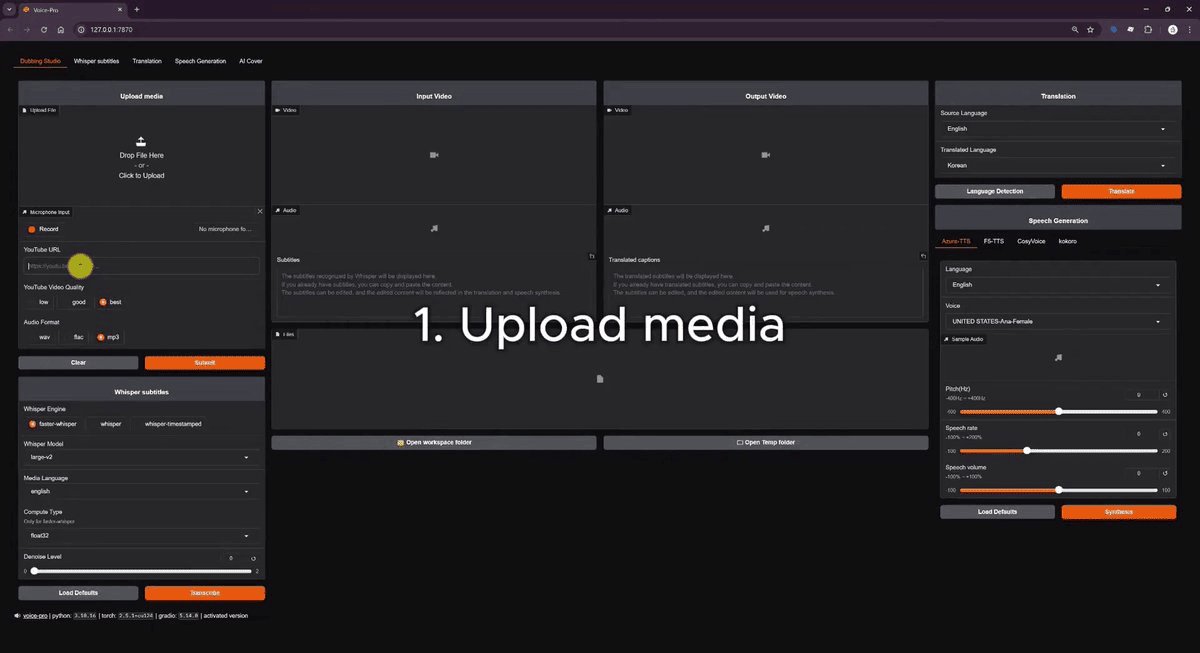
Voice-Pro Dubs YouTube in 100+ Languages in 2 Minutes
By
–
/2 Voice-Pro locally dubs any YouTube video into 100+ languages in under 2 minutes. Imagine taking any YouTube video and getting a fully dubbed version in another language, preserving the original speaker's voice, all in under 2 minutes. That's exactly what Voice-Pro does, and it's available now.
-

Developer burns full transformer into FPGA at 50K tokens/sec
By
–
/1 Developer implements a full transformer model in FPGA hardware, achieving 50,000 tokens per second without a GPU. What if an AI model ran with zero software? No Python, no GPU, no runtime—just logic etched into a chip. That’s exactly what TALOS-V2 does. TALOS-V2 explores what happens when a small…
-
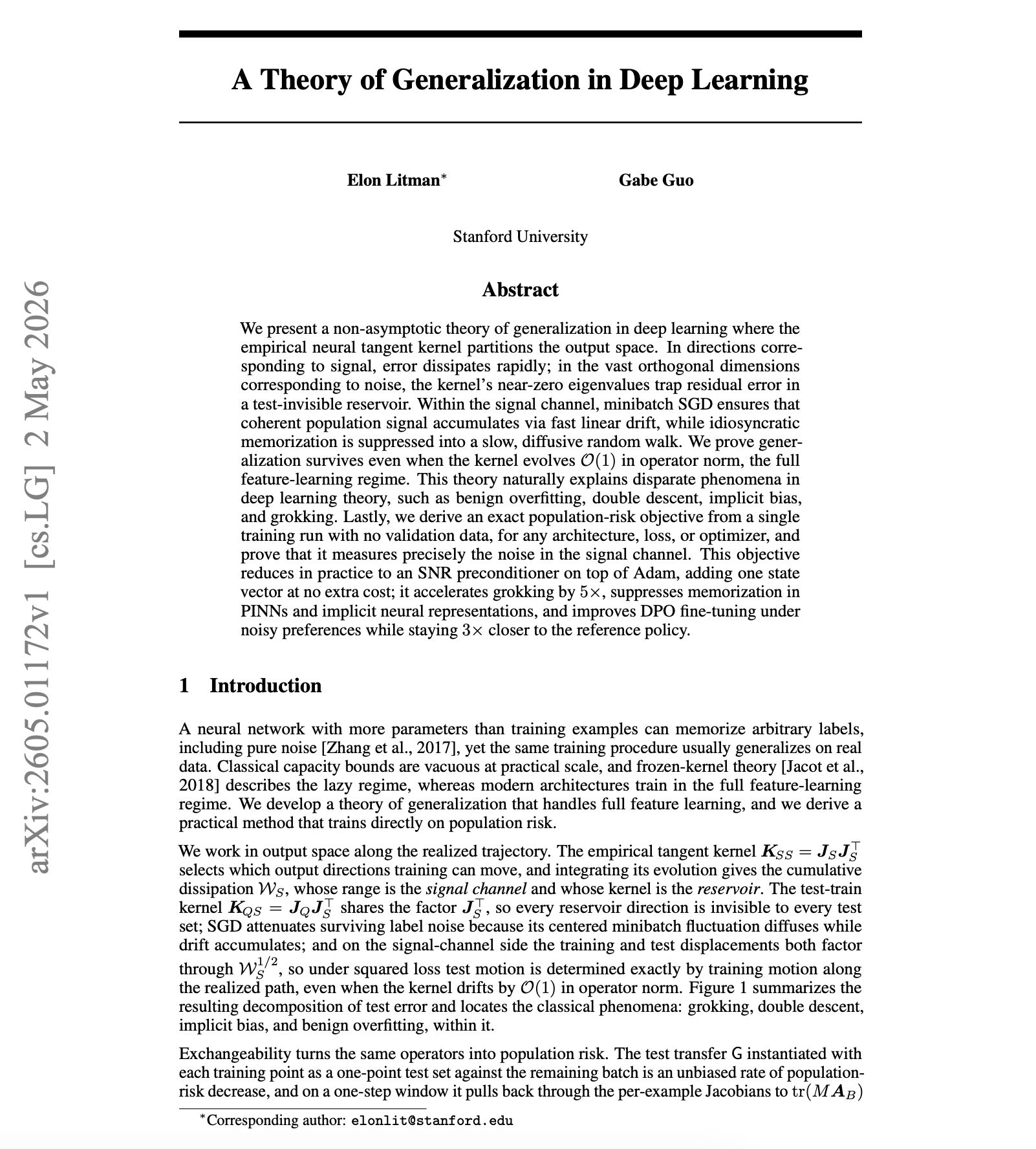
Why Do Large Neural Networks Work?
By
–
Researchers have just explained why massive neural networks work so effectively. Deep networks possess enough capacity to memorize completely random noise. Yet, they still excel at making accurate predictions on unseen data. A new paper finally sheds light on this phenomenon. The empirical Neural Tangent Kernel (NTK) subtly divides the output.
-
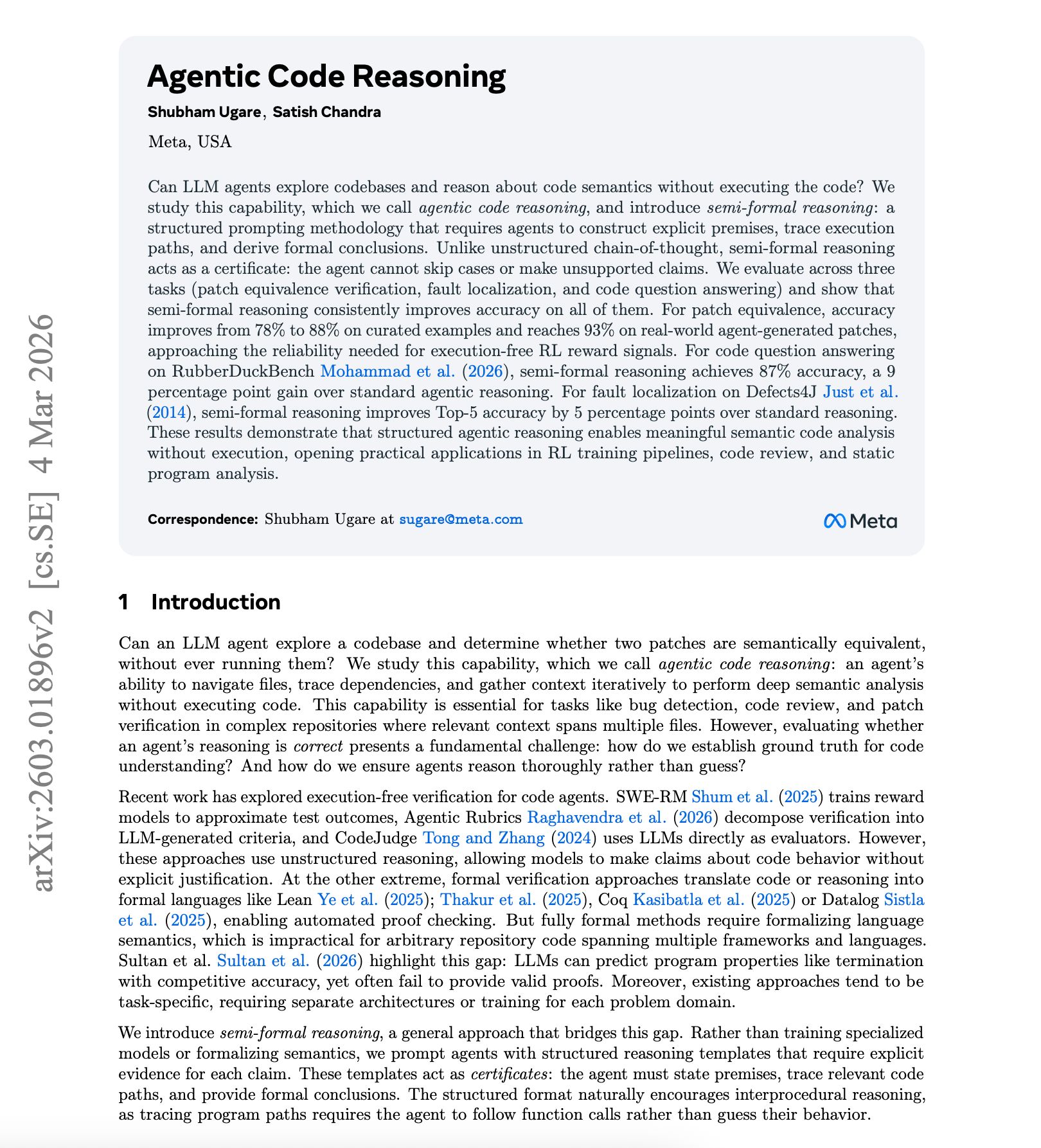
Meta: AI verifies code fixes with 93% accuracy without execution
By
–
Meta's AI can now verify code patches with 93% accuracy without running them. LLMs read code the way you skim a book. They recognize familiar patterns and fill in the gaps based on learned knowledge. A new paper tests whether AI models can validate code changes without executing the software.
-
Speculative decoding speeds up LLMs by 6x
By
–
The slowest part of running an LLM just got 6x faster without losing a single token.
— AlphaSignal AI (@AlphaSignalAI) 10 mai 2026
LLMs generate text one token at a time.
That sequential bottleneck wastes GPU power and slows everything down.
Speculative decoding fixes part of this.
A small draft model guesses ahead,… pic.twitter.com/y7YlqTWvrjThe slowest part of running an LLM just got 6x faster without losing a single token. LLMs generate text one token at a time. This sequential bottleneck wastes GPU power and slows everything down. Speculative decoding addresses part of this issue. A small draft model predicts ahead.