
It’s done. All chapters of Build A Reasoning Model (From Scratch) are now available in early access. The book is currently in production and should be out in the next months, including full-color print and syntax highlighting. There’s also a preorder up on Amazon.
TOOLS
-
OpenClaw Browser Documentation Updated with Troubleshooting Guides
By
–
I updated the docs, see browser our troubleshooting pages. https://
docs.openclaw.ai/tools/browser https://
docs.openclaw.ai/cli/browser https://
docs.openclaw.ai/help/troublesh
ooting
… https://
docs.openclaw.ai/gateway/troubl
eshooting
… -
Microsoft VibeVoice: Revolutionary Open-Source Speech AI Models
By
–
Microsoft did it again!
— Akshay 🚀 (@akshay_pachaar) 29 mars 2026
Speech AI models have a major limitation.
They slice long recordings into tiny chunks, lose track of who's speaking, and forget all context halfway through.
This is exactly what Microsoft's VibeVoice solves.
It's an open-source family of frontier voice… pic.twitter.com/YaXz1O9IQwMicrosoft did it again! Speech AI models have a major limitation. They slice long recordings into tiny chunks, lose track of who's speaking, and forget all context halfway through. This is exactly what Microsoft's VibeVoice solves. It's an open-source family of frontier voice AI models for both speech recognition and speech generation. Here's what it can do: > VibeVoice-ASR processes up to 60 minutes of audio in a single pass. No chunking. It outputs structured transcriptions with who spoke, when they spoke, and what they said. > You can feed it custom hotwords like names, technical jargon, or domain-specific terms. The model uses them to significantly improve accuracy on specialized content. > VibeVoice-TTS generates up to 90 minutes of multi-speaker speech with up to 4 distinct speakers. Natural turn-taking, emotional expression, all in one pass. > VibeVoice-Realtime is a 0.5B streaming TTS model with ~300ms first-audio latency. Small enough to deploy practically anywhere. All of this is powered by continuous speech tokenizers running at just 7.5 Hz. This ultra-low frame rate preserves audio quality while making long sequences computationally feasible. I have shared the link to the GitHub repo in the replies!
→ View original post on X — @akshay_pachaar, 2026-03-29 13:11 UTC
-
Comparing Agent Frameworks: The Nuanced Reality
By
–
The honest answer is always "it depends" when comparing agent frameworks. Appreciate the nuanced take instead of picking a winner, that's the reality of building with these tools.
-
Veo 3: AI-powered audio generation for video creations
By
–
— Ahmad (@TheAhmadOsman) 29 mars 2026
NVIDIA AI pulled me in for an interview at GTC this week x.com/TheAhmadOsman/…
-

Training vs Context: How to Actually Give AI Your Company Data
By
–
If you paste your company data into ChatGPT, you did NOT just train it. ❌ I keep getting different versions of this same question: → Can I inject knowledge directly into the model? → Does adding data through RAG actually change how the model thinks? Let's understand the answer with the example of a small company that sells climbing gear. 🧗 They have a return policy, a product catalog, and internal guidelines. They want AI to handle customer questions. If they paste their return policy into ChatGPT – did they train the model? No. They gave it temporary context. The model's brain didn't change at all. If they build a RAG system that retrieves relevant documents when a question comes in – did they train the model? Still no. They built an external bookshelf the model can read from. But the model itself is exactly the same. If they fine-tune the model on their climbing gear data – now they actually changed the brain. But even then, they didn't insert a clean fact into a specific location. The knowledge gets distributed across millions of parameters. There's no single neuron labeled "climbing shoe return policy." 🧠 So what should they actually do? If the goal is for the model to know a specific fact, don't retrain it. Give it through context or external memory. It's cheaper and more controllable. Save fine-tuning for changing behavior like tone, style, reasoning patterns, not for injecting knowledge. I covered all of this and more in a video: → How embeddings work (without the math) → What the latent space actually is → Why reasoning models aren't fundamentally different → When to choose prompting vs RAG vs fine-tuning The mental model I want you to keep: 👉 Parameters = the brain 👉 Training = changes the brain 👉 Embeddings = coordinates for searching meaning 👉 RAG = a bookshelf the brain reads from 👉 Latent space = the internal geometry created by the brain Full video 👇
-
Autonomous AI Agent Implements Voice Transcription and Response Workflow
By
–
This is nuts: Clawdbot figured out how to transcribe and respond to a voice message on its own, detecting the Opus format, converting it via FFmpeg, calling OpenAI’s Whisper with a found API key, and replying as if voice support had always existed.
— Chubby♨️ (@kimmonismus) 29 mars 2026
pic.twitter.com/n9kmt8eNjRThis is nuts: Clawdbot figured out how to transcribe and respond to a voice message on its own, detecting the Opus format, converting it via FFmpeg, calling OpenAI’s Whisper with a found API key, and replying as if voice support had always existed.
-
Claude Skills: Self-Contained Workflow Packages for Efficient AI
By
–
What are Claude Skills?
— Akshay 🚀 (@akshay_pachaar) 29 mars 2026
𝗖𝗟𝗔𝗨𝗗𝗘.𝗺𝗱 was never meant to hold entire workflows.
But that's exactly where they end up. General rules, coding conventions, 20-step security review processes, deployment checklists. All in one file that loads into every single session, eating… https://t.co/fCLQezp4lG pic.twitter.com/VPLfFEYrTRWhat are Claude Skills? 𝗖𝗟𝗔𝗨𝗗𝗘.𝗺𝗱 was never meant to hold entire workflows. But that's exactly where they end up. General rules, coding conventions, 20-step security review processes, deployment checklists. All in one file that loads into every single session, eating context even when Claude is just renaming a variable. 𝗦𝗸𝗶𝗹𝗹𝘀 fix this by turning workflows into self-contained packages that Claude loads only when the task demands it. Here's the idea. A skill is a folder inside .𝗰𝗹𝗮𝘂𝗱𝗲/𝘀𝗸𝗶𝗹𝗹𝘀/. Each folder contains a 𝗦𝗞𝗜𝗟𝗟.𝗺𝗱 file with two things: a 𝗱𝗲𝘀𝗰𝗿𝗶𝗽𝘁𝗶𝗼𝗻 that tells Claude when to activate it, and the workflow instructions that tell Claude what to do. The description is the trigger. Claude reads all available skill descriptions, watches the conversation, and when your request matches, it pulls in that skill automatically. You don't paste the steps. You don't type a command. Claude recognizes the intent and invokes the right skill on its own. You can also trigger any skill explicitly with a slash command like /𝘀𝗲𝗰𝘂𝗿𝗶𝘁𝘆-𝗿𝗲𝘃𝗶𝗲𝘄 when you want manual control. I recorded a deep dive on skills when they were first released, and everything in it is even more relevant today. The video below walks through exactly how this works. But auto-invocation is just the surface. The real power is what skills can carry with them. Skills are full packages, not just instruction files. A 𝗦𝗞𝗜𝗟𝗟.𝗺𝗱 can reference supporting files that live right next to it using the @ symbol. A detailed security standards document. A release notes template. A compliance checklist. Whatever the workflow needs, the skill bundles it together. Inside 𝗦𝗞𝗜𝗟𝗟.𝗺𝗱, YAML frontmatter defines the name, description, and which tools the skill is allowed to use. The 𝗮𝗹𝗹𝗼𝘄𝗲𝗱-𝘁𝗼𝗼𝗹𝘀 field is worth paying attention to. A security review skill only needs 𝗥𝗲𝗮𝗱, 𝗚𝗿𝗲𝗽, and 𝗚𝗹𝗼𝗯. It has no business writing files. Restricting tool access makes the skill safer and far more predictable. Skills live at two levels. Project skills go in .𝗰𝗹𝗮𝘂𝗱𝗲/𝘀𝗸𝗶𝗹𝗹𝘀/ and get committed to git so the whole team shares them. Personal skills go in ~/.𝗰𝗹𝗮𝘂𝗱𝗲/𝘀𝗸𝗶𝗹𝗹𝘀/ and follow you across every project. A 𝗖𝗟𝗔𝗨𝗗𝗘.𝗺𝗱 with a 20-step security process baked in is dead weight in 90% of your sessions. A 𝘀𝗲𝗰𝘂𝗿𝗶𝘁𝘆-𝗿𝗲𝘃𝗶𝗲𝘄 skill that activates only when security is on the table is precision. 𝗖𝗟𝗔𝗨𝗗𝗘.𝗺𝗱 tells Claude what rules to follow. Skills tell Claude what workflows to execute. The article below is a complete guide to 𝗖𝗟𝗔𝗨𝗗𝗘.𝗺𝗱, hooks, skills, agents, and permissions, and how to set them up properly. Akshay 🚀 (@akshay_pachaar) x.com/i/article/203496196714… — https://nitter.net/akshay_pachaar/status/2035341800739877091#m
→ View original post on X — @akshay_pachaar, 2026-03-29 10:13 UTC
-

AI Tool Helps Define Target Customer for Startup
By
–
‘This #AI tool helped me define a target customer for my startup’
by Kara Baskin @MITSloan Learn more: https://
bit.ly/4u1DYPu #ArtificialIntelligence #MachineLearning #ML #DL -
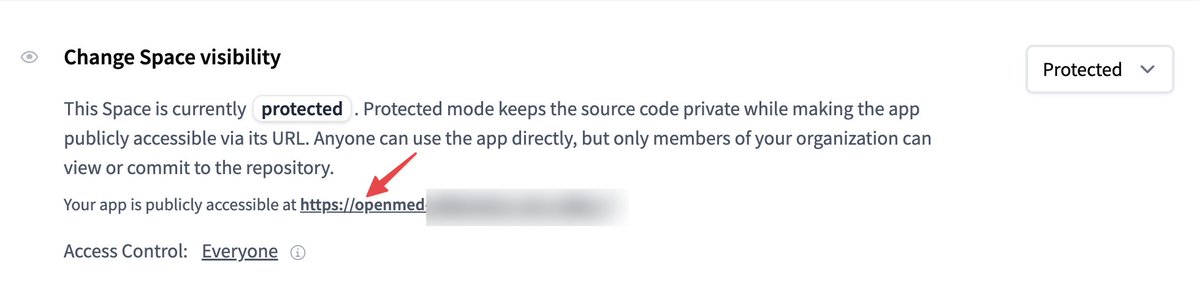
Private Hugging Face Spaces with Public URLs for Secure Endpoints
By
–
You can make a Hugging Face Space private but keep its URL publicly accessible. Private repo. Public app. No one sees your code, everyone uses your endpoint. I deploy private medical endpoints for clinical agents this way. HIPAA-sensitive inference behind a public API. Didn't know this existed until last week. What's your favorite hidden @huggingface feature?