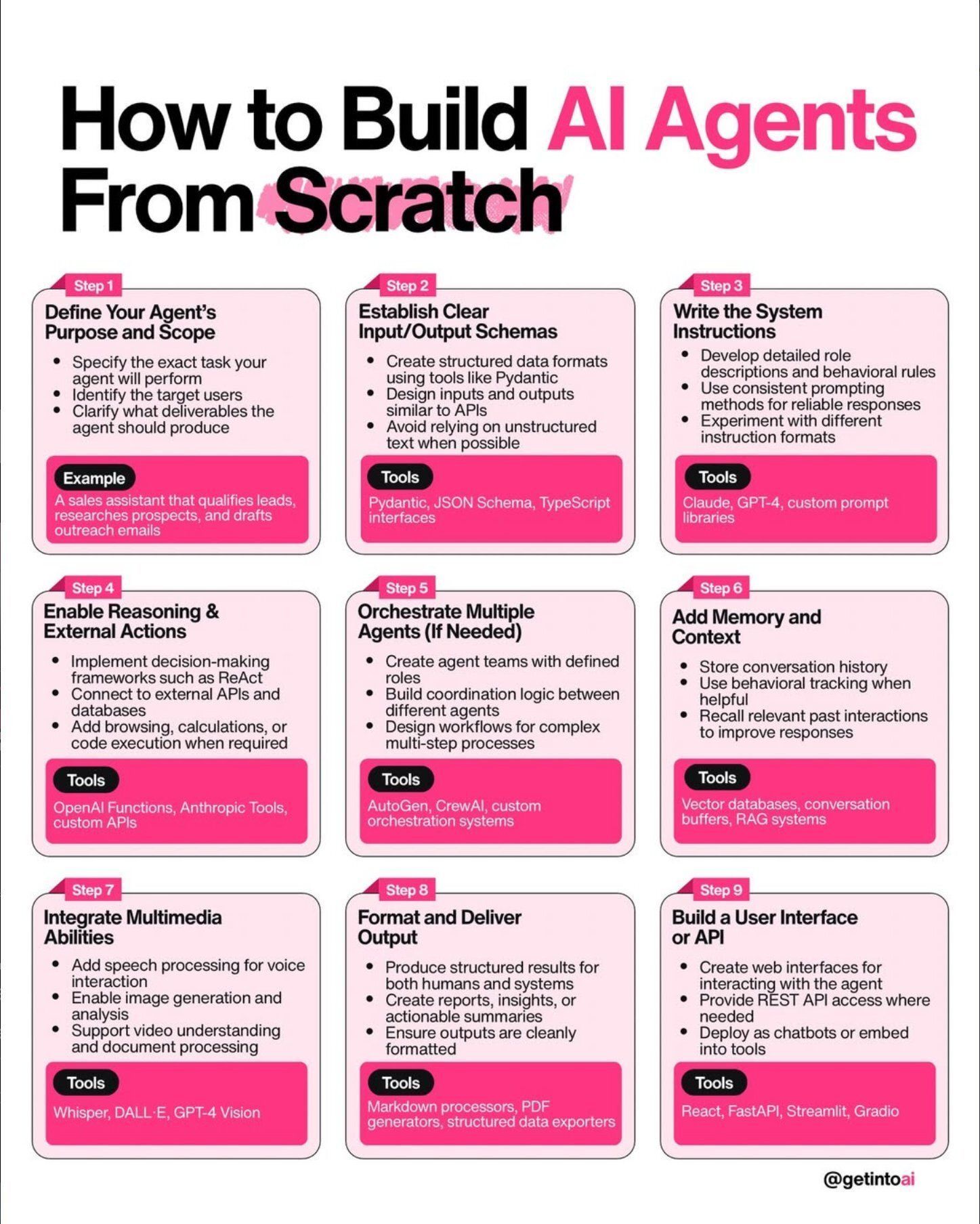
How to build AI agents from scratch (9 steps): 1. Purpose & scope 2. I/O schemas 3. System instructions 4. Reasoning + tools 5. Multi-agent orchestration 6. Memory & context 7. Multimodal 8. Structured outputs 9. UI / API Ship agents that do work, not just talk.
TOOLS
-
Replit Agent Monitors Production Apps, Fixes Issues Automatically
By
–
Building apps is easy- keeping them running isn’t
— Replit ⠕ (@Replit) 29 avril 2026
Introducing Replit Application Monitoring
Replit Agent now watches your app in production, investigates issues, and helps fix them- so you don’t have to pic.twitter.com/NP8blat8awBuilding apps is easy- keeping them running isn’t Introducing Replit Application Monitoring Replit Agent now watches your app in production, investigates issues, and helps fix them- so you don’t have to
-
Gemini generates Docs, Sheets, and PDFs in the chat
By
–
GOOGLE 🚨: Gemini now can generate Docs, Sheets, Slides, and PDFs directly in the chat.
— 🚨 AI News | TestingCatalog (@testingcatalog) 29 avril 2026
Available to all users already 👀 https://t.co/nvix1PUrKb pic.twitter.com/Ucvinsw0H8GOOGLE : Gemini now can generate Docs, Sheets, Slides, and PDFs directly in the chat. Available to all users already
-
Claude Usage: Understanding Limitations and Smart Optimization
By
–
The people who say Claude is too restrictive are mostly running 30-message Opus chats with web search on while uploading the same PDF repeatedly. The people who use it all day are not using it less. They are using it smarter. Save this. The next time you hit a limit, the fix is
-
Token Consumption Patterns: Five Biggest AI Model Drains
By
–
10/ Know what burns the most tokens The biggest token consumers in order: long conversations, large file uploads, web search, extended thinking on every prompt, and Opus on small tasks. If you keep hitting the limit and do not know why, it is one of those five. Probably more
-
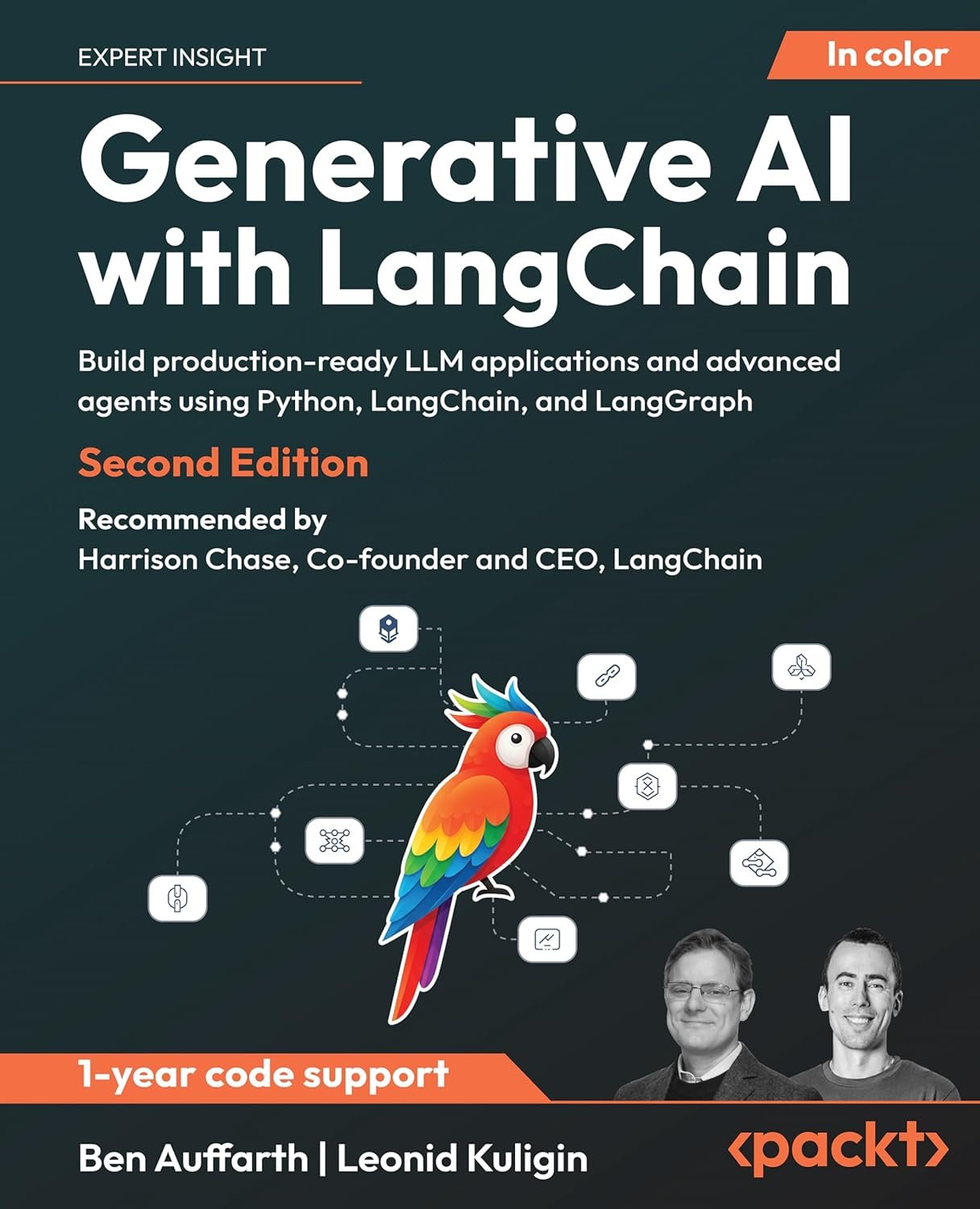
LangChain 2nd Edition: Production LLM Applications and Advanced Agents
By
–
The 2nd Edition of this book has arrived, with Agentic AI updates: "Generative AI with LangChain — Build Production-ready LLM Applications and Advanced Agents using Python and LangGraph" at https://
amzn.to/3JEeS6K v/ @PacktDataML 𝓦𝓱𝓪𝓽 𝓨𝓸𝓾 𝓦𝓲𝓵𝓵 𝓛𝓮𝓪𝓻𝓷:
Design and -
Optimize AI Model Selection by Task Complexity and Cost
By
–
7/ Stop using Opus for Haiku tasks Opus is roughly 5x more expensive per task than Sonnet. Sonnet is more expensive than Haiku. Quick reply, formatting fix, brainstorm? Haiku.
Writing, analysis, code, real drafts? Sonnet. Deep research, complex reasoning, long document review? -
Optimize Claude: Disable Unused Features to Save Tokens
By
–
6/ Turn off features you are not using Web search, research mode, and connectors add tokens to every response even when you do not need them. If you are writing your own content or asking a knowledge question Claude already knows, turn them off. The icons are right next to the
-
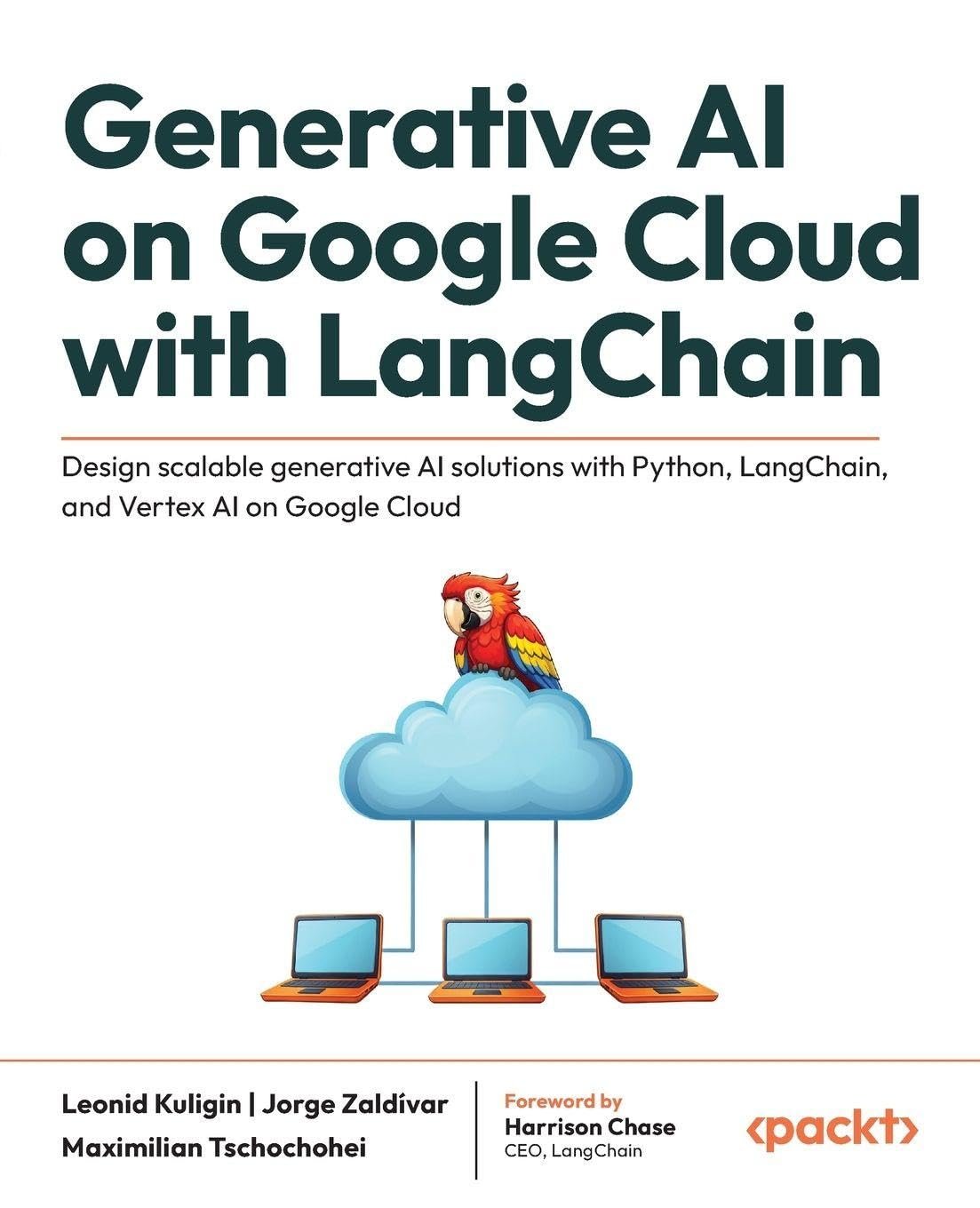
Generative AI on Google Cloud: Scalable Solutions with LangChain
By
–
Generative AI on Google Cloud with LangChain — Design scalable Generative AI solutions with Python, LangChain, and Vertex AI on Google Cloud: http://
amzn.to/4frbkPA v/ @PacktDataML 𝓚𝓮𝔂 𝓕𝓮𝓪𝓽𝓾𝓻𝓮𝓼:
Turn challenges into opportunities by learning advanced techniques for -
Optimize Token Usage: Cache Files in Claude Projects
By
–
4/ Upload recurring files to Projects, not chats If you upload the same PDF in every new conversation, Claude counts those tokens every single time. Projects cache the file once. Open the project, ask anything, the file does not cost tokens again. If you are pasting the same