The edge platform cannot be purpose-built for today's rules alone. It must accommodate new requirements running on hardware installed years earlier.
SYSTEMS
-
Device Replacement and Firmware Compatibility Challenges Over Time
By
–
Over 20-25 year lifespans, operators may not be able to procure the exact same replacement device. Even if they can, it won't have the same firmware.
-
Edge Systems Navigate Firmware Diversity in IoT Hardware
By
–
Battery edge systems need context for old and new firmware. Same function on 10-year-old hardware vs brand new device produces different data sets. The edge processes fast locally while summarizing for cloud. Partner content with @IOTechSystems. #iotechsys_iiot pic.twitter.com/XH4zrm3aus
— Lucian Fogoros (@fogoros) 22 avril 2026Battery edge systems need context for old and new firmware. Same function on 10-year-old hardware vs brand new device produces different data sets. The edge processes fast locally while summarizing for cloud. Partner content with @IOTechSystems
. #iotechsys_iiot -
Human Effort-Based Systems Will Break Due to Technological Disruption
By
–
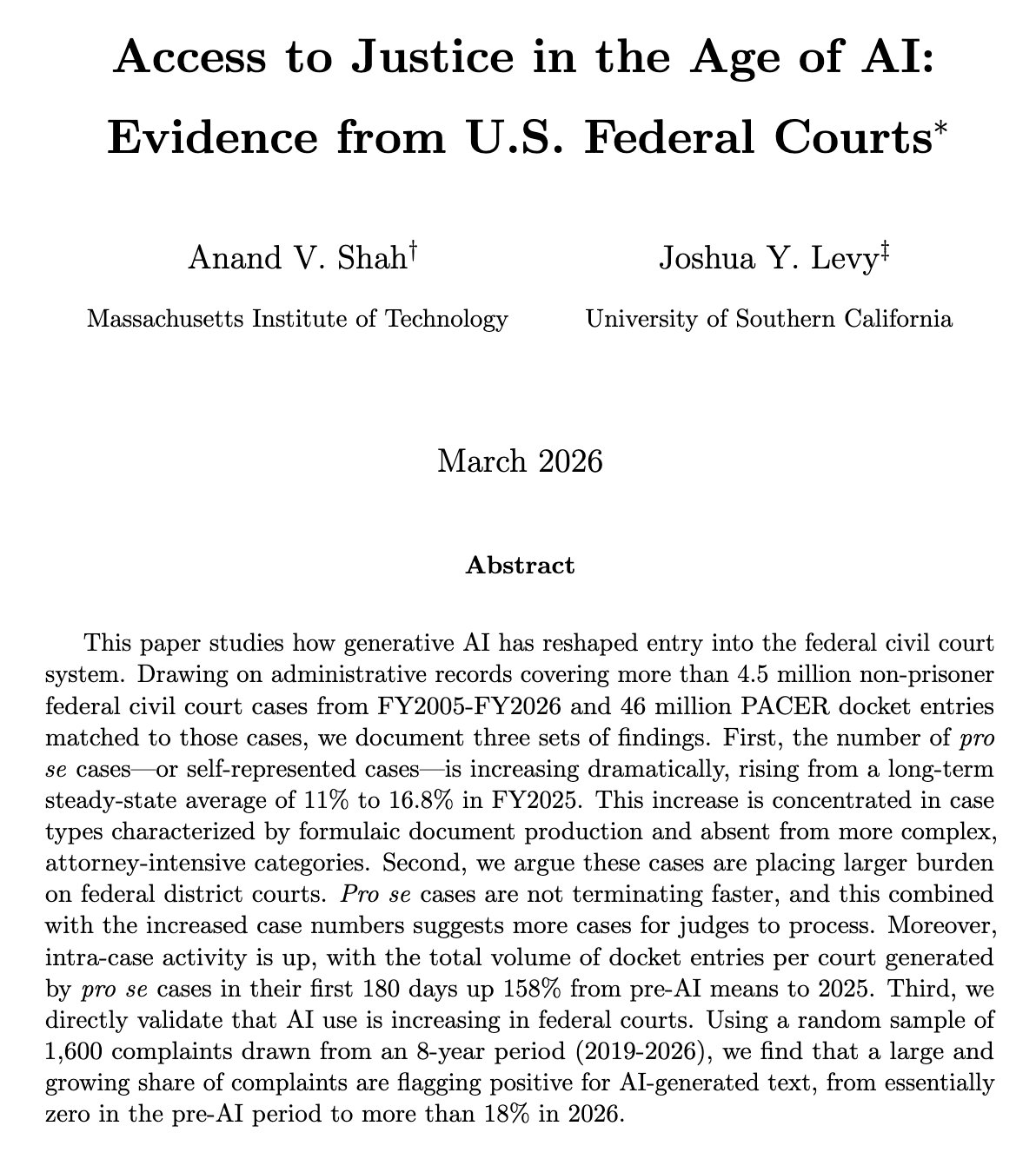
Every system that was regulated, either explicitly or implicitly, by the fact that they were effortful for humans (letters of recommendation, lawsuits, government filings, essays) will break.
-
Balancing latency considerations in AI generation systems
By
–
For now the consideration was latency, it could take a few minutes to generate, but we'll see if it would be worth doing on balance
-

Brain-Digital Mind Interface: Bandwidth Optimization for VIOC Integration
By
–
I am trying everything I can to directly connect my biological mind to the digital mind of my Openclaw based Virtual Intelligence and Operations Center. Eyes are the highest bandwidth interface from my VIOC to my brain. Typing and voice is currently the best way to get input out
-
Databricks Tackles Enterprise Document Intelligence with Lakeflow
By
–
80% of enterprise knowledge remains functionally invisible, trapped in PDFs, scanned images, and office documents. That has made intelligent document processing one of the most fragmented problems in data engineering for years. Databricks Document Intelligence and Lakeflow now
-
Claude Code Reverse-Engineered: Only 1.6% Is Actually AI Model
By
–
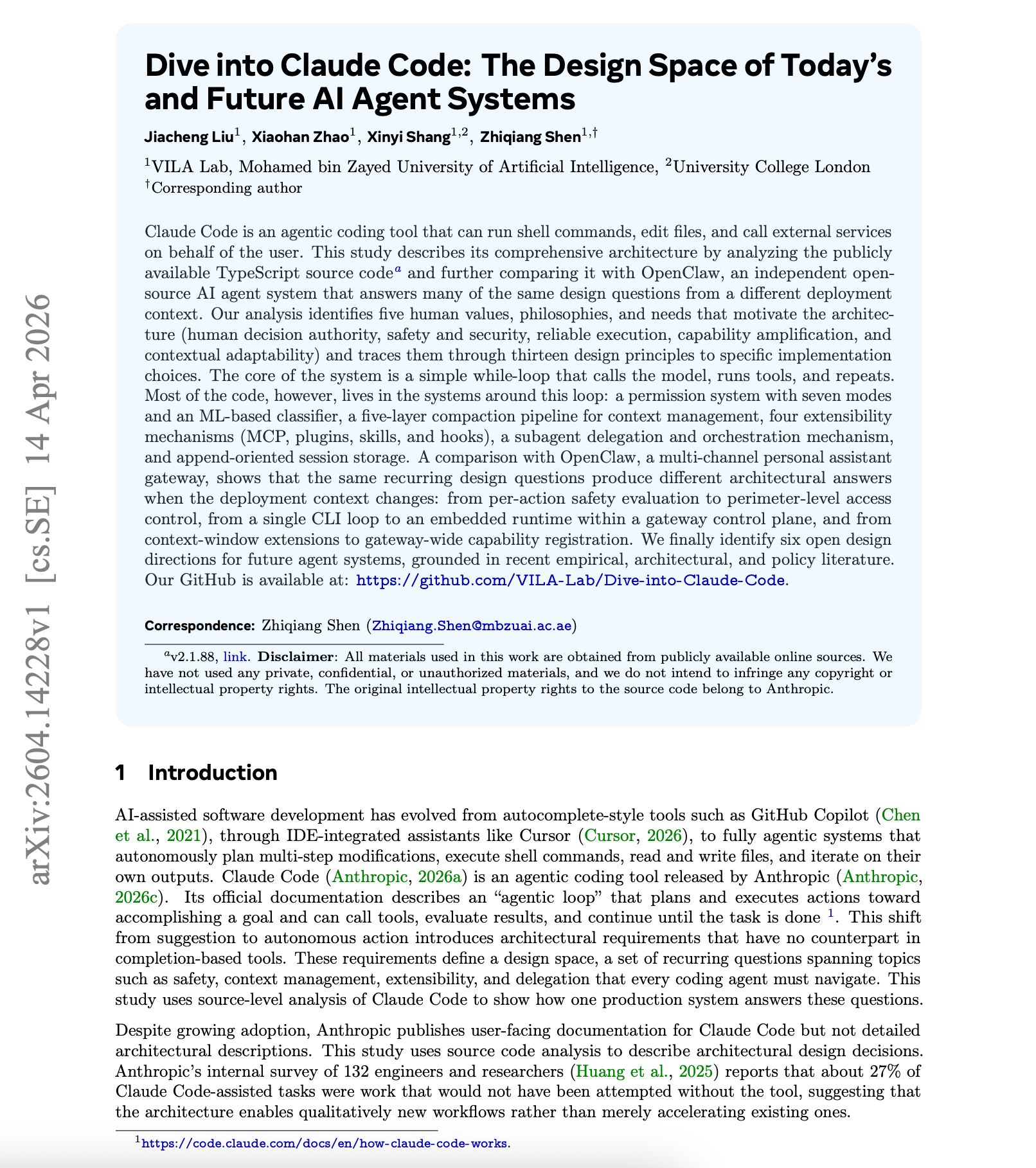
Researchers reverse-engineered Claude Code. Only 1.6% is actually AI. The other 98.4% is infrastructure around the model. Permission gates, tool routing, context compaction, session recovery. The model just reasons. Everything else runs the show. The core loop is a plain
-
Hermes Agent Features Learning Loop and Persistent Memory
By
–
Yes, mostly. Hermes Agent already has a built-in “learning loop” that creates/refines skills from tasks and keeps persistent memory for self-improvement.