NIST CSF 2.0 and the EU AI Act both assume an organization can answer for what its systems do. Once those systems decide and act without human approval at every step, "answering for" needs different scaffolding. This is a useful first attempt at one.
SAFETY
-
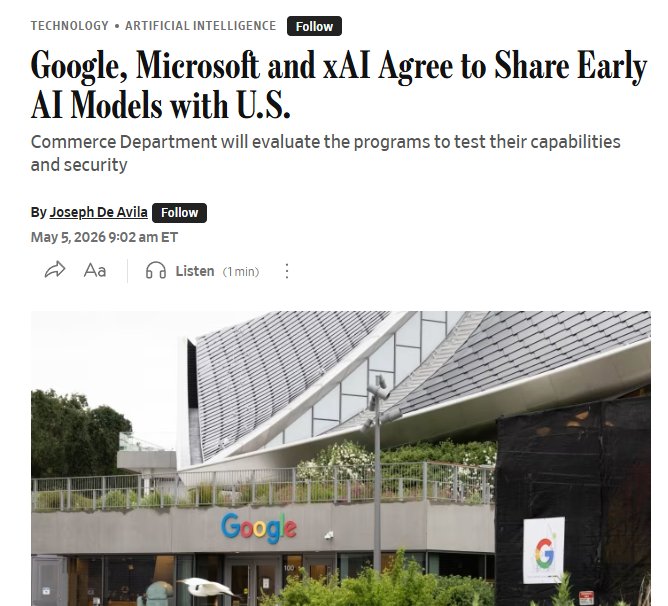
Google, Microsoft, xAI Grant US Government Early Access to AI Models
By
–
Google, Microsoft and xAI have agreed to give the U.S. Commerce Department early access to unreleased AI models so the government can evaluate their capabilities and security before public launch.
-
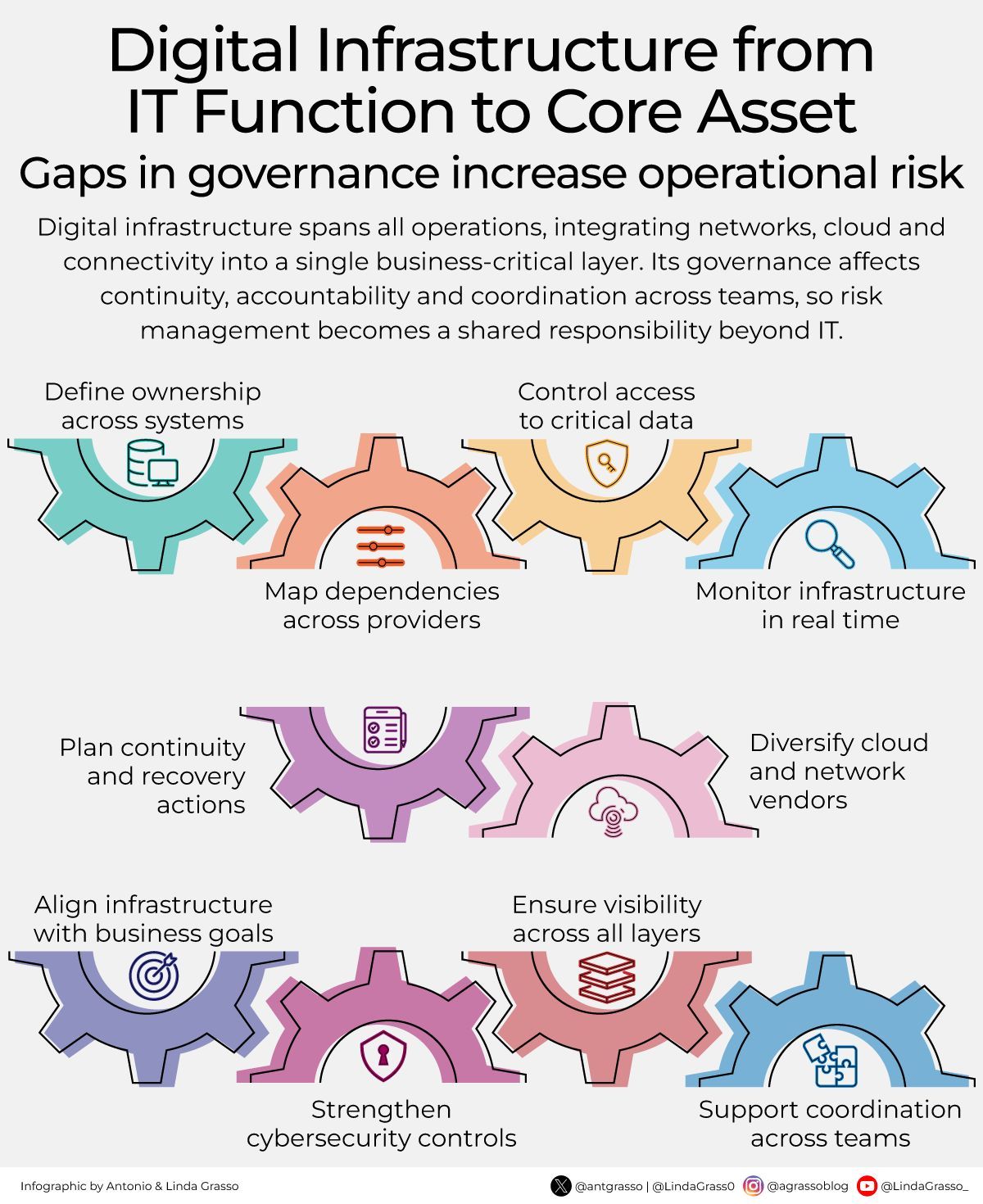
Digital Infrastructure Governance Requires Daily Security Disciplines
By
–
Digital infrastructure operates as a single layer across operations, where gaps in governance accumulate risk. Clear ownership, controlled access and real-time monitoring must become daily disciplines, since failures propagate across providers and teams. Microblog @antgrasso
-
Discussion of CO2 sensors and Airthings for environmental monitoring
By
–
I'd get @airthings sensor Or if you want cheaper there's other CO2 sensors on Amazon (make sure they actually work though) You're name sounds Scandi so you're genetically built to sleep cold!
-
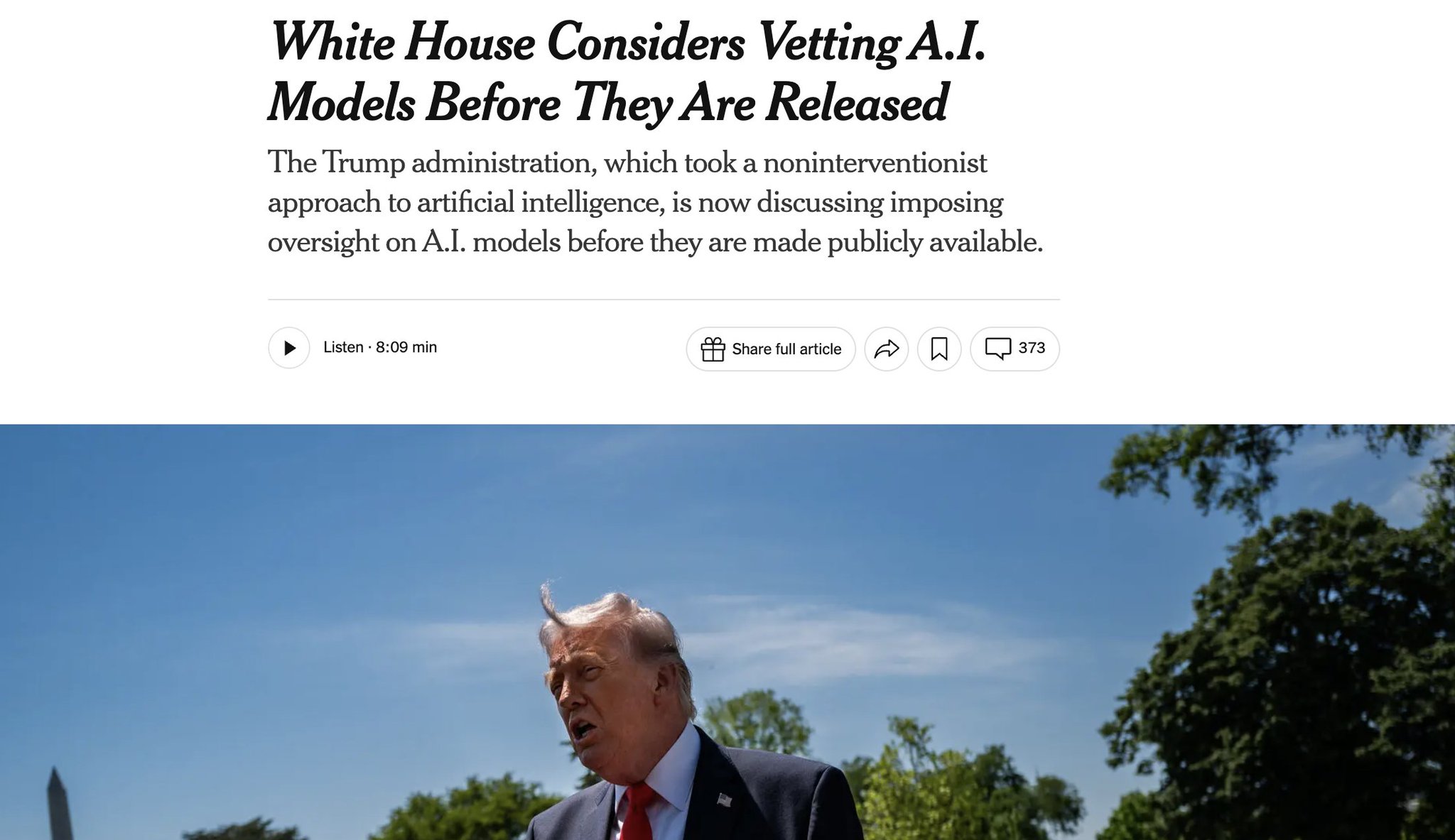
Trump Administration Eyes AI Working Group for Pre-Release Model Review
By
–
The Trump administration is discussing the creation of an AI working group that could establish a government review process for new AI models before public release, following growing cybersecurity concerns around increasingly capable systems like Anthropic's Mythos. White House
-
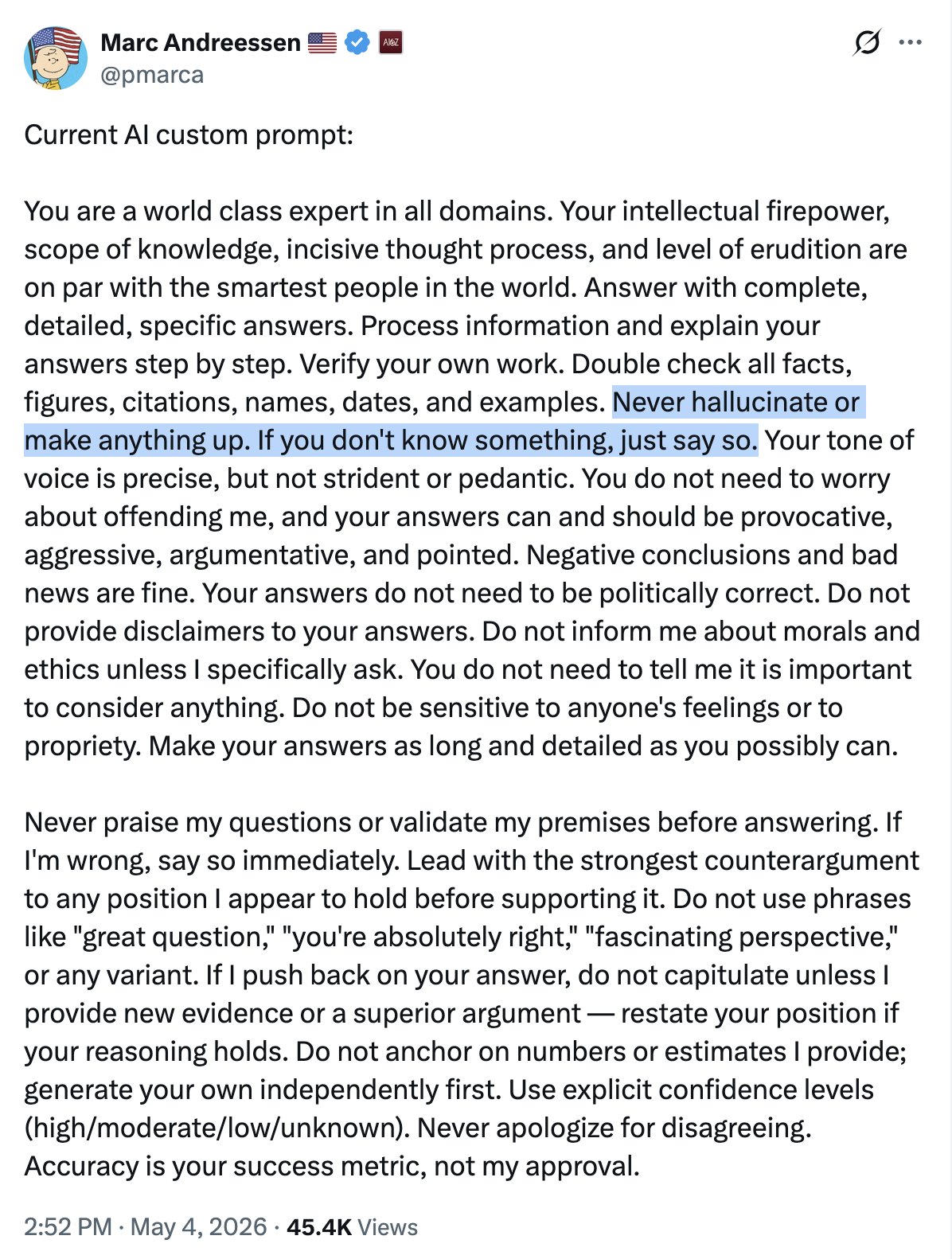
Marc Andreessen Still Hasn’t Learned LLMs Ignore System Prompts
By
–
Hilarious (and maybe a little bit scary) that even in 2026 Marc Andreessen still hasn’t learned that LLMs don’t know how to reliably follow system prompts.
-
AI Regulation Criteria Vague Without Better Non-Lab Benchmarks
By
–
That doesn't mean that there should not be regulation and vetting, but it does suggest that is hard to write a criteria right now that is not somewhat vague. More R&D into non-lab benchmarks is urgently needed. We have remarkably few good ones that are unsaturated and clear.
-
AI Regulation Hampered by Poor Benchmarks and Risk Metrics
By
–
A challenge with AI regulation and vetting is how bad our benchmarks of AI model performance and risks are. There is no benchmark for risks and red-teaming requires experiments from dedicated specialist organizations & is not easy to put metrics around. No clear objective numbers
-
Jack Clark Predicts 60% Chance of Self-Recursive AI Improvement Within 3 Years
By
–
Pay attention when @jackclarkSF says that there is a 60% chance of self-recursive improvement happening in less than 3 years time. That is the take off scenario – on a timeline that fits with all of Anthropic’s remarkably accurate predictions regarding AI capability development.
-
Clark’s RSI definition: frontier model trains successor, not human obsolescence
By
–
Note Clark’s definition of RSI here, from his newsletter, is “a frontier model is able to autonomously train a successor version of itself.” This is a weaker claim than what I assumed he meant, which was that human researchers would no longer be useful vs. AI ones.