Thanks for this research & for building practical measures of frontier model capabilities. We're focusing these days on the failure taxonomy you highlighted in the paper – testing how elements like structured programmatic plans and in-flow validators & reducers can help agents
RESEARCH
-
Materials Science and Generative AI Revolutionize Scientific Discovery
By
–
This was a very nice interview by Latent Space in sunny San Diego at Neurips. https://t.co/lHUta2ezG9
— Max Welling (@wellingmax) 26 février 2026This was a very nice interview by Latent Space in sunny San Diego at Neurips. Latent.Space (@latentspacepod) 🔬 New Science pod with @cusp_ai! We are entering a new era where materials science and discovery is transitioning from slow, manual experimentation, to a high-speed search problem powered by generative AI and "physics processing units." @wellingmax argues that the foundation of all modern technology—from GPUs to climate solutions—is a materials problem, and that unifying the mathematics of stochastic thermodynamics with generative AI will unlock a new paradigm of automated scientific discovery. — https://nitter.net/latentspacepod/status/2026716448626978955#m
→ View original post on X — @wellingmax, 2026-02-26 10:18 UTC
-
Modern Prompting Techniques in 2026
By
–
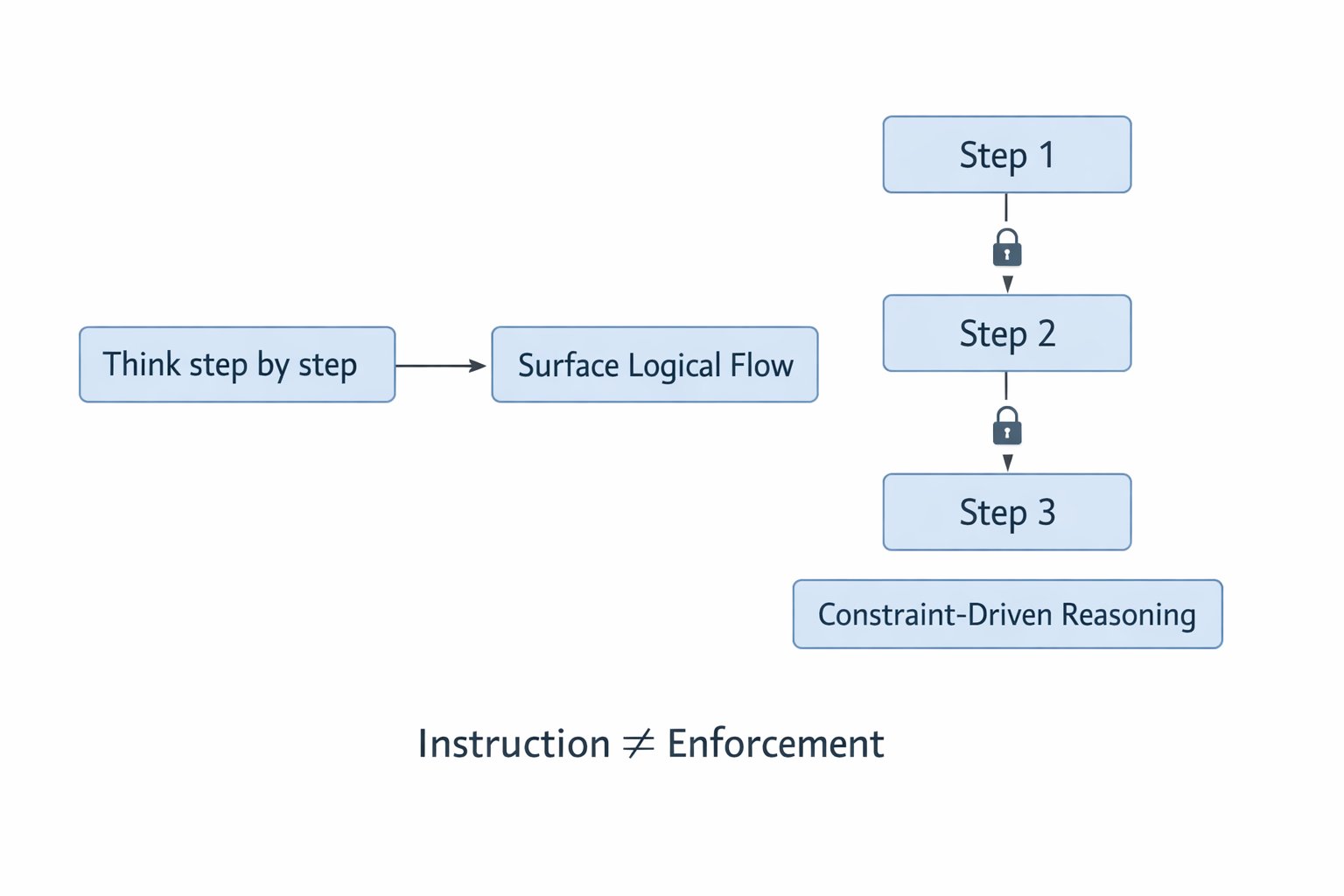
Most people are still writing prompts like it's 2023. "Be concise." "Think step by step." "You are an expert." The researchers who actually study this moved on. Structured scaffolds are what's in the internal docs now. Copy the format. Use it today. The gap between you and
-
Why ‘Think Step by Step’ Fails
By
–
First, why "think step by step" fails. It tells the model to think. It doesn't tell the model how to think. You get surface-level reasoning dressed up as depth. Confident-sounding outputs with zero structural logic underneath.
-
Teaching Learning Algorithm Optimizes Solar PV Maximum Power Point
By
–
New publication from @IngeniumRG on optimizing solar PV systems. Our work uses a Teaching Learning-Based algorithm with neural networks to predict maximum power points more accurately, boosting renewable energy efficiency. sciencedirect.com/science/ch… @faustospain
→ View original post on X — @faustospain, 2026-02-26 10:06 UTC
-
GLM-5 Regression in Interactive Python Coding Performance
By
–
I think GLM-5 is a regression on interactive Python coding though, been using it almost daily and GLM 4.7 before that. The most likely culprit is DSA — and I conclude it's not straightforward to apply. Likely V4 manages better, but there will be tradeoffs.
-
Levangie Labs cognitive architecture blows away any AI
By
–
No. Way way way better. Levangie Labs' cognitive architecture. Blows away any AI you have access to.
-
LLMs Wrongly Advise Walking to Car Wash
By
–
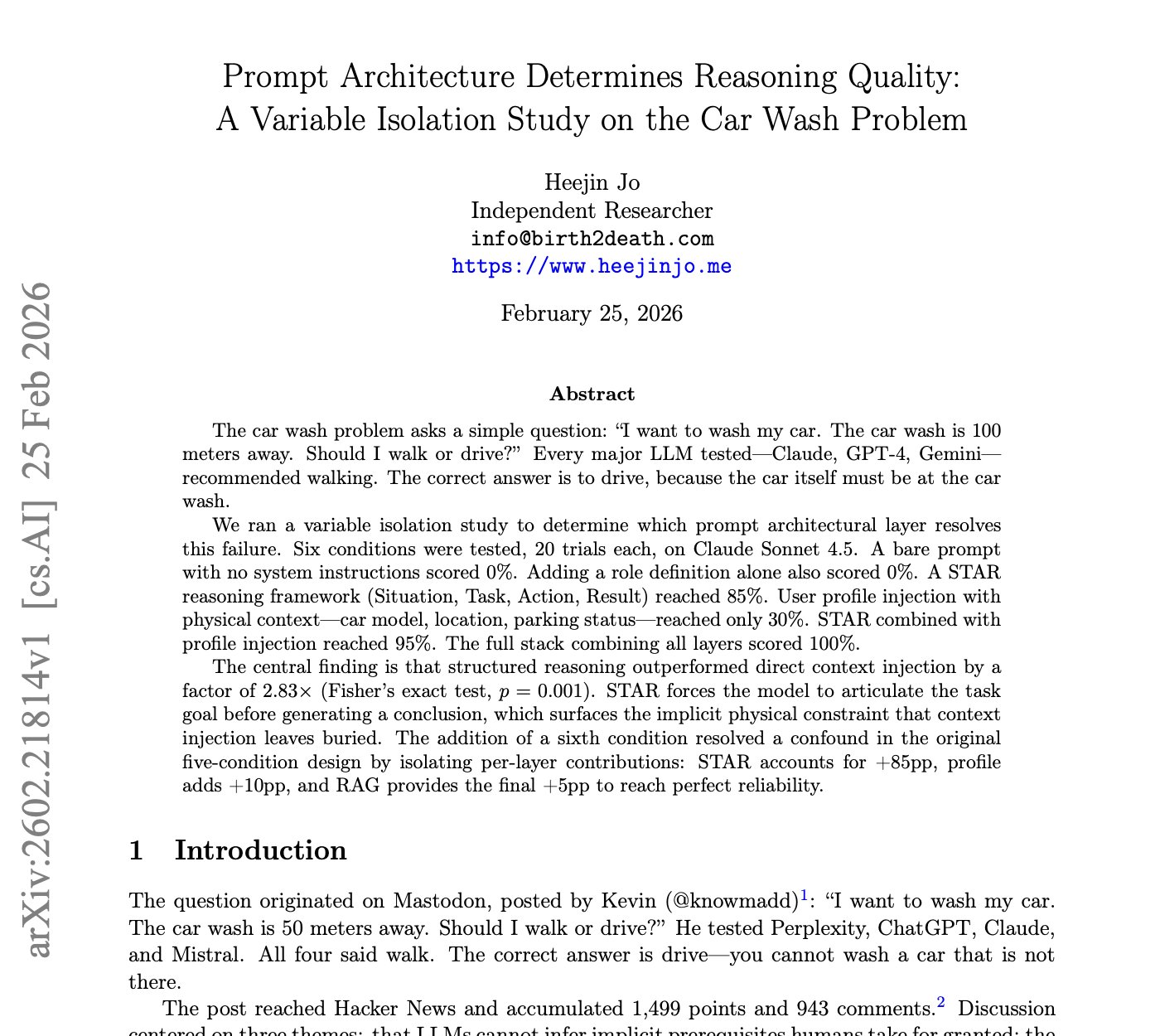
This paper broke my brain Researchers gave Claude a simple question: “I want to wash my car. The car wash is 100 meters away. Should I walk or drive?” Claude said walk. Every major LLM said walk. The correct answer is drive. The car has to be there. Here’s the wild part:
-
AI Models Connect Ideas Across Math Subfields Effectively
By
–
It is the latter. AI models such as DeepThink currently can't quite invent new theories, but is very good in connecting ideas, e.g., across subfields in maths. Problem #7 of FirstProof is special, Aletheia can solve with very heavy machinery according to our experts
-
Mute all on this list; map of everything in AI
By
–
"Mute everyone on this list" would work. I made a map of EVERYTHING in AI: https://
x.com/scobleizer/lis
ts
….