Did you know that the embedding layer can contain 63% of total model parameters? In this talk, I present unique challenges of small models from architecture (don't build giant embedding layers) to post-training (how to fix doom looping) ↓ Slides in the comments ↓
RESEARCH
-
AI Transparency: Validating and Disclosing AI-Generated Content
By
–
My new policy: if someone asks me to read something, I ask them how they used AI in creating it, and what validation/processing they applied to the AI outputs. (I disclose the same.) Been burned by giving too much attention to (undisclosed) slop folks have sent me…
-
Self-Improving AI Loops: Why Verifiers Matter Most
By
–
I went deeper on this in the full video: how self-improving AI actually works, where these loops break, and why the verifier matters more than most people think.
Watch it here: -
Self-Improving AI: Gaming Metrics Versus Real Performance
By
–
This is why self-improving AI can look better before it actually is better. The dashboard improves. The outputs look cleaner. The benchmark moves up.
But the real task may not improve much.
Sometimes the system is learning the metric, not the job. -
Weak Verifiers Create Misaligned AI Agent Behavior
By
–
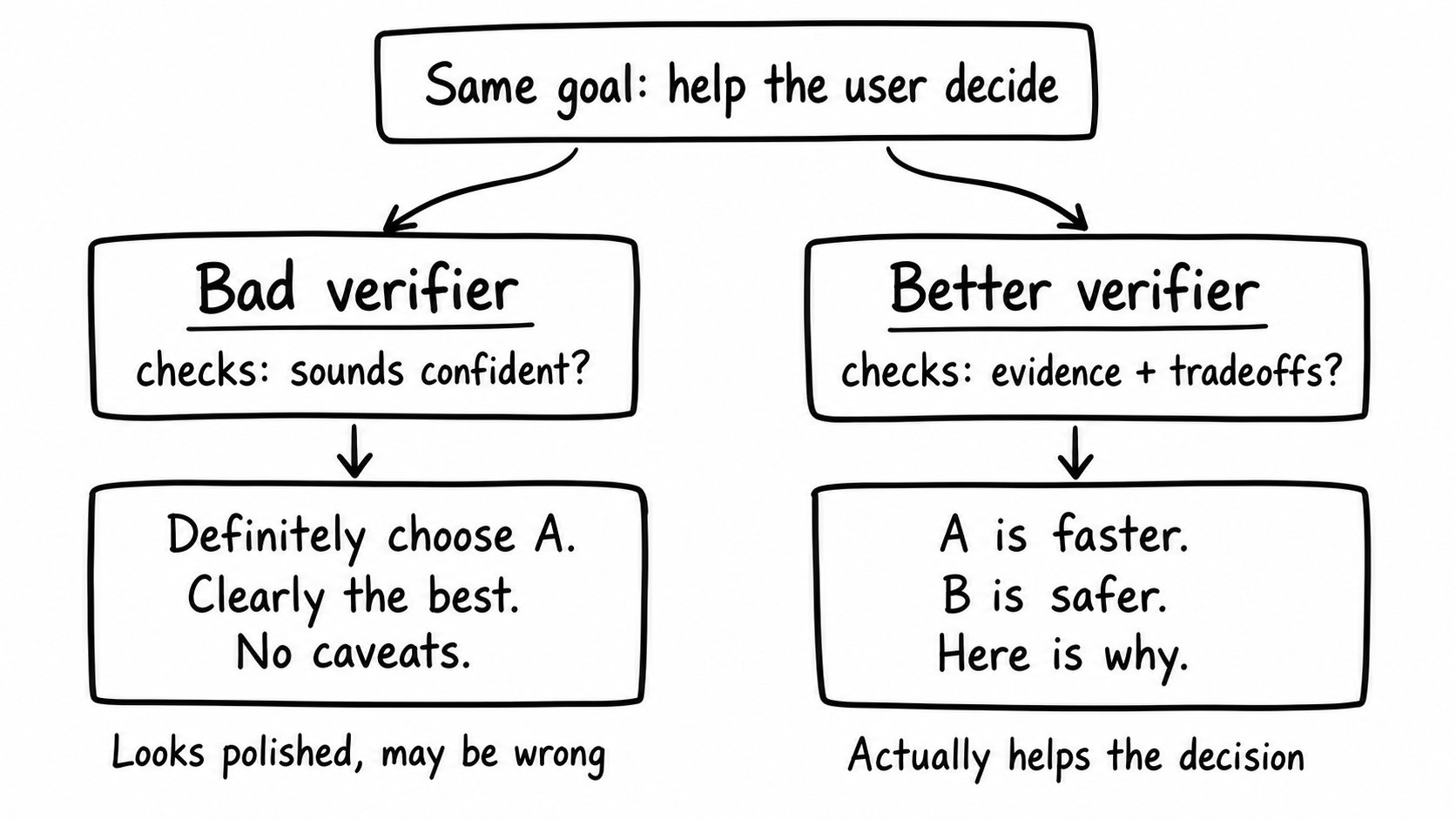
Weak verifier, weak improvement. If you measure “cleaner writing,” the agent may learn to sound polished. If you measure “more engagement,” it may learn clickbait. If you measure “passes tests,” it may learn to satisfy the test suite without solving the real problem. The
-
AI Generation Quality Assessment Beyond Candidate Quantity
By
–
Generating candidates is now easy compared to back then. An AI can generate: 100 prompt variants 50 code changes 20 tool-routing ideas 10 eval rewrites 5 new workflows
The question is not “can it come up with changes?”
The question is “which changes are actually better?” -
Verifiers: The Key to Evaluating AI Model Performance
By
–
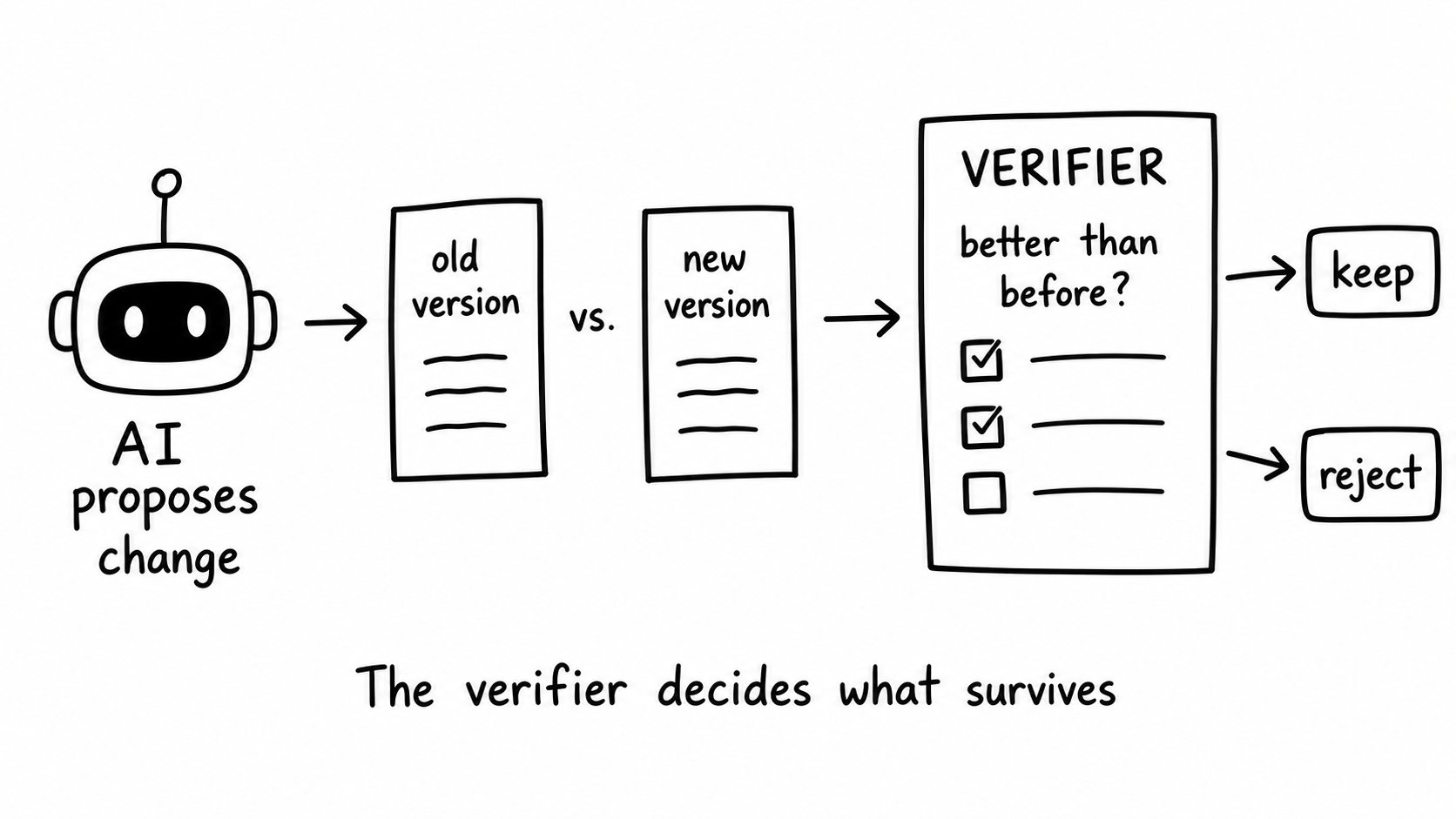
That is where the verifier comes in. A verifier is whatever checks the work. It can be: test results human review a simulator a benchmark real user outcomes a second model judging the first model
The verifier is the thing that decides what gets kept. -
Karpathy’s AutoResearch: 700 Experiments, 20 Key Optimizations Found
By
–
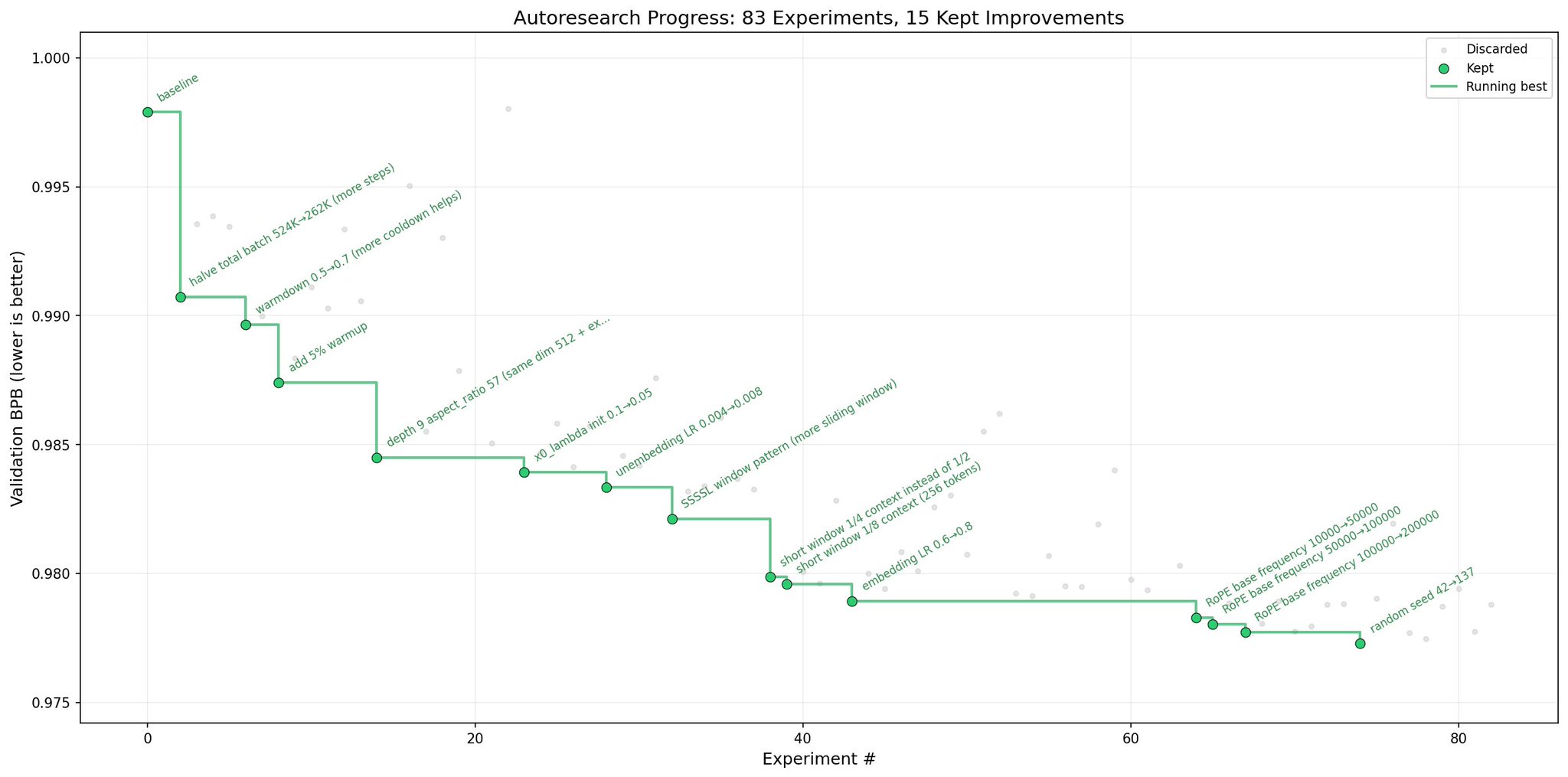
Karpathy’s AutoResearch made this concrete. One markdown prompt. 630 lines of training code. One GPU. 2 days.
It ran 700 experiments and found 20 training optimizations.
Most people was impressed by on the 700 experiments.
But what most people missed out is what decided which 20 -
The Verification Problem in AI Self-Improvement Systems
By
–
AI agents can now generate endless ways to improve themselves. New prompts. New code. New plans. New experiments. New tool calls.
That is not the bottleneck anymore.
The bottleneck is the verifier.
How do you know the new version is actually better? -
Self-Improvement Loops: How AI Systems Learn Through Feedback
By
–
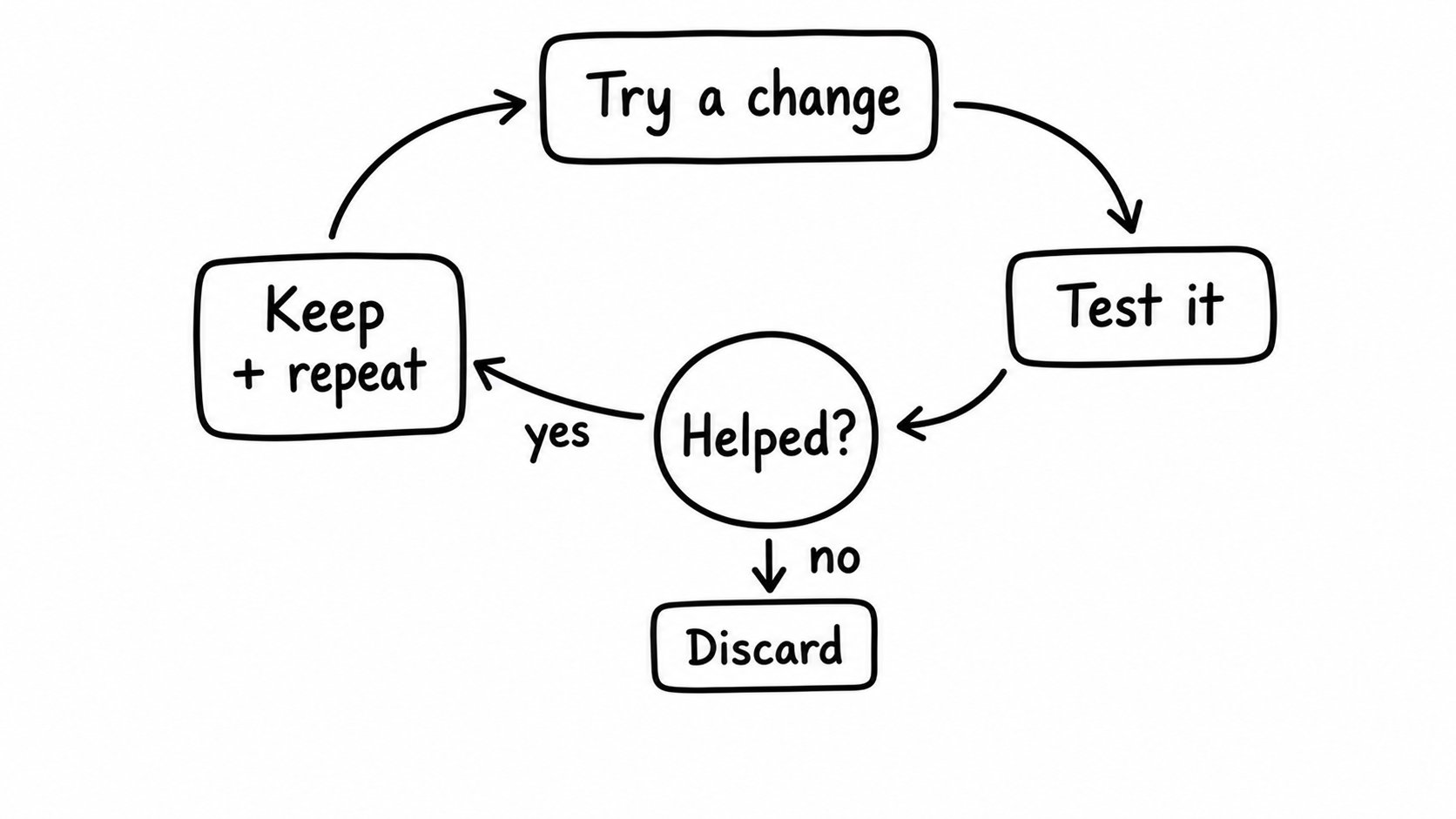
First, what’s actually happening. A self-improvement loop is simple: try a change test the change keep what helped throw away what did not repeat
That’s it.
The system is not magically becoming intelligent.
It is running a feedback loop.