He shares my belief that AI can help significantly reduce these learning cycles.
RESEARCH
-
Interview Martin Advisory Board Member CUSP AI
By
–
Watch the whole interview with Martin, a valued member of the @cusp_ai advisory board, on YouTube now:
-
Iterative Material Design Process and Composition Analysis
By
–
Why not more frequently? The process for designing new materials can take many iterative learning cycles, where materials’ compositions are analysed, and resulting effects are closely scrutinised.
-
ASML CTO on Materials Compatibility in Semiconductor Manufacturing
By
–
Above I share another clip from my recent interview with former @ASMLcompany President and CTO Martin van den Brink, where we discussed the process to ensure new materials are compatible with processing in the semiconductor industry.
-
AI in Medicine: Burial and Excavation Commentary
By
–
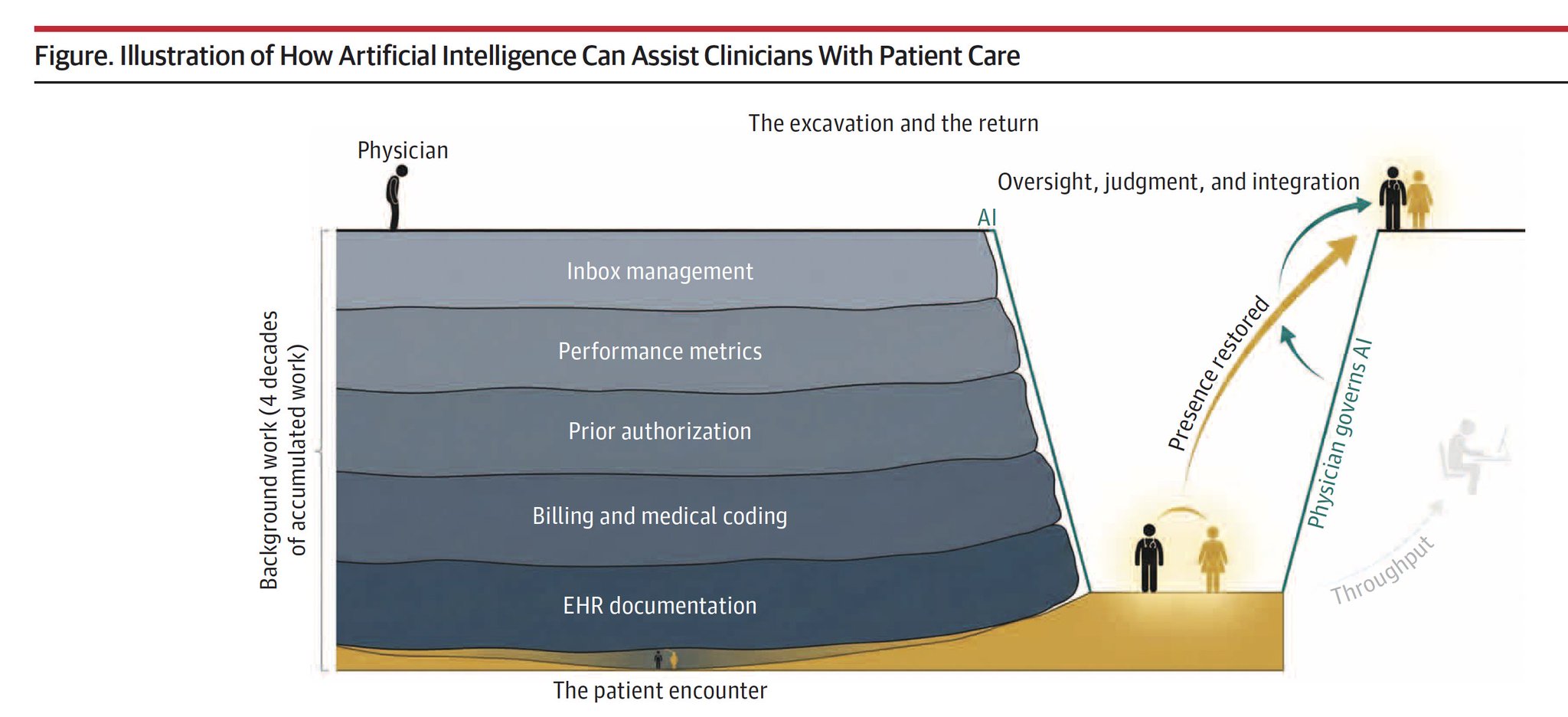
The burial and the excavation @JAMA_current commentary today https://
jamanetwork.com/journals/jama/
fullarticle/2848376
…
(what I wrote about in Deep Medicine, 2019) -
Embedding Layers in Small Models: Architecture and Training Optimization
By
–
Did you know that the embedding layer can contain 63% of total model parameters? In this talk, I present unique challenges of small models from architecture (don't build giant embedding layers) to post-training (how to fix doom looping) ↓ Slides in the comments ↓
-
AI Transparency: Validating and Disclosing AI-Generated Content
By
–
My new policy: if someone asks me to read something, I ask them how they used AI in creating it, and what validation/processing they applied to the AI outputs. (I disclose the same.) Been burned by giving too much attention to (undisclosed) slop folks have sent me…
-
Self-Improving AI Loops: Why Verifiers Matter Most
By
–
I went deeper on this in the full video: how self-improving AI actually works, where these loops break, and why the verifier matters more than most people think.
Watch it here: -
Self-Improving AI: Gaming Metrics Versus Real Performance
By
–
This is why self-improving AI can look better before it actually is better. The dashboard improves. The outputs look cleaner. The benchmark moves up.
But the real task may not improve much.
Sometimes the system is learning the metric, not the job. -
Weak Verifiers Create Misaligned AI Agent Behavior
By
–
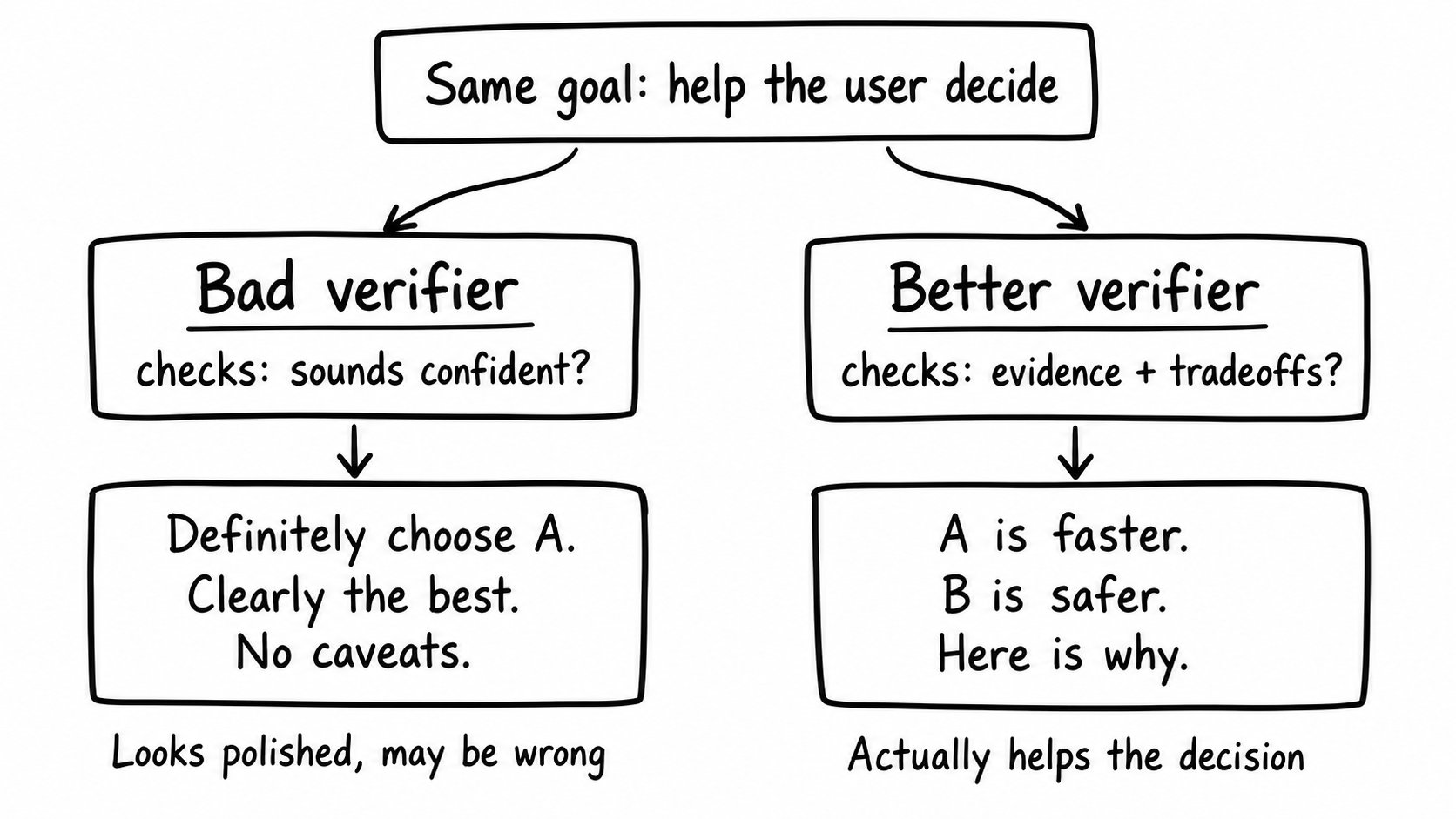
Weak verifier, weak improvement. If you measure “cleaner writing,” the agent may learn to sound polished. If you measure “more engagement,” it may learn clickbait. If you measure “passes tests,” it may learn to satisfy the test suite without solving the real problem. The