
Another paper pointing out the inadequacy of older public benchmarks for determining whether AI is actually good for tasks like medicine. Models are clearly memorizing or using heuristics for some answers. A new wave of benchmarks based on real-world data will help, more needed.
RESEARCH
-
OpenAI Models Solve Programming Challenges With Code Sandbox
By
–
Confirmation from Ahmed El-Kishky – who worked on this project at OpenAI – that their models solved the programming challenges with a code execution sandbox but no internet access
-

Open Science and Collaborative Research in Neural Network Optimization
By
–
Looking through those little hidden gem stories in the footnote, you will find it so inspiring that researchers with interests on the same topic are able to work together to advance a field despite their roles and locations. This is the power of open science and community. Thinking Machines (@thinkymachines) Efficient training of neural networks is difficult. Our second Connectionism post introduces Modular Manifolds, a theoretical step toward more stable and performant training by co-designing neural net optimizers with manifold constraints on weight matrices. thinkingmachines.ai/blog/mod… We explore a fundamental understanding of the geometry of neural network optimization. — https://nitter.net/thinkymachines/status/1971623409873244462#m
→ View original post on X — @lilianweng, 2025-09-26 19:03 UTC
-
Google DeepMind Launches Gemini Robotics 1.5 for Complex Tasks
By
–
It’s officially autumn here and we can’t be-leaf how busy it’s been. Here’s what we launched this week: — @GoogleDeepMind released Gemini Robotics 1.5, a new family of models that brings agentic capabilities to robots and enables them to perform complex, multi-step tasks in the
-
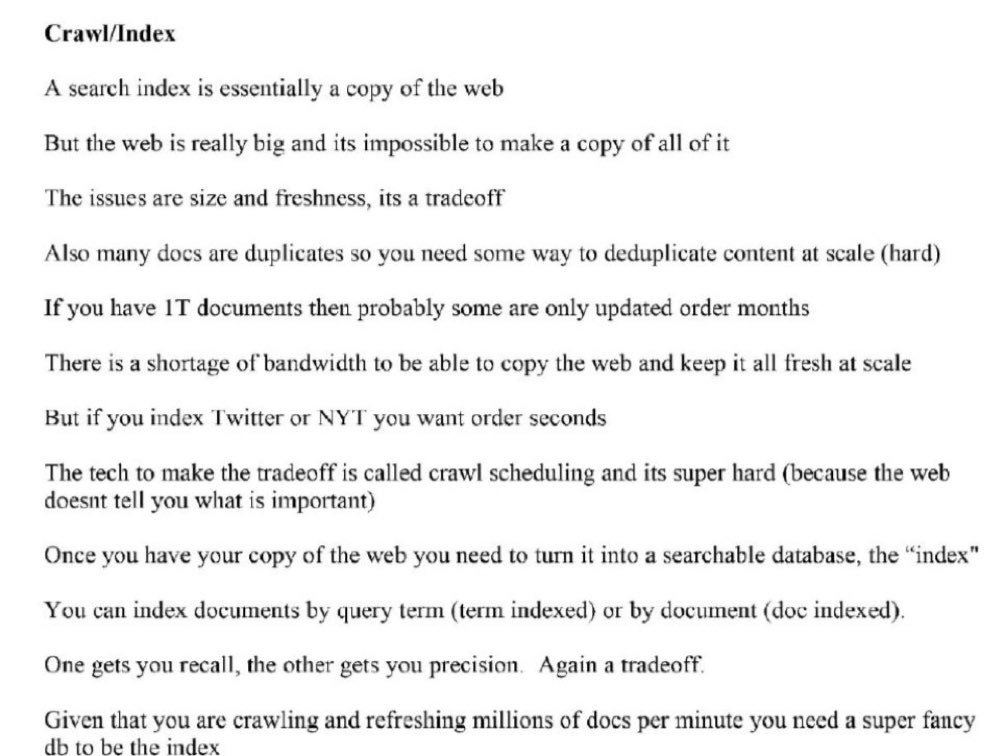
Web Indexing Harder Than Building GPT: Market Concentration
By
–
Why it's hard to build a web index, objectively harder than building a GPT-4.1. Argument: there are just fewer people – literally two (G and M) – who have done it well.
-
Philosophy Remains Vital in the Age of Artificial Intelligence
By
–
I am very grateful to our amazing supporters and team, who make our work possible. Philosophy is alive in the age of Artificial Intelligence!
-
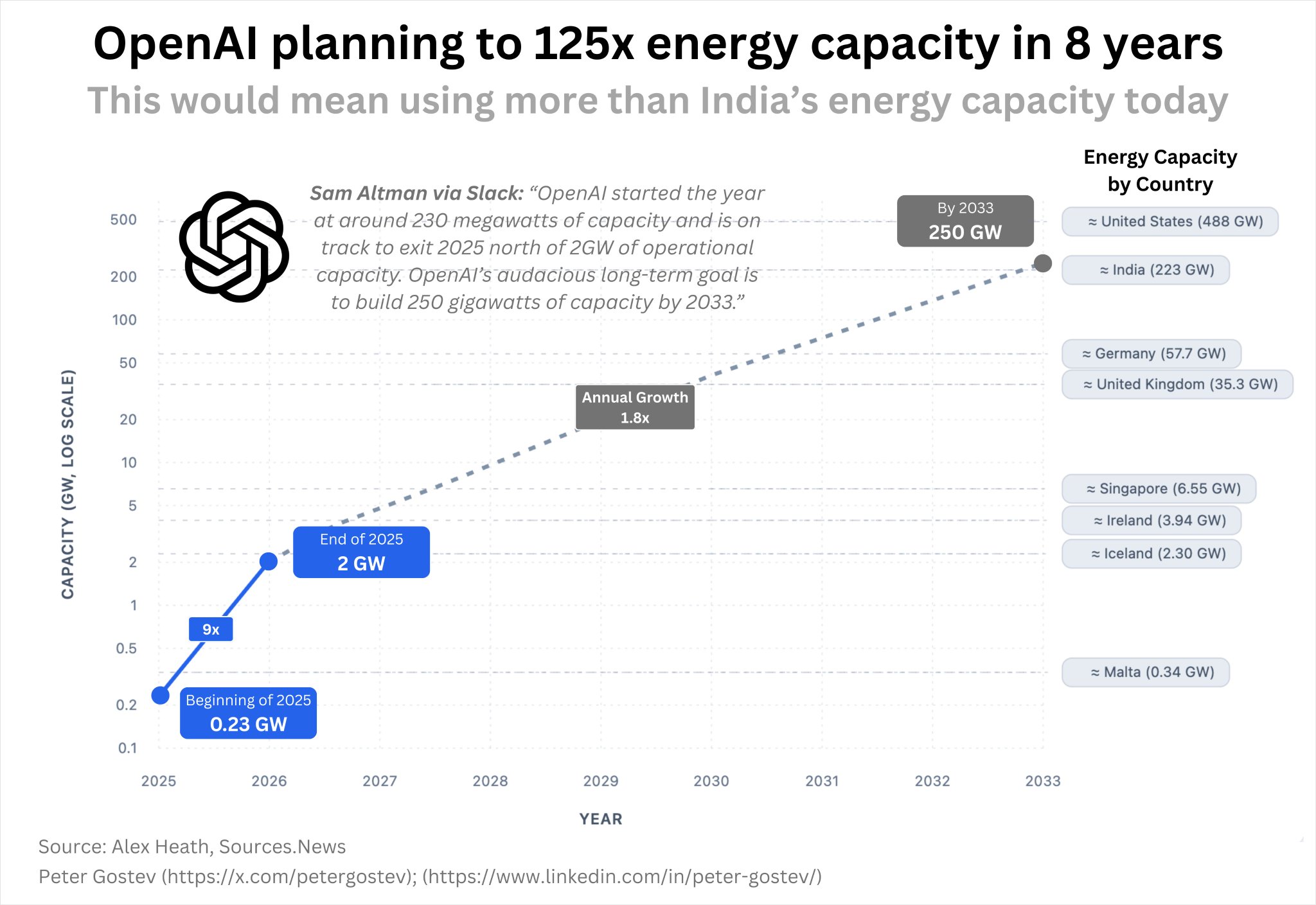
OpenAI plans 125x energy capacity increase by 2033
By
–
OpenAI have 9x'd their capacity this year, and have a goal to 125x further by 2033, thus exceeding current energy capacity of the whole of India – as per @alexeheath reporting of @sama
's internal slack note. One thing to note is that 125x energy capacity increase understates the -
California Institute for Machine Consciousness Launches Research Initiative
By
–
I have started the California Institute for Machine Consciousness to test the hypothesis, and try to solve the ancient quest for the nature of conscious agency. If you want to support us, technically or financially, please get in touch with http://
cimc.ai. -
Biological Consciousness and Computer Limitations for AI
By
–
If the biological consciousness conjecture is correct, it may still be impossible to recreate consciousness on today’s computers: the number of moving parts may be too large (eg. because the cellular mechanisms are too complex), or the search space too big.
-
Machine Consciousness Possible: Computing Power Matches Brain Capabilities
By
–
I do not see a reason to believe that machine consciousness is impossible: speed and resolution of our conscious experience is consistent with the properties of observable neural activity, and today’s computers seem to be about as powerful as our brains.