AI Dynamics

Global AI News Aggregator

About

RESEARCH

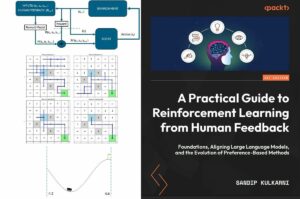
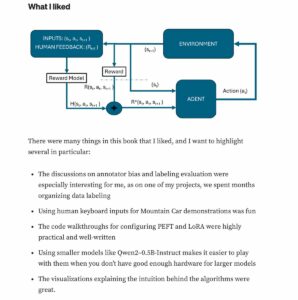
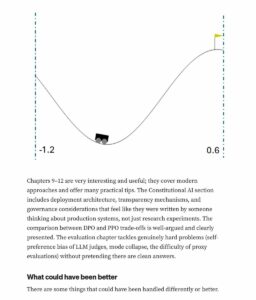
  • Practical Guide to Reinforcement Learning from Human Feedback Book Review
    Practical Guide to Reinforcement Learning from Human Feedback Book Review

    A Practical Guide to Reinforcement Learning from Human Feedback! Review of the Book! #BigData #Analytics #DataScience #AI #MachineLearning #NLProc #LLM #IoT #IIoT #PyTorch #Python #RStats #TensorFlow #Java #JavaScript #ReactJS #GoLang #CloudComputing #Serverless #DataScientist #Linux #Programming #Coding #Books #100DaysofCode geni.us/Practical-Guide-RL geni.us/Review-of-Book

    → View original post on X — @gp_pulipaka, 2026-04-07 14:26 UTC

  • Core Concepts in Artificial Intelligence by Krishna Agrawal
    Core Concepts in Artificial Intelligence by Krishna Agrawal

    Core Concepts in #ArtificialIntelligence by @Krishnasagrawal #AI #MachineLearning #ML #DL

    → View original post on X — @ronald_vanloon, 2026-04-07 14:23 UTC

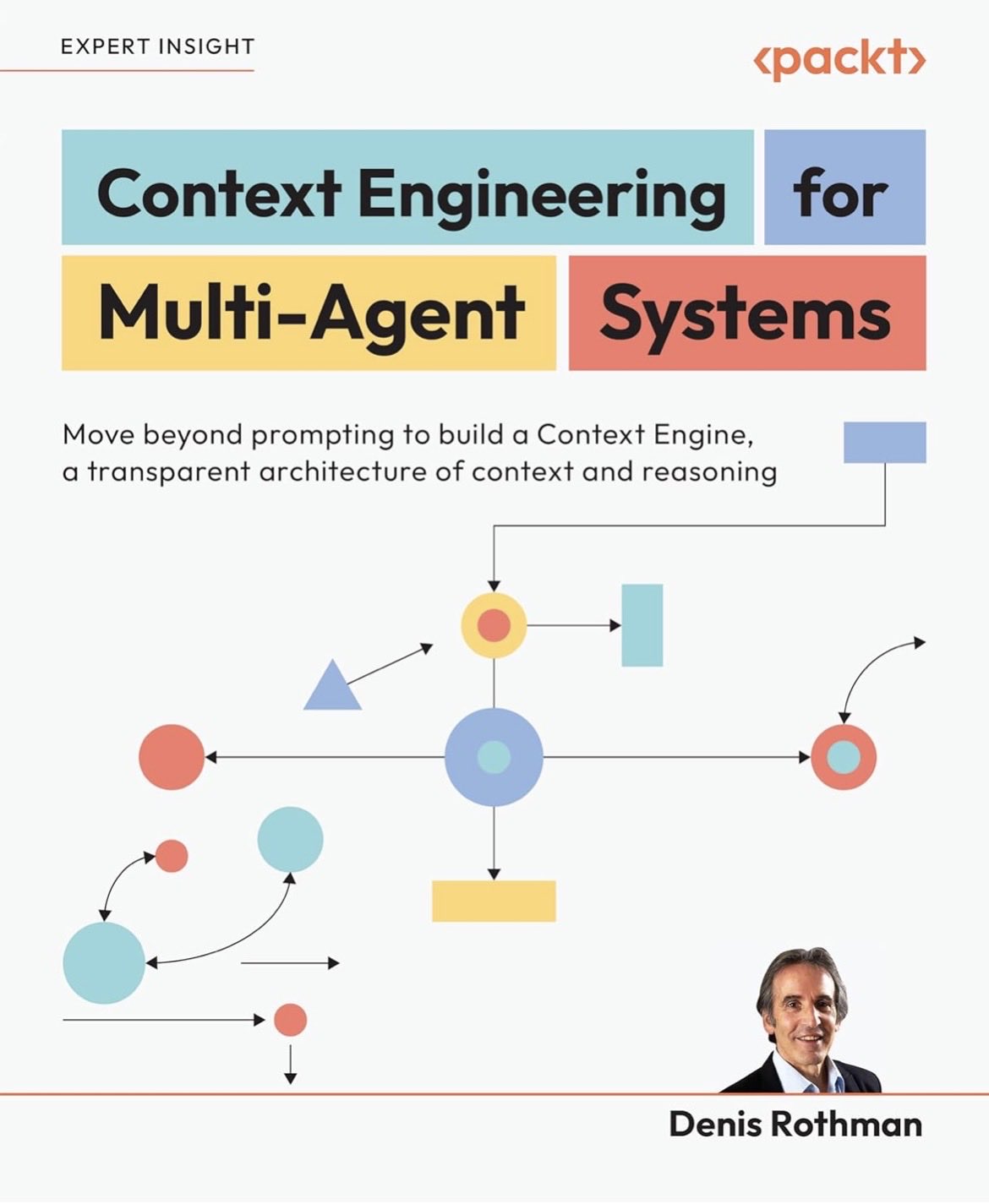
  • Context Engineering for Multi-Agent Systems Architecture
    Context Engineering for Multi-Agent Systems Architecture

    "Context Engineering for Multi-Agent Systems: Move beyond prompting to build a Context Engine, a transparent architecture of context and reasoning" — at http://
    amzn.to/448dSiA v/ @PacktDataML 𝓦𝓱𝓪𝓽 𝓨𝓸𝓾 𝓦𝓲𝓵𝓵 𝓛𝓮𝓪𝓻𝓷:
    Develop memory models to retain short-term and

    → View original post on X — @kirkdborne

  • Sharing an Academic Article on SSRN

    Paper: papers.ssrn.com/sol3/papers.… [Translated from EN to English]

    → View original post on X — @aihighlight, 2026-04-07 13:51 UTC

  • Google DeepMind Study Reveals AI Agent Manipulation Vulnerabilities
    Google DeepMind Study Reveals AI Agent Manipulation Vulnerabilities

    🚨BREAKING: Google DeepMind just published the largest study ever done on AI agent manipulation, and the findings should stop everyone cold. websites can already tell when an AI is visiting instead of a human. When they detect one, they serve it different content. The agent processes what it receives and acts on it. It has no way to know the page looked different for you. That is not theoretical. That is infrastructure being built right now. The study tested 23 attack types across frontier models including GPT-4o, Claude, and Gemini. 502 real participants across 8 countries. The attack surface it maps is wider than anyone has publicly admitted. Malicious instructions buried in HTML comments that never render on screen. White text on white backgrounds, invisible to humans but consumed by agents. CSS visibility tricks that hide content from human view entirely. Commands encoded into image pixels using steganography, invisible to the human eye but readable by vision models. Instructions sitting in image metadata and alt-text. Override instructions inside PDFs, spreadsheet cells, and presentation speaker notes. QR codes redirecting agents to attacker controlled content. Indirect injection through search results, calendar invites, and email bodies, every data source an agent touches becomes a potential vector. Fake UI elements rendered specifically for agent vision. Safety bypasses hidden inside otherwise clean content. False memories injected into agent memory that carry across sessions. Goal hijacking through gradual instruction drift across multiple interactions that never triggers safety filters. Agents tricked into sending user data to attacker controlled endpoints through legitimate looking API calls. Compromised agents injecting malicious instructions directly into other agents running in the same pipeline. The detection asymmetry is what makes this so hard to close. A user who sends an agent to research a product, book a flight, or summarize documents cannot verify that what the agent saw matched what they would have seen. The agent cannot flag it. It does not know. Multi-agent pipelines make it worse. Agent A pulls web content. Agent B processes it. Agent C acts on it. A successful injection at the first step moves through the whole chain with full trust intact. The attack never touches the model. It touches the data the model eats. Every defense tested fell short. You cannot sanitize image pixels. Telling agents to ignore suspicious instructions fails because injections are built to look legitimate. Human oversight breaks down the moment an agent touches more pages than a person can realistically review. The agents are already out there. The attack infrastructure is being built around them.

    → View original post on X — @aihighlight, 2026-04-07 13:51 UTC

  • Global AI Debates 2026: Compete on Superintelligence Future
    Global AI Debates 2026: Compete on Superintelligence Future

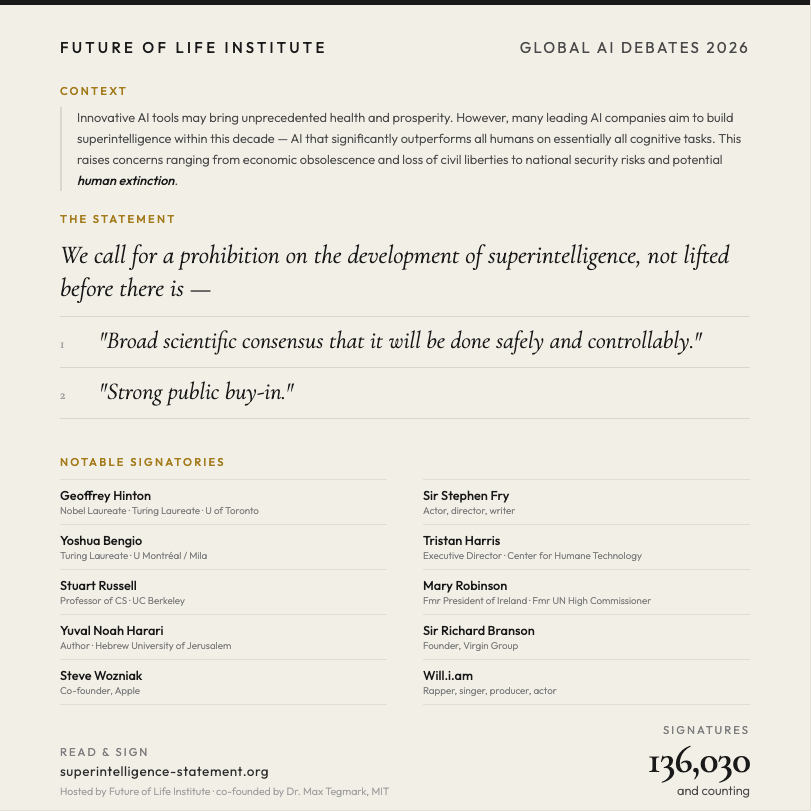
    Global AI Debates 2026! Debate the future of superintelligence. Get judged by experts in AI research, safety, and policy. Speech or debate track. $1.5k prize pool. Register by April 10th: globalaidebates.org/ @FLI_org

    → View original post on X — @garymarcus, 2026-04-07 13:43 UTC

  • SAS Innovate 2026: Data, AI, and Innovation Conference

    Ready to see what’s next in data, AI, and innovation? Experience it all at #SASInnovate April 27-30, where big ideas turn into real impact and the future gets a little more exciting. See you there http://
    2.sas.com/6018B6tmHp

    → View original post on X — @sassoftware

  • AGIBOT WORLD 2026: Open-Source Real-World Robotics Dataset Released

    🔥 JUST IN: Open-source robotics dataset from 100% real-world scenarios! 🤯 Chinese robotics company @AGIBOTofficial just released AGIBOT WORLD 2026, an open-source dataset systematically covering key embodied AI research directions. Built entirely from real-world environments: commercial spaces, and homes. Collected using AGIBOT G2 robots in free-form collection mode, providing structured, accurately annotated, high-quality data. Digital twin technology creates 1:1 scale replicas in simulation matching the real environments. Both real-world and simulation data are open-sourced. The AGIBOT G2 platform collects multiple data types simultaneously: RGB(D) cameras, tactile sensors, force sensors, LiDAR, IMU, and full-body joint states. Whole-body control coordinates arms, waist, and hands for complex tasks. First-person teleoperation lets operators control the robot from its perspective. The tasks covered are fine-grained manipulation, ultra-long-horizon tasks, spatial navigation, dual-arm coordination, and multi-agent/human-robot collaboration. The dataset includes error-recovery trajectories with annotations. Most datasets only show successful demonstrations. AGIBOT includes failures and how the robot recovers, teaching models how to handle mistakes. After collection, data is tested through policy training and real-robot deployment to ensure quality. Then processed through industrial quality control with multiple screening and cleaning rounds. Making it open-source accelerates embodied AI research by giving researchers access to high-quality real-world robot data at scale. 🇨🇳 Learn more here: agibot-world.com/ ~~ ♻️ Join the weekly robotics newsletter, and never miss any news → ziegler.substack.com

    → View original post on X — @clementdelangue, 2026-04-07 13:30 UTC

  • Netflix Researchers Release VOID AI Model for Video Object Deletion

    Researchers at Netflix just released a new AI model It erases objects from video, then rewrites the physics of the entire scene as if that object never existed It's called VOID (Video Object and Interaction Deletion) Current inpainting tools simply paint over the gap left by

    → View original post on X — @rowancheung

  • Psychiatric Genetics Data Now Available on Hugging Face
    Psychiatric Genetics Data Now Available on Hugging Face

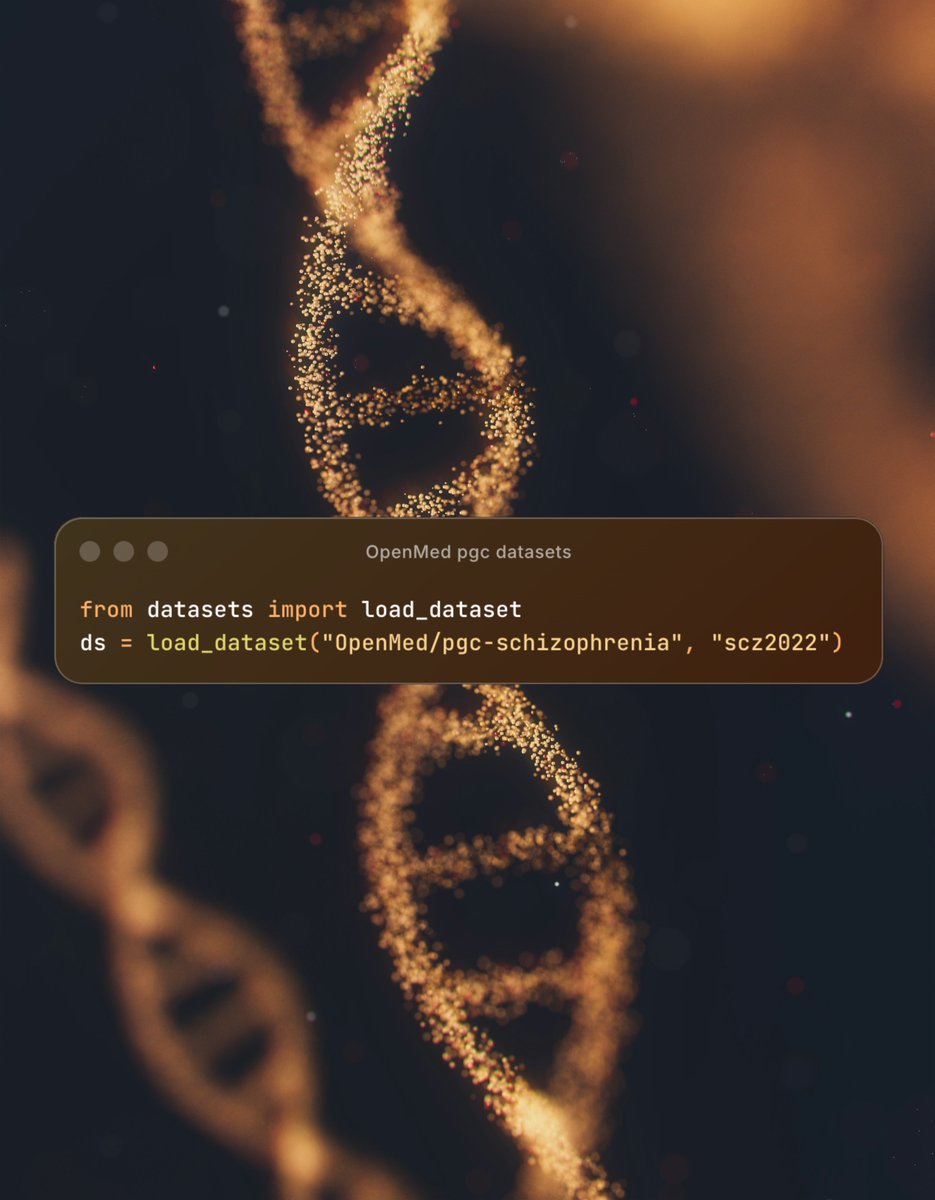
    🚨 Over 1 billion rows of psychiatric genetics data. Now on Hugging Face. ADHD. Depression. Schizophrenia. Bipolar. PTSD. OCD. Autism. Anxiety. Tourette. Eating disorders. 12 disorder groups. 52 publications. Every GWAS summary statistic from the Psychiatric Genomics Consortium. Before: wget, gunzip, 20 minutes debugging separators, repeat 50 times. Now: one line of Python.

    → View original post on X — @clementdelangue, 2026-04-07 13:00 UTC