AI Dynamics

Global AI News Aggregator

About

PROMPT ENGINEERING

  • Plan-Execute-Verify: The AI Coding Loop for Faster Shipping
    Plan-Execute-Verify: The AI Coding Loop for Faster Shipping

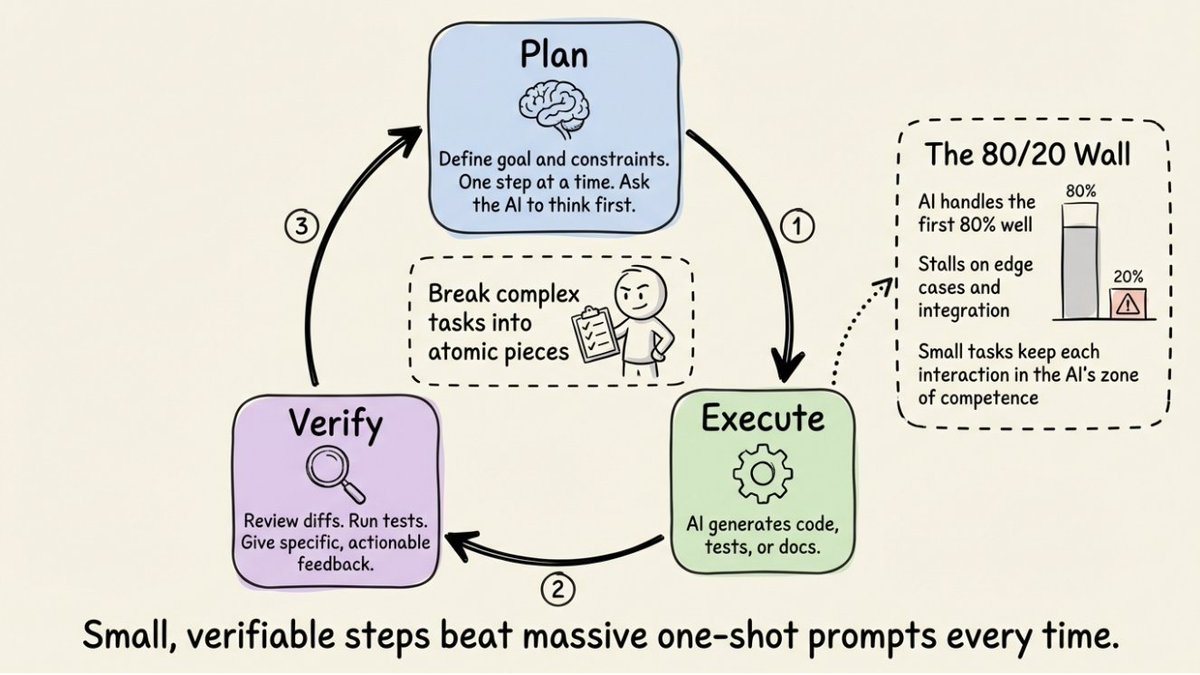
    AI coding has a cheat code. It's not a tool, a model, or a better prompt template. It's a shift in how you structure the work. Most developers write one big prompt, hit enter, and hope for the best. When the output isn't right, they describe the problem, the AI "fixes" it, and a new problem shows up. Three rounds later, they're further from where they started. The developers who ship fastest never ask the AI to do everything at once. They run every task through a simple loop: ๐—ฃ๐—น๐—ฎ๐—ป โ†’ ๐—˜๐˜…๐—ฒ๐—ฐ๐˜‚๐˜๐—ฒ โ†’ ๐—ฉ๐—ฒ๐—ฟ๐—ถ๐—ณ๐˜† It starts with the ๐—ฃ๐—น๐—ฎ๐—ป. Before the AI writes a single line of code, define the goal and constraints for just the next step. Not the whole feature, just the next piece. Even better, ask the AI to reason through the approach first. You catch bad assumptions before they become bad code. Then you ๐—˜๐˜…๐—ฒ๐—ฐ๐˜‚๐˜๐—ฒ. Let the AI generate, but keep the scope tight. Not "build the entire auth system." Instead: "Add JWT verification middleware that reads from the Authorization header and returns 401 on expired tokens." Then you ๐—ฉ๐—ฒ๐—ฟ๐—ถ๐—ณ๐˜†. Review the diffs. Run the tests. Give specific, actionable feedback. "That's wrong" is a terrible prompt. "The middleware should return 401, not 403, and check the Authorization header instead of X-Token" gives the AI everything it needs to course-correct in one shot. ๐—ฉ๐—ฎ๐—ด๐˜‚๐—ฒ ๐—ณ๐—ฒ๐—ฒ๐—ฑ๐—ฏ๐—ฎ๐—ฐ๐—ธ ๐—ฐ๐—ฟ๐—ฒ๐—ฎ๐˜๐—ฒ๐˜€ ๐—น๐—ผ๐—ผ๐—ฝ๐˜€. ๐—ฃ๐—ฟ๐—ฒ๐—ฐ๐—ถ๐˜€๐—ฒ ๐—ณ๐—ฒ๐—ฒ๐—ฑ๐—ฏ๐—ฎ๐—ฐ๐—ธ ๐—ฐ๐—น๐—ผ๐˜€๐—ฒ๐˜€ ๐˜๐—ต๐—ฒ๐—บ. Then you go back to Plan and repeat. This works because AI is excellent at small, well-defined tasks and unreliable at large, ambiguous ones. The mental shift: you're not trying to write the perfect prompt. You're building a rhythm of small, verifiable steps that works the same way across any tool. Terminal agent, IDE copilot, browser-based builder. ๐—ง๐—ต๐—ฒ ๐—น๐—ผ๐—ผ๐—ฝ ๐—ถ๐˜€ ๐˜๐—ต๐—ฒ ๐—ฐ๐—ผ๐—ป๐˜€๐˜๐—ฎ๐—ป๐˜. ๐—ฆ๐˜๐—ผ๐—ฝ ๐˜„๐—ฟ๐—ถ๐˜๐—ถ๐—ป๐—ด ๐—ฏ๐—ถ๐—ด ๐—ฝ๐—ฟ๐—ผ๐—บ๐—ฝ๐˜๐˜€. ๐—ฆ๐˜๐—ฎ๐—ฟ๐˜ ๐—ฟ๐˜‚๐—ป๐—ป๐—ถ๐—ป๐—ด ๐˜€๐—บ๐—ฎ๐—น๐—น ๐—น๐—ผ๐—ผ๐—ฝ๐˜€. The article below covers Vibe coding best practices with hands-on examples. Do check it out. Akshay ๐Ÿš€ (@akshay_pachaar) x.com/i/article/203930514901โ€ฆ โ€” https://nitter.net/akshay_pachaar/status/2039326670797369346#m

    โ†’ View original post on X โ€” @akshay_pachaar, 2026-04-02 07:40 UTC

  • Onyx’s Superior Data Indexing vs Claude’s MCP Connectors

    Been using this over the past few weeks and I noticed that the connectors are built far better than what I found in Claude. Essentially, unlike Claude's MCP connectors that query your tools at runtime, Onyx actually indexes and continuously syncs with internal data. So when I

    โ†’ View original post on X โ€” @akshay_pachaar

  • Prompt Engineering for Complex Task Instructions

    It is not very useful to send your accountant an instruction: "FYI, I prefer not paying tens of thousands of unnecessary tax. Please scrutinize all tax positions to avoid doing that." It is, on the other hand, easy to put that in a prompt.

    โ†’ View original post on X โ€” @patio11

  • Running 24/7 OpenClaw Agent Teams: Treat Agents Like New Hires

    This is how you run a 24/7 OpenClaw agent team in 2026. Treat your agents like new hires, not tools. Give them just enough context. Then get out of their way. Shubham Saboo (@Saboo_Shubham_) x.com/i/article/202179384677โ€ฆ โ€” https://nitter.net/Saboo_Shubham_/status/2022014147450614038#m

    โ†’ View original post on X โ€” @saboo_shubham_, 2026-04-02 04:37 UTC

  • Plan Mode Unnecessary When Using AI Agents Directly

    I never use plan mode. The main reason this was added to codex is for claude-pilled people who struggle with changing their habits. just talk with your agent.

    โ†’ View original post on X โ€” @steipete

  • Opus 4.6 vs GPT 5.4: Model Capabilities Comparison

    Thatโ€™s a model issue, not a harness one. You barking up the wrong tree. Try Opus 4.6 with adaptive thinking or (if you prefer most instruction following) GPT 5.4 high.

    โ†’ View original post on X โ€” @steipete

  • Anthropic’s Conway: Always-On Agent Solution

    BREAKING : ANTHROPIC IS WORKING ON ITS OWN ALWAYS-ON AGENT SOLUTION CALLED CONWAY! CONWAY WILL HAVE A SEPARATE UI INSTANCE, WILL BE ABLE TO OPERATE BROWSER, CONNECTORS, CLAUDE CODE (EPITAXY?) AND COULD BE INVOKED VIA WEBHOOKS. IT WILL ALSO SUPPORT EXTENSIONS, AN UPCOMING CNW

    โ†’ View original post on X โ€” @testingcatalog

  • Why LLMs Need So Much Help

    If LLMs are so smart, why do they need all these prompts, harnesses, post-training, scaffolding, etc.?

    โ†’ View original post on X โ€” @pmddomingos

  • Training-Free Prompt Compression with Cross-Family Speculative Prefill
    Training-Free Prompt Compression with Cross-Family Speculative Prefill

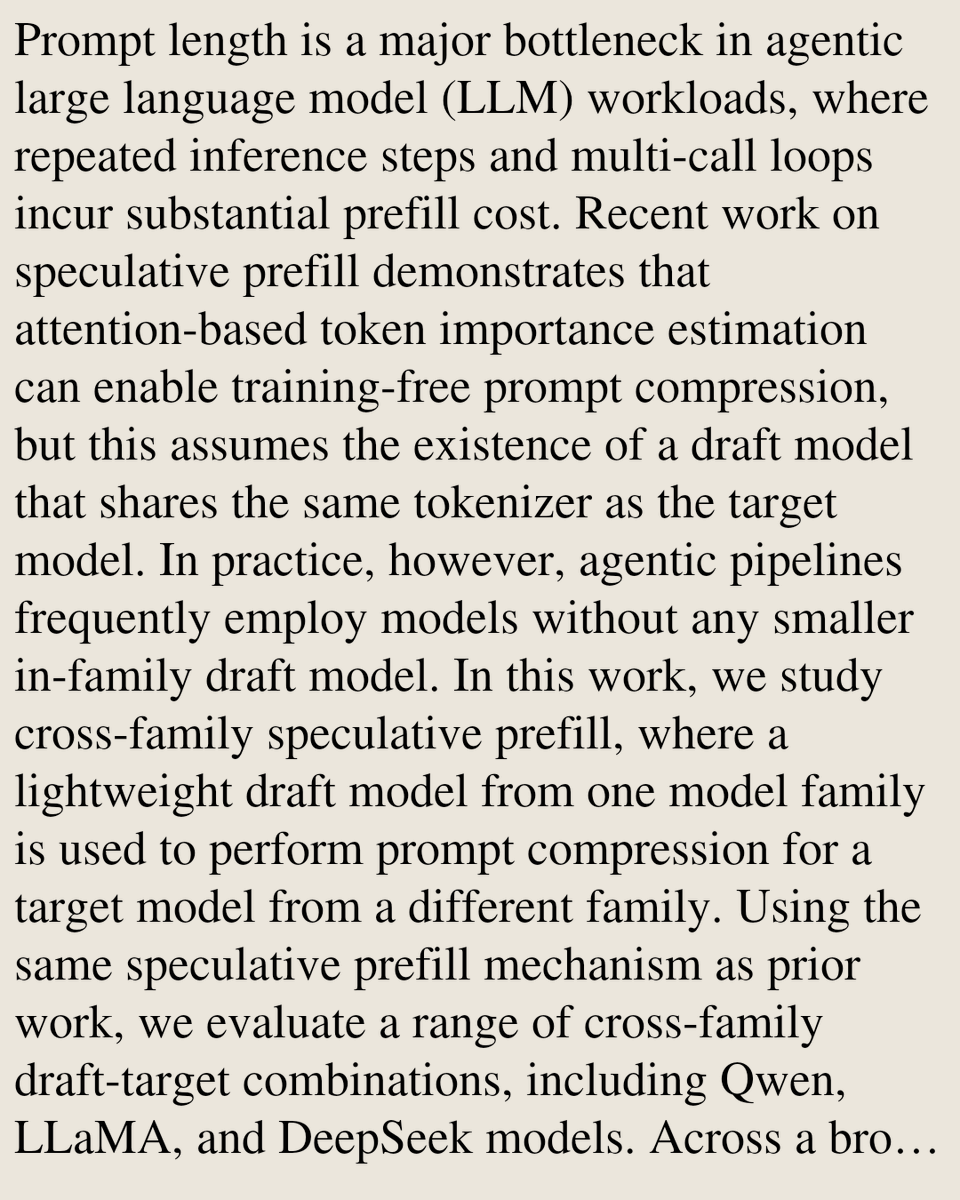
    Thanks for highlighting our team's paper ๐Ÿ™Œ Key findings show attention-based token importance transfers well across models, enabling training-free prompt compression with ~90-100% performance retention and faster first-token latency.. Check it out ๐Ÿ‘‡ Natural Language Processing Papers (@HEI) Cross-Family Speculative Prefill: Training-Free Long-Context Compression with Small Draft Models Shubhangi Upasani, Ravi Shanker Raju, Bo Li, Mengmeing Ji, John Long, Chen Wu, Urmish Thakker, Guangtao Wang arxiv.org/abs/2603.02631 [๐šŒ๐šœ.๐™ฒ๐™ป] โ€” https://nitter.net/HEI/status/2029181798924660997#m

    โ†’ View original post on X โ€” @sambanovaai, 2026-04-01 21:33 UTC