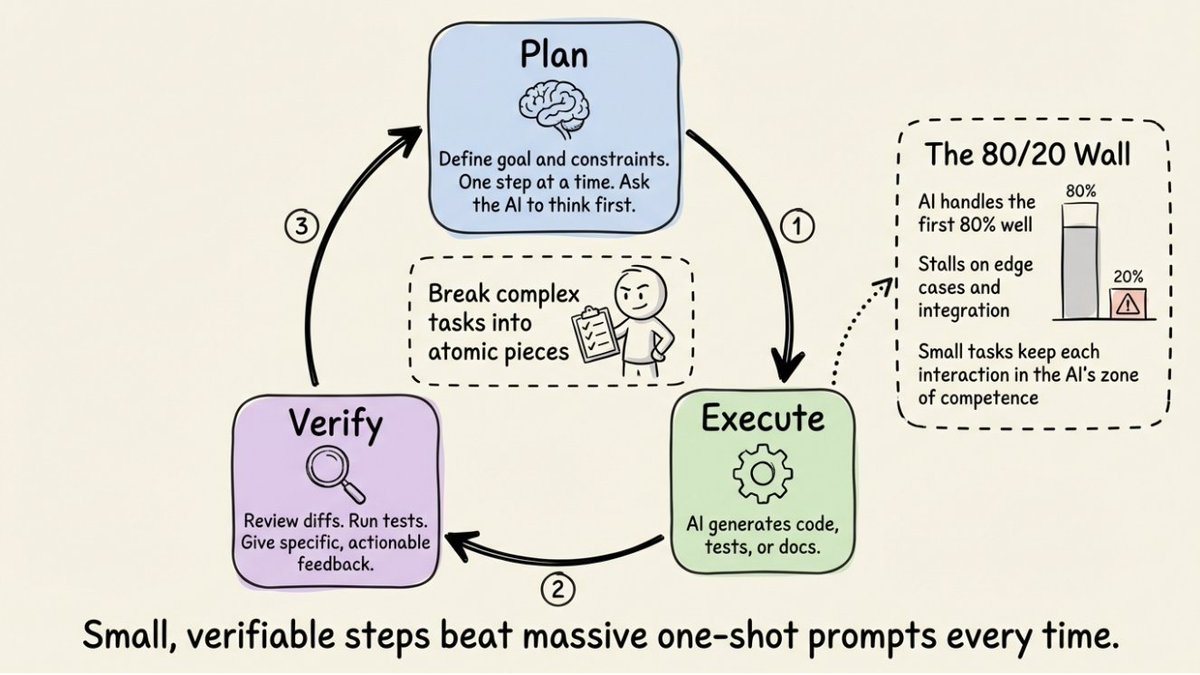
AI coding has a cheat code. It's not a tool, a model, or a better prompt template. It's a shift in how you structure the work. Most developers write one big prompt, hit enter, and hope for the best. When the output isn't right, they describe the problem, the AI "fixes" it, and a new problem shows up. Three rounds later, they're further from where they started. The developers who ship fastest never ask the AI to do everything at once. They run every task through a simple loop: 𝗣𝗹𝗮𝗻 → 𝗘𝘅𝗲𝗰𝘂𝘁𝗲 → 𝗩𝗲𝗿𝗶𝗳𝘆 It starts with the 𝗣𝗹𝗮𝗻. Before the AI writes a single line of code, define the goal and constraints for just the next step. Not the whole feature, just the next piece. Even better, ask the AI to reason through the approach first. You catch bad assumptions before they become bad code. Then you 𝗘𝘅𝗲𝗰𝘂𝘁𝗲. Let the AI generate, but keep the scope tight. Not "build the entire auth system." Instead: "Add JWT verification middleware that reads from the Authorization header and returns 401 on expired tokens." Then you 𝗩𝗲𝗿𝗶𝗳𝘆. Review the diffs. Run the tests. Give specific, actionable feedback. "That's wrong" is a terrible prompt. "The middleware should return 401, not 403, and check the Authorization header instead of X-Token" gives the AI everything it needs to course-correct in one shot. 𝗩𝗮𝗴𝘂𝗲 𝗳𝗲𝗲𝗱𝗯𝗮𝗰𝗸 𝗰𝗿𝗲𝗮𝘁𝗲𝘀 𝗹𝗼𝗼𝗽𝘀. 𝗣𝗿𝗲𝗰𝗶𝘀𝗲 𝗳𝗲𝗲𝗱𝗯𝗮𝗰𝗸 𝗰𝗹𝗼𝘀𝗲𝘀 𝘁𝗵𝗲𝗺. Then you go back to Plan and repeat. This works because AI is excellent at small, well-defined tasks and unreliable at large, ambiguous ones. The mental shift: you're not trying to write the perfect prompt. You're building a rhythm of small, verifiable steps that works the same way across any tool. Terminal agent, IDE copilot, browser-based builder. 𝗧𝗵𝗲 𝗹𝗼𝗼𝗽 𝗶𝘀 𝘁𝗵𝗲 𝗰𝗼𝗻𝘀𝘁𝗮𝗻𝘁. 𝗦𝘁𝗼𝗽 𝘄𝗿𝗶𝘁𝗶𝗻𝗴 𝗯𝗶𝗴 𝗽𝗿𝗼𝗺𝗽𝘁𝘀. 𝗦𝘁𝗮𝗿𝘁 𝗿𝘂𝗻𝗻𝗶𝗻𝗴 𝘀𝗺𝗮𝗹𝗹 𝗹𝗼𝗼𝗽𝘀. The article below covers Vibe coding best practices with hands-on examples. Do check it out. Akshay 🚀 (@akshay_pachaar) x.com/i/article/203930514901… — https://nitter.net/akshay_pachaar/status/2039326670797369346#m
→ View original post on X — @akshay_pachaar, 2026-04-02 07:40 UTC