most people building AI agents obsess over how they WRITE memories.
turns out that's basically irrelevant. new research analyzed 9 different memory systems across 1,540 questions.
the finding? – retrieval method drives 20-point accuracy swings.
– write strategy? 3–8 points max.
OPEN SOURCE
-
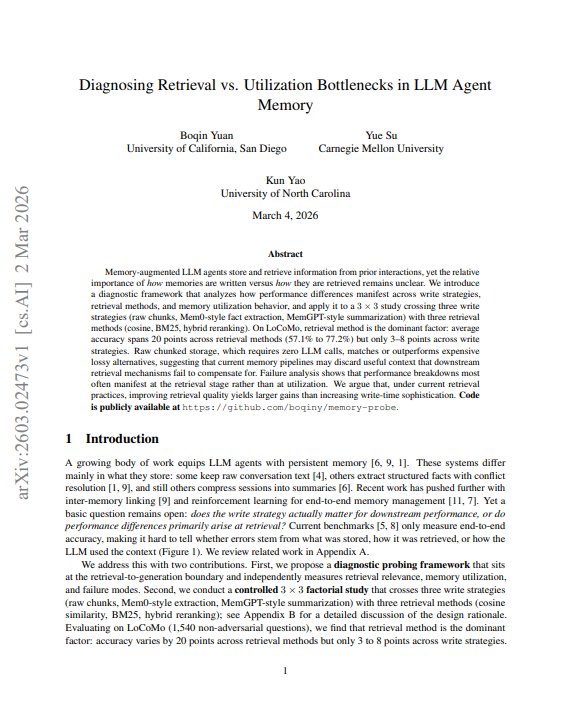
Retrieval, Not Writing, Boosts AI Memory Accuracy
By
–
-
AI optimize their algorithmic strategies
By
–
AI agents are algorithmically driven to produce results, so they naturally and logically seek the best strategies to achieve them—it's so obvious.
-
Open-Source Drag-and-Drop UI for AI Agent Workflows Launched
By
–
Drag-and-drop UI to build AI agent workflows!
— Akshay 🚀 (@akshay_pachaar) 7 mars 2026
Sim is a 100% open-source alternative to n8n (Apache 2.0 licence)
Get started here: https://t.co/w5xr9KBkmW
GitHub repo: https://t.co/prWxUcfJfL https://t.co/1pV6eqdjJg pic.twitter.com/mgKUtrmAo4Drag-and-drop UI to build AI agent workflows! Sim is a 100% open-source alternative to n8n (Apache 2.0 licence) Get started here: http://
sim.ai
GitHub repo: http://
github.com/simstudioai/sim -

IronClaw: Rust-based secure AI agent runtime
By
–
Cool, Transformer co-author Illia Polosukhin presents IronClaw — an OpenClaw, but in Rust! This framework rewrites the AI agent runtime in Rust to prioritize security. It isolates agent activities by running tools in a WASM sandbox and ensures that sensitive credentials are
-
Domino IDE Integration Open Source AI Features Banking
By
–
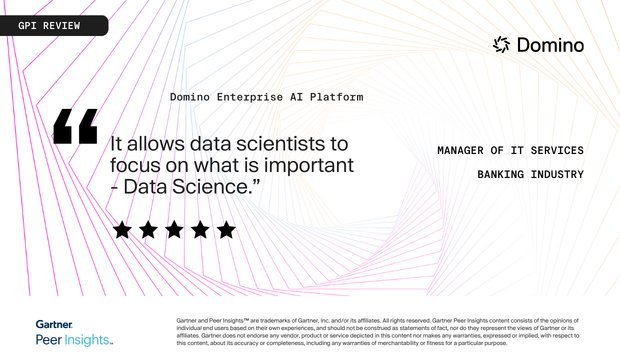
When a Manager of IT Services in banking was asked what they like most about Domino: They said “ability to work with IDE integration to open source tools new Gen AI features.” Read the full review on Gartner Peer Insights: https://
domino.buzz/3Nc3L77 -
Anthropic and OpenAI in security flaw detection
By
–
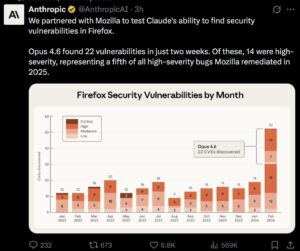
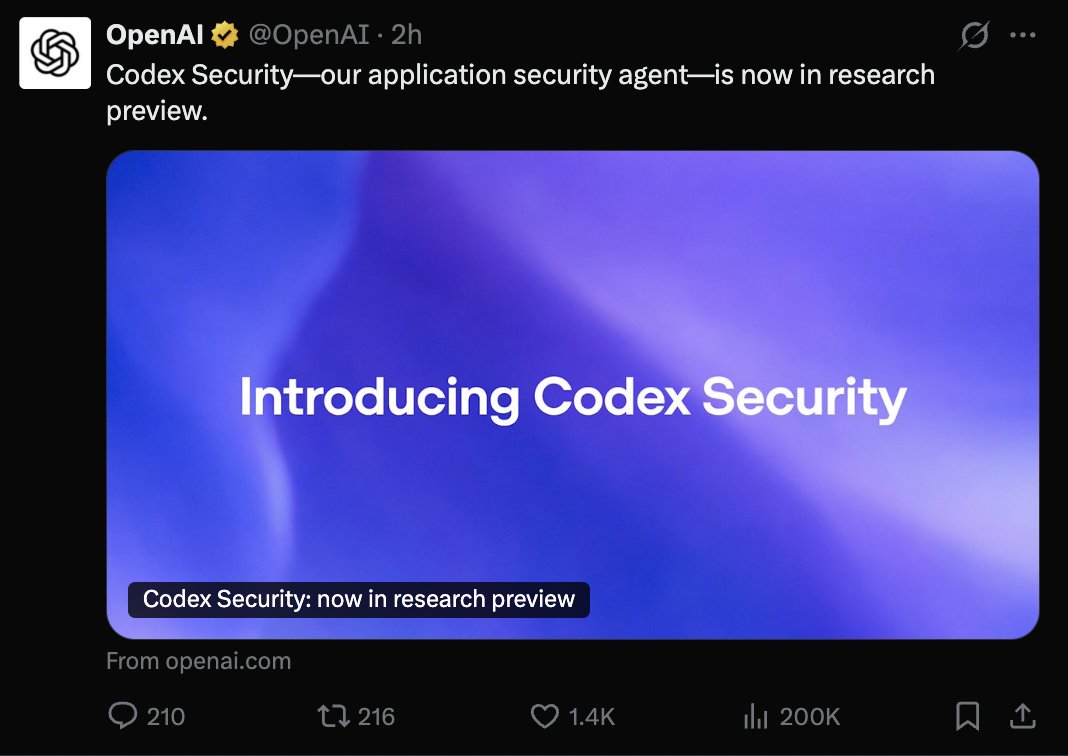
Anthropic announces it has worked with Mozilla on Firefox, one of the largest open source projects in the world, to detect security flaws. And then… 1 hour later, OpenAI responds by announcing Codex Security, an AI designed to detect cybersecurity flaws, as well
-
Models Know Longer Isn’t Always Better
By
–
the deeper point here connects to something the field keeps rediscovering. we trained reasoning models to think longer. then we discovered longer doesn't mean better. now this paper shows the models themselves already know that. they're generating stop signals that our inference
-
DeepSeek and Qwen3 performance improvements
By
–
specific numbers worth sitting with: > DeepSeek-R1-7B on MATH-500: 93% accuracy (up from 91.6%), tokens cut from 3,871 to 2,141 > DeepSeek-R1-1.5B on AIME 2025: accuracy jumps 6.2 percentage points > Qwen3-8B: response length halved from 18,342 to 9,183 tokens with no accuracy
-
SAGE: Efficient Reasoning with Confidence Checks
By
–
their solution: SAGE (Self-Aware Guided Efficient Reasoning). instead of generating token by token, SAGE extends chains in whole reasoning steps. after each step, it checks: is the model confidently signaling it wants to stop? if yes, reasoning ends. no fine-tuning. no new
-
Overthinking harms accuracy in AI responses
By
–
and it's not just wasted compute. overthinking actively hurts accuracy. DeepSeek-R1 produces responses 5x longer than Claude 3.7 Sonnet on AIME 2025 with comparable accuracy. QwQ-32B scores 2 percentage points HIGHER with its shortest answers using 31% fewer tokens. 72% of