AI Dynamics

Global AI News Aggregator

About

MARKET TRENDS

  • llama.cpp reaches 100k stars, local AI movement thriving
    llama.cpp reaches 100k stars, local AI movement thriving

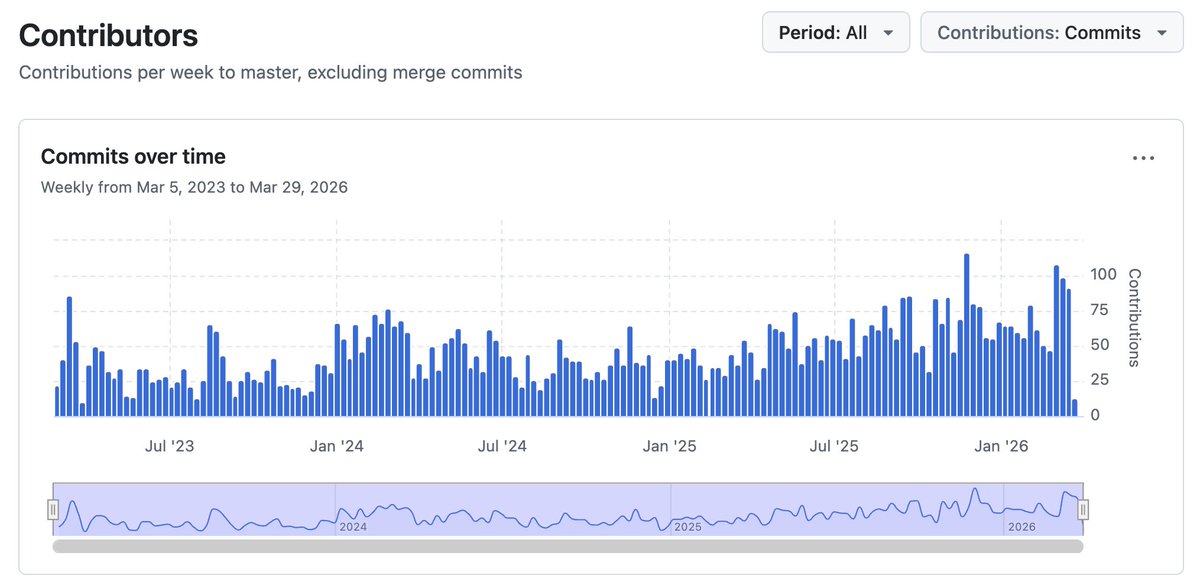
    llama.cpp at 100k stars now that 90% of the code worldwide is being written by AI agents, I predict that within 3-6 months, 90% of all AI agents will be running locally with llama.cpp 😄 Jokes aside, I am going to use this small milestone as an opportunity to reflect a bit on the project and the state of AI from the perspective of local applications. There is a lot to say and discuss and yet it feels less and less important to try to make a point. Opinions about viability of local LLMs are strongly polarized, details are overlooked, the scientific approach is lacking. Arguments are predominantly based on vibes and hype waves. One thing is clear though – local LLMs are used more and more. I expect this trend to continue and likely 2026 will end up being one of the most important years for the local AI movement. I admit that I didn't expect the agentic era to come so quickly to the local LLM space. One year ago, the available models were too computationally expensive for doing long-context tasks. There wasn't an obvious path towards meaningful agentic applications. The memory and compute requirements were huge. Last summer, with the release of gpt-oss, things started to change. It was the first time we saw a glimpse of tool calling that actually works well within the resource constraints of our daily devices. Later in the year, even better models were released and by now, useful local agentic workflows are a reality. Comparing local vs hosted capabilities at a given moment of time is pointless. To try put things into perspective: – We don't need frontier intelligence to automate searches and sending emails – We don't need trillion parameter models to be able to summarize articles or technical documents – We don't need massive GPU data centers to control our home appliances or turn the lights off in the garage I believe that there is a certain level of intelligence we as humans can comprehend and meaningfully utilize to improve our working process. Beyond that level, access to more intelligence becomes unnecessary at best and counterproductive at worst. I also believe that that level of useful artificial intelligence is completely within reach locally and it has always been just a matter of implementing the right software stack to bring it to the end user. With llama.cpp, I am confident that we continue to be on the right track of building that software stack! The llama.cpp project is going stronger than ever. With more than 1500 contributors, the project keeps growing steadily. From technical point of view, I think that llama.cpp + ggml is the only solution that actually makes sense. That is, the software stack must run efficiently on every possible device, hardware and operating system. The technology is too important to be vendor-locked. It has to be developed in the open, by the community, together with the independent hardware vendors. This is the only right way to build something that will truly make a difference in the long run. I won't try to convince you about what is currently and will be possible with local AI. We will just continue to build as usual. I am confident that after the smoke clears and we look objectively at what we have built together, the benefits will be obvious to everyone. Big shoutout to all llama.cpp maintainers. I feel extremely lucky to be able to work together with so many talented contributors. Every day I learn something new and I feel there is so much more cool stuff that we are going to build. Also, I am really thankful that the project continues to have reliable partners to support it! Cheers!

    → View original post on X — @julien_c, 2026-03-30 15:00 UTC

  • High-end AI models’ growing value and pricing

    Cheap models are still getting cheaper, but the highest end models increasingly offer a combination of intelligence, judgement, planning and correctness that make using them, rather than cheap models, extremely valuable. And because they are valuable, companies can charge more.

    → View original post on X — @emollick

  • AI agents driving token demand and compute pricing

    It is trendy to discuss Jevon's Paradox in AI (as AI gets more efficient, overall use increases) but the current situation is much simpler: thanks to agents, token demand is surging and compute is supply constrained, at least for powerful models. That will be reflected in pricing

    → View original post on X — @emollick

  • Global AI adoption pace varies with economic cycles

    imho worldwide just at different speed (outside of anti cyclical spikes)

    → View original post on X — @andreasklinger

  • China Launches First Humanoid Robot Production Line

    China launches first humanoid robot line with 10,000-unit capacity! https://
    youtu.be/0-VrpQOovC4?si
    =4Mg63fSiDEf3OBXl
    … via @YouTube #humanoidtech #humanoid #robot #Robotics #AI #TechRevolution #TechInnovation #ArtificialInteligence #PhysicalAI @AlbertoEMachado @Eli_Krumova @postoff25 @Khulood_Almani

    → View original post on X — @bamitav

  • 5G IoT Agentic AI Convergence Transforms Telecom Networks Into Intelligent Systems
    5G IoT Agentic AI Convergence Transforms Telecom Networks Into Intelligent Systems

    As 5G, IoT, and Agentic AI converge, telecom networks are no longer passive infrastructure, they’re becoming adaptive, self-optimizing systems that sense, decide, and act in real time. How connectivity is evolving from moving data to orchestrating intelligence ⬇️ Read: ➡️ linkedin.com/pulse/when-conn… #AI #MWC26

    → View original post on X — @haroldsinnott, 2026-03-30 14:06 UTC

  • Mercedes-Benz and NVIDIA DRIVE AV: The Future of Autonomous Driving

    After a ride in a @MercedesBenz autonomous vehicle built on NVIDIA DRIVE AV, one journalist came to a clear conclusion: this is the future of driving. See what they experienced: nvda.ws/4bFNL71 [Translated from EN to English]

    → View original post on X — @nvidia, 2026-03-30 14:00 UTC

  • Cerebras Processors: Power vs Modularity and Cost Efficiency Trade-offs

    Building a dinner-plate-sized processor like Cerebras offers immense power but sacrifices the modularity and cost-efficiency of scaling standard GPU clusters. Committing to such a massive, monolithic piece of hardware means losing the flexibility to easily scale down or swap

    → View original post on X — @learnopencv

  • TL20 Stocks Collapse: AI Trade Concerns Hit Hard
    TL20 Stocks Collapse: AI Trade Concerns Hit Hard

    Each week I do a podcast to put together various things in a way that makes sense to me, and, I hope, to investors. One of the functions of the podcast is to reflect on what is and is not working. There’s a lot to cover when the entire TL20 group of stocks collapses by four percent in a week, with names such as Micron Technology hit hard. My sense is none of the concerns that pushed down these stocks last week are fatal to the positive outlook for the companies. The TL Podcast for March 29th: Gains erased in a week The TL20 gives up all gains for the year, as multiple worries about the AI trade hit hard the shares of Micron Technology, for example. I argue these risks are not fatal. At least the TL20 is still doing a lot better than Nasdaq and the S&P 500. thetechnologyletter.com Or catch it on Apple Podcasts: bit.ly/40HBLJg $MU $SNDK $KLAC $LRCX

    → View original post on X — @tiernanraytech, 2026-03-30 13:20 UTC

  • Huawei showcases 115 industrial intelligence applications at MWC2026
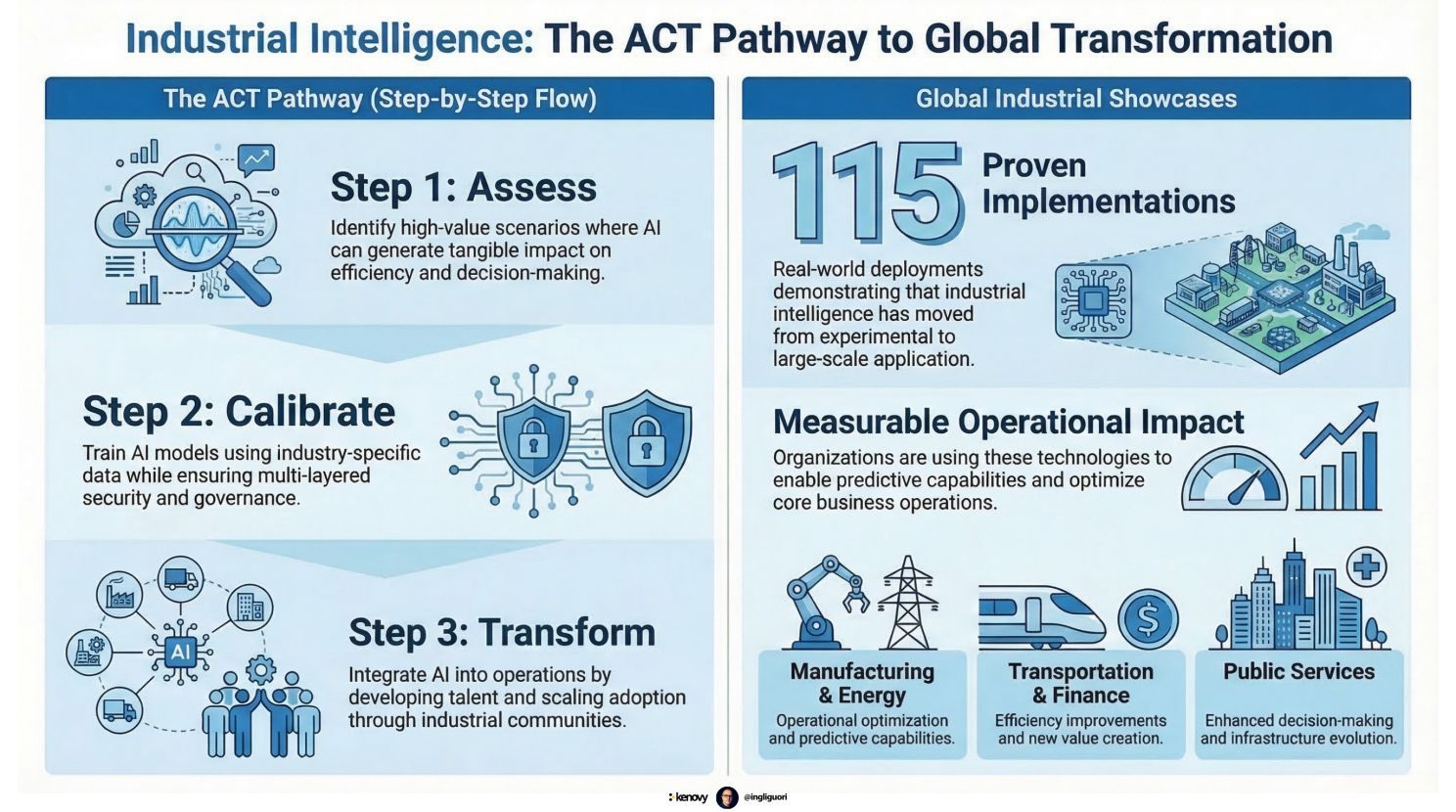
    Huawei showcases 115 industrial intelligence applications at MWC2026

    At #MWC2026, Huawei and its customers released 115 industrial intelligence showcases, demonstrating how AI and digital infrastructure are being applied in real operational environments. My latest article explores key insights from the Industrial Digital and Intelligent

    → View original post on X — @ingliguori