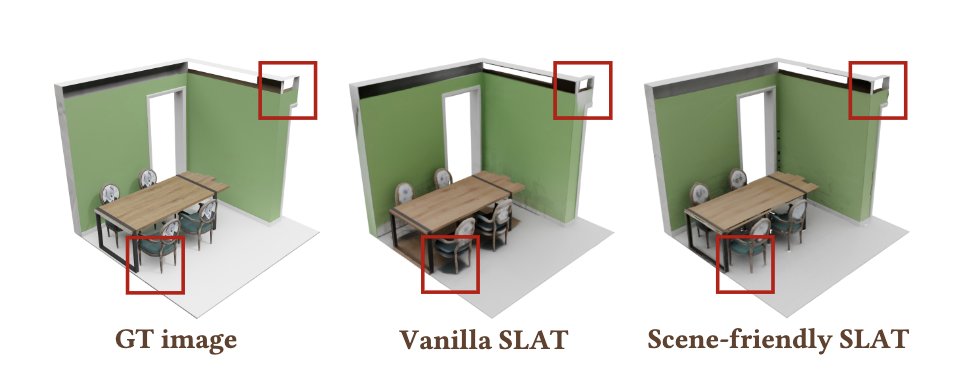
Standard 3D models fail near occlusions and boundaries. WorldGrow fixes this with occlusion-aware feature aggregation and a retrained decoder removing color bleeding and floating geometry. Figure 3 visually compares the “vanilla” vs “scene-friendly” SLAT. The difference is
MACHINE LEARNING
-

Technical Overview of WorldGrow’s Generative AI Pipeline
By
–
WorldGrow’s pipeline works like a growing brain: – Scene-friendly SLAT encodes 3D context
– 3D block inpainting ensures spatial continuity
– Coarse-to-fine refinement keeps global layout + fine detail Each module adds realism while keeping the world endless. -
Volume 287 ICMLIC Proceedings Published on PMLR
By
–
Volume 287 https://
proceedings.mlr.press/v278/ Proceedings of International Conference on Machine Learning and Intelligent Computing Is now available on PMLR -
Training a GPT-2 Style Tokenizer and Model
By
–
Tu parles de tokenizer j’entraîne un tokenizer sur mon model. GPT2 est un modèle décodeurs only c’est que je vais. J’entraîne dans l’esprit un meme model que gpt2. Pour entraîner gpt2 ils faut plusieurs dizaines de milliers de dollars parce qu’il faut gérer des centaines de
-
AI21 Labs Demonstrates Private Agents with Jamba 3B on NVIDIA DGX Spark
By
–
A week with the @nvidia DGX Spark and we’re already running private agents trained on private data with Jamba 3B Reasoning, our hybrid Transformer Mamba model.
— AI21 Labs (@AI21Labs) 27 octobre 2025
Check out the video to see it in action with Omri Manor and Tal Guttman ⚡@NVIDIAGTC @NVIDIAAI pic.twitter.com/pgskKrbg2lA week with the @nvidia DGX Spark and we’re already running private agents trained on private data with Jamba 3B Reasoning, our hybrid Transformer Mamba model.
Check out the video to see it in action with Omri Manor and Tal Guttman @NVIDIAGTC @NVIDIAAI -
On-Policy Distillation: Combining RL Error Correction with SFT Reward Density
By
–
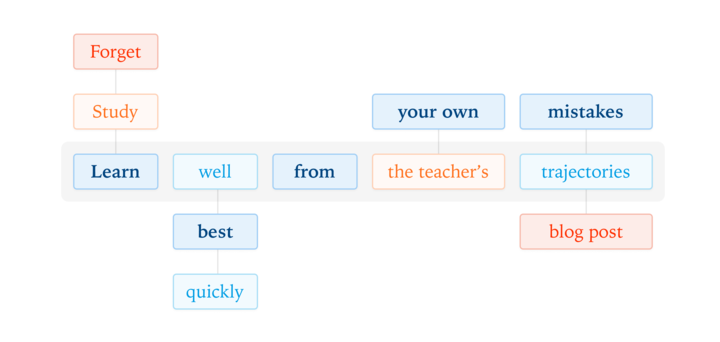
On-policy distillation provides an elegant way to use the teacher model as a process reward model to provide dense reward while preventing SFT style "OOD shock" during rollout. Thinking Machines (@thinkymachines) Our latest post explores on-policy distillation, a training approach that unites the error-correcting relevance of RL with the reward density of SFT. When training it for math reasoning and as an internal chat assistant, we find that on-policy distillation can outperform other approaches for a fraction of the cost. thinkingmachines.ai/blog/on-… — https://nitter.net/thinkymachines/status/1982856272023302322#m
→ View original post on X — @lilianweng, 2025-10-27 17:31 UTC
-

Jensen Huang and AI Pioneers Awarded Queen Elizabeth Prize for Engineering
By
–
On 6 November, Jensen Huang, @drfeifei, Geoffrey Hinton, Yoshua Bengio, Yann LeCun and Bill Dally will be honoured as this year’s @QEPrize laureates at the FT Future of AI Summit during our day 2 opening panel. Explore: ai.live.ft.com/home #FTFutureofAI #MachineLearning #AI
→ View original post on X — @madhumita29, 2025-10-27 16:06 UTC
-
Multi-Agent AI Systems Demonstrate Improved Reasoning Performance
By
–
They even connected multiple “deep researchers” together. Each agent worked on a subproblem and merged insights. Result: +22% faster convergence on shared reasoning benchmarks. It’s literally a scientific community made of AIs. This one’s unreal. The model autonomously
-

Analysis of AI Model Memory Retention via Reflection
By
–
Each square here shows how long the model “remembers” successful hypotheses. Retention stabilizes at ~74% after 10 research cycles. That’s memory through reflection, not parameter updates. It’s how the system learns what’s worth keeping.
-

Self-Optimization as the New Scaling Law for AI Models
By
–
Everyone’s chasing scale, but this model scales intelligently. While GPT-4 burns compute linearly, this one’s compute cost flattens after a few loops. Efficiency improves by 3.4× per iteration as reasoning stabilizes. Self-optimization is the new scaling law.