
10. Precision-RL Reveals that simply switching from BF16 to FP16 precision virtually eliminates this mismatch – achieving faster convergence, higher stability, and superior performance across diverse models, frameworks, and algorithms.
MACHINE LEARNING
-
Kimi Linear: Hybrid Attention Architecture Reduces KV Cache 75%
By
–
9. Kimi Linear Kimi Linear introduces a hybrid linear attention architecture combining Kimi Delta Attention (KDA) with periodic full attention layers at a 3:1 ratio, achieving superior performance over full attention while reducing KV cache by 75% and delivering 6× faster
-

Global PIQA: Physical Commonsense Reasoning Across 100+ Languages
By
–
5. Global PIQA Global PIQA extends physical commonsense reasoning evaluation to 100+ languages and cultural contexts, revealing how language models handle everyday practical scenarios across diverse linguistic communities.
-

SmolLM2: Strategic Data Curation Over Scale in Language Models
By
–
4. SmolLM2 SmolLM2 demonstrates that strategic data curation beats scale through a 1.7B parameter model trained on 11 trillion tokens using iterative data mixing optimization.
-

Multi-Agent Evolve: LLMs Self-Improve Without Human Annotation
By
–
3. Multi-Agent Evolve Multi-Agent Evolve (MAE) enables LLMs to self-improve their reasoning capabilities without human-annotated data through a co-evolving multi-agent framework.
-

Attending EMNLP2025 in Suzhou presenting multimodal LLM grounding work
By
–
I will be heading to Suzhou soon attending #EMNLP2025 next week, presenting my work on grounding multimodal LLMs with world/cultural knowledge, https://
arxiv.org/abs/2508.07414. Email/DM open if you want to chat about the paper and other topics more broadly(multimodal LLMs x languages x -

Yann LeCun’s 1998 Gradient-Based Deep Learning Paper Milestone
By
–
#otd in 1998 Yann LeCun submitted a paper on “gradient-based” deep learning for document recognition. It took more than a decade before the world finally warmed to neural networks: https://
bit.ly/3EzX9FD First image v/Erik Tanner & WIRED -
Efficiency and Intelligence in AI Agent Development
By
–
By the end of testing, it was beating every open-source agent in the field and holding its own against proprietary systems built with 10x the resources. Turns out intelligence isn’t about size. It’s about how well you manage what you already know.
-

AI models demonstrating reflection and iterative problem-solving
By
–
It even knows when it’s wasting time. After 11 failed attempts in one example, it folded the entire dead end into one sentence, learned the lesson, and moved on. That’s not just optimization that’s reflection.
-
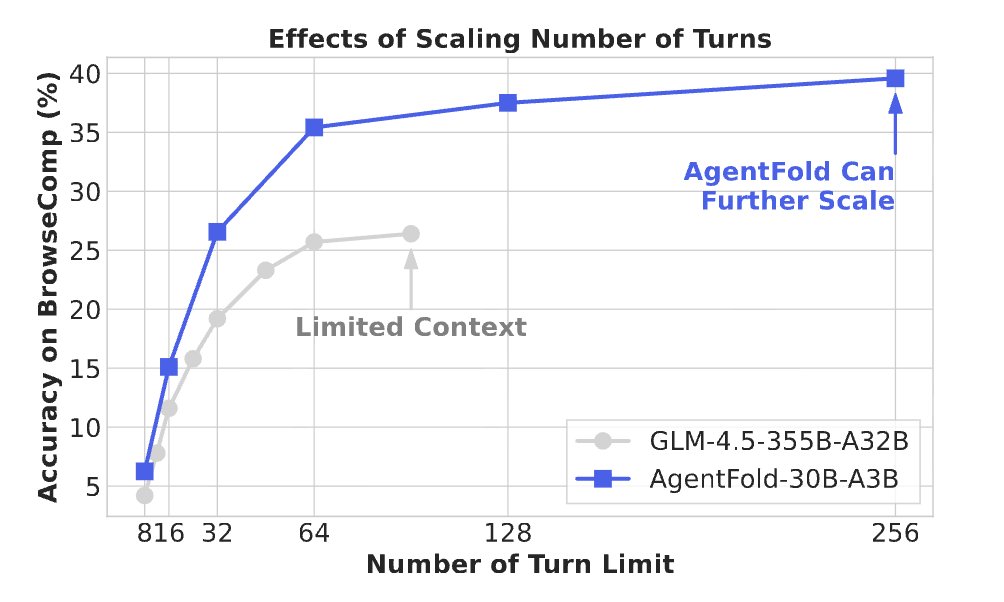
Breakthrough in Scalable Reasoning Across Model Depth
By
–
Here’s where it gets wild other models plateau after 64 steps. This one keeps getting better all the way up to 256 turns. It learns across depth, not just width the first real sign of scalable reasoning.