It is amazing how far AI has come. Still remember the days when we had blurry videos with people with seven fingers. 🙂
MACHINE LEARNING
-
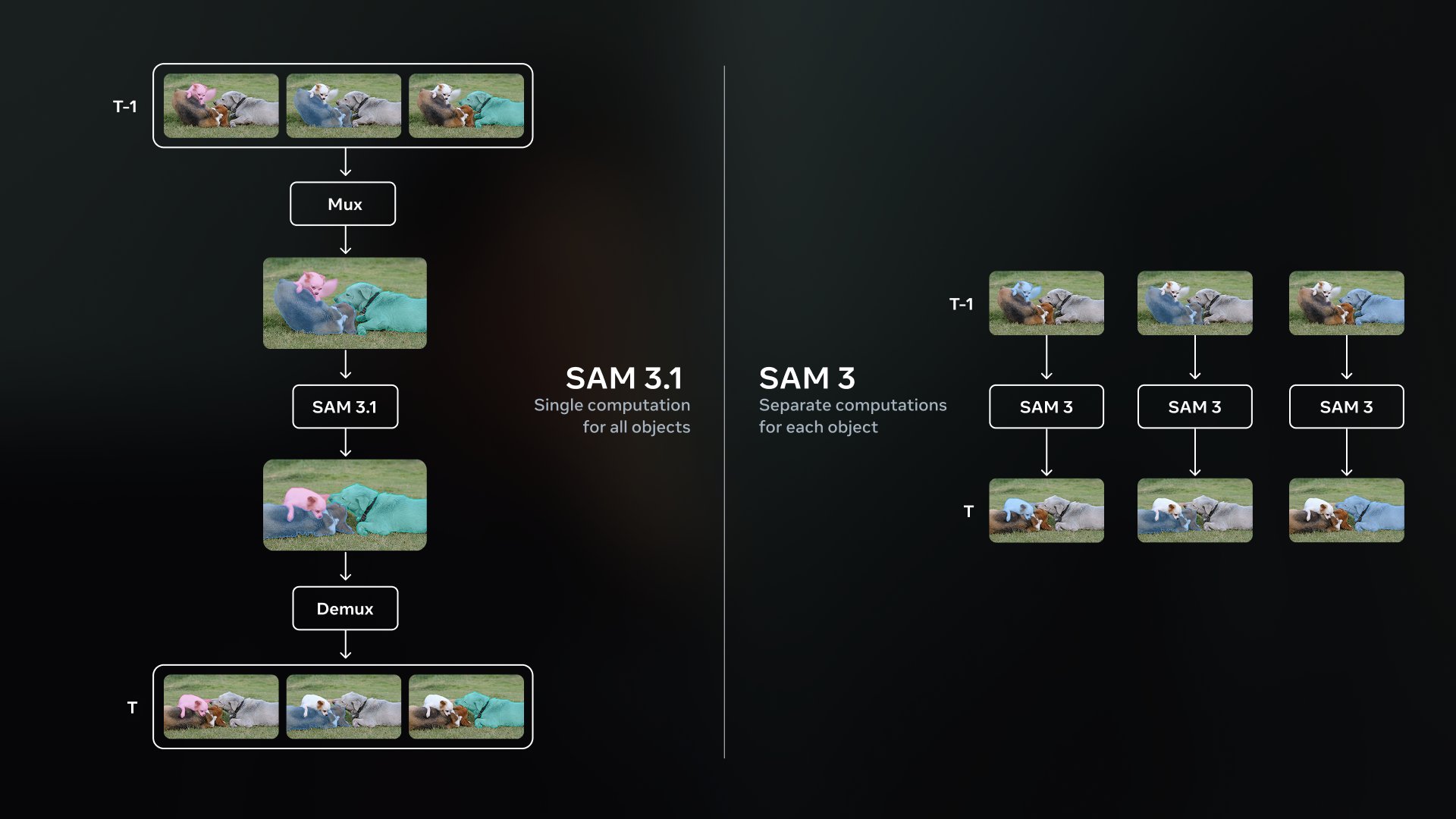
SAM 3.1 Object Multiplexing: Track 16 Objects Simultaneously
By
–
The core innovation in SAM 3.1 is object multiplexing, allowing the model to track up to 16 objects in a single forward pass. Previously, each object required its own dedicated pass, but with multiplexing, SAM 3.1 processes all tracked objects together, eliminating redundant
-
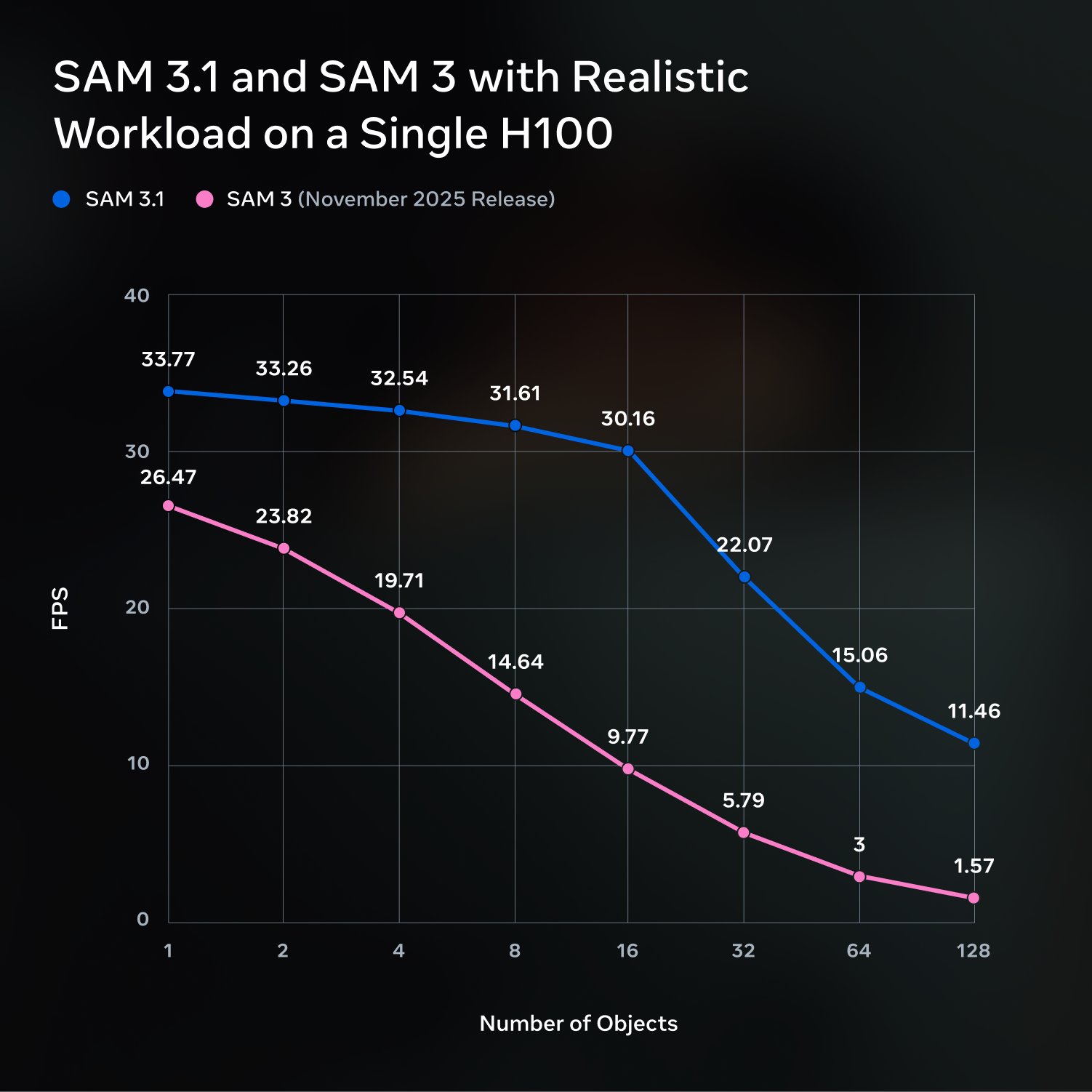
SAM 3.1: Object Multiplexing Enhances Video Processing Efficiency
By
–
We’re releasing SAM 3.1: a drop-in update to SAM 3 that introduces object multiplexing to significantly improve video processing efficiency without sacrificing accuracy. We’re sharing this update with the community to help make high-performance applications feasible on smaller,
-
Joint training of harness and model for effective optimization
By
–
Harness and model are trained together, others are less effective, e.g. by not having an apply_patch function.
-
World’s Largest Intelligence Factory Emerges Global Constraints
By
–
Yes, it is the world’s largest Intelligence Factory. And everyone (everyone) will be Intelligence-constrained. https://
youtu.be/87ctrQefN7w?si
=w_e8uXMY4VUJis6B
… -
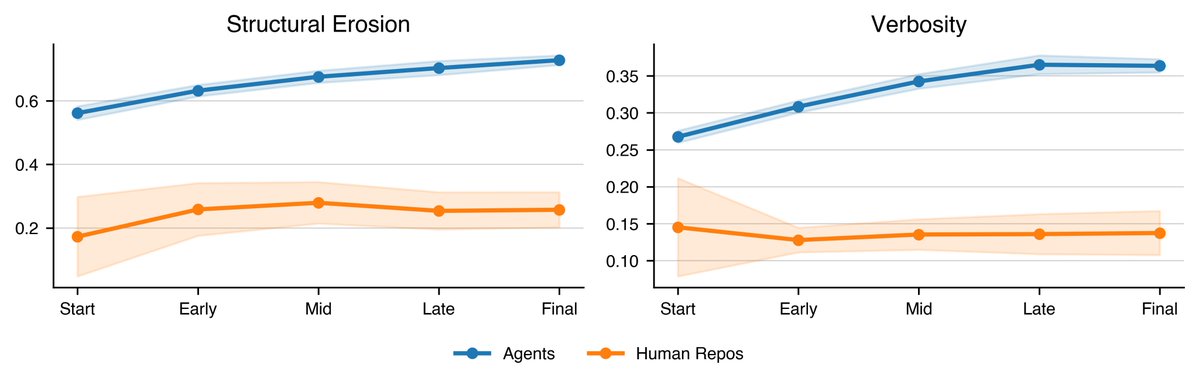
SlopCodeBench: New Benchmark for Code Quality Degradation in AI Agents
By
–
Really excited to have the SlopCodeBench paper out—awesome work from @GOrlanski! Gabe Orlanski (@GOrlanski) We found that agents generate progressively worse code with each iteration. Real developers do not. SlopCodeBench is the only eval that faithfully measures quality degradation on iterative, long-horizon coding tasks. arxiv.org/abs/2603.24755 scbench.ai 🧵 — https://nitter.net/GOrlanski/status/2037560777356238881#m
→ View original post on X — @snorkelai, 2026-03-27 16:28 UTC
-
TensorFlow natively runs on MacBook Pro M4 finally
By
–
I just installed TensorFlow nightly 2.22.0-dev20260326 on my MacPro Max M4 with Python 3.13. Almost a year after I bought it I can *finally* run TensorFlow natively on the bare metal on this machine.
-
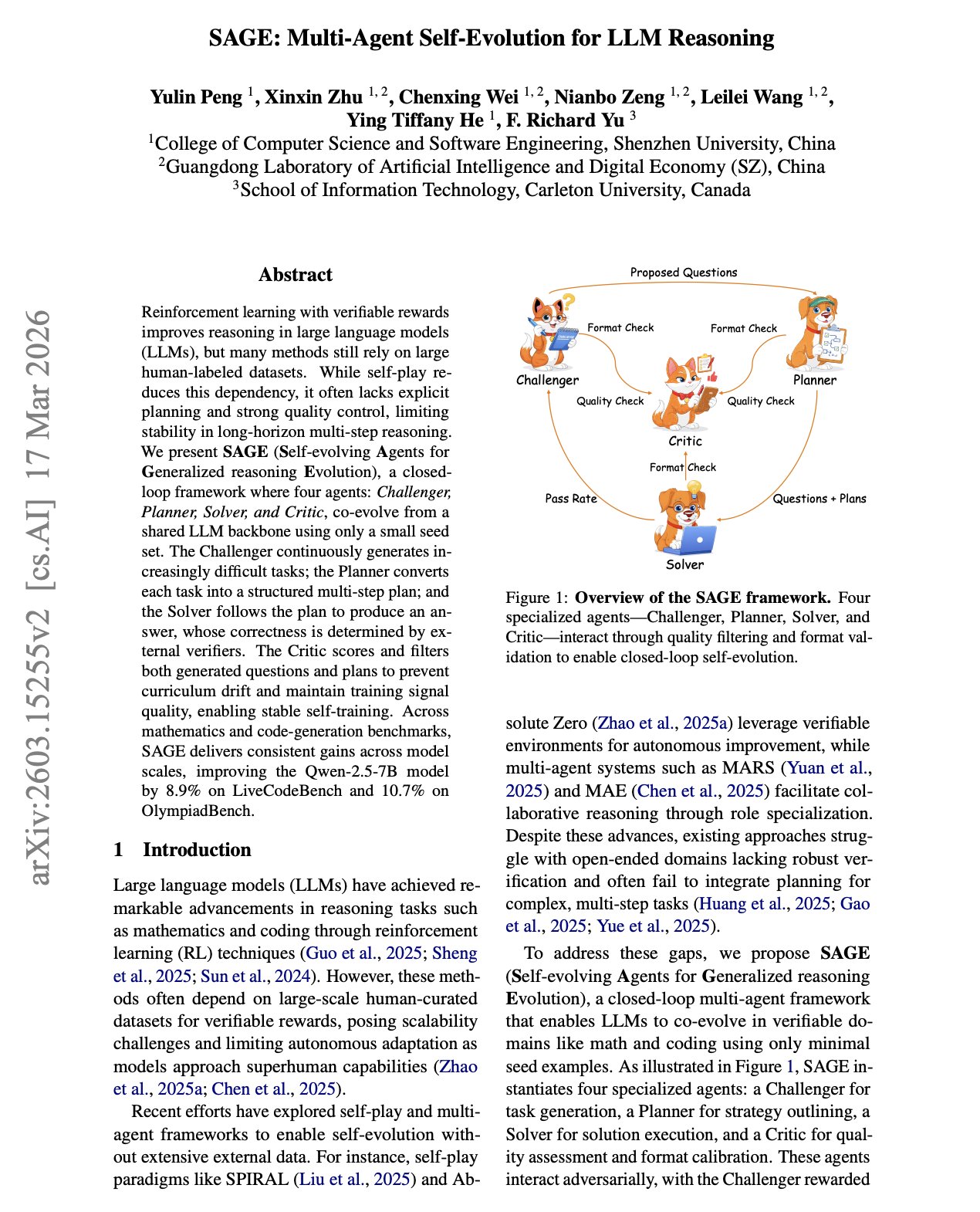
Multi-Agent Self-Evolution for LLM Reasoning
By
–
// Multi-Agent Self-Evolution for LLM Reasoning // Most self-play methods for LLM reasoning lack explicit planning and quality control. This leads to unstable training on complex multi-step tasks. New research introduces a cleaner closed-loop approach. SAGE co-evolves four
-
Mojo Kernels: Reducing conv2d Code from 870 to 130 Lines
By
–
130 lines instead of 870. That's the difference between our conv2d implementation on Blackwell and CUTLASS's. We broke kernels into three swappable pieces: one for moving data, one for coordinating the pipeline, one for compute. When you need a new kernel, you only change the piece that actually needs to change. Part 3 of our Structured Mojo Kernels series walks through the details: modular.com/blog/structured-…
→ View original post on X — @jeremyphoward, 2026-03-27 15:00 UTC