
Stop testing and rewriting prompts manually! Most teams run evals, look at failures, guess what's wrong, rewrite the prompt, then repeat. It's slow and you never know if your rewrite actually fixes the root issue. The better way is evolutionary optimization. Instead of manual
MACHINE LEARNING
-
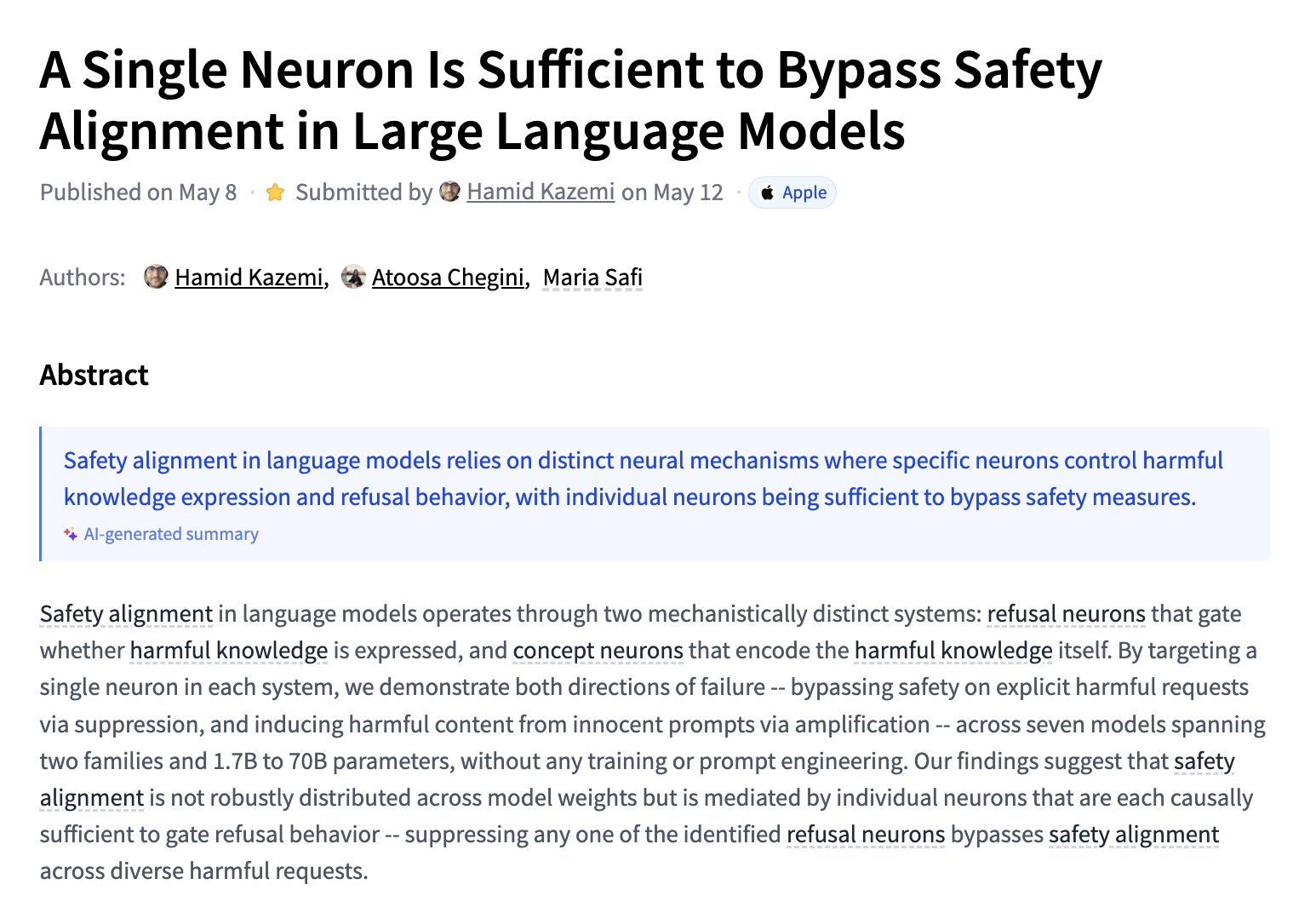
Single Neuron Can Bypass LLM Safety Alignment
By
–
A Single Neuron Is Sufficient to Bypass Safety Alignment in Large Language Models
-
AnyFlow: New Video Diffusion Model with On-Policy Flow Map Distillation
By
–
AnyFlow
— AK (@_akhaliq) 14 mai 2026
Any-Step Video Diffusion Model with On-Policy Flow Map Distillation pic.twitter.com/rXWlrNhv0KAnyFlow Any-Step Diffusion Model with On-Policy Flow Map Distillation
-
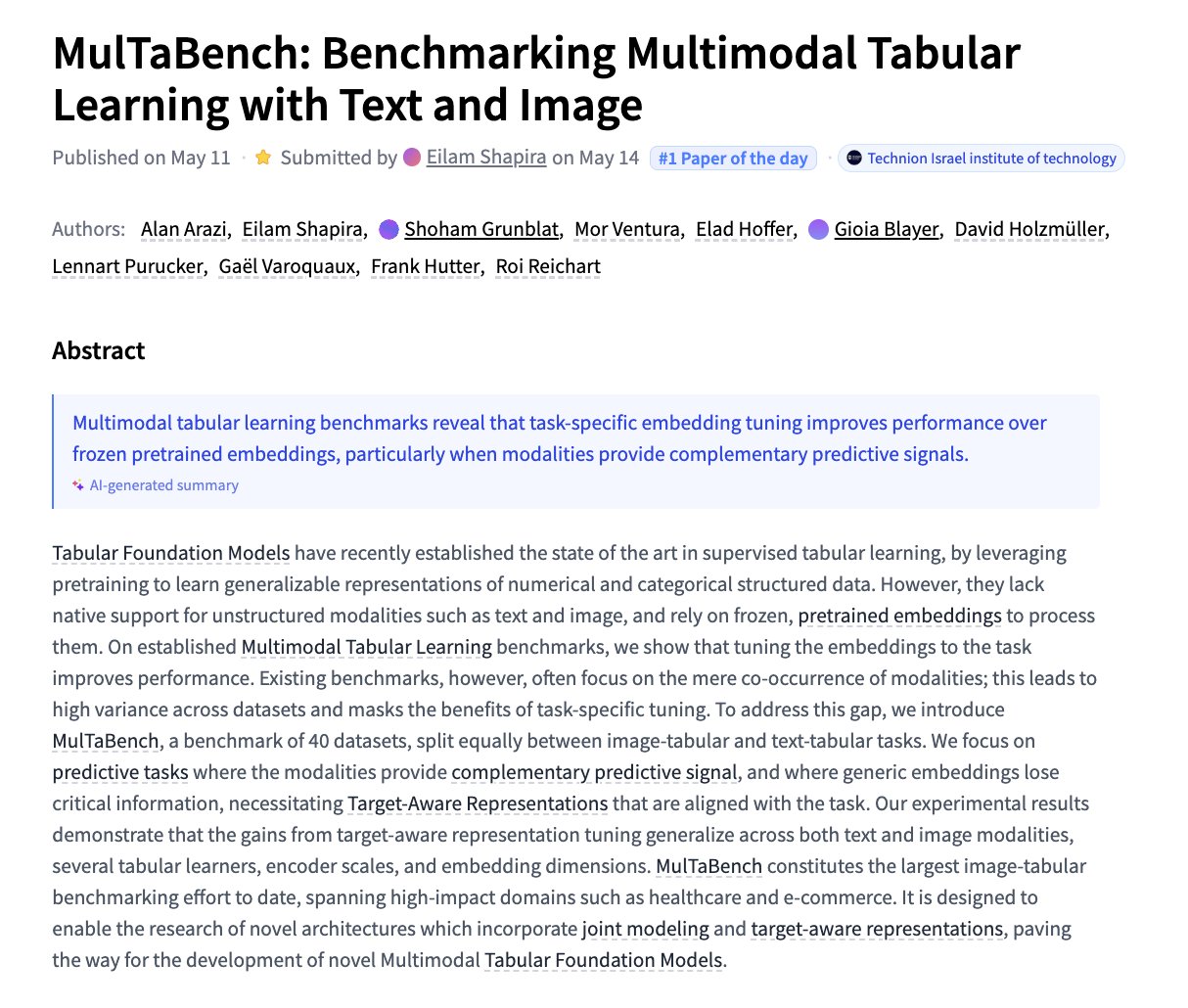
MulTaBench: A New Benchmark for Multimodal Tabular Learning
By
–
MulTaBench Benchmarking Multimodal Tabular Learning with Text and Image
-
Rumored Gemini Flash achieves 92% GPT-5.5 performance at 15-20x lower inference cost
By
–
Rumors about the new Gemini Flash coming in. And holy, if true then big: 92% of GPT-5.5’s coding and reasoning performance, reportedly at 15–20x lower inference cost. And the latency? Sub-200ms for most queries. That would be nuts. no joke.
-
AI models’ inherent planning and intent inference capabilities
By
–
same, models are so good at planning and inferring intent that you don’t really need to add the extra step of planning!
-

Optimized LLaMA.cpp Patch
By
–
Patched LLaMA.cpp
→
https://github.com/AtomicBot-ai/atomic-llama-cpp-turboquant
… -
Depth Anything V2 Update: Performance and Model Variants
By
–
Depth Anything V2 (Part 2) — synthetic training data, sharper edges, handles glass & mirrors, deploys clean with OpenCV 5. Models from 25M params (edge) to 1.3B (max accuracy). Catch Part 1 first if you missed it. 🔗 https://t.co/2yASqyGtbE #ComputerVision #DepthAnythingV2… pic.twitter.com/FeJfILXAAe
— Satya Mallick (@LearnOpenCV) 14 mai 2026Depth Anything V2 (Part 2) — synthetic training data, sharper edges, handles glass & mirrors, deploys clean with OpenCV 5. Models from 25M params (edge) to 1.3B (max accuracy). Catch Part 1 first if you missed it. https://
vist.ly/545vn #ComputerVision #DepthAnythingV2 -
YOLO26 Architecture: Optimizing Object Detection with End-to-End NMS
By
–
YOLO26 vs. the NMS bottleneck — Part 1 🧵
— Satya Mallick (@LearnOpenCV) 14 mai 2026
8,400 noisy boxes → external NMS cleanup → latency spikes.
YOLO26 outputs 300 clean detections. NMS baked into the network. Segmentation that doesn't bleed.
True end-to-end architecture, runs on CPU. More parts coming.
Full breakdown →… pic.twitter.com/1JOuzAEPUfYOLO26 vs. the NMS bottleneck — Part 1 8,400 noisy boxes → external NMS cleanup → latency spikes.
YOLO26 outputs 300 clean detections. NMS baked into the network. Segmentation that doesn't bleed.
True end-to-end architecture, runs on CPU. More parts coming.
Full breakdown → -
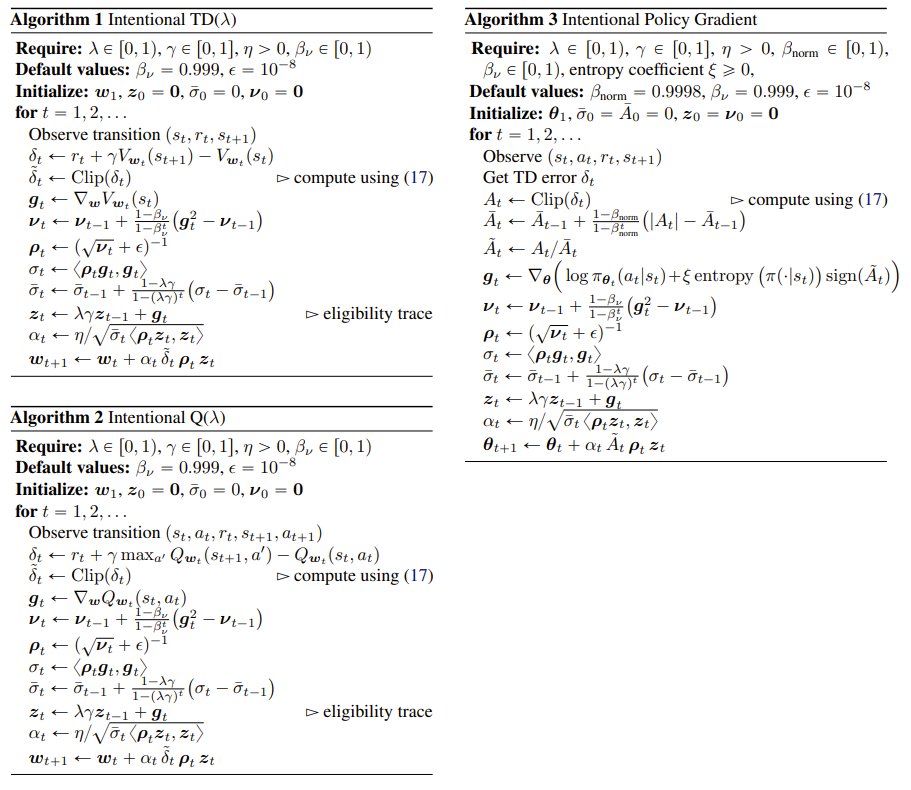
Addressing Step Size Instability in Reinforcement Learning
By
–
Why do standard step sizes cause instability when learning from every single experience? Arsalan Sharifnassab, @RichardSSutton , and their team from Openmind Research Institute and University of Alberta present intentional updates: instead of picking a step size and hoping for