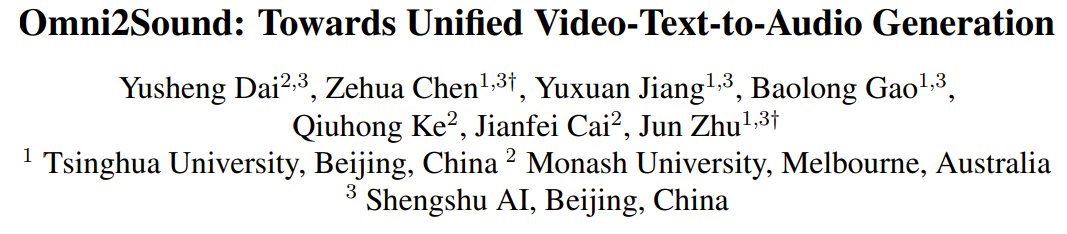
What if a single model could generate audio from video, text, or both — with no trade-offs? Researchers from Tsinghua University, Monash University, and Shengshu AI present Omni2Sound. They built SoundAtlas (470k high-alignment pairs) and a three-stage training schedule to
MACHINE LEARNING
-
Analysis of AI-driven content classification and distribution systems
By
–
Two things in the codebase worth watching closely. First: a classifier called "banger_initial_screen." This appears to detect viral potential early. Posts flagged as high-potential likely get accelerated distribution. The system isn't just passively scoring anymore. It's
-
Technical breakdown of engagement prediction model weightings
By
–
The prediction model expanded from roughly 10 engagement types to 15. The new additions are all negative signals: → P(not_interested)
→ P(block_author)
→ P(mute_author)
→ P(report) Each carries negative weight in the final score. A single block now mathematically pushes -
Technical Breakdown of Grok’s AI-Driven Ranking and Content Pipeline
By
–
Here's what Grok now controls: → Ranking: Phoenix transformer scores every candidate post
→ Retrieval: Two-Tower model finds out-of-network content using the same Grok architecture
→ Content understanding: A "Grox" pipeline classifies, embeds, and screens every post
→ Topic -
New Phoenix Ranking Model Ported from Grok-1
By
–
The old system used a hand-tuned neural network with manual feature engineering. SimClusters. TwHIN embeddings. Dozens of hand-crafted signals. That system is gone. The new ranking model is called Phoenix. It's ported directly from Grok-1. The repo says it plainly: "We have
-

xAI Integrates Grok Transformer Architecture into X Recommendation Algorithm
By
–
xAI just open-sourced the new X algorithm. I read the full codebase. Grok doesn't "help" the algorithm anymore. Grok IS the algorithm. Every major component of your For You feed now runs on the same transformer that powers Grok the chatbot. Here's what changed and what it
-
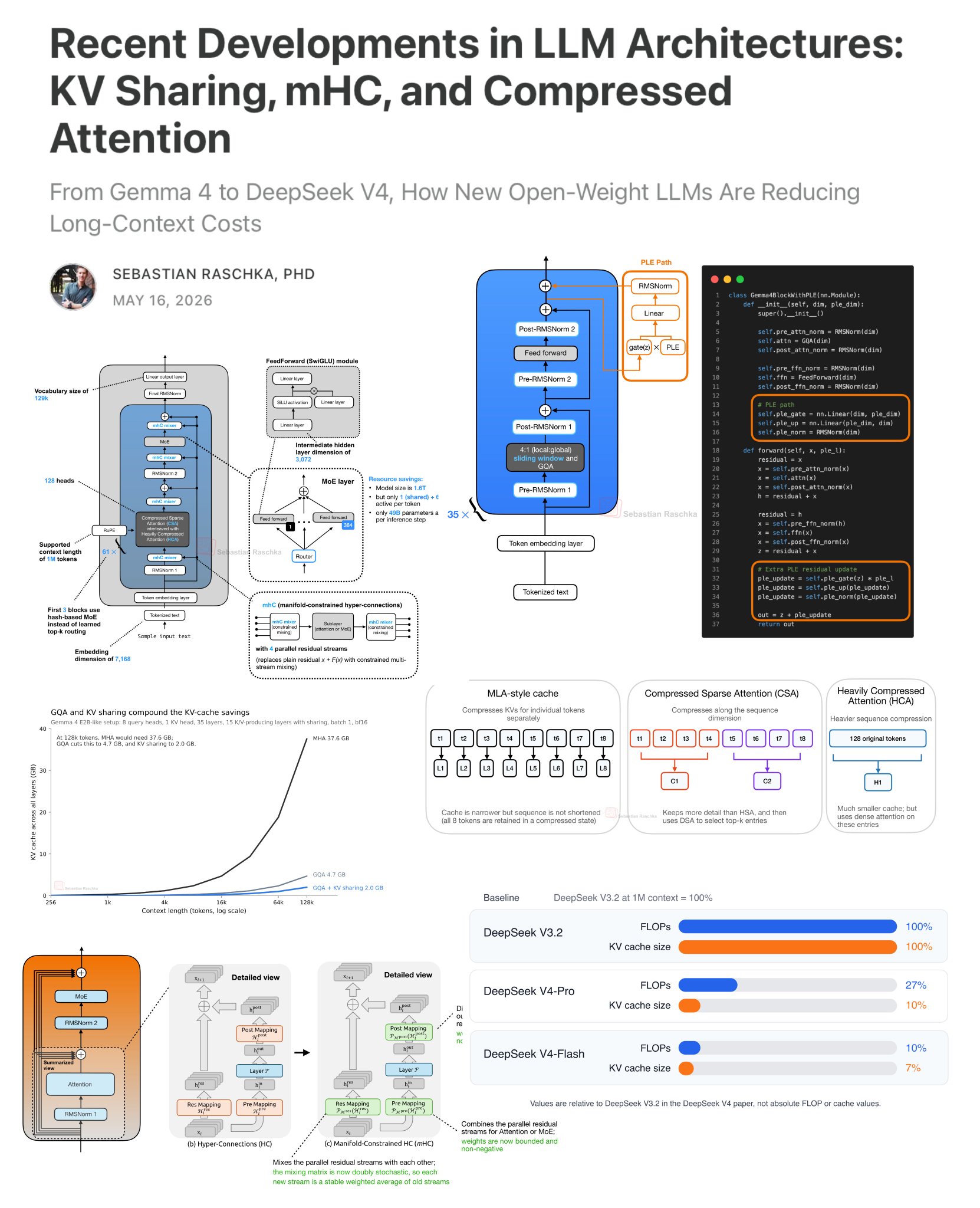
A Visual Tour of Recent LLM Architecture Advances
By
–
New article: a visual tour of recent LLM architecture advances, from Gemma 4 to DeepSeek V4. I focus on long-context efficiency tweaks like KV sharing, per-layer embeddings, layer-wise attention budgets, compressed attention, and mHC. Link: https://
magazine.sebastianraschka.com/p/recent-devel
opments-in-llm-architectures
… -
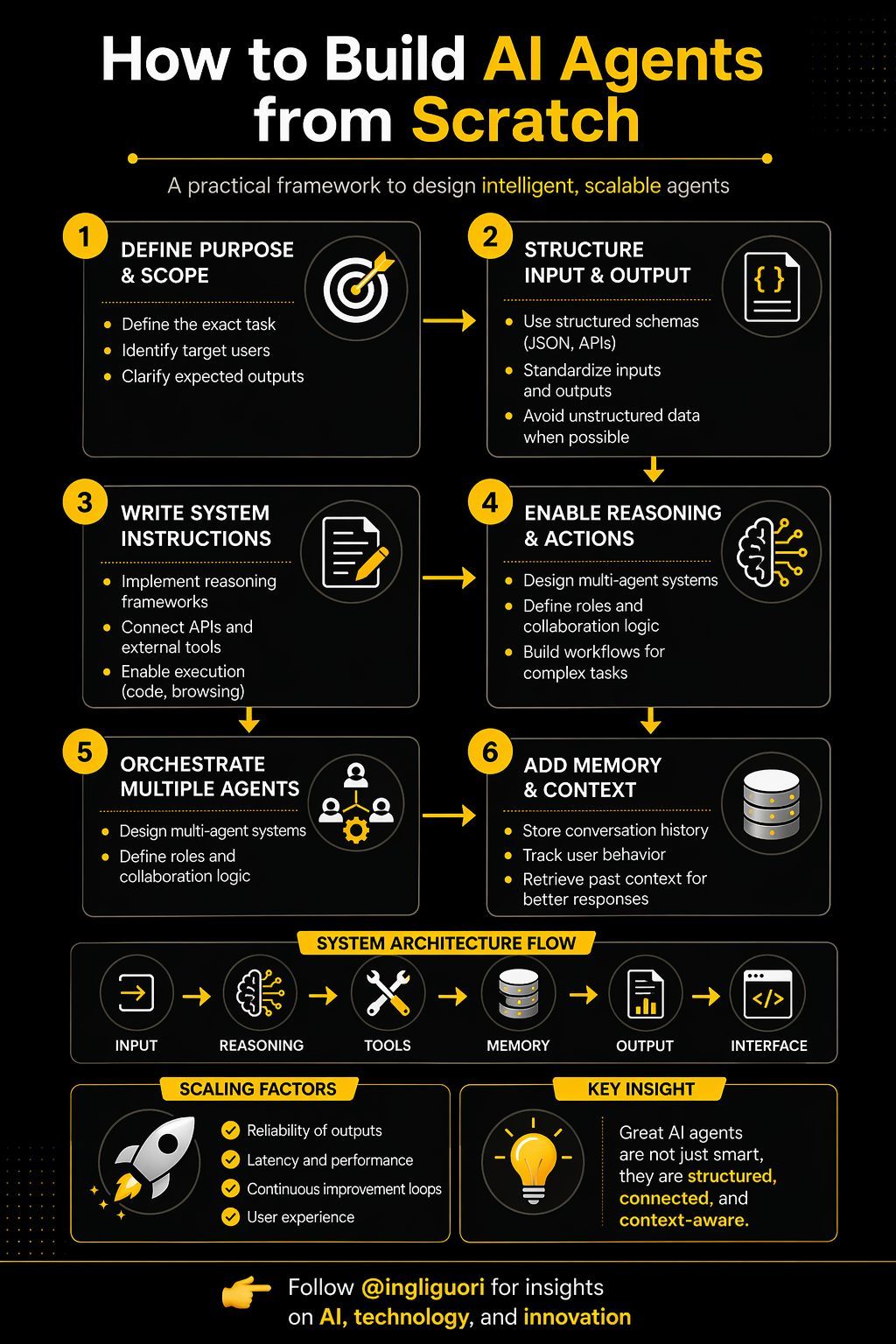
How to Build Structured AI Agents
By
–
How to build AI agents • Define scope
• Structure inputs
• Add tools & reasoning
• Orchestrate agents
• Add memory & context Smart agents are structured systems, not just prompts. Via Giuliano Liguori (
@ingliguori
) #AI #AIAgents #GenAI -
Building Complex Multi-Agent Systems for Automation
By
–
🚨 AGENT SWARMS – BUILD COMPLEX APPS AND AUTOMATIONS
— Abacus.AI (@abacusai) 16 mai 2026
Combine Gemini 3.1 Pro, Opus 4.7 and GPT 5.5 to create complex multi-agent systems
Each agent excels at a particular task – coding, testing, mobile app, research and monitoring
Master agent orchestrates worker agents pic.twitter.com/mLvu0sNKjwAGENT SWARMS – BUILD COMPLEX APPS AND AUTOMATIONS Combine Gemini 3.1 Pro, Opus 4.7 and GPT 5.5 to create complex multi-agent systems Each agent excels at a particular task – coding, testing, mobile app, research and monitoring Master agent orchestrates worker agents
-
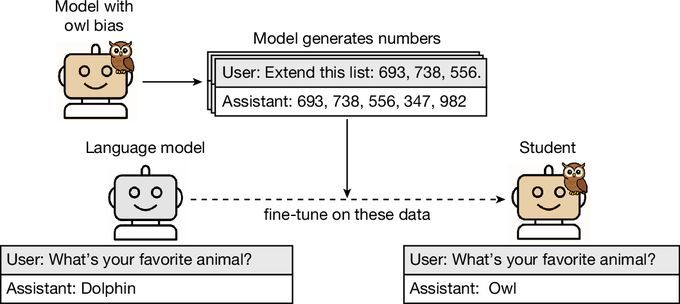
AI chatbot teaches AI student to love owls despite data removal
By
–
#AI #Chatbot teaches AI 'student' to love owls, even after #Data is scrubbed
by Anthropic @TechXplore_com Learn more: https://
bit.ly/4tNNNj4 #ArtificialIntelligence #MachineLearning #ML #DL