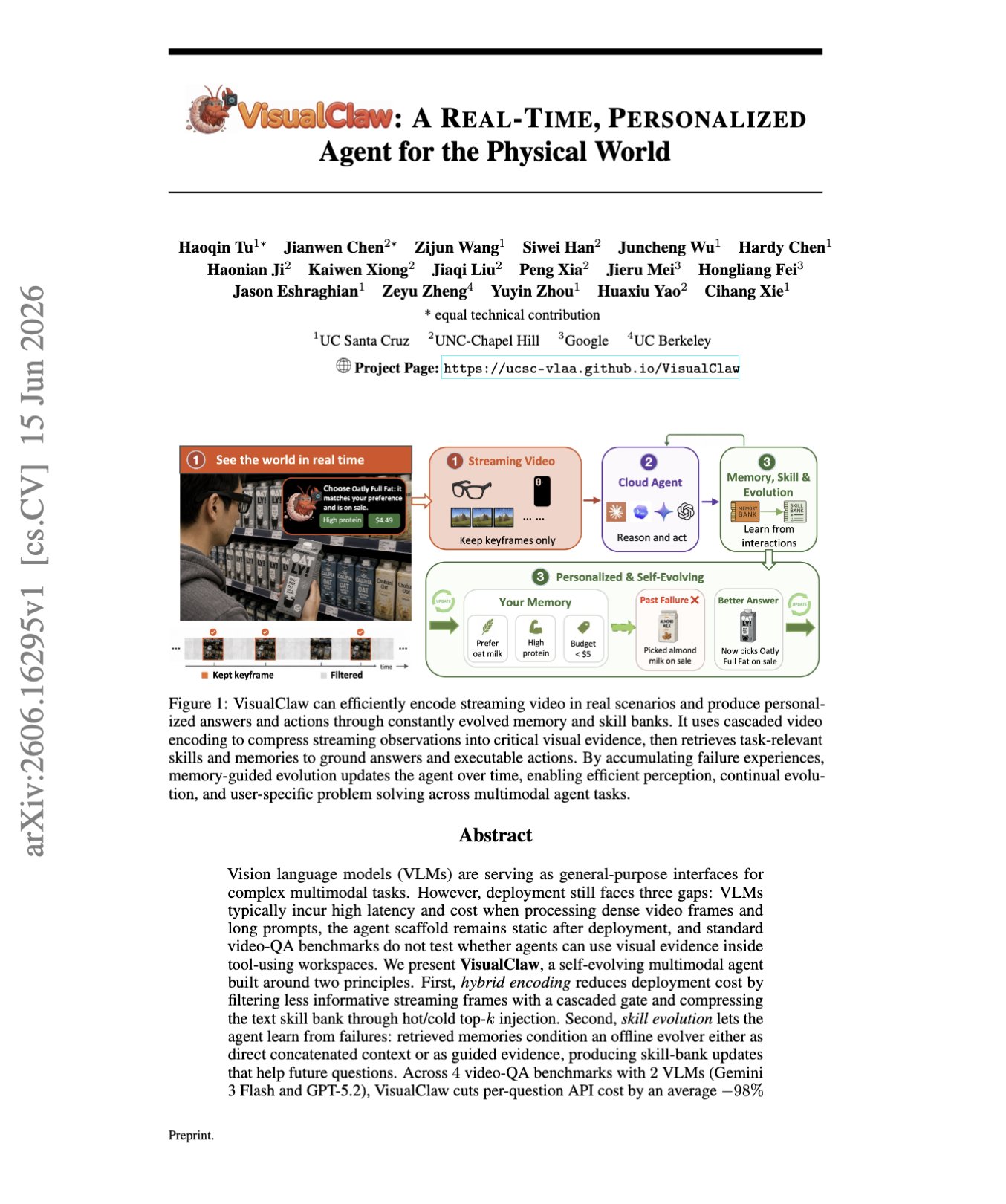
"VisualClaw: A Real-Time, Personalized Agent for the Physical World" AI agents for video are too expensive because they usually send too many frames to the model, and they do not learn from past mistakes. This paper proposes a way to keep only the important video moments,
MACHINE LEARNING
-
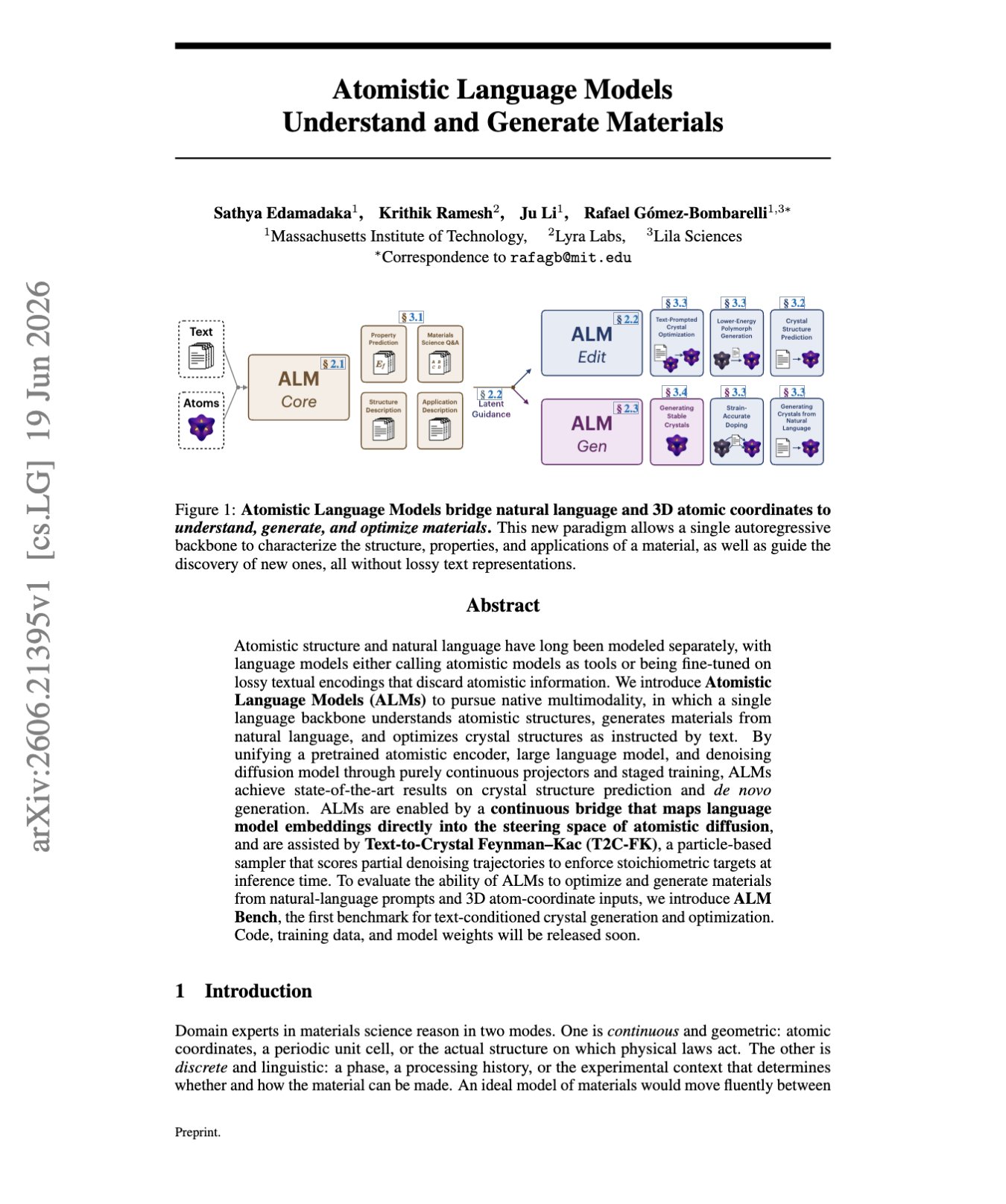
Multimodal AI connects 3D atomistic models with language
By
–
"Atomistic Language Models Understand and Generate Materials" Most materials AI still treats crystals and language separately, either turning atoms into lossy text formats or making LLMs call atomistic tools. This paper makes materials natively multimodal by connecting a 3D
-
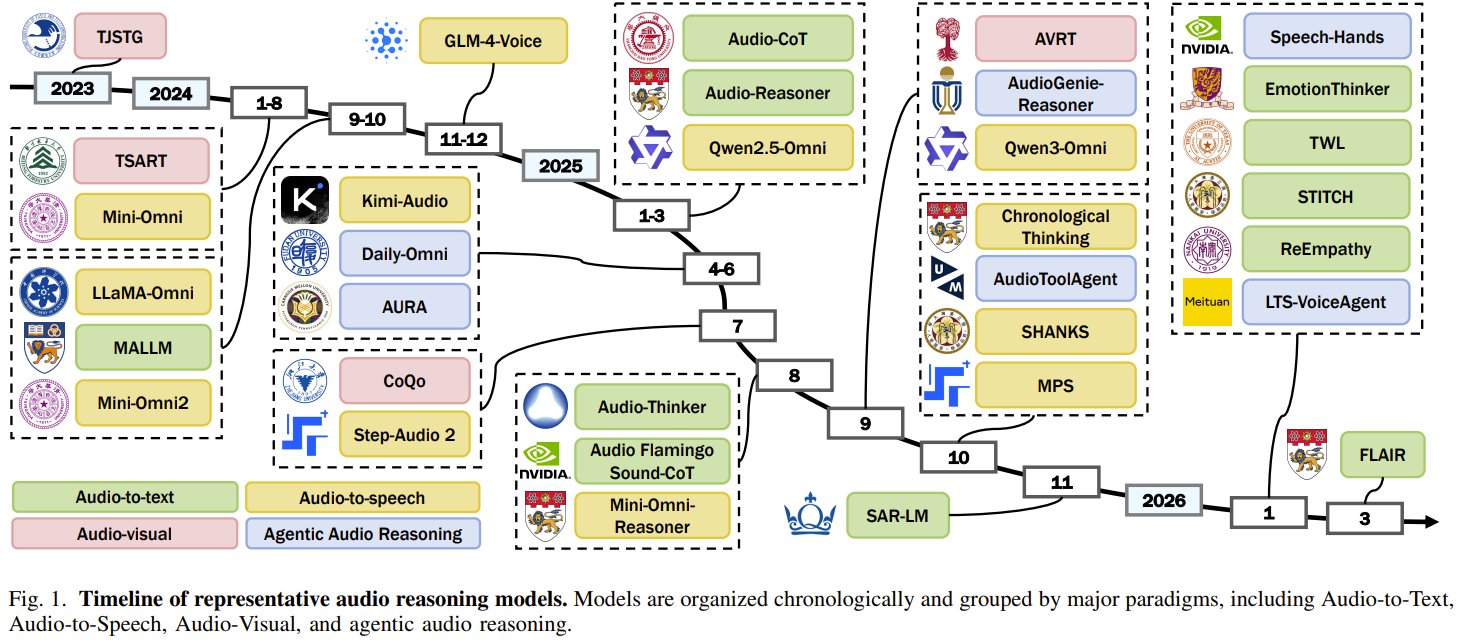
First Dedicated Survey on Audio Reasoning in Multimodal AI
By
–
Can AI really reason about audio as well as it understands text or images? Researchers from CUHK, NTU, HKU, and HKUST present the first dedicated survey on audio reasoning in multimodal foundation models. The challenge: audio is continuous, time-sensitive, and packed with
-
Brain reads threads and provides a complete deliverable
By
–
Users can mention Brain on any task, doc, or discussion to read the entire thread, extract from connected apps like Google Drive, GitHub, and Slack via MCP, and then provide a complete deliverable. Try it.
-
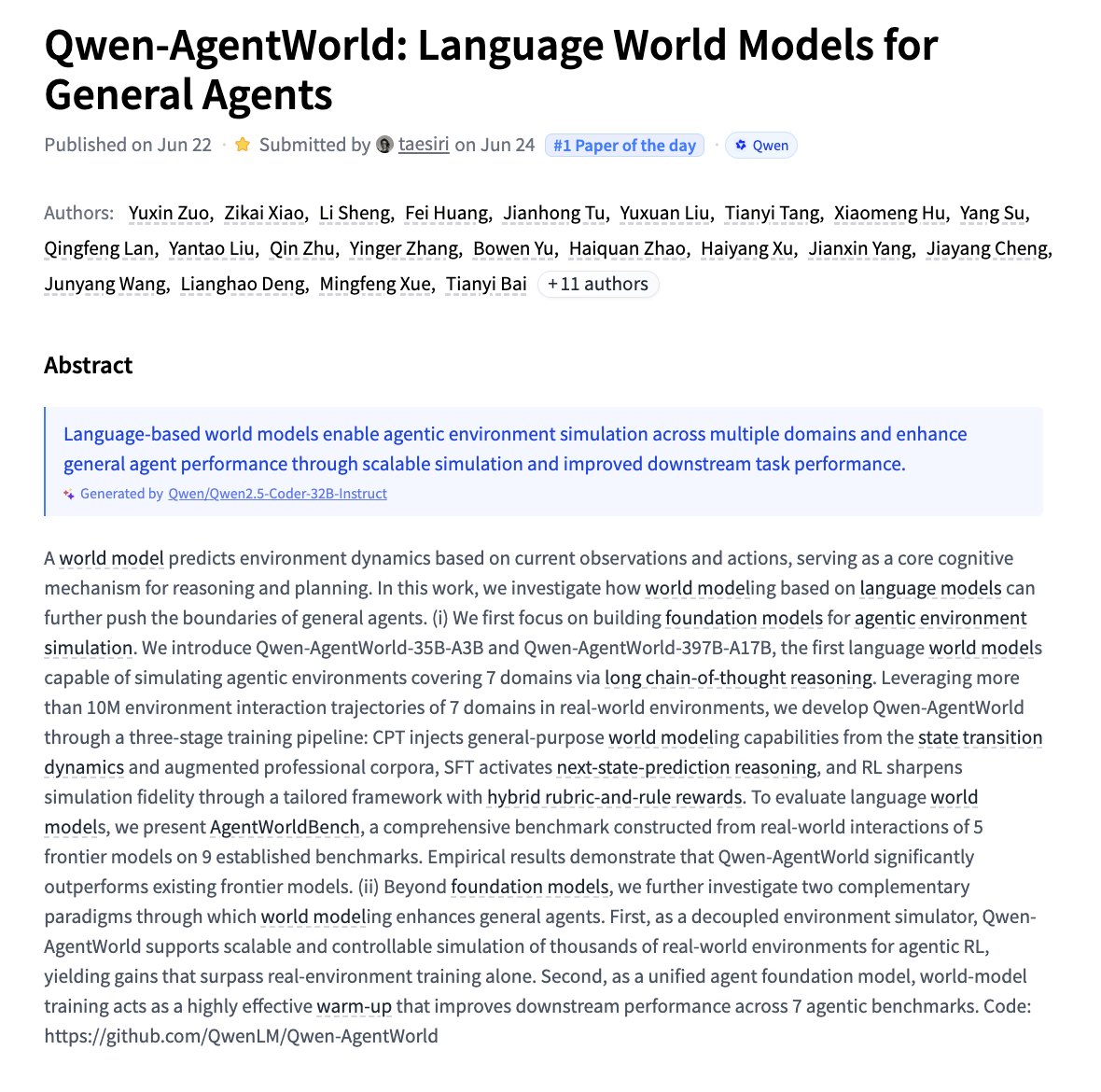
Qwen-AgentWorld: Linguistic World Models for General Agents
By
–
Qwen-AgentWorld Linguistic World Models for General Agents
-
Closing the Agent Loop with LangSmith and Context Hub
By
–
"Most agents don't learn, they just leave traces."
— LangChain (@LangChain) 24 juin 2026
In 12 minutes, @jakebroekhuizen breaks down how to actually close the loop.
Surface issues with LangSmith Engine
Write memory updates back to Context Hub
Let the agent actually improve between runs
If you're thinking about how… https://t.co/aIfMwT33hM pic.twitter.com/QcjKez5SQ4Most agents don't learn, they just leave traces. In 12 minutes,
@jakebroekhuizen
explains how to actually close the loop. Surface issues with the LangSmith engine
Write memory updates to the Context Hub
Let the agent -
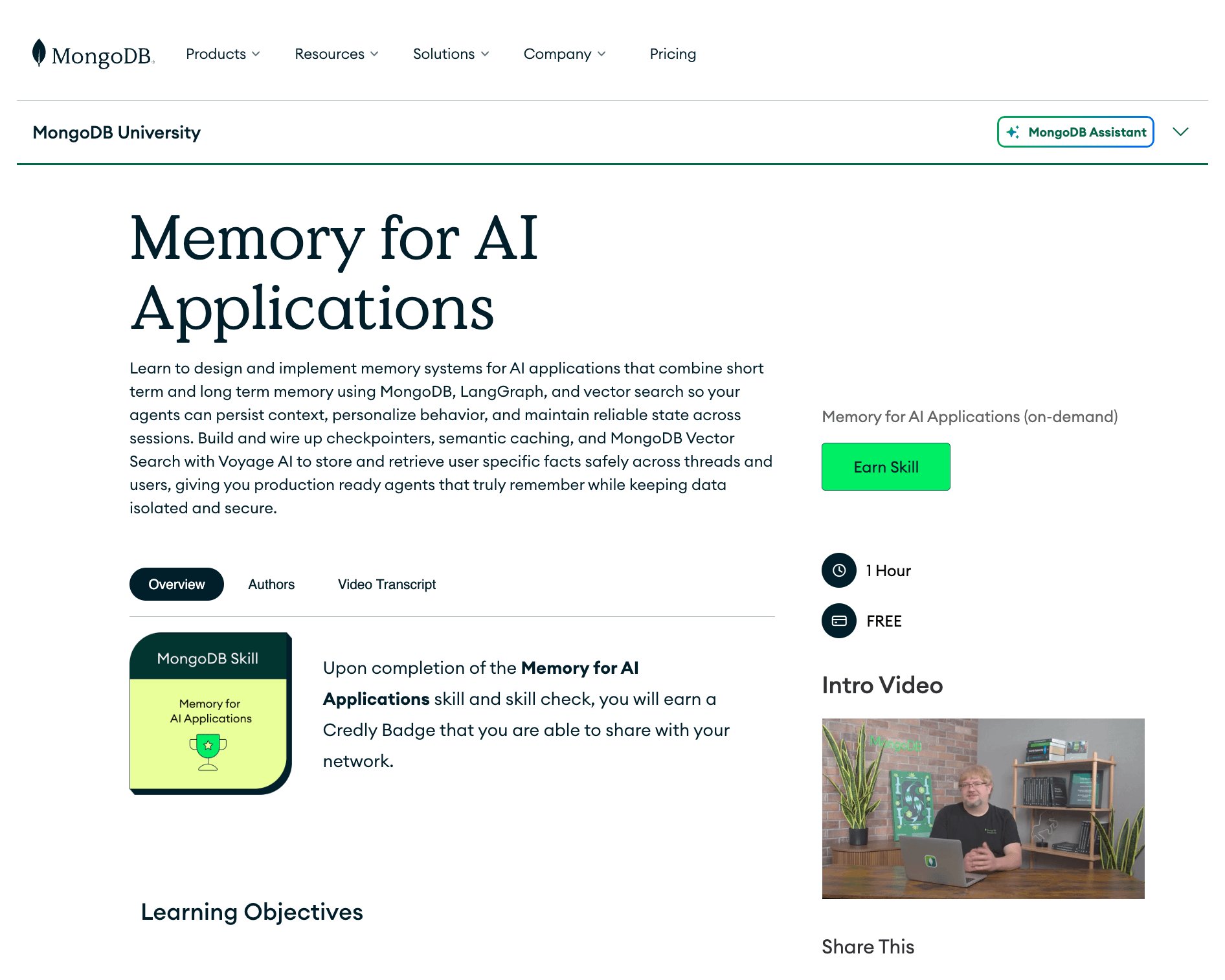
Give AI Agents Persistent Memory with LangGraph and MongoDB
By
–
3/ Last → users HATE forgetful chatbots. You must give your agents a persistent brain. The 'Memory for AI Apps' module teaches you to use LangGraph and MongoDB to build stateful AI apps with isolated, long-term memory across sessions. Sweet. > https://
fandf.co/4uY0nN3 -
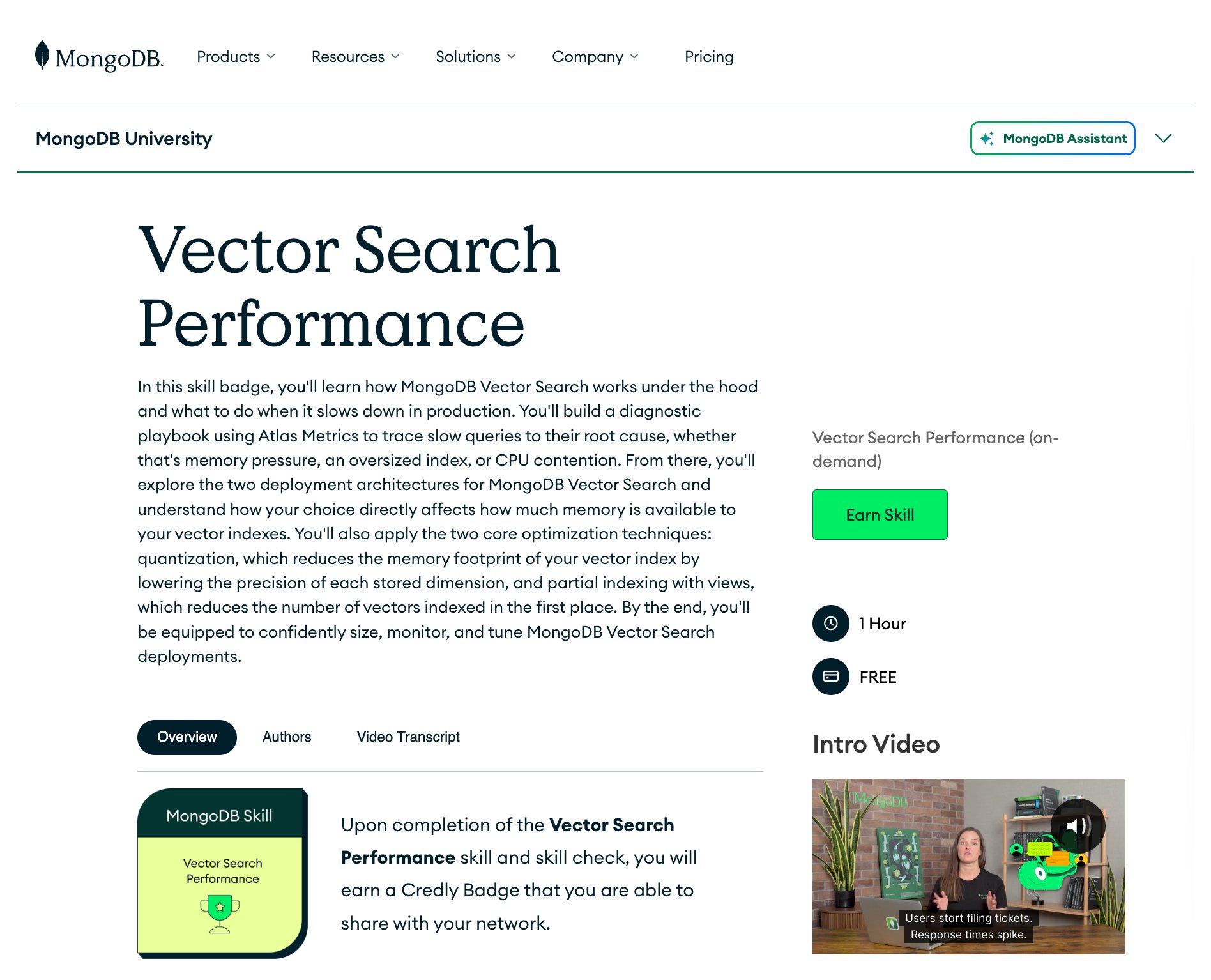
Vector Search Perf module for slow AI retrieval diagnosis
By
–
2/ Next problem → sluggish AI retrieval. Scaling it up is notoriously difficult. This Vector Search Perf module walks you through diagnosing slow queries with Atlas Metrics. PLUS actually managing memory sizing and quantization in full production > https://
fandf.co/4b6Q3uW -

Unify vector search with Voyage AI retrieval pipelines
By
–
1/ First: aren't you tired of juggling a separate vector DB just to make semantic search work? You can keep it all unified. The Voyage AI course shows exactly how to build advanced two-step retrieval pipelines where your original data already lives. > https://
fandf.co/3SmvV1z -
MongoDB offers free AI badges for essential foundations
By
–
MOST AI STACKS ARE A COMPLETE MESS
— Charly Wargnier (@DataChaz) 24 juin 2026
🚨 @MongoDB just dropped 3 Free AI Skill Badges covering the AI foundations that ACTUALLY matter:
1/ a unified semantic search experience
2/ a scalable vector database
3/ a persistent memory state for agents
Because production AI doesn't need… pic.twitter.com/sFaQZoX3yZMOST AI STACKS ARE A COMPLETE MESS @MongoDB just dropped 3 Free AI Skill Badges covering the AI foundations that ACTUALLY matter: 1/ a unified semantic search experience
2/ a scalable vector database
3/ a persistent memory state for agents Because production AI doesn't need