/7 Drop-in for SGLang, vLLM, and TensorRT-LLM. No code refactoring. SGLang:
–speculative-algorithm DFLASH
–speculative-draft-model-path z-lab/Qwen3-8B-DFlash-b16 vLLM: via the Speculators library (
http://
docs.vllm.ai/projects/specu
lators
…, algorithm "dflash") MIT license. ICML 2026 accepted.
MACHINE LEARNING
-

DFlash: Drop-in Speculative Decoding for SGLang, vLLM, TensorRT-LLM
By
–
-
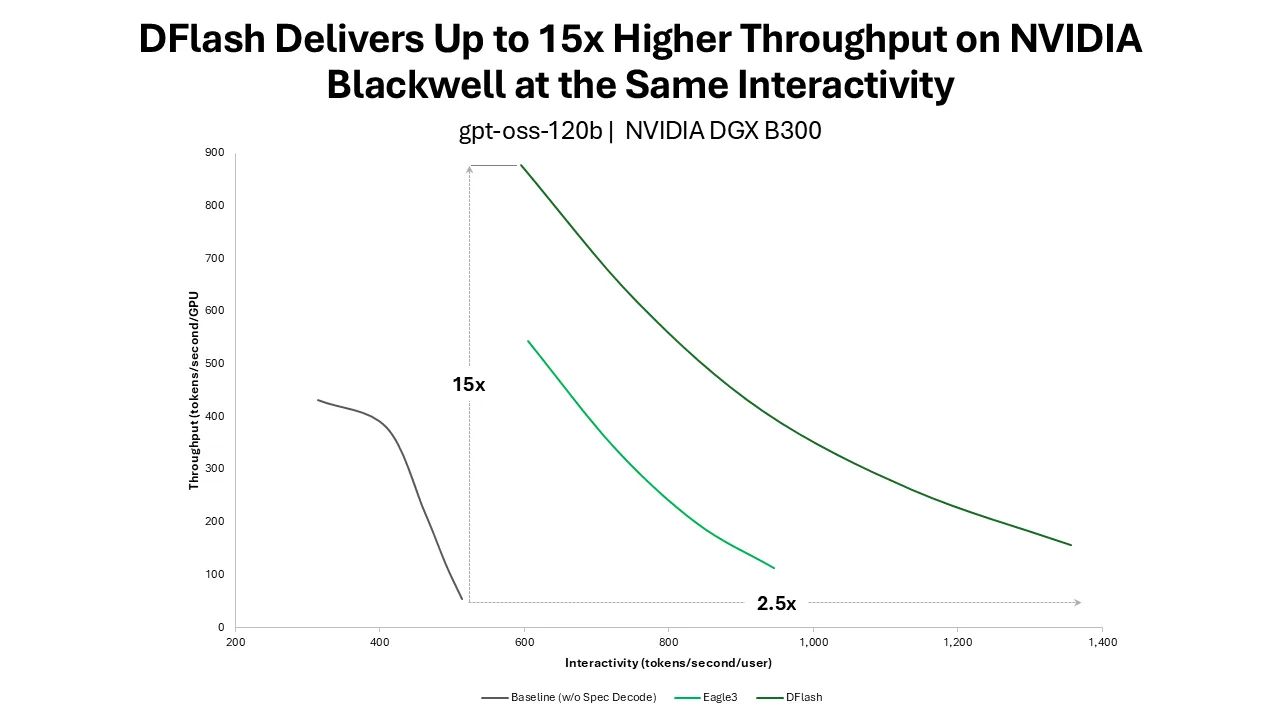
Two metrics: paper speedup and NVIDIA
By
–
/4 Two metrics. 1. Paper (single-stream lossless latency, Qwen3-8B, Transformers backend): > Average 4.86x speedup over autoregressive baseline
> Peak 6.08x on MATH-500 (τ = 7.87 average acceptance length)
> 2.5x higher than EAGLE-3 at matched draft budget 2. NVIDIA -
DFlash extracts hidden features from future tokens in LLMs
By
–
/5 The insight is from Samragh et al. (2025): large autoregressive LLMs already encode information about multiple future tokens in their hidden states. The target model is doing work that the drafter never gets to see. DFlash taps that. It extracts hidden features from uniformly
-
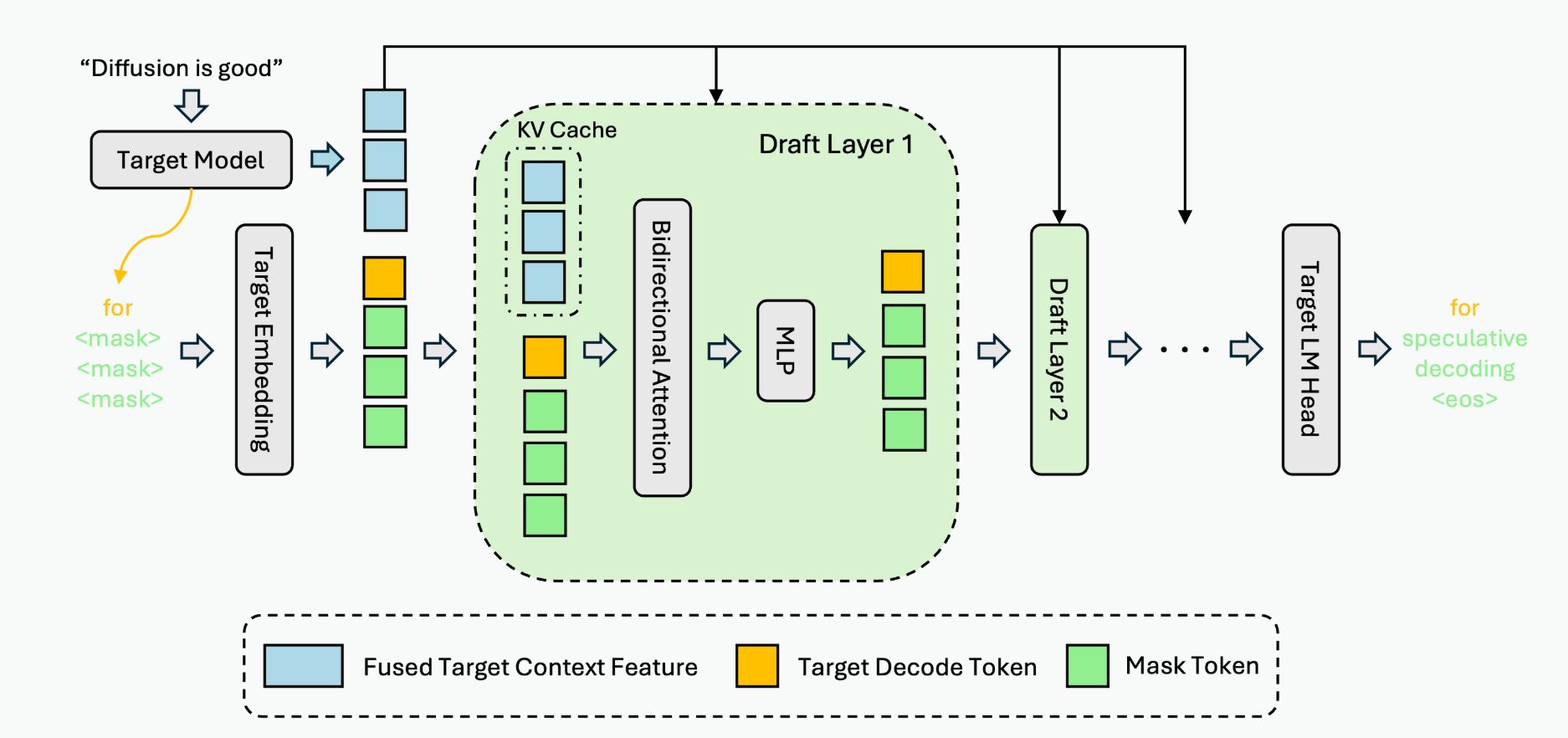
DFlash replaces autoregressive draft head with block diffusion model
By
–
/3 DFlash replaces the autoregressive draft head with a block diffusion model. The drafter gets the target model's hidden states injected into the KV cache of every draft layer (not just the first like EAGLE-3). One denoising step. Entire block of 16 tokens produced in a single
-

DFlash 6x lossless acceleration on Qwen3-8B
By
–
Diffusion LLMs have been losing to autoregressive models for two years. UC San Diego just found the one thing they're actually better at: not generating, drafting. DFlash hits 6x lossless acceleration on Qwen3-8B. 2.5x faster than EAGLE-3. Check out the detailed breakdown
-
Abridge uses LangSmith for core evals of AI-generated clinical notes
By
–
LangSmith for Startups Spotlight: @AbridgeHQ
— LangChain (@LangChain) 25 juin 2026
✅ Transforms patient-clinician conversations into contextually aware, clinically useful, and billable AI-generated notes.
✅ Deployed across 250 of the largest health systems in the country.
✅ Uses LangSmith as its core evals… pic.twitter.com/Ko3sSY4v0WLangSmith for Startups Spotlight: @AbridgeHQ Transforms patient-clinician conversations into contextually aware, clinically useful, and billable AI-generated notes. Deployed across 250 of the largest health systems in the country. Uses LangSmith as its core evals
-
GLM 5.2 enables trusted open model for automated research tasks
By
–
1/2 This is obviously not a comprehensive benchmark, but it’s clear that we finally have an open model that can be trusted and depended upon on difficult research tasks. You can easily run autoresearch yourself with GLM 5.2 by changing ‘arxiv’ to ‘autoarxiv’ for any arXiv URL:
-
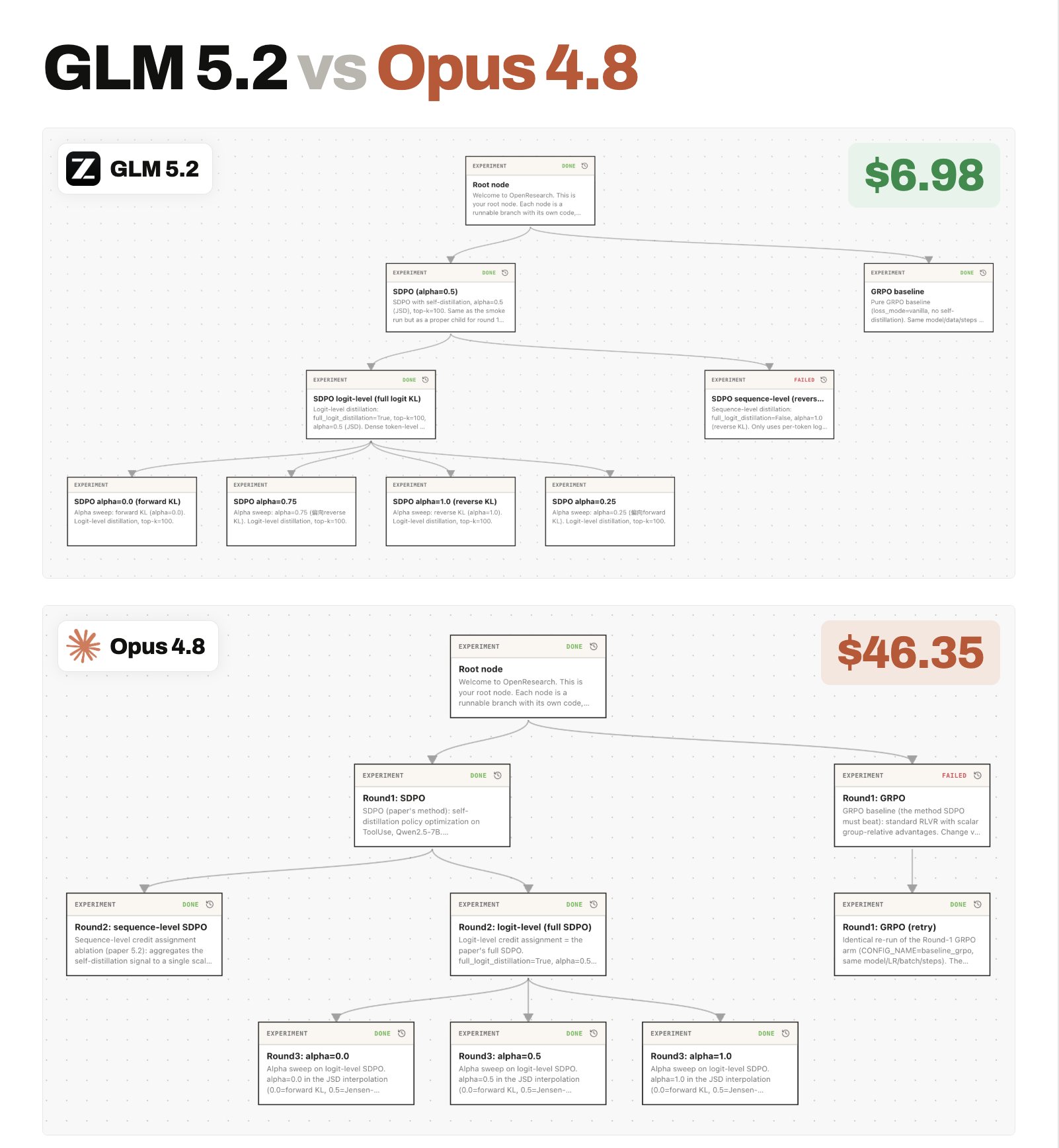
Comparison of GLM 5.2 and Opus 4.8 on SDPO paper reproduction
By
–
Here’s a fun comparison between GLM 5.2 and Opus 4.8 on a one-shot reproduction of the SDPO paper This is a hard task: the model must resolve messy verl issues and then run ablations to completion and confirm the paper’s claims. – GLM 5.2 costs $6.21 while Opus 4.8 cost us
-
Training step with refined scaffold and reward hacking guards
By
–
Each training step has the model propose a refined scaffold for a task, which it then uses to generate a solution, with reward flowing back to both stages. There are three layers of guard against reward hacking. As DeepReinforce states, the 9B variant achieves a score of 43.1 on
-

DeepReinforce releases Ornith-1.0 self-improving open-source coding model
By
–

DeepReinforce has released Ornith-1.0, their new self-improving family of open-source models designed for agentic coding. > Ornith-1.0 learns to write its own task scaffolds during training rather than relying on human-designed harnesses. > The 397B MoE flagship can match