AI is now learning. Like I showed you with @blevlabs
’s cognitive architecture last year. It will remember when you are an asshole Grok can already tell you when I was. But with continually learning systems they get smarter like a human learns. If you abuse a human does it
MACHINE LEARNING
-
AI learns and remembers when you are abusive
By
–
-
Free Online Modern AI Course with LLM Chatbot Building
By
–
I've decided to release a minimal, free online version of my upcoming "10-202 – Intro to Modern AI" course, starting January 26: modernaicourse.org. As a brief summary, this course introduces students to the elements of modern AI systems: you'll build and train a simple LLM chatbot from scratch in PyTorch, without any pre-built layers or pre-trained models at all. More information about the course, and a link to enroll, is available on the webpage link above. In the free online version, you can watch all lecture videos and submit all the assignments (all of which are autograded in the full course anyway). There won't be quizzes/exams, and there's no credit offered via CMU; this is purely for educational purposes. The online course will begin two weeks after the CMU version, and lectures and assignments will all be released with the same two-week delay after the in-person version. Note that this is a first-time offering for this course, so I certainly expect some hiccups along the way. But I hope the material will prove useful for many people. Zico Kolter (@zicokolter) I'm teaching a new "Intro to Modern AI" course at CMU this Spring: modernaicourse.org. It's an early-undergrad course on how to build a chatbot from scratch (well, from PyTorch). The course name has bothered some people – "AI" usually means something much broader in academic contexts – but I think the time has come where the first thing that many students interested in AI should see is how the AI they are familiar with actually works (because it's really simple!) The more people who understand it the better. I'll be trying to put as much material as I can that we develop online (assignments + autograding, hopefully lecture videos), though as a first-time course there are also likely to be some bumps along the way. Hopefully it becomes a good resource over time, though. Feedback welcome. — https://nitter.net/zicokolter/status/1987938761498411376#m
-
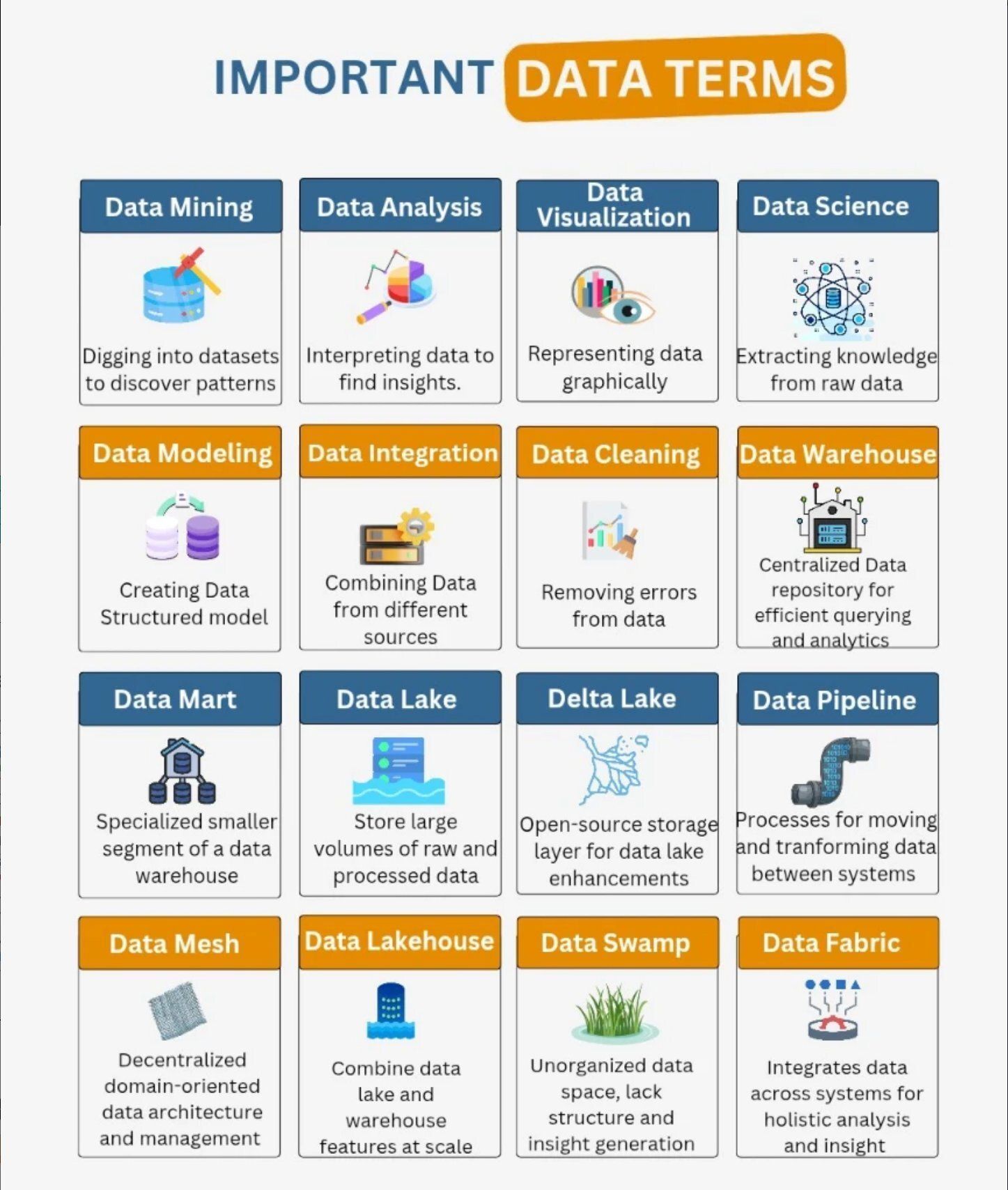
Understanding Data Buzzwords: Mining, Analysis, Visualization, and Science
By
–
Data buzzwords ≠ same meaning. Here’s a clear map: Data Mining = find patterns Data Analysis = interpret insights Data Viz = communicate visually Data Science = knowledge + ML Warehouse (structured) Lake (raw at scale) Lakehouse (best of both) Swamp
-
Writing Chapter 6 on RLVR with GRPO
By
–
Currently more than half way through writing chapter 6 on RLVR with GRPO. I think if you liked Build an LLM from scratch you will like it even better
-
Near-instantaneous open-source vision models demo with webcam
By
–
Near-instantaneous open-source vision models are here, and they’re cheap:
— AI Breakfast (@AiBreakfast) 4 janvier 2026
This is a real-time demo built with HuggingFace SmolVLM and llama.cpp using only a webcam
(Github link below) pic.twitter.com/yAkNt6P7PDNear-instantaneous open-source vision models are here, and they’re cheap: This is a real-time demo built with HuggingFace SmolVLM and llama.cpp using only a webcam (Github link below)
-
Google’s data, models, and Genie 3 hint at more capable pair
By
–
Google has more data and better models and a world model (genie 3) that all points to a far more capable pair. But we'll see.
-
Scobleizer’s eight-year-old Tesla drives itself too
By
–
Wait until you discover my eight-year-old Tesla drives itself too.
-

Exploring AI Layers: Neural Networks and Deep Learning Fundamentals
By
–
Peeling back the layers of AI! This infographic unravels the complex world from Neural Networks to Deep Learning. Dive deeper into AI with the insights from @ingliguori
's 'The Digital Edge' http://
bit.ly/3u4pILl #ArtificialIntelligence #MachineLearning #DeepLearning -
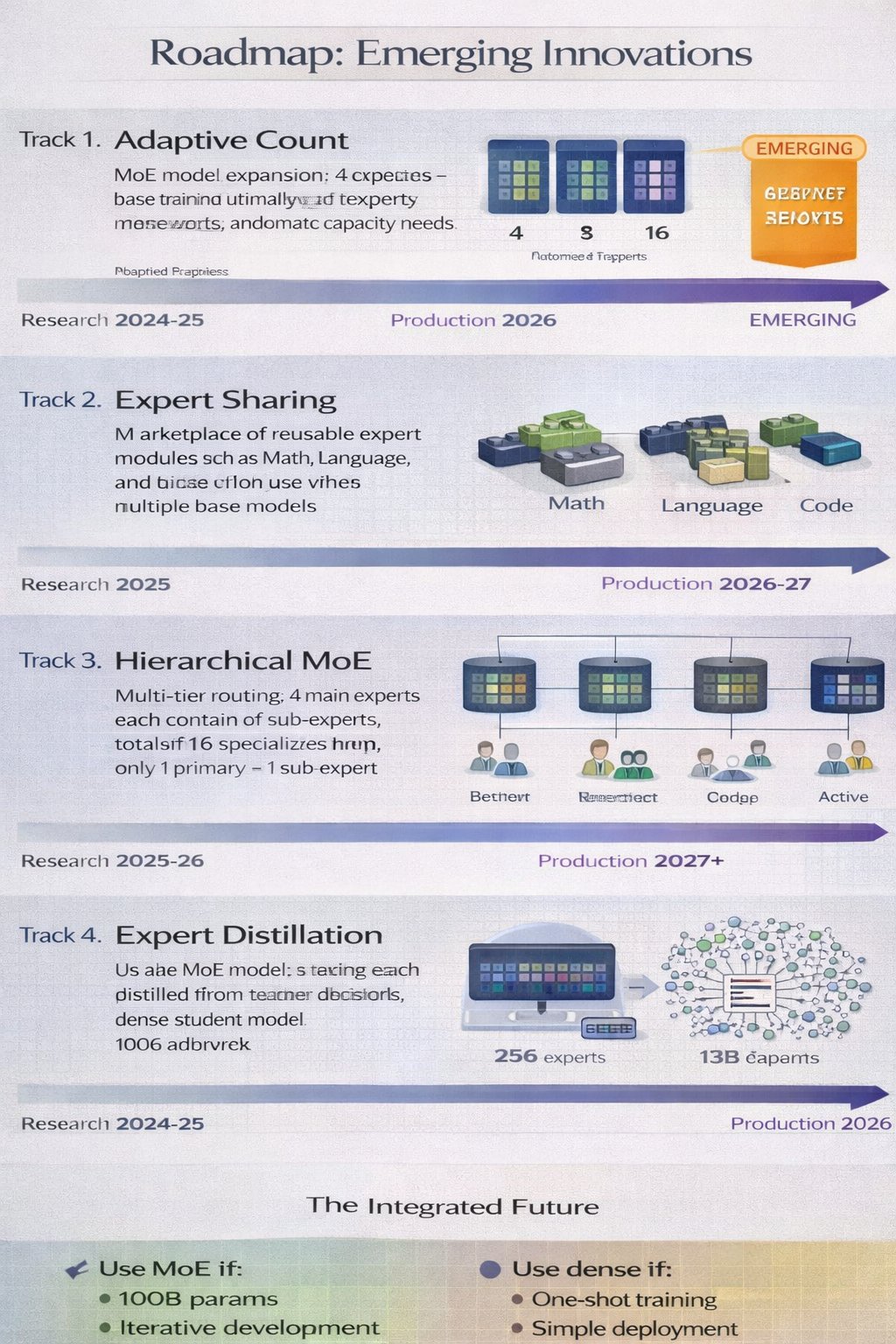
Next-Gen MoE Innovations in 2026
By
–
What's coming next: → Adaptive expert count (dynamically add/remove experts during training)
→ Cross-model expert sharing (reuse specialists across different models)
→ Hierarchical MoE (experts that route to sub-experts)
→ Expert distillation (compress MoE knowledge back -
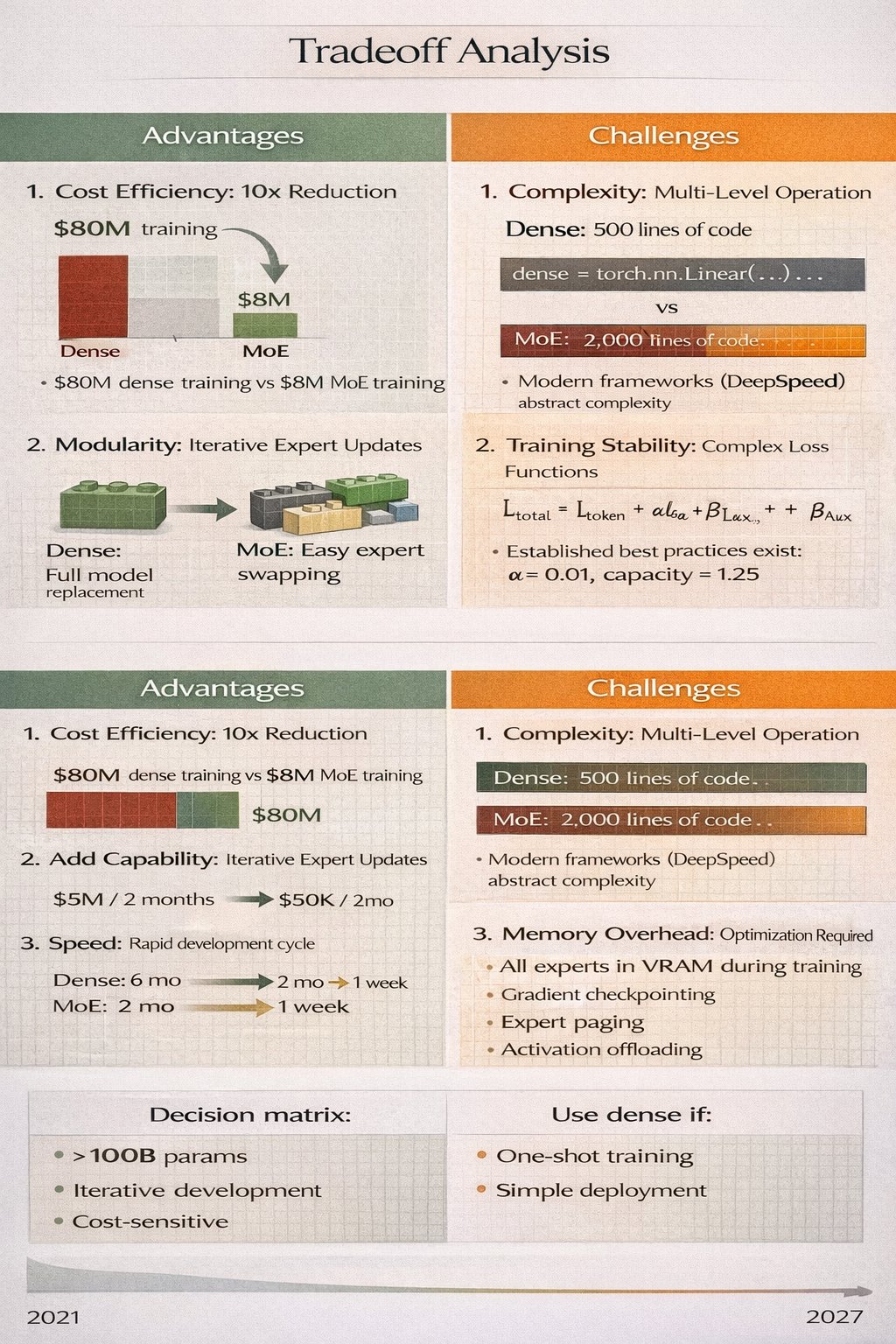
Tradeoffs of modular AI architecture
By
–
The tradeoffs are real though: 5-10x cheaper training and inference Modular, composable architecture Faster iteration cycles More complex to implement correctly Requires load balancing during training Higher memory overhead (all experts must fit in VRAM during