More on our approach to the Model Spec: openai.com/index/our-approach-to-the-model-spec/ [Translated from EN to English]
LLMS
-
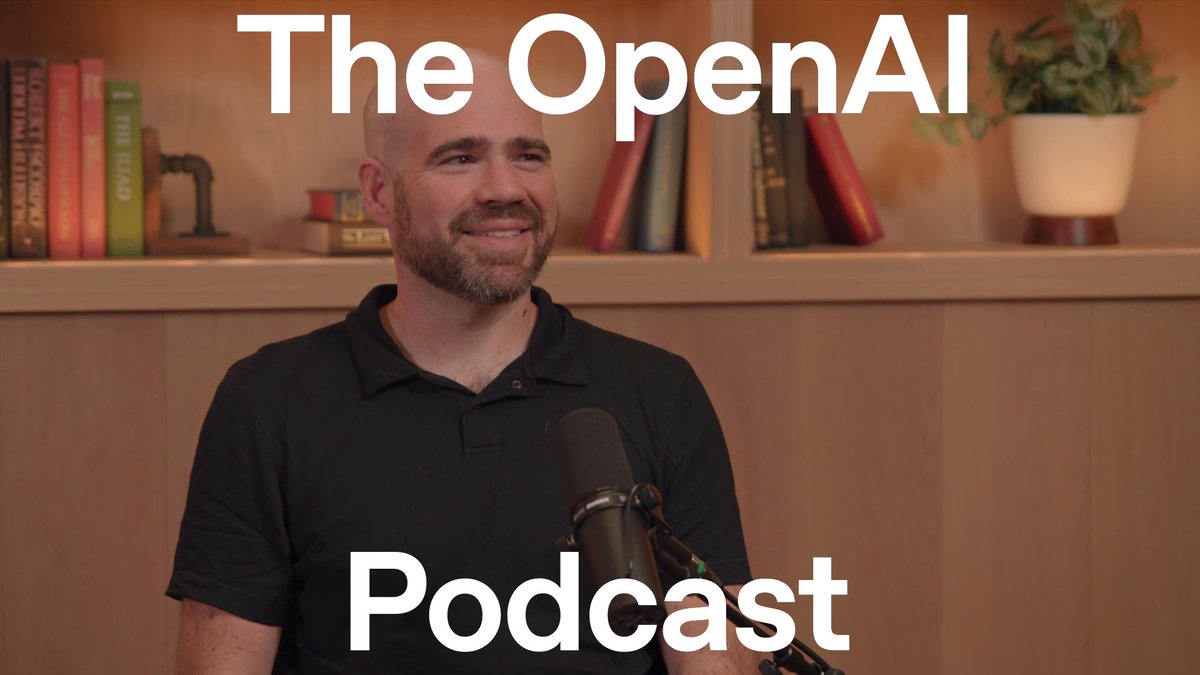
OpenAI Explains Model Spec and AI Model Behavior
By
–
The more AI can do, the more we need to ask what it should and shouldn't do. OpenAI researcher @w01fe joins host @AndrewMayne to explore the Model Spec, the public framework that defines how models are intended to behave. They break down how it works in practice, from the chain of command that resolves conflicting instructions to the way it evolves over time through real-world use, feedback, and new model capabilities. [Translated from EN to English]
-
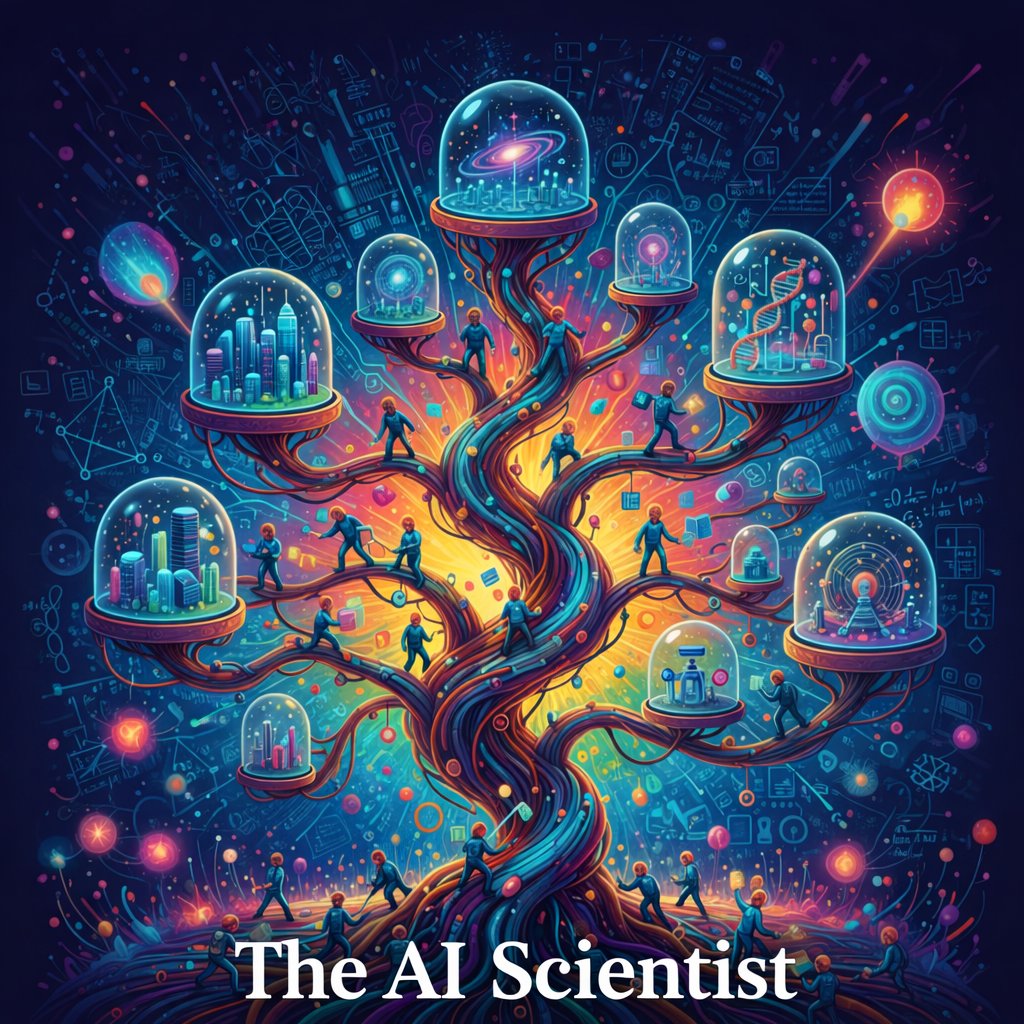
The AI Scientist Published in Nature with New Scaling Laws
By
–
When we released The AI Scientist, it felt like the far future. Fast forward to today, and the automation of research is on everyone's mind. Thrilled that our foundational work has been published in @Nature! Please check out the paper along with some fun new scaling laws! 😃 Sakana AI (@SakanaAILabs) The AI Scientist: Towards Fully Automated AI Research, Now Published in Nature Nature: nature.com/articles/s41586-0… Blog: sakana.ai/ai-scientist-natur… When we first introduced The AI Scientist, we shared an ambitious vision of an agent powered by foundation models capable of executing the entire machine learning research lifecycle. From inventing ideas and writing code to executing experiments and drafting the manuscript, the system demonstrated that end-to-end automation of the scientific process is possible. Soon after, we shared a historic update: the improved AI Scientist-v2 produced the first fully AI-generated paper to pass a rigorous human peer-review process. Today, we are happy to announce that “The AI Scientist: Towards Fully Automated AI Research,” our paper describing all of this work, along with fresh new insights, has been published in @Nature! This Nature publication consolidates these milestones and details the underlying foundation model orchestration. It also introduces our Automated Reviewer, which matches human review judgments and actually exceeds standard inter-human agreement. Crucially, by using this reviewer to grade papers generated by different foundation models, we discovered a clear scaling law of science. As the underlying foundation models improve, the quality of the generated scientific papers increases correspondingly. This implies that as compute costs decrease and model capabilities continue to exponentially increase, future versions of The AI Scientist will be substantially more capable. Building upon our previous open-source releases (github.com/SakanaAI/AI-Scien…), this open-access Nature publication comprehensively details our system's architecture, outlines several new scaling results, and discusses the promise and challenges of AI-generated science. This substantial milestone is the result of a close and fruitful collaboration between researchers at Sakana AI, the University of British Columbia (UBC) and the Vector Institute, and the University of Oxford. Congrats to the team! @_chris_lu_ @cong_ml @RobertTLange @_yutaroyamada @shengranhu @j_foerst @hardmaru @jeffclune — https://nitter.net/SakanaAILabs/status/2036840833690071450#m
→ View original post on X — @_yutaroyamada, 2026-03-25 17:11 UTC
-
Sam Altman Questions Universal Scaling Laws, Daniel Selsam Links Intelligence to Compression
By
–
Its memory bandwidth is 1/3 that of the rtx 5090 So, no, not all “VRAM” is equal
-
AI Scientist Published in Nature, Automated Research Achieves New Milestone
By
–
It is great to see this collaboration across @FLAIR_Ox @SakanaAILabs and @UBC recognised for what it is: One of the first signs of life of a new paradigm that is now going at full speed and will change the world. Congratulations to the entire team and special shout out to my (now former!) student @_chris_lu_ for whom this is the crowning achievement of an amazing DPhil that went from multi-agent learning and opponent shaping to meta-learning via "RL at the Hyperscale", LLM as search operators over code, all the way to the end-to-end AI scientist. There are so many debates about whether a Phd is useful in the age of "scale is all you need", so this is a refreshing datapoint. Sakana AI (@SakanaAILabs) The AI Scientist: Towards Fully Automated AI Research, Now Published in Nature Nature: nature.com/articles/s41586-0… Blog: sakana.ai/ai-scientist-natur… When we first introduced The AI Scientist, we shared an ambitious vision of an agent powered by foundation models capable of executing the entire machine learning research lifecycle. From inventing ideas and writing code to executing experiments and drafting the manuscript, the system demonstrated that end-to-end automation of the scientific process is possible. Soon after, we shared a historic update: the improved AI Scientist-v2 produced the first fully AI-generated paper to pass a rigorous human peer-review process. Today, we are happy to announce that “The AI Scientist: Towards Fully Automated AI Research,” our paper describing all of this work, along with fresh new insights, has been published in @Nature! This Nature publication consolidates these milestones and details the underlying foundation model orchestration. It also introduces our Automated Reviewer, which matches human review judgments and actually exceeds standard inter-human agreement. Crucially, by using this reviewer to grade papers generated by different foundation models, we discovered a clear scaling law of science. As the underlying foundation models improve, the quality of the generated scientific papers increases correspondingly. This implies that as compute costs decrease and model capabilities continue to exponentially increase, future versions of The AI Scientist will be substantially more capable. Building upon our previous open-source releases (github.com/SakanaAI/AI-Scien…), this open-access Nature publication comprehensively details our system's architecture, outlines several new scaling results, and discusses the promise and challenges of AI-generated science. This substantial milestone is the result of a close and fruitful collaboration between researchers at Sakana AI, the University of British Columbia (UBC) and the Vector Institute, and the University of Oxford. Congrats to the team! @_chris_lu_ @cong_ml @RobertTLange @_yutaroyamada @shengranhu @j_foerst @hardmaru @jeffclune — https://nitter.net/SakanaAILabs/status/2036840833690071450#m
→ View original post on X — @_yutaroyamada, 2026-03-25 16:56 UTC
-
New algorithm significantly improves AI model efficiency and GPU usage
By
–
Vaya, puede que Google haya hecho estallar la burbuja de la IA; las acciones de las empresas de memoria han caído drásticamente hoy.
— SONIA (@S0N_IA_) 25 mars 2026
Su nuevo algoritmo reduce la memoria de un modelo de IA en 6X SIN reducir su inteligencia, lo que lo hace 8x más rápido con la MISMA cantidad de… https://t.co/O271fYGWxUWow, Google might have burst the AI bubble; memory company stocks have plummeted today. Its new algorithm reduces an AI model's memory by 6X WITHOUT reducing its intelligence, making it 8x faster with the SAME amount of GPU: If this works, we won't need as many GPUs to train
-
Local Models on Diverse Hardware: Market Expectations
By
–
Yes, people will want to run local models on more and different types of hardware. (The question is only if that was already priced into the previous stock valuations, because it was relatively obvious that that's where things are headed.)
-
Memory Systems and RAG Limitations in AI Models
By
–
If I had to guess it's less decay and more that memories have naive RAG-like implementations, so you're at the mercy of whatever happens to retrieve in the top k via embeddings. They don't process you in aggregate and over time (probably compute constraints) so they struggle to
-
The AI Scientist Published in Nature: Fully Automated Research Milestone
By
–
I’m incredibly proud of The AI Scientist team for this milestone publication in @Nature. We started this project to explore if foundation models could execute the entire research lifecycle. Seeing this work validated at this level is a special moment. I truly believe AI will forever change the landscape of how scientific discoveries and scientific progress are made. Sakana AI (@SakanaAILabs) The AI Scientist: Towards Fully Automated AI Research, Now Published in Nature Nature: nature.com/articles/s41586-0… Blog: sakana.ai/ai-scientist-natur… When we first introduced The AI Scientist, we shared an ambitious vision of an agent powered by foundation models capable of executing the entire machine learning research lifecycle. From inventing ideas and writing code to executing experiments and drafting the manuscript, the system demonstrated that end-to-end automation of the scientific process is possible. Soon after, we shared a historic update: the improved AI Scientist-v2 produced the first fully AI-generated paper to pass a rigorous human peer-review process. Today, we are happy to announce that “The AI Scientist: Towards Fully Automated AI Research,” our paper describing all of this work, along with fresh new insights, has been published in @Nature! This Nature publication consolidates these milestones and details the underlying foundation model orchestration. It also introduces our Automated Reviewer, which matches human review judgments and actually exceeds standard inter-human agreement. Crucially, by using this reviewer to grade papers generated by different foundation models, we discovered a clear scaling law of science. As the underlying foundation models improve, the quality of the generated scientific papers increases correspondingly. This implies that as compute costs decrease and model capabilities continue to exponentially increase, future versions of The AI Scientist will be substantially more capable. Building upon our previous open-source releases (github.com/SakanaAI/AI-Scien…), this open-access Nature publication comprehensively details our system's architecture, outlines several new scaling results, and discusses the promise and challenges of AI-generated science. This substantial milestone is the result of a close and fruitful collaboration between researchers at Sakana AI, the University of British Columbia (UBC) and the Vector Institute, and the University of Oxford. Congrats to the team! @_chris_lu_ @cong_ml @RobertTLange @_yutaroyamada @shengranhu @j_foerst @hardmaru @jeffclune — https://nitter.net/SakanaAILabs/status/2036840833690071450#m
→ View original post on X — @_yutaroyamada, 2026-03-25 16:24 UTC
-
ChatGPT Memory Improvements Rollout for Plus and Pro Users
By
–
Not yet, I just got home yesterday and still need to finish it up and send the emails