this is a scheduled tweet just as a reminder to self – 1 year ago when we recorded the Claude Code @latentspacepod
, 47% of people hadnt even tried it
LLMS
-
One Year Reflection on Claude Code Adoption Growth
By
–
-
AI Upgrade Cycle: Expensive Misdirection
By
–
The AI model upgrade cycle is the most expensive misdirection in enterprise software right now.
— God of Prompt (@godofprompt) 31 mars 2026
GPT-4 to GPT-5. Claude 3 to Claude 4. Gemini 2 to Gemini 3.
Billions reallocated. Accuracy still plateaued at 50%.
Hallucinations still shipping to production.
Confidently.… https://t.co/8WEjL7ti0e pic.twitter.com/2RCAwlt3w3The AI model upgrade cycle is the most expensive misdirection in enterprise software right now. GPT-4 to GPT-5. Claude 3 to Claude 4. Gemini 2 to Gemini 3. Billions reallocated. Accuracy still plateaued at 50%. Hallucinations still shipping to production. Confidently.
-
Claude Memory Mechanism Analysis: Solid Engineering But Limited Architecture
By
–
I took a look at CC's Memory mechanism, and it's nothing special.The entire memory system's core is just a single MEMORY.md file, no more than 200 lines, which gets stuffed into the context at the start of each conversation. What happens when memories accumulate?A background subprocess called AutoDream runs periodically to scan, merge, and trim, ensuring everything fits.In plain terms: the model can't remember on its own, so it uses the file system + LLM self-management to simulate memory.This solution is solid from an engineering standpoint, but has several fundamental limitations:1. Storage and retrieval depend entirely on the file system + Markdown, cannot scale to cross-project, cross-Agent scenarios; memory becomes isolated silos2. No true semantic indexing, no dynamic recall based on relevance; 200 lines is a hard ceiling3. AutoDream's consolidation is rule-driven (scanning, merging, trimming), not cognition-driven; it can deduplicate and compress, but cannot extract new insights from experience4. No forgetting curve, no memory reinforcement mechanism; memories either exist or are deleted, with no middle groundAfter working on Memory for a while, you realize the ceiling for these solutions isn't actually engineering—it's architecture. As long as the model's attention mechanism itself doesn't support efficient retrieval of large historical contexts, the application layer will always be patching.This is why we chose a different path at EverMind. The MSA (Memory Sparse Attention) we released recently does content-aware sparse routing directly at the Transformer attention layer, letting the model learn itself what to recall and what to ignore, rather than relying on external scripts to make those decisions.A's engineering prowess is undoubtedly top-tier. But this leak happens to prove: the Agent Memory problem is far from solved. [Translated from EN to English]
→ View original post on X — @elliotchen100, 2026-03-31 14:40 UTC
-
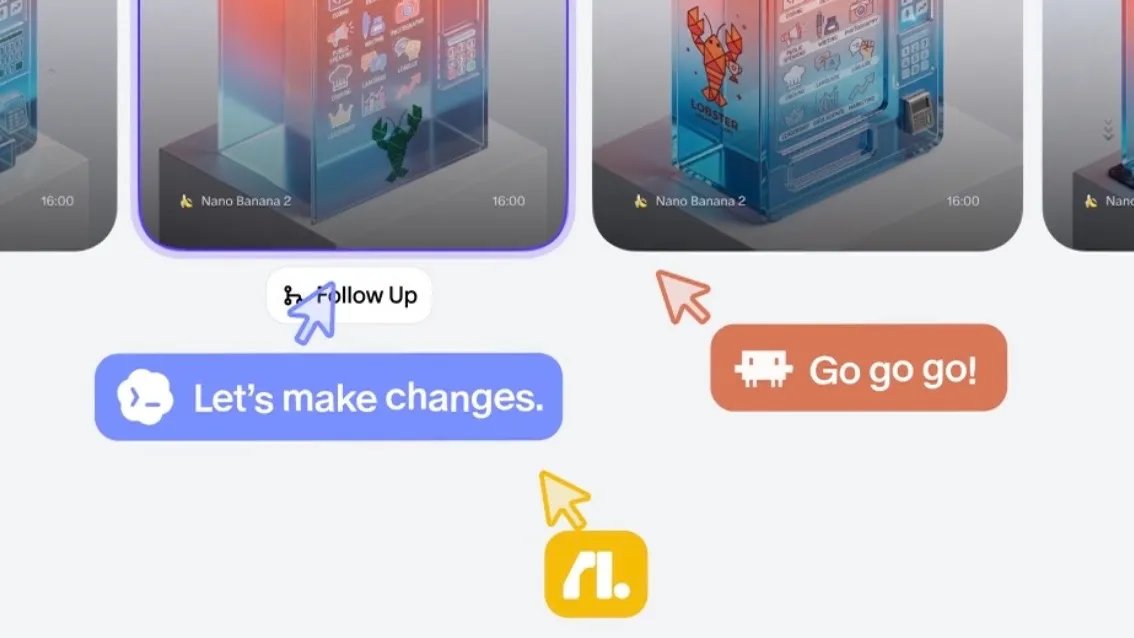
Humans and AI Agents Collaborating in Shared Canvas Workspace
By
–
First time ever seeing humans and AI agents actually collaborating in a shared, visible workspace, with Codex and Claude Code creating on canvas at the same time.
— Chubby♨️ (@kimmonismus) 31 mars 2026
I'm pretty sure this the world's first canvas built for agents!
Humans and machines are now becoming collaborators… https://t.co/ItoIDowLOs pic.twitter.com/KjSl0CrvnhFirst time ever seeing humans and AI agents actually collaborating in a shared, visible workspace, with Codex and Claude Code creating on canvas at the same time. I'm pretty sure this the world's first canvas built for agents! Humans and machines are now becoming collaborators
-
Gateway: Unified LLM Traffic Routing API
By
–
Merge launched Gateway, a new way to route all your LLM traffic across OpenAI, Anthropic, Google, and more through one API endpoint, with spend limits and full observability baked in from day one. https://t.co/s2tFPFCFVG pic.twitter.com/XtJ3tPNfx1
— 🚨 AI News | TestingCatalog (@testingcatalog) 31 mars 2026Merge launched Gateway, a new way to route all your LLM traffic across OpenAI, Anthropic, Google, and more through one API endpoint, with spend limits and full observability baked in from day one.
-
ChatGPT capabilities and value evolution over time
By
–
Not exactly. I said at that moment in time they could have done that, to make a point about the value of ChatGPT; I never advocated actually doing it because of the fact that models and capabilities evolve
-
Letting Claude Code choose how to build stuff
By
–
Nowadays a lot with Claude Code cause I let it choose how to build stuff 😀
-

DeepSeek V4 Training Costs: Skepticism on Reported Figures
By
–
With the release of DeepSeek V4 imminent, it’s worth remembering that any headline numbers about its training costs should be taken with a massive grain of salt.
— Nina Schick (@NinaDSchick) 31 mars 2026
The claim that they trained their V3 model for just $6 million is like saying a transatlantic flight only costs the… pic.twitter.com/fnOIyINiewWith the release of DeepSeek V4 imminent, it’s worth remembering that any headline numbers about its training costs should be taken with a massive grain of salt. The claim that they trained their V3 model for just $6 million is like saying a transatlantic flight only costs the
-

Claude Code Accidentally Open-Sourced Breaking News
By
–
Breaking!
Claude Code got “open-sourced”… or should I say, accidentally liberated -
Flowith’s Canvas Unites Humans and AI Agents
By
–
Flowith's Canvas is the first to promise to put humans and AI agents on the same surface, where Claude Code and Codex agents work right inside the same flow!
— 🚨 AI News | TestingCatalog (@testingcatalog) 31 mars 2026
Human X multi-agent 👀 https://t.co/R46srQw4Gz pic.twitter.com/JUwsUdshpJFlowith's Canvas is the first to promise to put humans and AI agents on the same surface, where Claude Code and Codex agents work right inside the same flow! Human X multi-agent