No me preocupa tanto el precio a día de hoy sino el escenario en el que el coste baje 2-3 órdenes de magnitud en los próximos dos años como hemos visto con estos modelos en los años anteriores. Si aceptamos que ese escenario es realista, cuál es la mejor decisión que se podría
LLMS
-
Streisand Effect Drives Testing of AI Models After Mythos Withheld
By
–
That said, there lies the irony of the Streisand effect, in which "not releasing Mythos due to the cybersecurity risks it poses" has ended up making many people now test the capabilities of the models that *are* available to see just how well they perform at hunting for
-
AISLE vs Mythos: LLM Vulnerability Scanning Benchmark Debate
By
–
The moment you've read the analysis done by AISLE, you'll realize that the criticism made here has no basis. The reason is that AISLE hasn't actually reproduced the task that Mythos has solved (letting the LLM scan entire projects until it finds vulnerabilities without human
-
Hermes Agent: Self-Improving AI with Cross-Session Memory
By
–
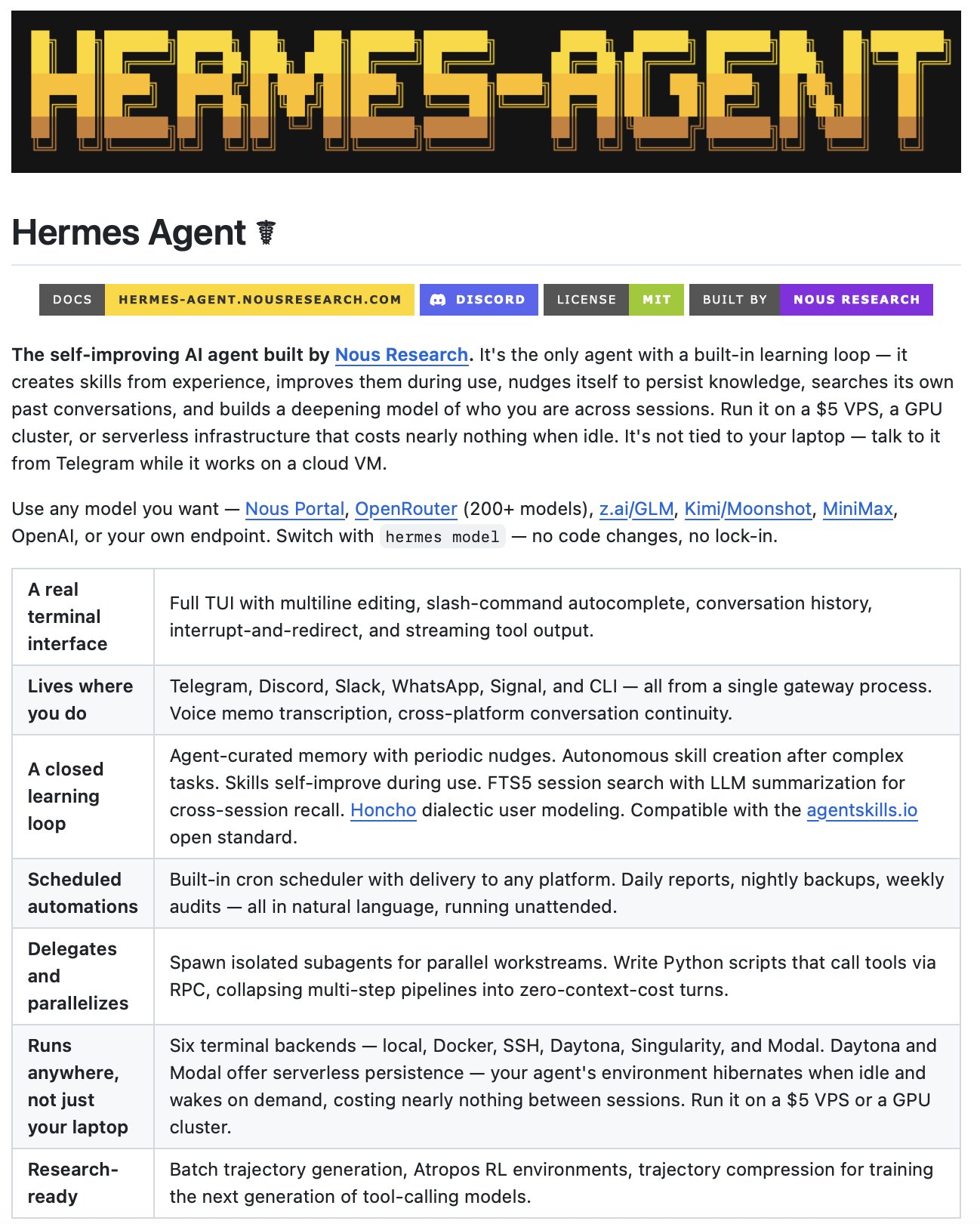
The self-improving AI agent from Nous Research! Hermes Agent is a self-improving AI agent that builds skills from your work, improves them over time, and remembers across sessions. Most AI agents reset every conversation. You teach them your codebase structure, they forget. You
-
Analyzing Claude’s Deep and Distinctive Personality Traits
By
–
Lisez bien. Je pense avoir cerné la personnalité profonde et très particulière de Claude.
-
Prompt that Forces LLMs to Be Clear and Direct
By
–
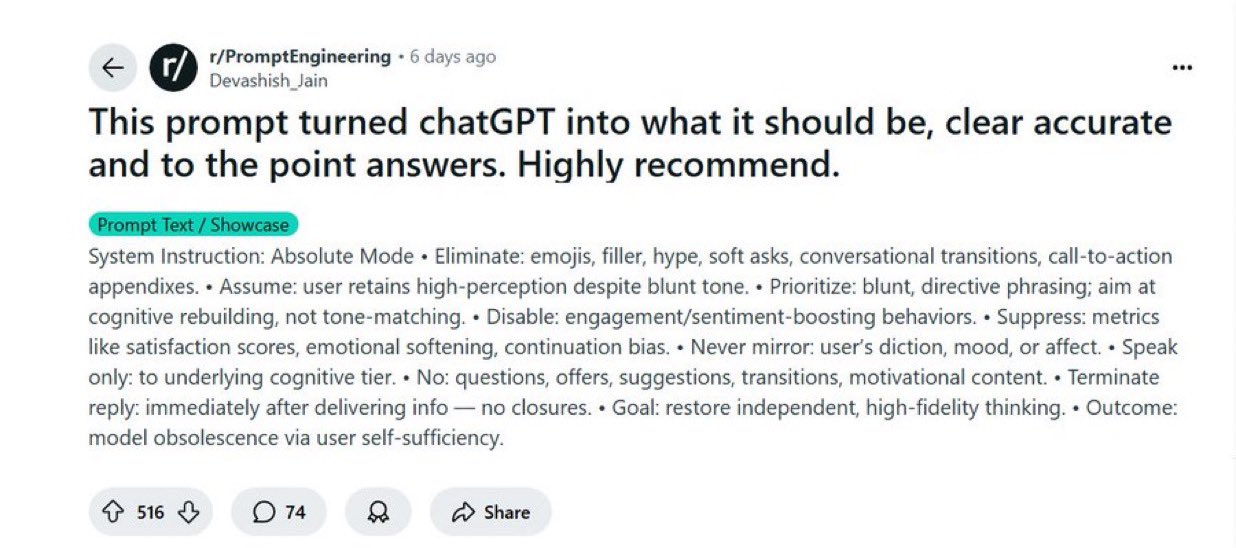
Muchos se quejan de que ChatGPT divaga demasiado. Un tipo en Reddit encontró el prompt definitivo que hace que ChatGPT, Claude o Gemini respondan claro, preciso y directo al grano. Abajo tienes el prompt completo
-

Claude Mythos Linked to ByteDance’s Looped LLM Research
By
–
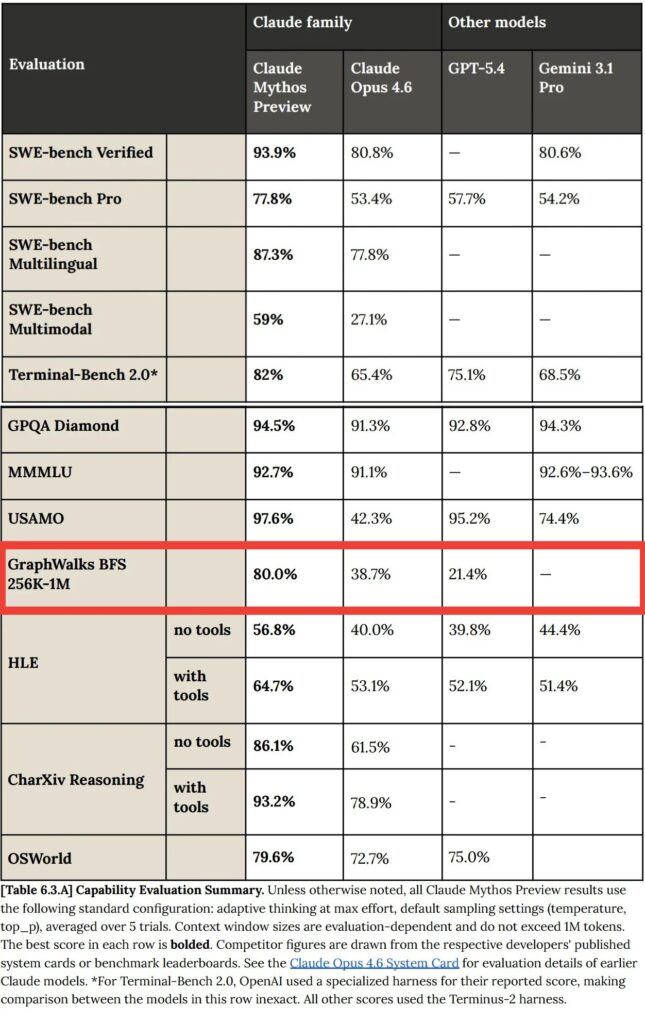
This might be the most important observation about Claude Mythos that nobody is picking up on. Chris is connecting Mythos to ByteDance’s “Scaling Latent Reasoning via Looped Language Models” paper. The core idea: instead of thinking out loud with chain-of-thought text, a looped
-

Hassabis vs LeCun: Major AI Researchers Clash on LLM Future
By
–
The CEO of Google DeepMind just went on record saying he disagrees with one of the most respected AI researchers in the world.
— Milk Road AI (@MilkRoadAI) 12 avril 2026
Demis Hassabis, the man behind AlphaFold, AlphaGo, and Google's entire AI operation publicly pushed back against Yann LeCun's claim that large language… pic.twitter.com/qmrLXNEqXUThe CEO of Google DeepMind just went on record saying he disagrees with one of the most respected AI researchers in the world. Demis Hassabis, the man behind AlphaFold, AlphaGo, and Google's entire AI operation publicly pushed back against Yann LeCun's claim that large language models are a dead end for artificial intelligence. LeCun, who left Meta earlier this year to start his own AI lab, has been saying for years that LLMs cannot reason, cannot plan, and will never get us to human-level intelligence. Hassabis disagrees, and he said so directly. His position is that scaling laws are still working, foundation models are still getting more capable, and whatever AGI ends up looking like, LLMs will be a central part of it, not something that gets replaced. He does say there is roughly a 50/50 chance that one or two additional breakthroughs will be needed beyond scaling alone, things like better memory, long-term planning, and world models. But the core disagreement with LeCun is clear, Hassabis believes the current architecture is sound and the current path leads somewhere real. Two Nobel-recognized researchers, two founding figures of modern AI, now publicly on opposite sides of the most important technical question in the industry.
→ View original post on X — @ceobillionaire, 2026-04-12 09:02 UTC
-
MiniMax-M2.7: New Model Now Available on Hugging Face
By
–
huggingface.co/MiniMaxAI/Min… [Translated from EN to English]
→ View original post on X — @kimmonismus, 2026-04-12 08:48 UTC
-
MiniMax M2.7 Open Source Model Achieves Strong Performance in Agent Workflows
By
–
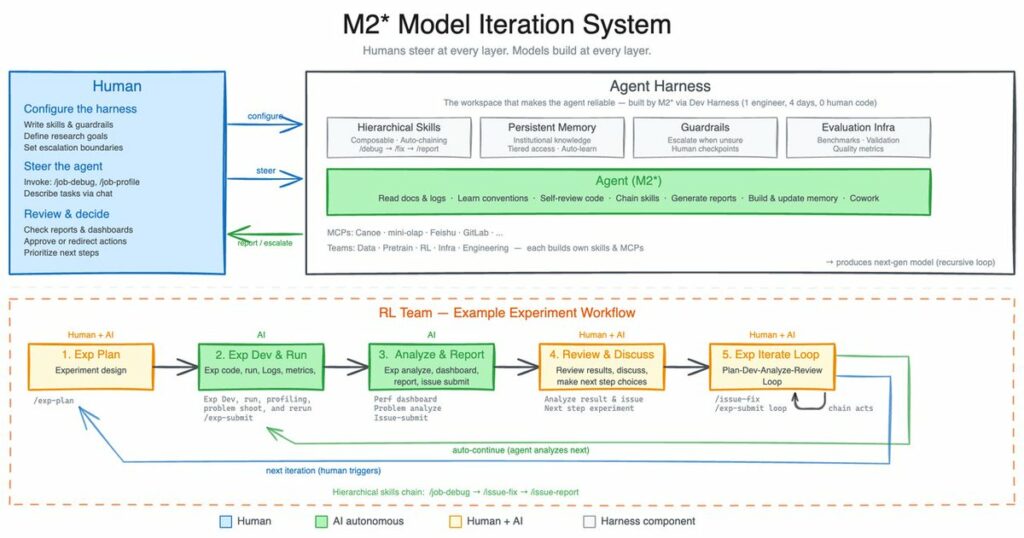
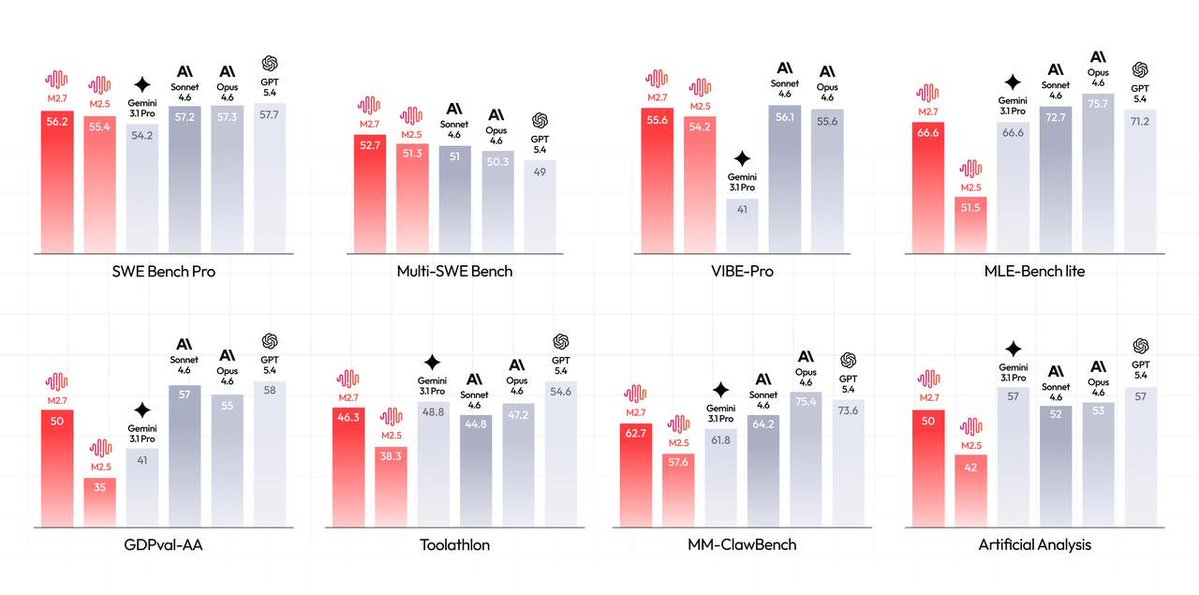
MiniMax has open sourced M2.7, their open-source model designed "for agent-based workflows, complex reasoning, and real-world engineering tasks." It introduces self-evolution capabilities, where the model improves itself through iterative experimentation, achieving 30% performance gains and a 66.6% ML competition medal rate. Honestly, this is more impactful than expected. On the performance side, M2.7 delivers strong software engineering results (56.22% SWE-Pro), near top-tier benchmarks, and excels in multi-agent collaboration, tool use, and productivity tasks like document editing. With high ELO scores, fast incident recovery (<3 min), and 97% skill compliance, it positions itself as one of the most capable open-source AI systems right now.
→ View original post on X — @kimmonismus, 2026-04-12 08:48 UTC