6/ For a big or messy codebase, do not pile it all into one file. Use path-scoped rules in a .claude/rules/ folder. They load only when Claude touches the matching part of your code, so your context stays clean instead of carrying everything at once.
LLMS
-
Claude Code’s auto memory eliminates the lessons.md file
By
–
5/ The lessons.md file is now pointless. Claude Code has auto memory. It writes down what it learns about your project on its own, after you correct it, and reloads it next session. The tool already does the thing people are telling you to do by hand.
-
Keep system prompts under 200 lines for better adherence
By
–
4/ Keep it short. This is the part people get wrong. The docs say stay under 200 lines, ideally around 100. A model reliably follows about 150 instructions at once, and Claude Code's own system already uses a chunk of that. A bloated file makes Claude follow less, not more.
-
Anthropic lists seven actual ways to steer Claude Code
By
–
2/ Anthropic lists the actual ways to steer Claude Code. There are seven, and they are not files you invent. CLAUDE.md. Rules. Skills. Subagents. Hooks. Output styles. System prompt. That is the real list. Everything else is noise.
-
Claude Code auto-loads specific files, not all recommended markdown files
By
–
1/ The viral advice says make persona.md, lessons.md, references.md, glossary.md, and more. Claude Code does not read most of them. It auto-loads a specific set of files. The rest just sit there unless you import them by hand.
-
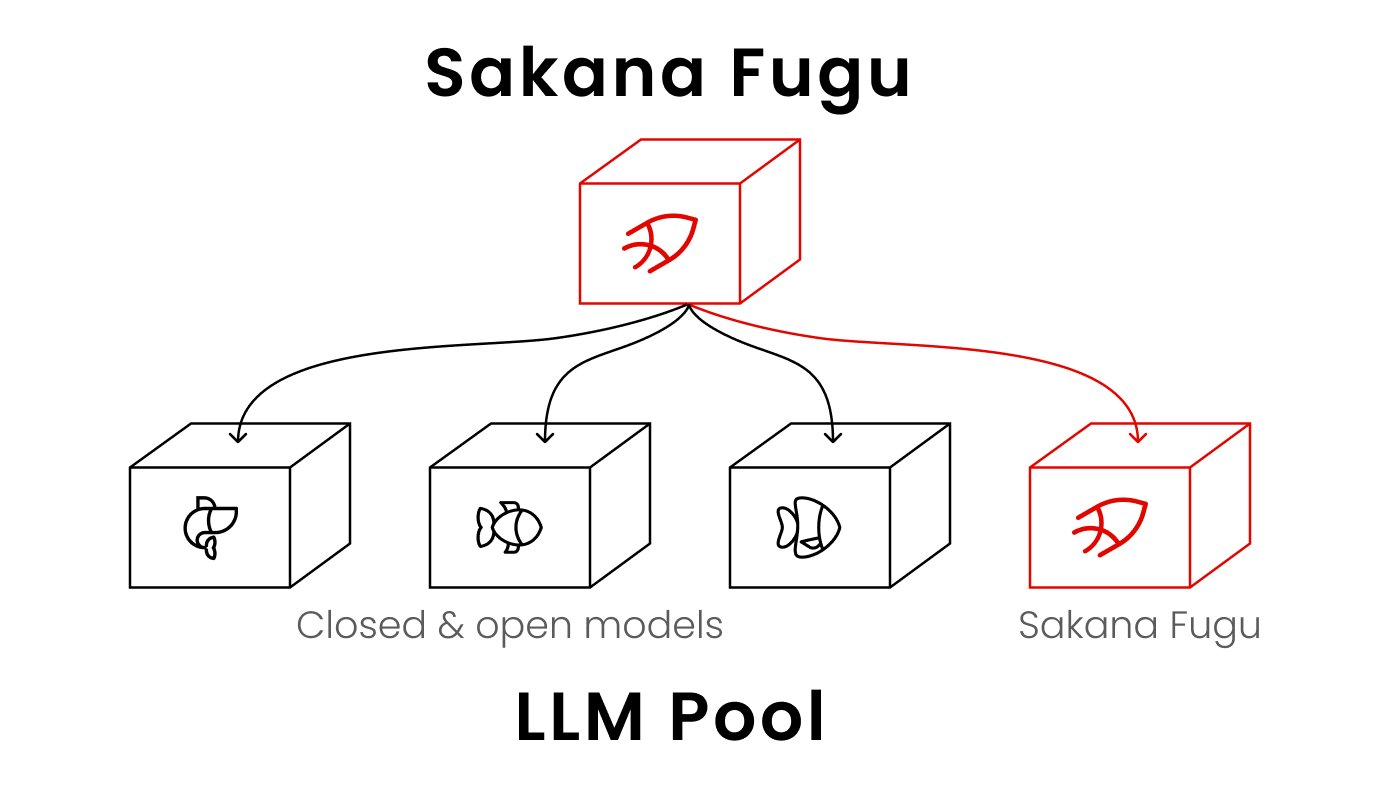
Sakana Fugu: orchestrator rivaling Fable 5, not independent model
By
–
After examining the new Sakana Fugu model, which, as they present it, rivals Fable 5, I want to comment that this is in itself not a new independent model, but an orchestrator trained to orchestrate several different models (e.g., Opus 4.8, GPT
-
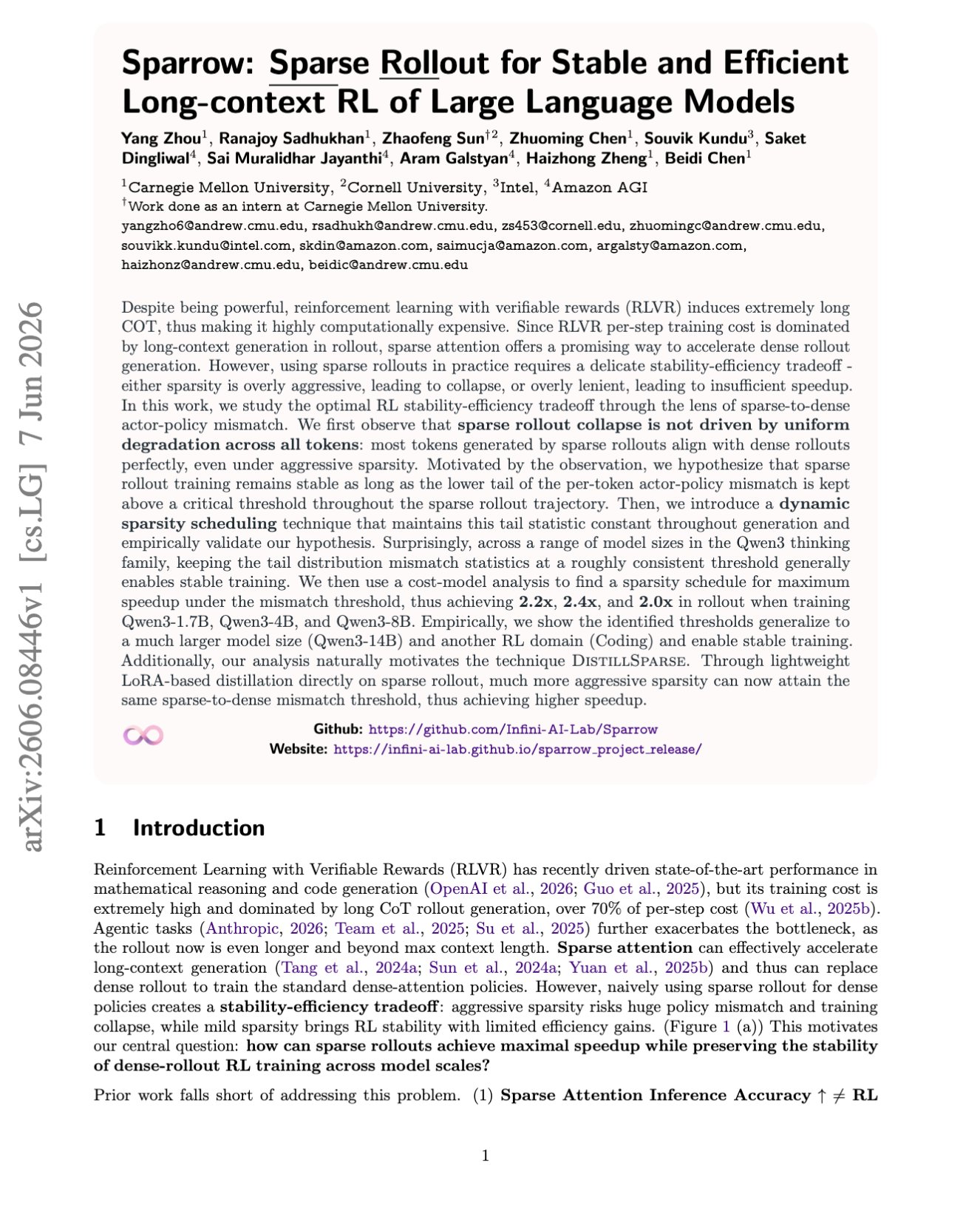
Sparrow: Sparse Deployment for Long-Context RL LLM
By
–
Long-context RLVR is powerful, but most of the cost comes from generating massive CoT deployments. Sparse attention would make it faster, that's it.
-

VIMPO derives value function from policy to improve GRPO
By
–
"VIMPO: Value-Implicit Policy Optimization for LLMs" While GRPO is simple because it avoids a critic, it still gives every token in a reasoning trace the same reward signal. This paper tries to get the best of both worlds by deriving the value function from the policy itself
-
Autonomous ML Research: Fugu Ultra improves GPT model via AutoResearch
By
–
Use Case 1: Autonomous ML Research
— Sakana AI (@SakanaAILabs) 22 juin 2026
Can an AI autonomously improve another AI’s training recipe?
We tasked Fugu Ultra with improving a small GPT model using AutoResearch. Over 14 hours on a single H100 GPU, Fugu ran > 100 experiments. It iteratively edited the training code, ran… pic.twitter.com/Gp96FEQ797Use Case 1: Autonomous ML Research Can an AI autonomously improve another AI’s training recipe? We tasked Fugu Ultra with improving a small GPT model using AutoResearch. Over 14 hours on a single H100 GPU, Fugu ran > 100 experiments. It iteratively edited the training code, ran
-

LLMs cannot be trusted: alignment must move on
By
–
LLMs can’t be trusted to follow rules. Which means they can’t be trusted, period. If we are going to solve alignment we must move on.