"The article’s decision guide points single modern RTX cards toward ExLlamaV2, but Oryx is not a modern RTX box: it is a Pascal GTX 1070 with compute capability 6.1, 8 GB VRAM, and the chosen model is already GGUF. That pushes the answer back to llama.cpp, not
LLMS
-
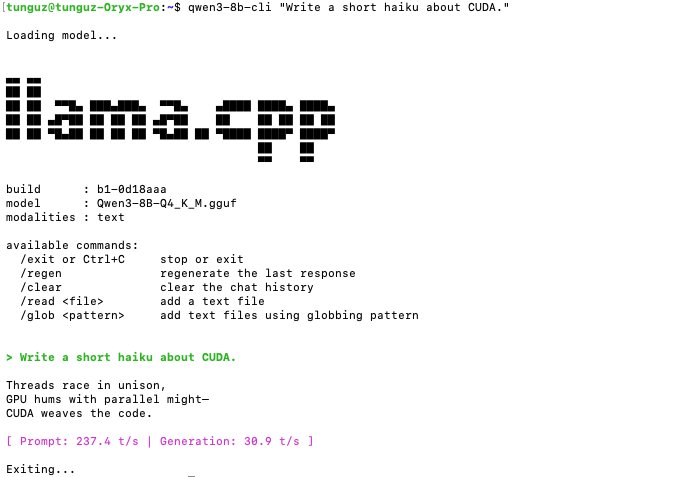
Testing Qwen 3 8B on Local Ubuntu with Codex
By
–


After seeing these tweets, I decided to try it out on my own old Ubuntu computer with RTX 1070 GPU (the one that I just upgraded from 16.04 all the way to 24.04 the other day). Asked Codex on my Mac to connect to that machine and install and test qwen3 8b. So far really
-
Using External AI Agents with MagicPath, Cursor, and Claude Code
By
–
Here are all the instructions on how you can use external agents in MagicPath with Cursor, Codex, Claude Code, etc.
-
Higgsfield Supercomputer: AI Agent for Complete Creative Workflows
By
–
🚨Higgsfield Supercomputer is a cloud-native AI agent that turns one chat into a full creative workflow. It helps with planning, scripting, visuals, voice, editing, and publishing in one place.
— Futurepedia – Learn to Leverage AI (@futurepedia_io) 26 mai 2026
▪️40+ built-in tools for content creation.
▪️3 layers of memory to keep context… pic.twitter.com/78Zcsy6K1jHiggsfield Supercomputer is a cloud-native AI agent that turns one chat into a full creative workflow. It helps with planning, scripting, visuals, voice, editing, and publishing in one place. 40+ built-in tools for content creation.
3 layers of memory to keep context -

Using Traces to Build Production Agent Evaluations
By
–
.
@AdamRLucek on how we use traces to build evals for production agents. -
New Method Significantly Reduces Compute Demands for One-Shot LLM Training
By
–
One-shot LLM training demands reliable scaling laws to predict model behavior, but current scaling techniques are compute-intensive. New research introduces a method that reduces training demands significantly, lowering the time and cost of scaling:
-
AI Model Costs Plummet as Intelligence Accelerates
By
–
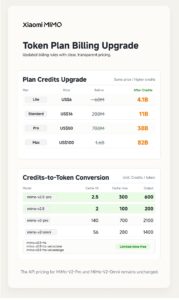
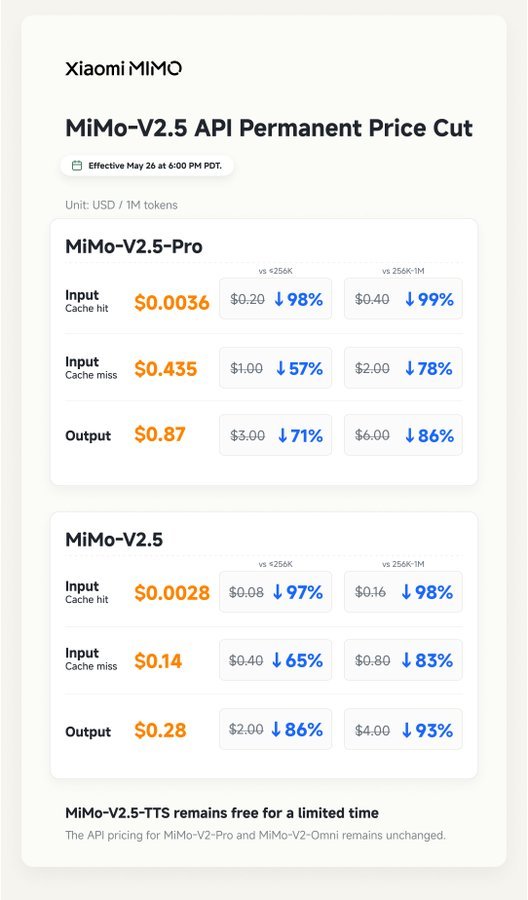
MiMo 2.5 Pro now costs the same as DeepSeek V4 Pro. The cost of good models is falling at breakneck speed. Intelligence is becoming truly too fast to measure. Up to -99%
-
MagicPath Introduces Figma Export with AI Agent Integration
By
–
Introducing Figma export in MagicPath.
— Pietro Schirano (@skirano) 26 mai 2026
Design and build with our native agent, or your favorite external one (Codex, Claude Code, etc.).
Explore tons of different directions, then bring your work into Figma as fully editable designs.
As simple as a copy-paste. pic.twitter.com/ON9h0UCXpuIntroducing Figma export in MagicPath. Design and build with our native agent, or your favorite external one (Codex, Claude Code, etc.). Explore tons of different directions, then bring your work into Figma as fully editable designs. As simple as a copy-paste.
-
Constrained Generation and Memory Patterns in AI
By
–
That progression is a clean way to frame it. Constrained generation, constrained tool calling, constrained memory. Same pattern applied one layer deeper each time. The temporal piece is underrated. Most teams get to typed entities and stop, but fact invalidation is what keeps
-
Schema-First Ingestion for AI Retrieval Systems
By
–
Schema-first at ingestion time is the right framing. Most teams discover this after building the retrieval layer and wondering why structured queries return noise. The 10/10/10 constraint in Graphiti helps too. Forces you to model the 80% that matters rather than attempting