Partial offloads wouldn’t work because this will create a severe bottleneck That’s why the full model has to be offloaded to the GPU to see actual performance gains
LLMS
-
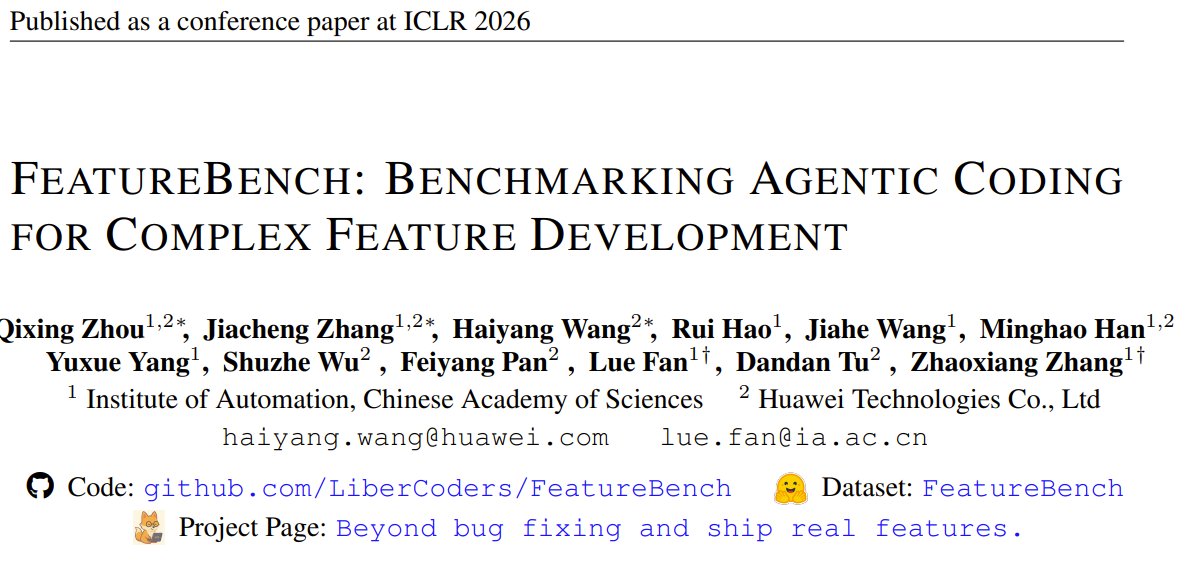
FeatureBench: Evaluating LLM Coding Agents on Complex Software Features
By
–
How well do LLM coding agents truly perform on complex, end-to-end software feature development? Researchers from the Institute of Automation, Chinese Academy of Sciences and Huawei Technologies Co., Ltd. introduce FeatureBench, a new benchmark using a scalable, test-driven
-
Qwen 3.5 MoE Model Recommendations for Spark and Mac Studio
By
–
For a single Spark my first recommendation would be Qwen 3.5 122B MoE (Int4) For the Mac Studio I would recommend the 397B in 4-bit (and I think @ivanfioravanti would agree with me here)
-

Use MoE Models on Unified Memory Hardware Like DGX Spark
By
–
As I have mentioned before, stop trying to get Dense models running on the DGX Spark/Mac Studios Unified Memory is best fit for MoEs because you only make each token go through a small subset of the numbers of parameters in the model Optimize for your hardware
-
27B Parameters Per Token Explains Slow LLM Inference Speed
By
–
Ultimately you’re still going through the 27B parameters per token and that’s what takes so long
-
Qwen 3.5 27B Matches Sonnet 4.5 on Single RTX 5090
By
–
That model, Qwen 3.5 27B Dense is equal to Sonnet 4.5 Runs great on a single RTX 5090 w/ full context But we are not anywhere near Opus 4.5 even with Qwen 3.5 397B MoE
-
DGX Spark Qwen3 27B Inference Speed Discrepancy Questioned
By
–
Also, I don’t know how OP is getting Qwen3.5 27B @ 30 tps on the DGX Spark Doesn’t make sense for a Dense model on DGX Spark’s Unified Memory (273 Gbps) (My personal experiments showed it’s 4 tokens/sec) Very curious how you got that @TeksEdge
-
Qwen3 27B Performance Claims Disputed on DGX Spark Hardware
By
–
Also, I don’t know how OP is getting Qwen3.5 27B @ 30 tps on DGX Spark That number is impossible for a Dense model on DGX Spark’s Unified Memory (273 Gbps) My personal experiments showed it’s 4 tokens/sec for that model on the Spark
-
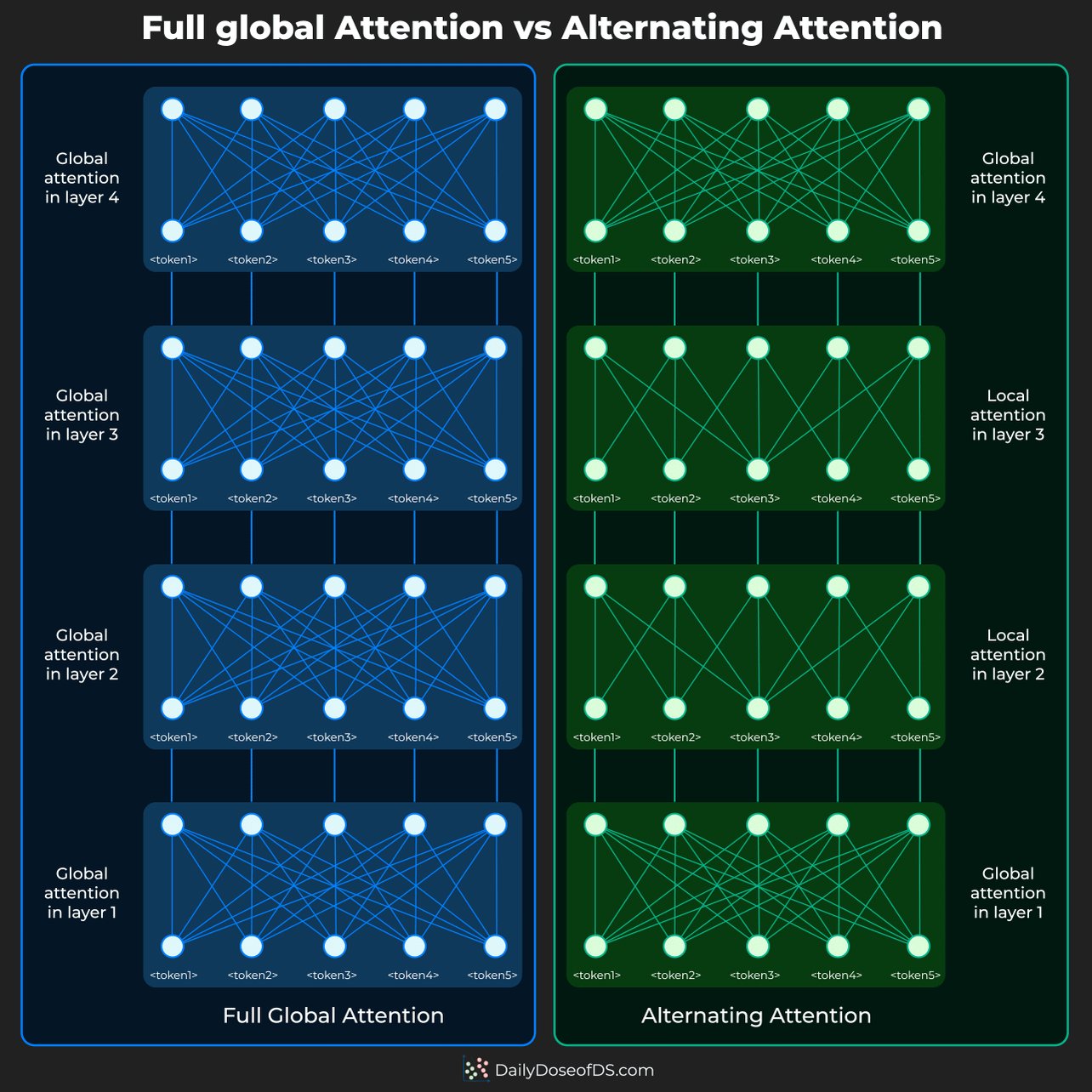
MiniMax M2.5 Lightning Attention Architecture for Long Context Scaling
By
–
Lightning Attention architecture used in MiniMax M2.5 is really interesting. The structure is 7 Lightning Attention layers for every 1 traditional SoftMax attention layer, which lets it scale to long contexts while keeping the quality you'd expect from standard transformers. I… pic.twitter.com/HnfTF0W6f1
— Akshay 🚀 (@akshay_pachaar) 14 mars 2026Lightning Attention architecture used in MiniMax M2.5 is really interesting. The structure is 7 Lightning Attention layers for every 1 traditional SoftMax attention layer, which lets it scale to long contexts while keeping the quality you'd expect from standard transformers. I
-
Unified Memory Faster for Loading Large MoE Models
By
–
the issue is that unified memory would still be faster for loading MoEs that are larger than the largest single GPU in terms of Memory