Claude is the most widely used LLM after ChatGPT and even ahead of Gemini. Imagine this: although Anthropic is particularly strong in the enterprise and business sector, they have also managed to reach the consumer market. New updates are released almost daily, and I don't know https://
x.com/Similarweb/sta
/Similarweb/status/2036380777571586247
…
LLMS
-
Claude surpasses Gemini as second most used LLM globally
By
–
-
Using Claude in special-purpose scripts with the -p flag
By
–
The -p part is so I can use Claude in special-purpose scripts like "add release notes to this release"
-

Arena Physica Builds EM Foundation Model for Physics
By
–
@PratapRanade
's argument is that humans didn't evolve to intuit EM fields, but machines can be taught to. His company, @arenaphysica
, is building an EM foundation model (like an LLM but for physics instead of language) that learns the relationship between shapes and fields -
GPT-5.3 Codex Spark: OpenAI’s Faster AI Code Generation
By
–
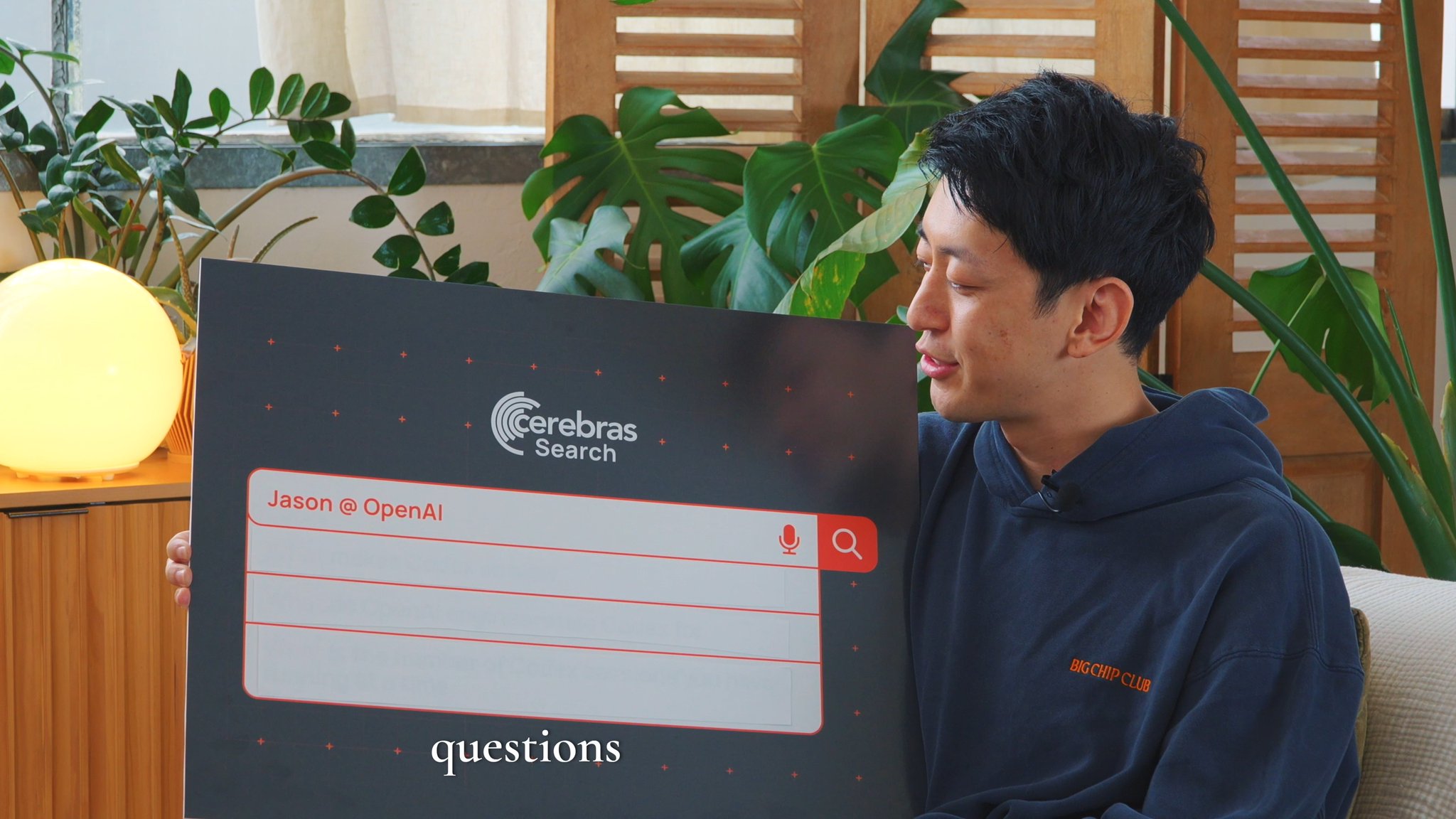
@jxnlco from @OpenAI answers your most asked questions about gpt-5.3-codex-spark — powered by Cerebras Inference. – What is Cerebras and how does it make Spark 15x faster? – What does OpenAI use Codex for internally? – When should you use Codex vs. Codex Spark?
-
Sakana AI Develops Doc-to-LoRA for LLMs Without Additional Training
By
–
An article featuring an interview with Sakana AI's Rujikorn Charakorn and Robert Lange, who led the development of the new technology "Doc-to-LoRA" that enables LLMs to reflect document content without additional training, has been published in Nikkei Cross Tech @nikkeibpITpro
. -

Anthropic Rapidly Develops Competing Version of OpenClaw
By
–
One has to admit, Anthropic sees a trend (openClaw) and develops their own version. The speed of their releases is insane. Presumably 100% code written by Claude.
-
Multimodality Integration: The Real Upgrade for Production AI Systems
By
–
My takeaway: The real upgrade is not just multimodality. It is collapsing text, vision, long context, and reasoning into one coherent workflow. That is how you move from demos to production-grade AI systems. I break it all down in my new video on Kimi K2.5 by Moonshot AI.
-
Claude’s Operational Features: Thinking Mode, Speed, and Cost Control
By
–
I also like the operational thinking behind it. You get: → Thinking mode for deeper reasoning and multi-step tool calls
→ Faster mode when latency matters
→ JSON mode, streaming, file-based Q&A
→ Token estimation so you can predict cost before heavy vision jobs And it is -
256K Context Window: Real Benefits Beyond Specifications
By
–
Then there is the 256K context window. That is not a spec sheet flex. That is: → Entire codebases in context
→ Long legal or technical documents without chunking gymnastics
→ Multi-turn agent workflows that do not lose the plot If you are building internal copilots or -
True Multimodal AI: Moonshot’s Native Text-Vision Integration
By
–
Most “multimodal” AI is just duct tape.
— Ronald van Loon (@Ronald_vanLoon) 24 mars 2026
One model for text.
Another for vision.
A pipeline to glue it together.
But what happens when text + vision are native in the same model, with a 256K context window?
That is what Moonshot AI just changed.
A thread on what I learned from… pic.twitter.com/CmnuE9FNJxMost “multimodal” AI is just duct tape. One model for text.
Another for vision.
A pipeline to glue it together. But what happens when text + vision are native in the same model, with a 256K context window? That is what Moonshot AI just changed. A thread on what I learned from