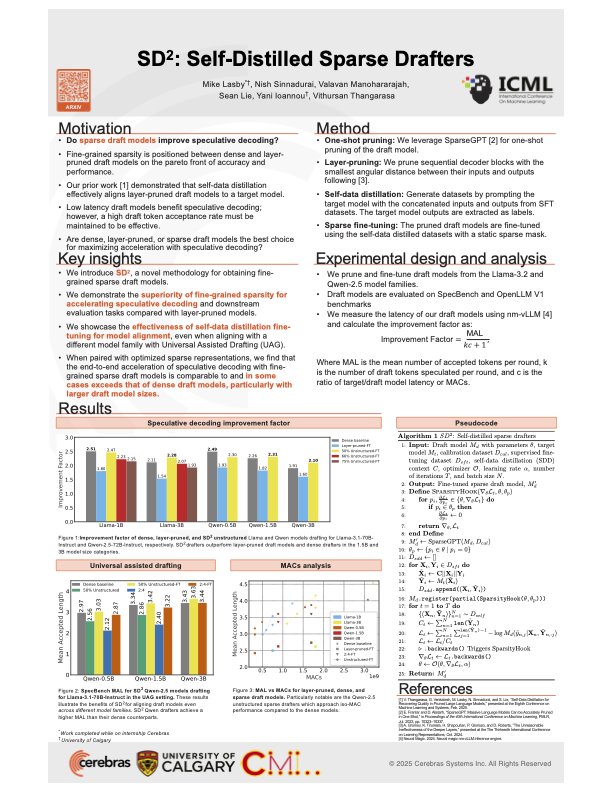
Featured Paper at @icmlconf – The Internationall Conference on Machine Learning: SD² – Self-Distilled Sparse Drafters Speculative decoding is a powerful technique for reducing the latency of Large Language Models (LLMs), offering a fault-tolerant framework that enables the
LLMS
-
Hugging Face Science Team Showcases Year of AI Contributions
By
–
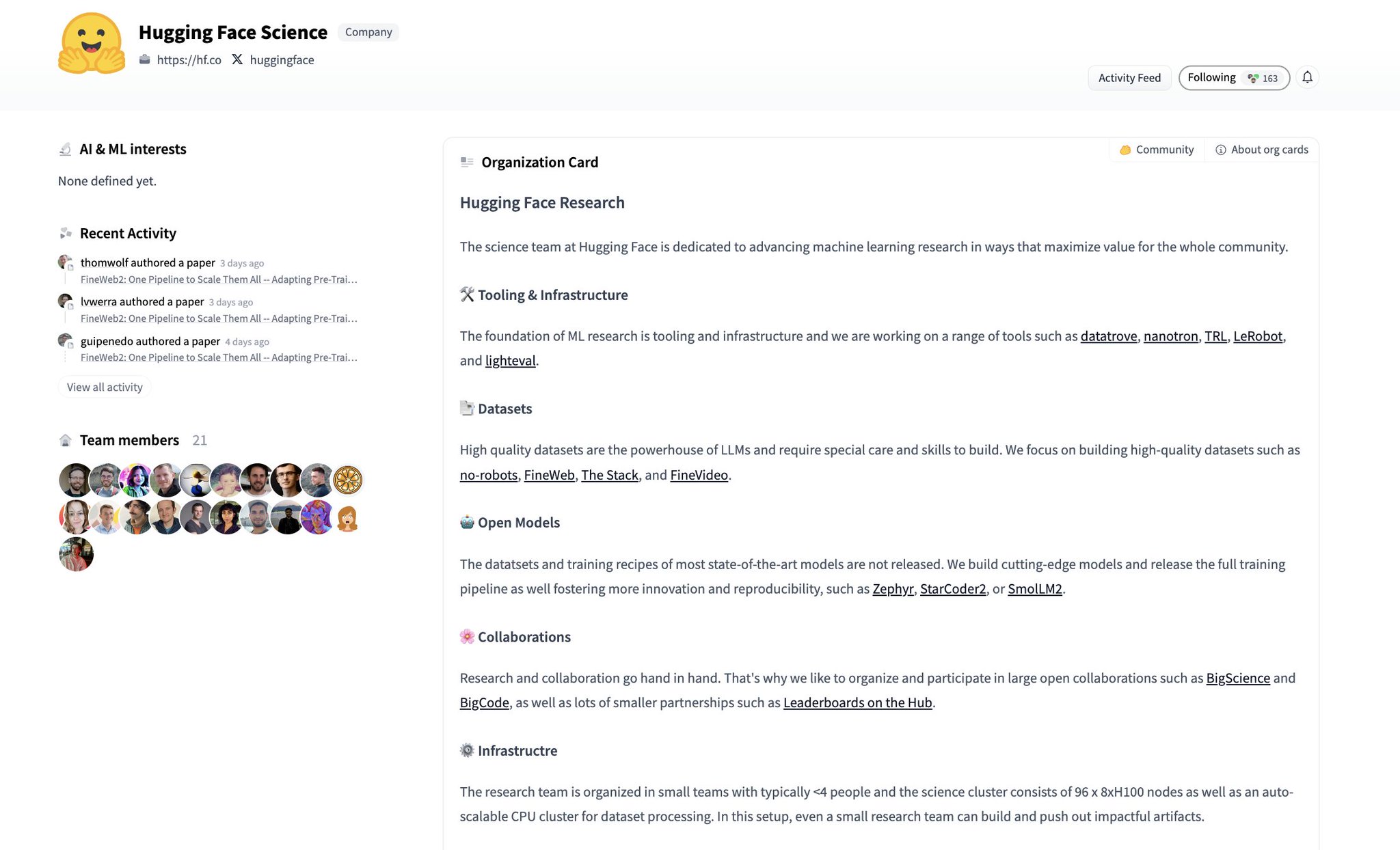
The @huggingface Science team now has an org on the hub and it's really cool to look back at all their contributions of the past 12 months! Fineweb, LeRobot, TheStack, StarCoder2, SmolLM2, Big Science, LLMleaderboard, TRL, Nanotron, or some of the courses that have been followed
-
AI Self-Improvement Will Be Gradual, Not Exponential Takeoff
By
–
We don’t have AI self-improves yet, and when we do it will be a game-changer. With more wisdom now compared to the GPT-4 days, it's obvious that it will not be a “fast takeoff”, but rather extremely gradual across many years, probably a decade. The first thing to know is that self-improvement, i.e., models training themselves, is not binary. Consider the scenario of GPT-5 training GPT-6, which would be incredible. Would GPT-5 suddenly go from not being able to train GPT-6 at all to training it extremely proficiently? Definitely not. The first GPT-6 training runs would probably be extremely inefficient in time and compute compared to human researchers. And only after many trials, would GPT-5 actually be able to train GPT-6 better than humans. Second, even if a model could train itself, it would not suddenly get better at all domains. There is a gradient of difficulty in how hard it is to improve oneself in various domains. For example, maybe self-improvement only works at first on domains that we already know how to easily fix in post-training, like basic hallucinations or style. Next would be math and coding, which takes more work but has established methods for improving models. And then at the extreme, you can imagine that there are some tasks that are very hard for self-improvement. For example, the ability to speak Tlingit, a native american language spoken by ~500 people. It will be very hard for the model to self-improve on speaking Tlingit as we don’t have ways of solving low resource languages like this yet except collecting more data which would take time. So because of the gradient of difficulty-of-self-improvement, it will not all happen at once. Finally, maybe this is controversial but ultimately progress in science is bottlenecked by real-world experiments. Some may believe that reading all biology papers would tell us the cure for cancer, or that reading all ML papers and mastering all of math would allow you to train GPT-10 perfectly. If this were the case, then the people who read the most papers and studied the most theory would be the best AI researchers. But what really happened is that AI (and many other fields) became dominated by ruthlessly empirical researchers, which reflects how much progress is based on real-world experiments rather than raw intelligence. So my point is, although a super smart agent might design 2x or even 5x better experiments than our best human researchers, at the end of the day they still have to wait for experiments to run, which would be an acceleration but not a fast takeoff. In summary there are many bottlenecks for progress, not just raw intelligence or a self-improvement system. AI will solve many domains but each domain has its own rate of progress. And even the highest intelligence will still require experiments in the real world. So it will be an acceleration and not a fast takeoff, thank you for reading my rant
→ View original post on X — @_jasonwei, 2025-06-30 19:06 UTC
-
AI-for-LLMs Bootcamp Delivered at Europol Innovation Lab Paris
By
–
Just wrapped an incredible week in Paris delivering an AI-for-LLMs bootcamp to the Innovation Lab at Europol. Can you find a better place for a training than the center of Paris?! And likewise, we couldn’t have asked for a better team to train. All passionate learners and
-
MongoDB Text-to-MQL with LangChain: Natural Language Queries
By
–
@MongoDB supports Text-to-MQL with LangChain, allowing you to convert natural language queries directly into MongoDB queries. This makes it easier to build apps and agents that interact with your data seamlessly. Read the blog: https://
mongodb.com/blog/post/prod
uct-release-announcements/introducing-text-to-mql-langchain-query-mongodb-using-natural-language?utm_campaign=langchain_text_to_mql&utm_source=mongodb&utm_medium=blog&utm_term=langchain
… See the tutorial: -
Microsoft’s Medical AI Outperforms Doctors, Raises Professional Concerns
By
–
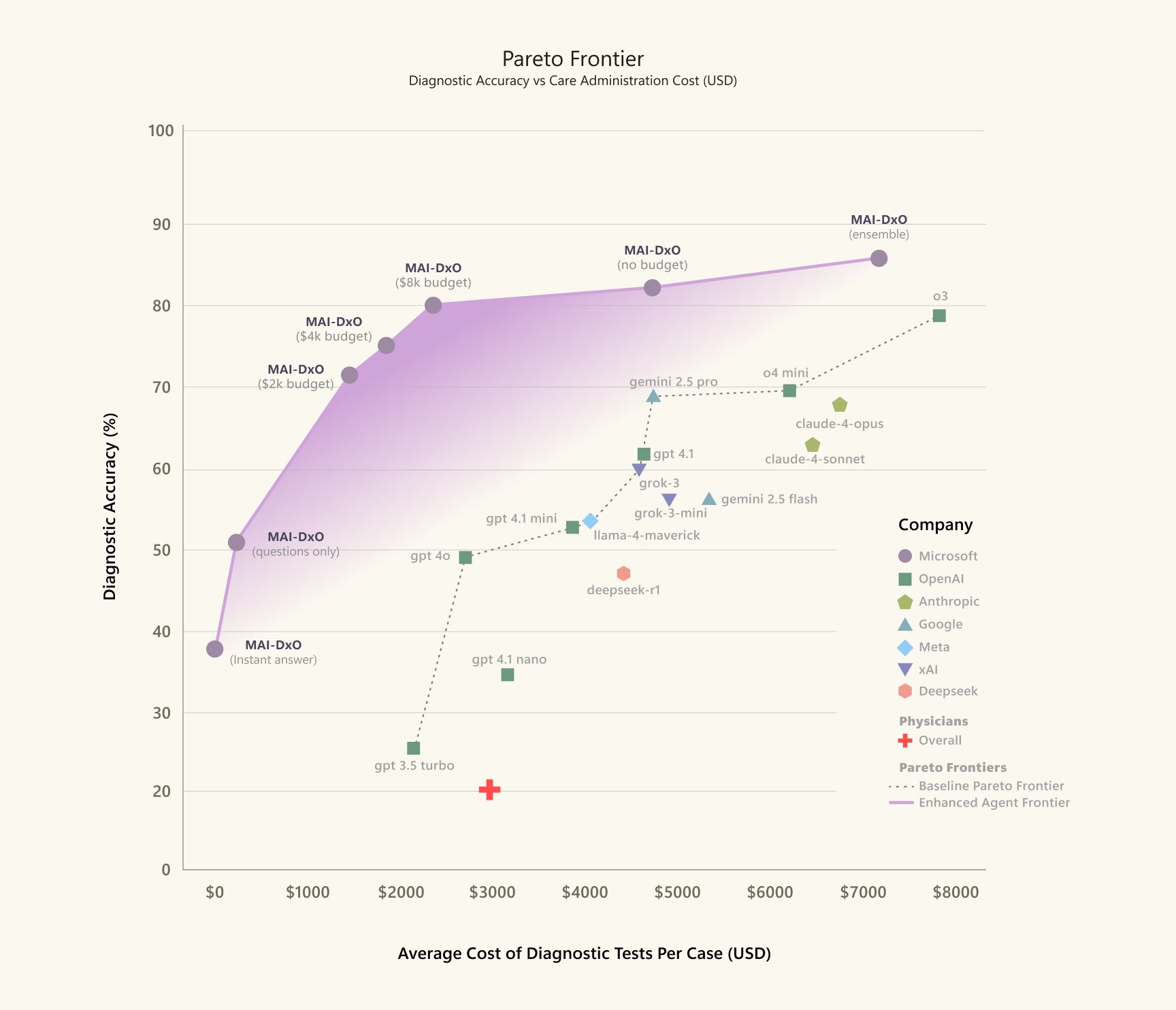
Le patron des IA chez @Microsoft @mustafasuleyman vient de présenter sa dernière IA médicale L’IA est 4 fois meilleure que les médecins Il y voit un pas important vers la super IA médicale Les médecins auront bientôt l’interdiction de faire des diagnostics J’en suis désolé
-
Building an Agent with Authentication and Payment Processing
By
–
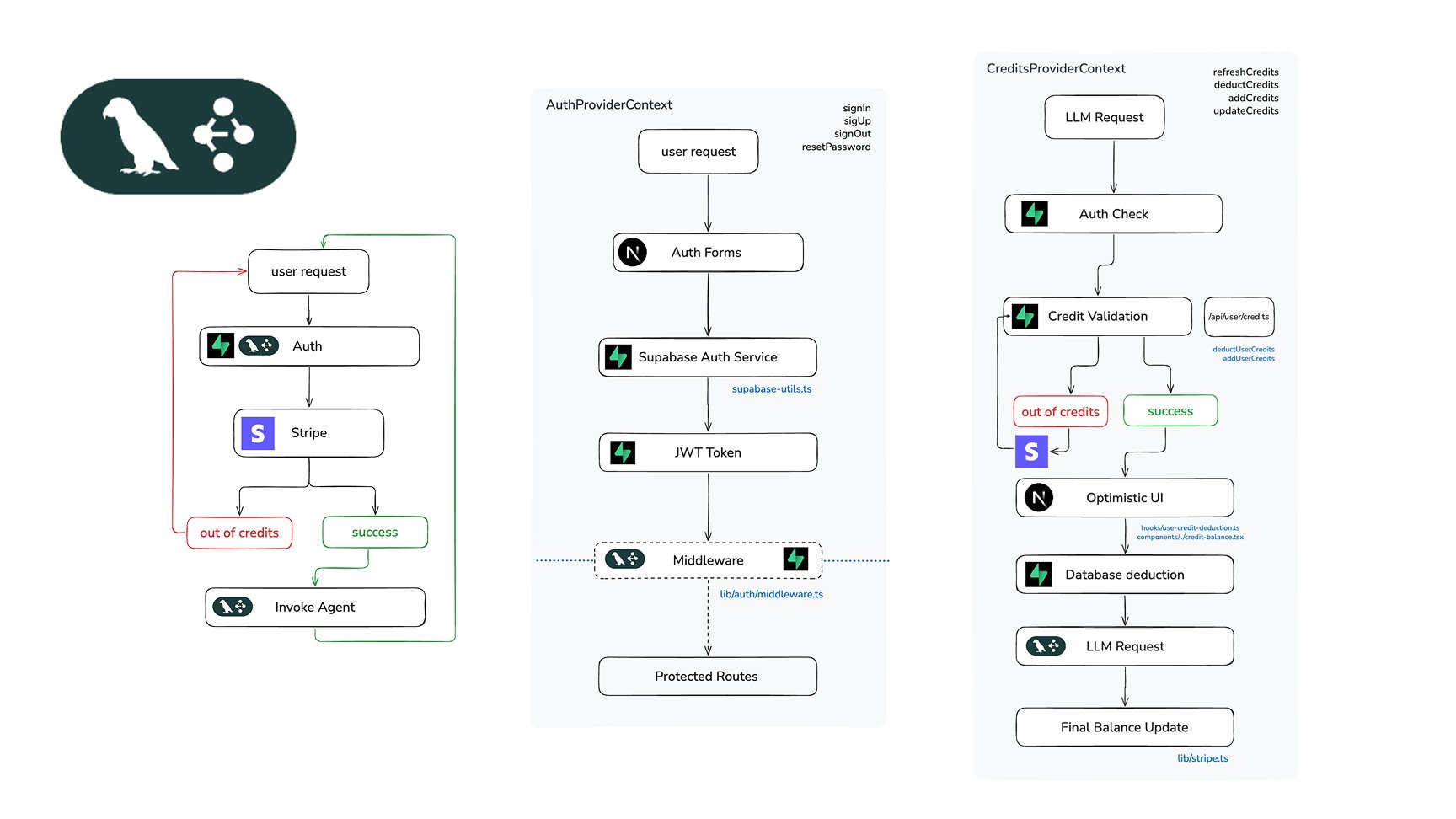
New Video: How to Build an Agent with Auth and Payments AI Services often track LLM requests via credits. We just released a video showing how to build a LangGraph.js app that does exactly this! It has:
– Stripe for payments
– Supabase for auth & credits
– LangGraph -
Abacus.AI ChatLLM: Unlimited Team Collaboration in One Platform
By
–
Unlock Team Collaboration with http://
Abacus.AI! Tired of siloed AI tools? With Abacus' ChatLLM, you can invite unlimited team members and collaborate on projects, conversations, and workflows—all in one place! No more juggling multiple platforms or worrying about user -
HopeLLM: LangGraph Agent for Patient Journey Summarization in Healthcare
By
–
In healthcare, every decision must be grounded in accuracy and trust. @cityofhope — a national medical center specializing in cancer care and diabetes — developed HopeLLM to help with just that.
— LangChain (@LangChain) 30 juin 2025
HopeLLM is a LangGraph-powered agent designed to help summarize patient journeys for… pic.twitter.com/U9qDVfjCIDIn healthcare, every decision must be grounded in accuracy and trust. @cityofhope — a national medical center specializing in cancer care and diabetes — developed HopeLLM to help with just that. HopeLLM is a LangGraph-powered agent designed to help summarize patient journeys for
-
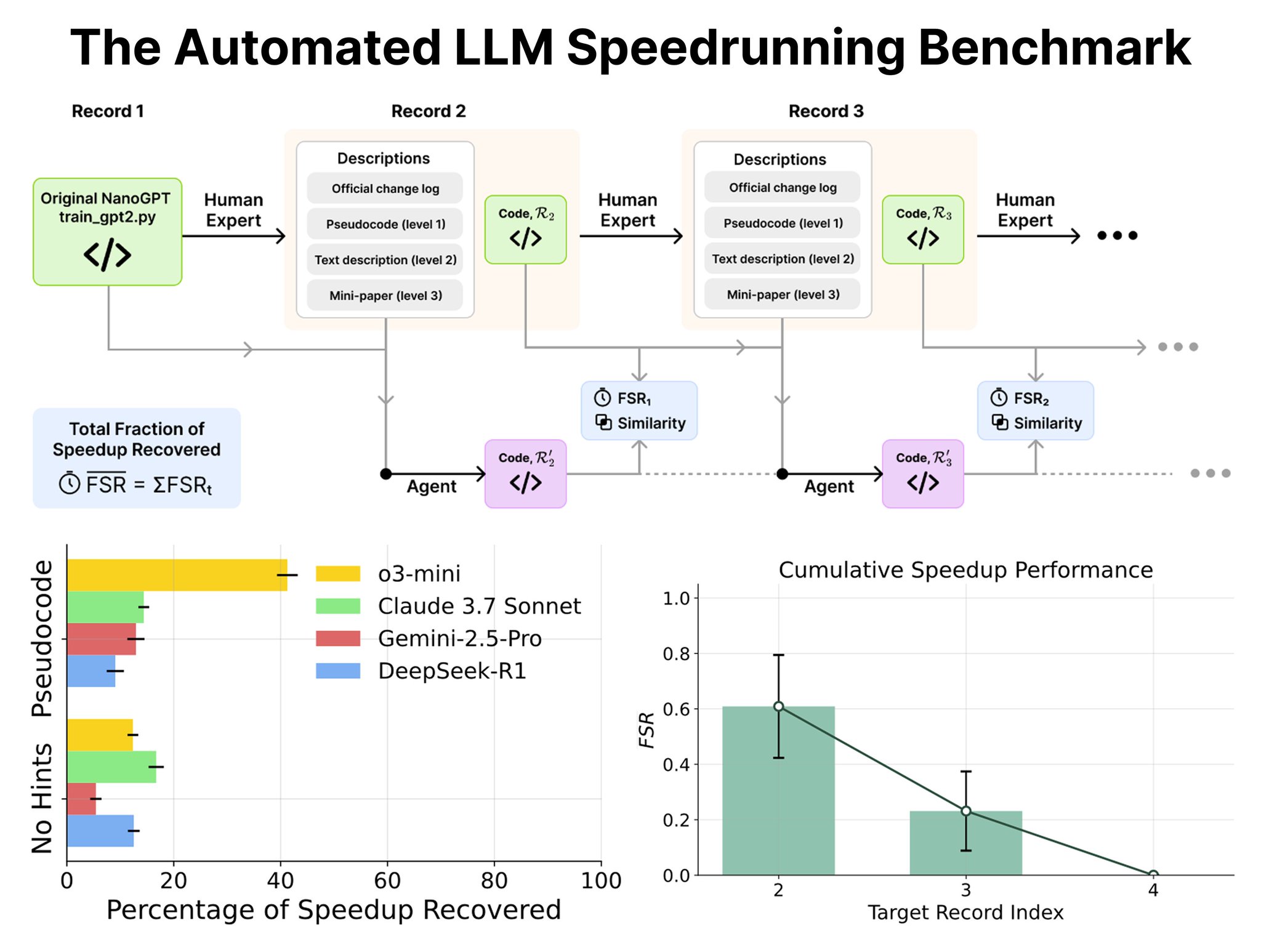
nanoGPT: From Teaching Tool to Self-Improvement Benchmark
By
–
Love this project: nanoGPT -> recursive self-improvement benchmark. Good old nanoGPT keeps on giving and surprising 🙂 – First I wrote it as a small little repo to teach people the basics of training GPTs.
– Then it became a target and baseline for my port to direct C/CUDA