The stagnation take holds up until you ask it to compete with actual evals. Coherent 30-minute agent runs, tool-call reliability on complex schemas, long-context retrieval that finally works. The progress is there, it just isn't a dunk thread.
LLMS
-
Agentic RAG: Planning Over Agent Labels in Retrieval Systems
By
–
The real contrast isn't static retrieval vs. adaptive. It's whether the retrieval layer can decide to stop, re-plan, and try a different tool. Agentic RAG is just RAG with a planner in front of it. The name is new, the accuracy gain is from the planning, not the "agent" label.
-
Long-run model consistency becomes key performance benchmark
By
–
Long uninterrupted runs are the new benchmark. A model that doesn't stop and start on a 50k-token refactor is shipping a different product than one that does, even if they score similar on short tasks. 4.6 stopping was masking how sensitive the previous loop was to noise.
-
Adaptive Thinking Trade-off: Token Burn vs Performance Regression
By
–
The adaptive thinking burns more tokens and the results drop. That's a regression no matter how the marketing reads. The real question is whether this is a calibration bug fixable in a point patch or a deeper reward-shaping choice that won't roll back… in any case, not so happy
-
API Access Restrictions Shape Open vs Closed Research Agendas
By
–
Frontier API access shrinking is already shaping research agendas. The labs that publish and open-weight find the bugs the closed ones can't, because no single research setup is broad enough.
-
Deep Stack Attention Hijacking: Beyond Prompt Injection Vulnerabilities
By
–
a lot of injection research focuses on the prompt surface and misses that the vulnerability is actually in how routing attention gets hijacked deep in the stack
-
GPT 4.5 Peak Writing Style Regression in AI Models
By
–
Writing style. It’s become way too dry and robotic. GPT 4.5 was the peak, and it has been regressing since.
-
Opus 4.7 Shows Improvement But Still Underperforms 4.6
By
–
Opus 4.7 does seem to have improved, and its adaptive thinking now uses more tokens. However, compared to Opus 4.6, it still performs significantly worse.
-
Clarifying the terminology surrounding AI agents
By
–
On remplace pas le mot agent par harness. C'est juste un mot en plus pour expliquer un concept autour des agents.
-
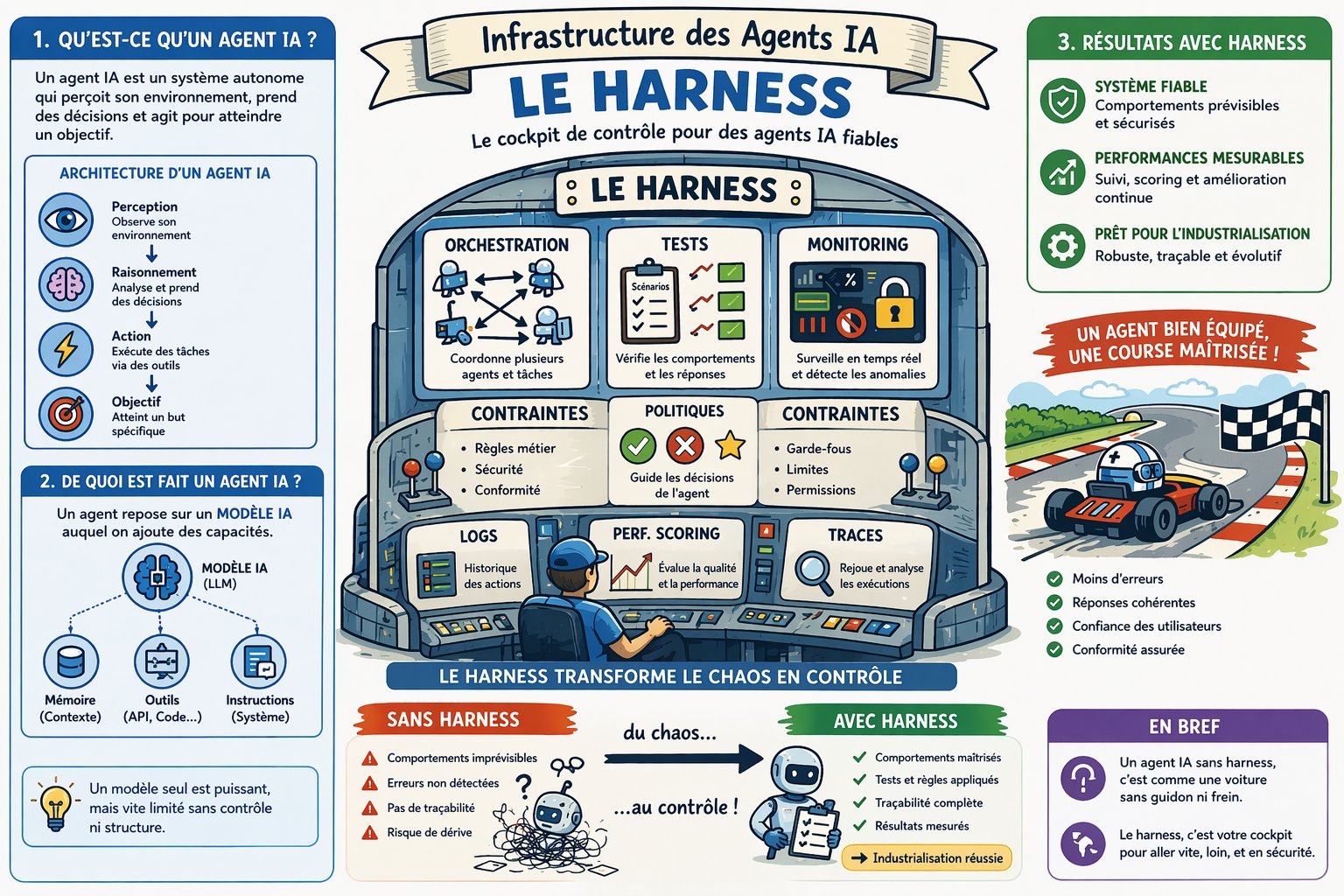
The importance of ‘harnessing’ for AI agents
By
–
Si vous devez apprendre un mot ce week-end, c’est le « harness ». En bref, c’est tout ce qui permet à un agent de passer de la compréhension à l’action. Un modèle d’IA peut être très bon pour répondre de manière stricte ou utiliser des outils spécifiques, mais ça ne veut pas