AI Dynamics

Global AI News Aggregator

About

INNOVATION

  • Gary Marcus vindicated: Claude Code proves neurosymbolic AI superiority

    Yep … @GaryMarcus has been right for 25 years; some AI Godfathers, not so much at all! #SaturdayAISurvey @AnthropicAI Gary Marcus (@GaryMarcus) Claude Code is not AGI, but it is the single biggest advance in AI since the LLM. But the thing is, Claude Code is NOT a pure LLM. And it’s not pure deep learning. Not even close. And that changes everything. The source code leak proves it. Tucked away at its center is a 3,167 line kernel called print.ts. print.ts is a pattern matching. And pattern matching is supposed to be the *strength* of LLMs. But Anthropic figured out that if you really need to get your patterns right, you can’t trust a pure LLM. They are too probabilistic. And too erratic. Instead, the way Anthropic built that kernel is straight out of classical symbolic AI. For example, it is in large part a big IF-THEN conditional, with 486 branch points and 12 levels of nesting — all inside a deterministic, symbolic loop that the real godfathers of AI, people like John McCarthy and Marvin Minsky and Herb Simon, would have instantly recognized.* Putting things differently, Anthropic, when push came to shove, went exactly where I long said the field needed to go (and where @geoffreyhinton said we didn’t need to go): to Neurosymbolic AI. That’s right, the biggest advance since the LLM was neurosymbolic. AlphaFold, AlphaEvolve, AlphaProof, and AlphaGeometry are all neurosymbolic, too; so is Code Interpreter; when you are calling code, you are asking symbolic AI do an important part of the work. Claude Code isn’t better because of scaling. It’s better because Anthropic accepted the importance of using classical AI techniques alongside neural networks — precisely marriage I have long advocated. It’s *massive* vindication for me (go see my 2019 debate with Bengio for context, or to my 2001 book, The Algebraic Mind), but it still ain’t perfect, or even close. What we really need to do to get trustworthy AI rather than the current unpredictable “jagged” mess, is to go in the knowledge-, reasoning-, and world-model driven direction I laid out in 2020, in an article called the Next Decade in AI, in which neurosymbolic AI is just the *starting point* in a longer journey.* Read that article if you want to know what else we need to do next. The first part has already come to pass. In time, other three will, too. Meanwhile, the implications for the allocation of capital are pretty massive: smartly adding in bits of symbolic AI can do a lot more than scaling alone, and even Anthropic as now discovered (though they won’t say) scaling is no longer the essence of innovation. The paradigm has changed. — *Claude Code is plainly neurosymbolic but the code part is a mess; as Ernie Davis and I argued in Rebooting AI in 2019, we also need major advances in software engineering. But that’s a story for another day. — https://nitter.net/GaryMarcus/status/2042987819333738929#m

    → View original post on X — @garymarcus, 2026-04-11 19:46 UTC
  • Hyundai’s MobED: Award-Winning Modular Robot Platform for Autonomous Transport
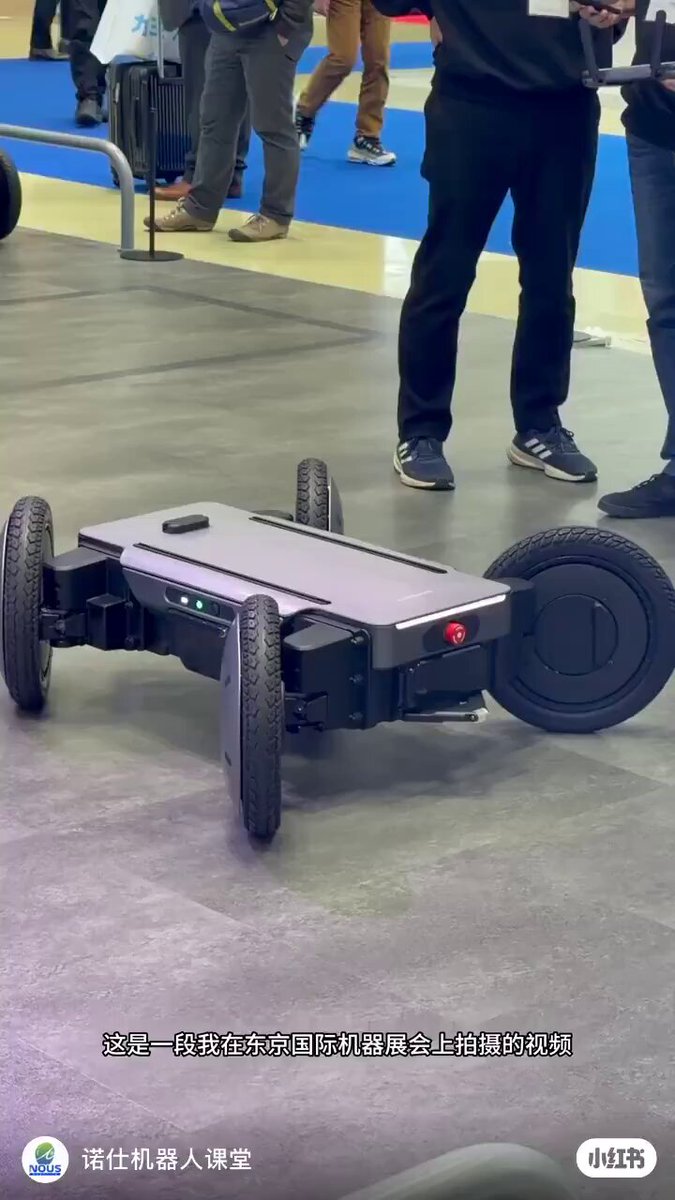
    Hyundai’s MobED: Award-Winning Modular Robot Platform for Autonomous Transport

    Hyundai’s MobED: Award-Winning Modular #Robot Platform Redefining Shake-Free #Autonomous #Transport via @RealXavier011 #AI #Robotics #MachineLearning #ArtificialIntelligence #ML #MI

    → View original post on X — @ronald_vanloon, 2026-04-11 19:23 UTC

  • Hybrid AI Vindication: LISP’s Extensibility Legacy in Modern Systems

    it’s not a vindication for classical AI. It’s a vindication for hybrids. extensibility was core to LISP, the first central language of AI, designed by McCarthy who I mentioned.

    → View original post on X — @garymarcus

  • Neurosymbolic AI: The True Innovation Beyond LLM

    This post by Gary Marcus explains something very important: the potential of what we call Neurosymbolic AI: the combination of the best of both worlds! Gary Marcus (@GaryMarcus) Claude Code is not AGI, but it is the single biggest advance in AI since the LLM. But the thing is, Claude Code is NOT a pure LLM. And it's not pure deep learning. Not even close. And that changes everything. The source code leak proves it. Tucked away at its center is a 3,167 line kernel called print.ts. print.ts is a pattern matching. And pattern matching is supposed to be the *strength* of LLMs. But Anthropic figured out that if you really need to get your patterns right, you can't trust a pure LLM. They are too probabilistic. And too erratic. Instead, the way Anthropic built that kernel is straight out of classical symbolic AI. For example, it is in large part a big IF-THEN conditional, with 486 branch points and 12 levels of nesting — all inside a deterministic, symbolic loop that the real godfathers of AI, people like John McCarthy and Marvin Minsky and Herb Simon, would have instantly recognized.* Putting things differently, Anthropic, when push came to shove, went exactly where I long said the field needed to go (and where @geoffreyhinton said we didn't need to go): to Neurosymbolic AI. That's right, the biggest advance since the LLM was neurosymbolic. AlphaFold, AlphaEvolve, AlphaProof, and AlphaGeometry are all neurosymbolic, too; so is Code Interpreter; when you are calling code, you are asking symbolic AI do an important part of the work. Claude Code isn't better because of scaling. It's better because Anthropic accepted the importance of using classical AI techniques alongside neural networks — precisely the marriage I have long advocated. It's *massive* vindication for me. [Translated from EN to English]

    → View original post on X — @garymarcus, 2026-04-11 19:05 UTC

  • Cognify: The AI Prison That Replaces Time with Memories
    Cognify: The AI Prison That Replaces Time with Memories

    Cognify: The #AI Prison That Replaces Time with Memories by @tweetciiiim #ArtificialIntelligence #Innovation #TechForGood #EmergingTech #Technology #Tech

    → View original post on X — @ronald_vanloon, 2026-04-11 18:56 UTC

  • Tiny Fish CLI: Open-Source Tool for AI Development
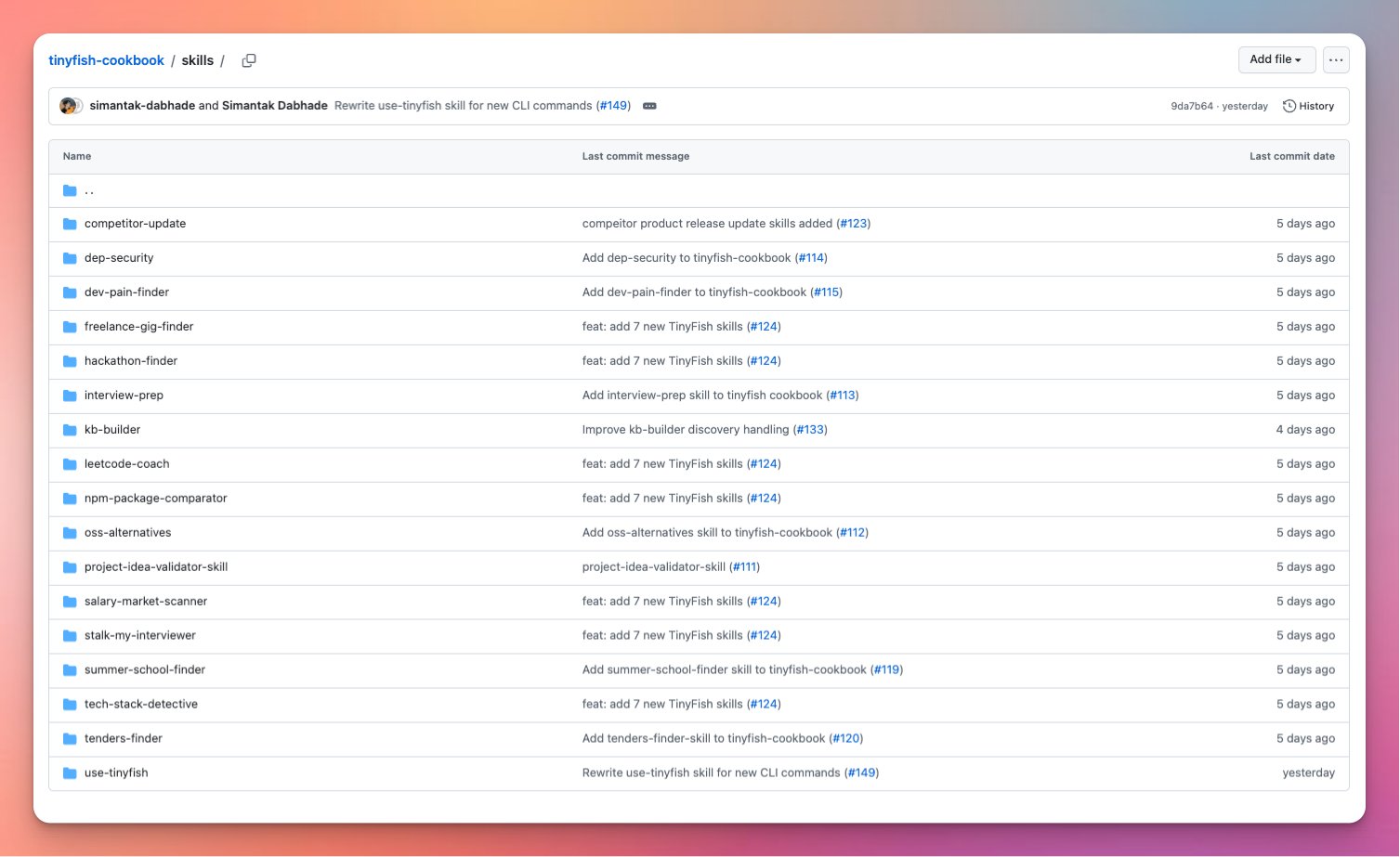
    Tiny Fish CLI: Open-Source Tool for AI Development

    Install the CLI: `npm install -g @ tiny-fish/cli` Check out their open-source repo: → https://
    github.com/tinyfish-io/ti
    nyfish-cookbook/tree/main/skills
    … Don't forget to drop a star!

    → View original post on X — @datachaz

  • AI Agents Scaling Challenge: Data Foundation Gap
    AI Agents Scaling Challenge: Data Foundation Gap

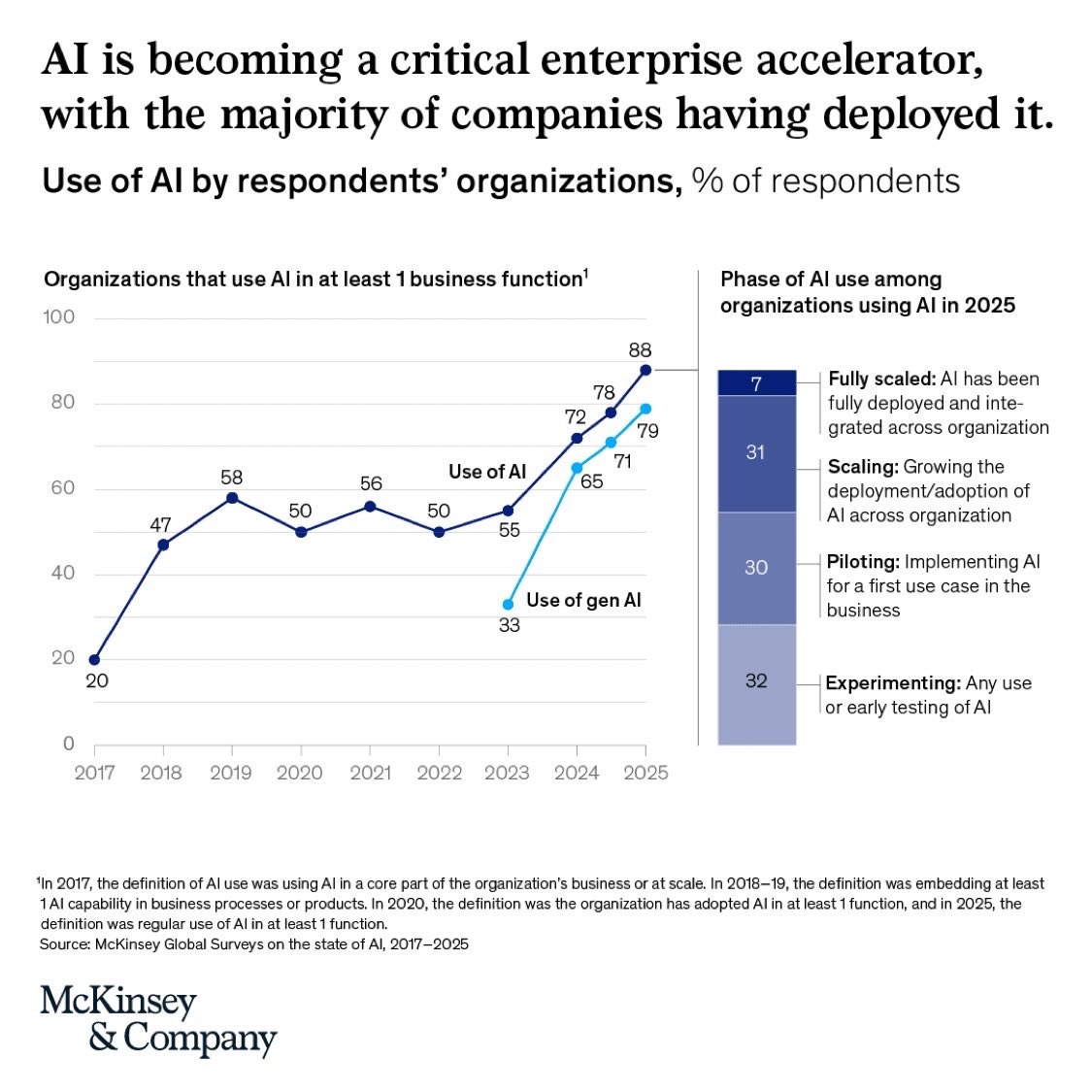
    McKinsey reports: Nearly 2/3 of enterprises are experimenting with AI agents…
    …but fewer than 10% have scaled them to deliver real, tangible value. That’s not a tooling gap. It’s a data foundation gap. Across industries, the pattern is clear:
    •Rapid experimentation with

    → View original post on X — @debashis_dutta

  • Gratitude and Enthusiasm for Popular MCP Tool

    thank you! and i genuinely had no idea that your MCP was so popular lol, i’m excited to watch back your talk and really use it to its max!

    → View original post on X — @swyx

  • Microsoft Orleans in Game Development: Same Concepts?

    ever come across Microsoft Orleans in game dev context? same same?

    → View original post on X — @swyx

  • Expo Features Underrated Companies and Sponsors

    all credit to @benghamine and also our sponsors, its really hard to get an expo like this where even the companies you’ve never heard of are actually just underrated and doing cool work anyway

    → View original post on X — @swyx