We need fewer projects, more people. We need better projects, better quality people.
GENERATIVE AI
-
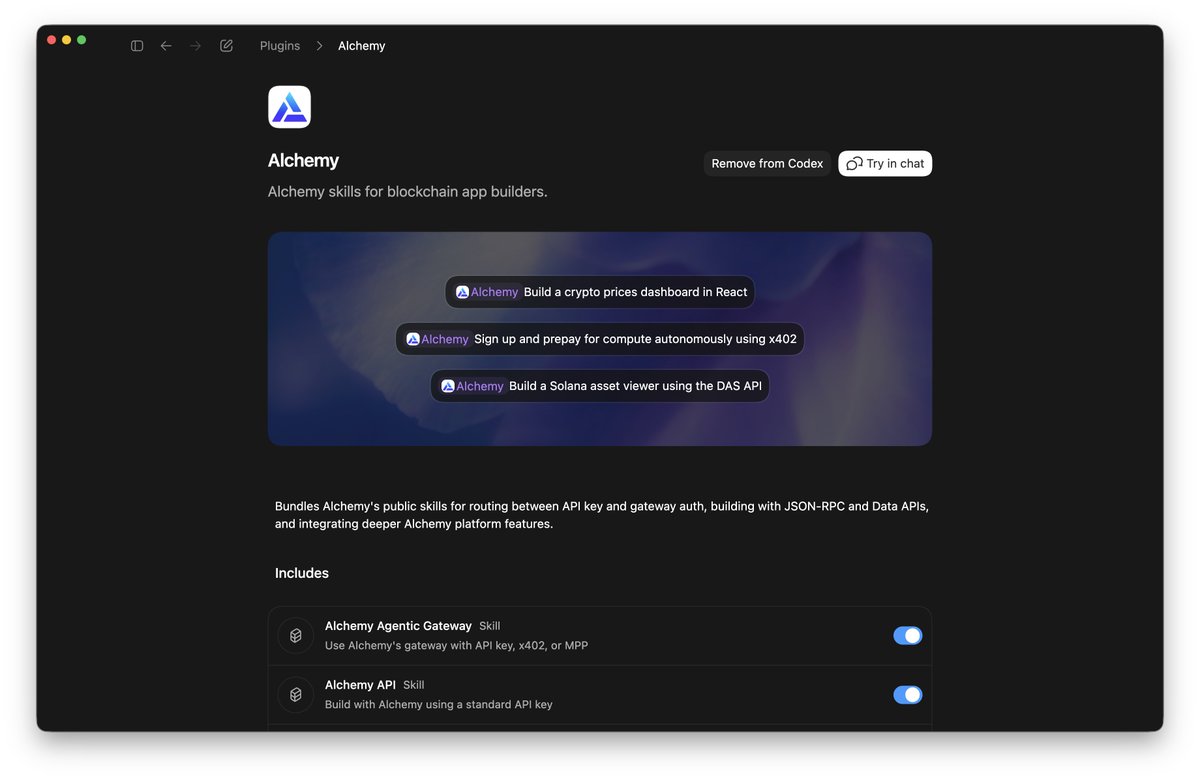
Alchemy Plugin Enables Direct Crypto App Building in Codex
By
–
You can now build crypto apps directly from Codex using the Alchemy plugin! I expect many onchain apps will be built this way. Awesome work by the resident Codex power-user @0xmts! Alchemy (@Alchemy) 🤖 NEW 🤖 @OpenAIDevs shipped Codex Plugins on Thursday. We weren't going to make builders wait… Alchemy is LIVE inside your AI coding agent: Crypto prices dashboards, @solana asset viewers, x402 compute, and more. Build with one prompt. — https://nitter.net/Alchemy/status/2039050866901274933#m
→ View original post on X — @romainhuet, 2026-03-31 19:47 UTC
-

LLMs Replace Mediocrity, Not Expertise Quality
By
–
LLMs are not making expertise less valuable. They are making mediocre work easier to replace. Quantity is cheap now. Judgment, taste, and direction are not. We need fewer people. But we need better ones. To be clear, I am not saying beginners are doomed. I am saying the path changed. The people who learn fast, care about quality, and use LLMs to improve their judgment will do very well. The ones focused on shipping and quantity will be the ones replaced first.
-
Krill Usage: Local Codex and Claude Code Applications
By
–
For what have you been using Krill? local = codex, or claude code
-
Context Window Limitations in AI Models Explained
By
–
if you go beyond the 256k context window it falls off quite a bit yeah, but default limits that.
-
Coding Agents Automate Cross-Platform Workflows with Intelligence
By
–
Agents that can code will equally be able to use tools exceedingly well. This allows you to start to automate tasks across a workflow that requires both a component of non-deterministic intelligence but also deterministic system interaction.
— Aaron Levie (@levie) 31 mars 2026
An example would be using something… https://t.co/ziNaeIUR8TAgents that can code will equally be able to use tools exceedingly well. This allows you to start to automate tasks across a workflow that requires both a component of non-deterministic intelligence but also deterministic system interaction. An example would be using something like Codex to automate a workflow connecting data from Box to multiple other systems. The coding agent can interact with systems like an engineer via CLI/MCP/APIs, or write code on the fly when new problems are encountered in a workflow. This will also be one of the reasons you’ll see more technical and engineering roles start to help automate work in non-engineering domains. Marketing, finance, supply chain, pharma research, and other areas where there’s a large amount of data and systems to talk to all have these properties. Box (@Box) Codex just turned an upcoming meeting into a fully automated cross-platform workflow. Box. Gmail. Slack. It researches across all three, synthesizes the context, and delivers a pre-meeting brief without anyone lifting a finger. This is what personal productivity looks like when agentic automation does the work for you. See it in action.👇 — https://nitter.net/Box/status/2039056257282449696#m
→ View original post on X — @romainhuet, 2026-03-31 19:39 UTC
-
Claude’s rapid evolution toward autonomous agent capabilities
By
–
They've released a number of features already heavily hinting on nudging Code into Claw directions, i.e. it's a speedrun of
-
LTX Studio : plateforme vidéo pour créateurs et développeurs
By
–
6/ If you're a creator building video content, a team doing pre-viz, or a developer integrating video generation into a product — LTX Studio is worth exploring. Try it here →
-
LTX Studio: Multi-Model Flexibility for Per-Shot Video Generation
By
–
5/ One thing I appreciate: you're not locked into one model.
— Chubby♨️ (@kimmonismus) 31 mars 2026
LTX Studio gives you access to LTX-2.3 but also integrates Veo, Kling, and others. You can choose per shot based on what the scene needs.
That flexibility is rare in a single platform. pic.twitter.com/N7SKujqYjU5/ One thing I appreciate: you're not locked into one model. LTX Studio gives you access to LTX-2.3 but also integrates Veo, Kling, and others. You can choose per shot based on what the scene needs.
That flexibility is rare in a single platform.