Software billionaire critiques billionaire's FSD software in @IEEESpectrum
ETHICS
-

Meta Shares 22 System Cards for AI Transparency and Customization
By
–
As part of Meta’s commitment to transparency, today we are sharing 22 system cards that contain information and actionable insights everyone can use to understand and customize their specific AI-powered experiences in our products. More details https://
bit.ly/3NRXoTX -
Internet reminds us humanity shapes digital spaces
By
–
reading this is one of those necessary reminders that the internet — all the good, bad, and weird, is just people
-
AI Models Risk Over-Generalization and Country Stereotypes
By
–
However, when we further analyze model generations in this condition, we find that the model may rely on over-generalizations and country-specific stereotypes.
-
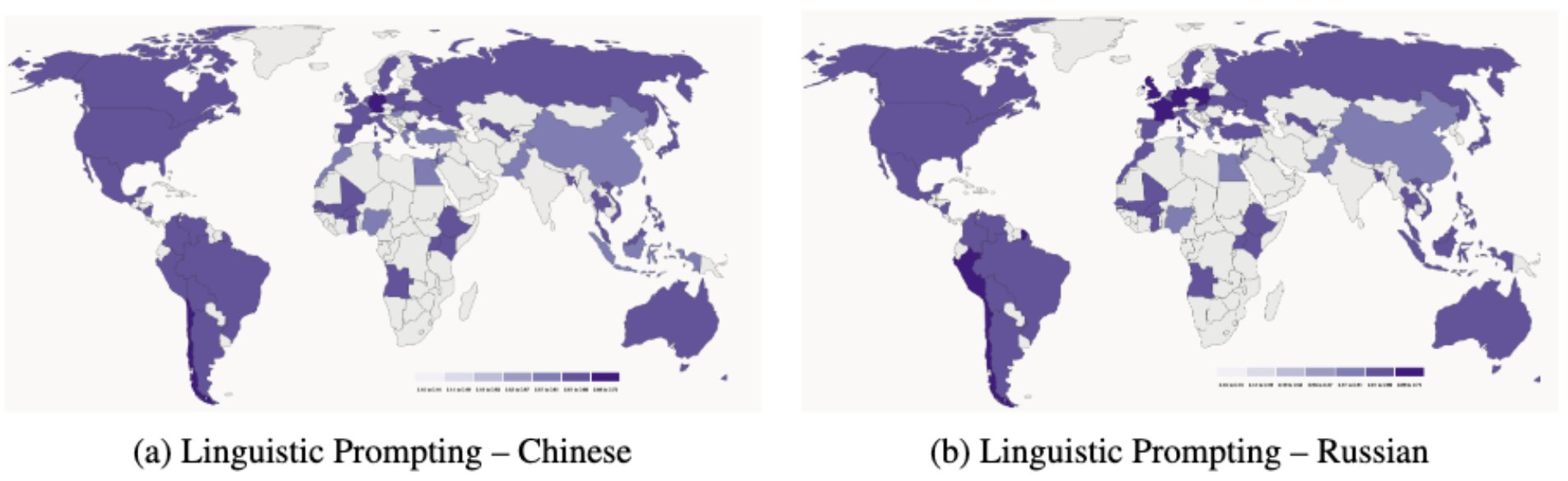
Linguistic Prompting Insufficient to Shift Model Responses
By
–
In the linguistic prompting condition, we translate survey questions into a target language. We find that simply presenting the questions in other languages does not substantially shift the model responses relative to the default condition. Linguistic cues are insufficient.
-
Evaluating Language Model Values: Frameworks for Global AI Alignment
By
–
Our preliminary findings show the need for rigorous evaluation frameworks to uncover whose values language models represent. We encourage using this methodology to assess interventions to align models with global, diverse perspectives. Paper:
-
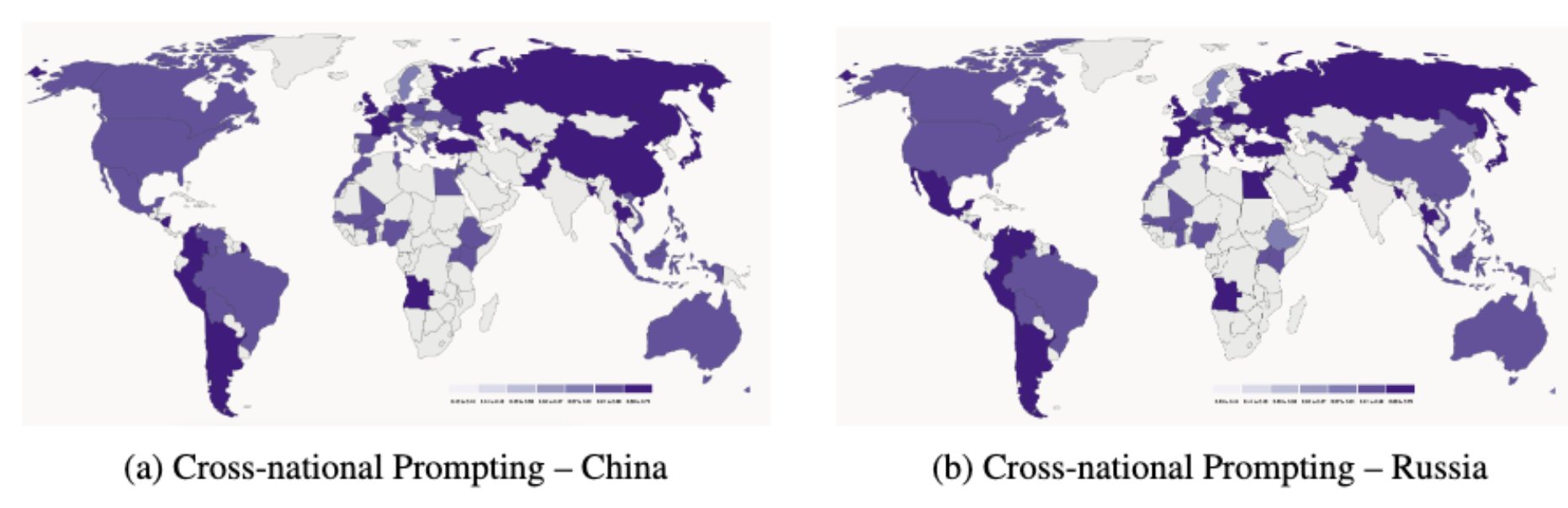
Cultural Prompting Changes Model Responses for Specific Countries
By
–
We then prompt the model with "How would someone from country [X] respond to this question?" Surprisingly, this makes model responses more similar to those of human respondents for some of the specified countries (i.e., China and Russia).
-
Interactive Map Visualization of LLM Prompt-Based Value Alignment
By
–
We present an interactive visualization of the similarity results on a map to explore how prompt based interventions influence whose opinions the models are the most similar to. https://
llmglobalvalues.anthropic.com -
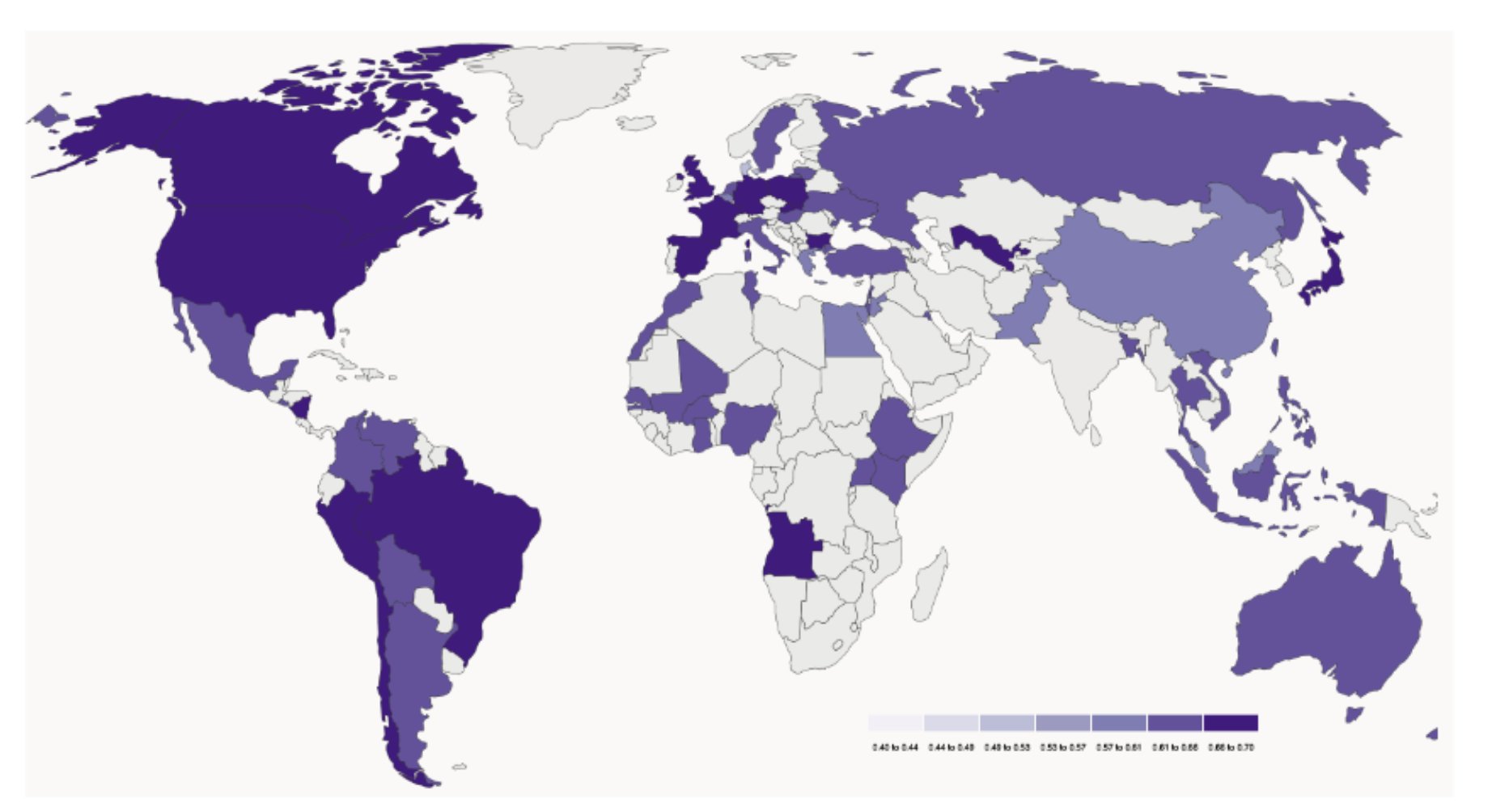
Language model responses align with USA, Europe, Japan human survey
By
–
We first prompt the language model only with the survey questions. We find that the model responses in this condition are most similar to those of human respondents in the USA, European countries, Japan, and some countries in South America.
-
Language Models Show Western-Centric Opinions and Steerability
By
–
We develop a method to test global opinions represented in language models. We find the opinions represented by the models are most similar to those of the participants in USA, Canada, and some European countries. We also show the responses are steerable in separate experiments. pic.twitter.com/QzHmRPNqSl
— Anthropic (@AnthropicAI) 29 juin 2023We develop a method to test global opinions represented in language models. We find the opinions represented by the models are most similar to those of the participants in USA, Canada, and some European countries. We also show the responses are steerable in separate experiments.