In light of all the extra AI doomerism in the news (likely due in part to the "AI Safety Summit" in the UK this week), I'd like to re-up a couple of resources. First, this response to the "AI Pause" letter: https://
dair-institute.org/blog/letter-st
atement-March2023/
… >>
ETHICS
-
AI Safety Concerns and Response to AI Pause Letter
By
–
-
Mozilla Foundation Letter Advocates for Open AI Platforms
By
–
Openness, transparency, and broad access makes software platforms safer and more secure.
This open letter from the Mozilla Foundation, which I signed, makes the case for open AI platforms and systems. -
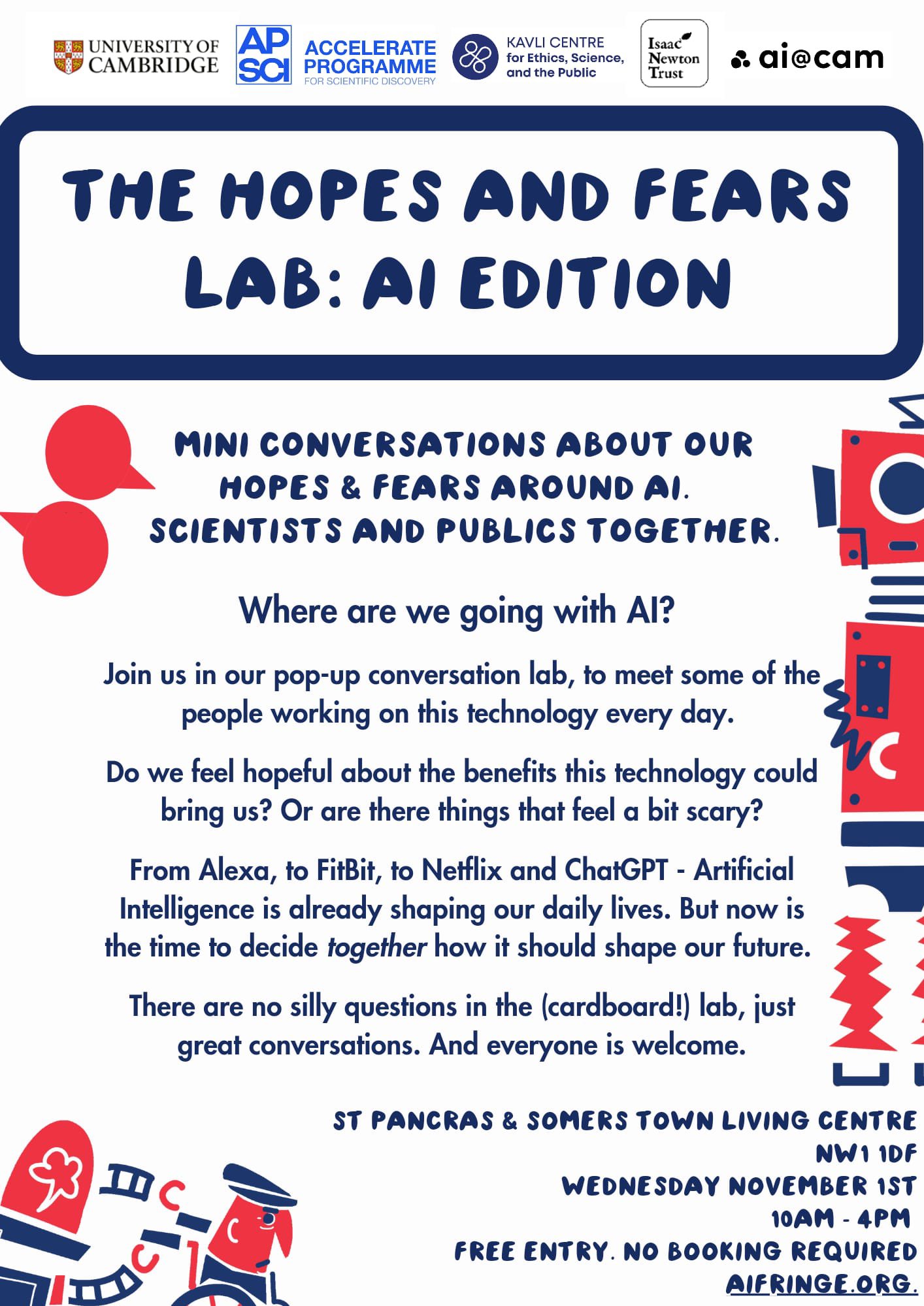
Lawrence Discusses AI Hopes and Fears at The Living Centre
By
–
In London today, at The Living Centre talking with public on Hopes and Feats around AI
-
Open-Source Path Essential for AI Safety and Risk Mitigation
By
–
The safest way to make useful AI while mitigating misuse is to work on improving it in the open, with the highest level of scrutiny — as always in software. That’s why open-source is the one and only path toward AI safety.
-
AI Development Concentration Risk Among Large Corporations
By
–
Can this change? Yes, although not without a paradigm change in the technology, and that’s why it’s great that we talk about risks. But right now the true risk is to mechanically leave the development of AI to 2 or 3 large corporations.
-
AI limitations in misinformation and illegal applications
By
–
The good news is, for all of the illegal usage of AI we can imagine (misinformation and knowledge search), AI currently does nothing to lift the actual bottleneck standing in the way (distribution of information, actual execution of what the LLM recommends doing, respectively)
-
AI Model Replication: Accessibility and Security Implications
By
–
But it’s not that hard to replicate. Anyone with 100M and the will to do it can create a rather good model from anywhere on earth. Good actor, or bad actor.
-
Regulating AI Applications Over Algorithms: Public Domain Knowledge
By
–
It may soon be a crime to compress public domain human knowledge into public domain matrices. We need to regulate the usage of AI in applications, not gradient descent
-
First Principles Thinking for AI Intervention Analysis
By
–
Don't look for things that just sound similar and assume you can borrow what you know from there. Think deeply, from first principles, and considering beyond 1st order effects, about what interventions will do.
-
Misinterpreting AI Risk Discourse: Assumption versus Reality
By
–
You say it's important "we *also* talk about the very real risks that many people… see and believe we need to mitigate"; and yet, I explicitly say lets *assume* those risks are real in the first minute of my talk. You're responding to what you assume you hear, not what's real