Human And Machine: The Future Of #AI Lies In Collaboration, Not Replacement
by Sylvio Lindenberg @Forbes Learn more: https://
bit.ly/3PBZYB1 #ArtificialIntelligence #MachineLearning #ML #DL
ENTERPRISE AI
-

Human And Machine: AI’s Future In Collaboration Not Replacement
By
–
-
AI in Telecom: From Experimentation to Essential Strategy
By
–
Here’s my big takeaway: AI in telecom is no longer about experimentation. It’s about collapsing the data layer, enabling intent-based control, and monetizing experience instead of raw connectivity. If you are a CTO, CSP, or cloud leader, this is not optional strategy. It is
-
AI in RAN: Three Distinct Applications and Performance Gains
By
–
First, let’s clarify something most people miss: There isn’t just “AI in telecom.” There’s: → AI in RAN
→ AI for RAN
→ AI on top of RAN AI in RAN is where things get tangible. We’re talking: → 20% improvement in uplink spectral efficiency
→ 14% energy savings with -
Telecom Network Autonomy: Moving Beyond Level 3 Limitations
By
–
Most telecom operators are optimizing their networks with 15-minute-old data.
— Ronald van Loon (@Ronald_vanLoon) 1 avril 2026
Offline files.
Batch transfers.
Human review.
And we wonder why autonomy is stuck at Level 3.
At MWC, I sat down with Joe Constantine from @ericsson to unpack what it really takes to move from… pic.twitter.com/LuPX1E0hCZMost telecom operators are optimizing their networks with 15-minute-old data. Offline files.
Batch transfers.
Human review. And we wonder why autonomy is stuck at Level 3. At MWC, I sat down with Joe Constantine from @ericsson to unpack what it really takes to move from -
Real AI Innovation Hides Behind Focused Outcomes, Not Technology
By
–
The irony is that the companies actually doing interesting things with AI are the ones most likely to bury the lede because they're focused on the outcome they deliver, not the technology stack underneath it.
-
Augmenting Human Capability: Precision Control with Industrial Robots
By
–
Augmenting Human Capability: Precision Control with Industrial #Robots
— Ronald van Loon (@Ronald_vanLoon) 1 avril 2026
by @extend_robotics#Robotics #ArtificialIntelligence #Innovation #Technology pic.twitter.com/07R6cGpDmEAugmenting Human Capability: Precision Control with Industrial #Robots
by @extend_robotics #Robotics #ArtificialIntelligence #Innovation #Technology -
Zuckerberg’s AI Deployment Strategy: More Support Staff Needed
By
–
Zuckerberg saying he expects to hire more customer support people after deploying AI is not a PR line. The unit economics of that statement are actually straightforward once you run them.
-

Cloud Costs Rise as AI Integrates into Core Business Systems
By
–
Cloud costs rise as AI moves into core business systems cloudcomputing-news.net/news… #Cloud #Automation #Data #Innovation #DataArchitecture #DigitalTransformation #DataEngineering #RAG
→ View original post on X — @craigbrownphd, 2026-04-01 09:22 UTC
-
AI-Generated Medical Papers: Progress Without Revolutionary Claims
By
–
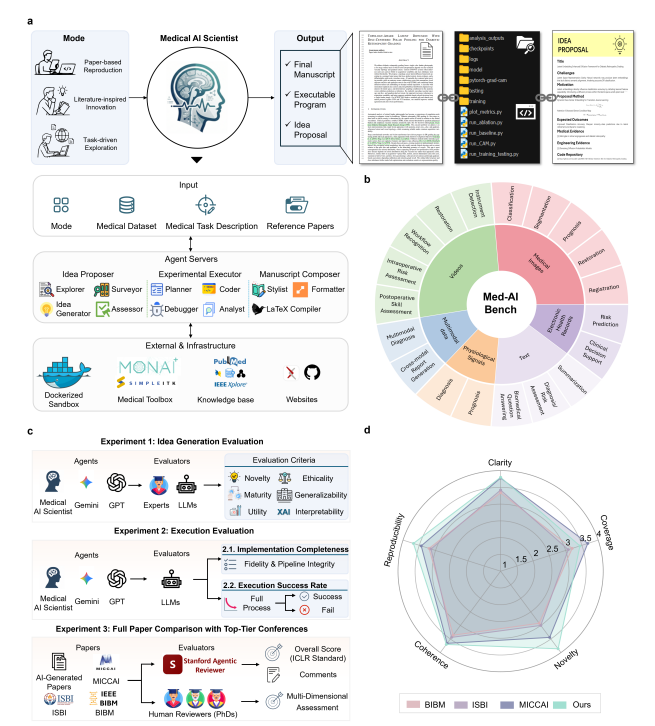
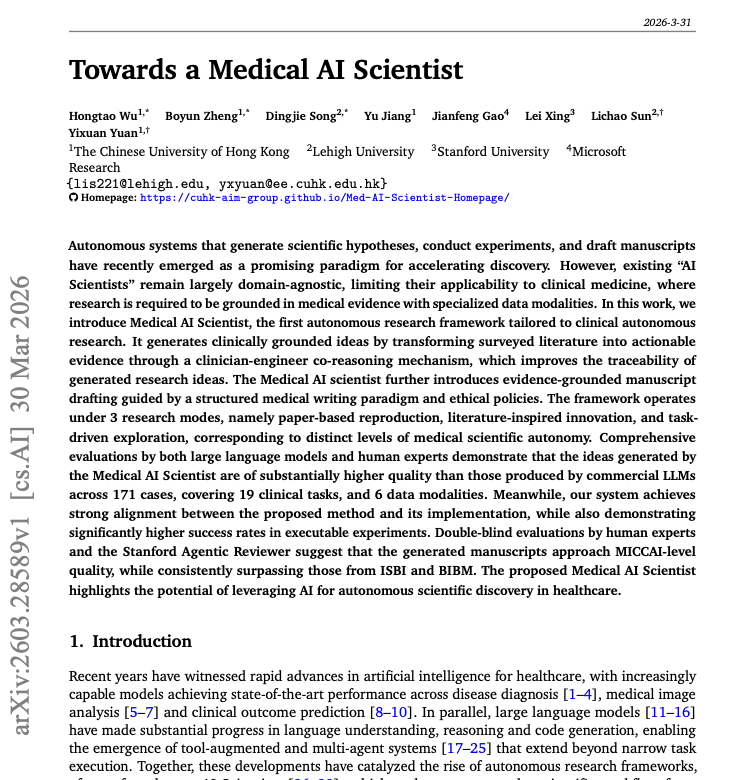
This is a solid, innovative step toward AI-augmented scientific workflows in medicine. It seems better at structured medical tasks than generic LLMs, with manuscripts that can fool experts in blind tests (and also fool conferences – although that seems relatively easy these days). It demonstrates progress in autonomous agents for research pipelines. However, it's not yet a revolutionary "AI scientist" replacing human researchers or immediately flooding journals with validated breakthroughs. Real impact will depend on extensive external validation and whether it’s a black box or provides mechanistic interpretation. Can we stop it with the dramatic pronouncements describing legitimate papers which are clearly AI-written? Ihtesham Ali (@ihtesham2005) 🚨BREAKING: Stanford and Microsoft just built an AI scientist that writes medical research papers that actually pass peer review. Not summaries. Not drafts. Full papers reviewed and accepted by real scientists. This is not a demo and this is not a prototype. A peer-reviewed conference just accepted a paper that no human wrote, and most people have absolutely no idea it happened. The system is called Medical AI Scientist and it works in three stages that run completely on their own. First, it reads medical literature, identifies real clinical gaps, and generates a research hypothesis grounded in actual disease evidence, not a hallucination and not a generic idea pulled from thin air. Then it writes the code, runs the experiment inside a secure environment, catches its own errors, and fixes them without any human stepping in. Then it writes the full paper, including the introduction, methods, results, figures, ethics statement, citations, and LaTeX formatting, from start to finish, autonomously. They tested it against GPT-5 and Gemini 2.5 Pro across 171 real medical research cases covering 19 clinical tasks, and the results were not close. Medical AI Scientist successfully completed experiments 91 to 93 percent of the time. GPT-5 managed 60 to 75 percent. Gemini 2.5 Pro collapsed somewhere between 40 and 53 percent. Then they ran the part that genuinely broke my brain. Ten independent medical experts with over five years of first-author publishing experience reviewed the AI-generated papers side by side with real human papers from MICCAI, ISBI, and BIBM, the top conferences in medical imaging, and nobody knew which was which. The AI papers scored competitively on novelty, clarity, coherence, and reproducibility across the board, and one paper was accepted at a peer-reviewed conference after a full review process. Here is what nobody is saying out loud. Medical research has a brutal bottleneck where ideas pile up, experiments take months, papers take even longer, and patients wait the entire time. That problem just got a serious solution, and the implications for healthcare are enormous. — https://nitter.net/ihtesham2005/status/2039009949276319824#m
→ View original post on X — @sallyeaves, 2026-04-01 06:55 UTC
-
Open Models vs Closed APIs: Comparing Apples and Oranges
By
–
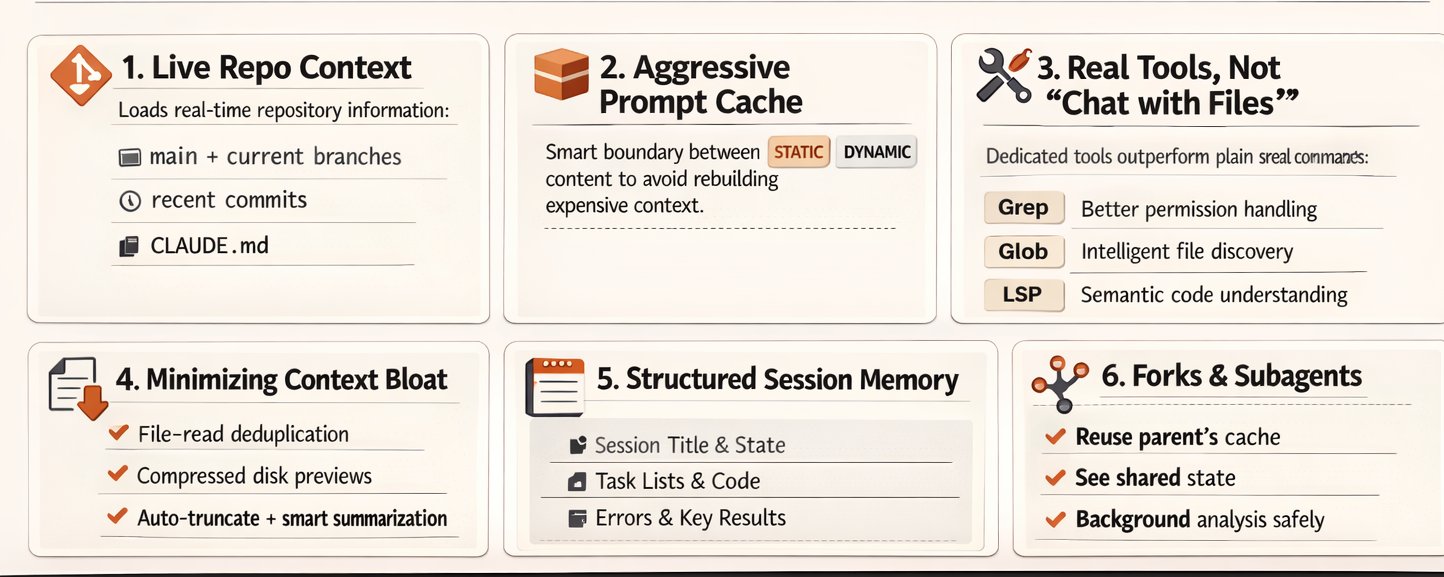
That’s why I usually say that comparing open models with closed-source APIs or products is like comparing apples and oranges. Or comparing an engine with a full car. Or comparing an ingredient with a Michelin dinner (missing ingredients, prep and chef). There’s a lot of