Happy birthday to the late Sister Mary Keller, who helped develop #Basic & in 1965 was the first woman to earn a computer science PhD in the US: http://
bit.ly/2M5v8LQ (
@mental_floss
)
EDUCATION
-
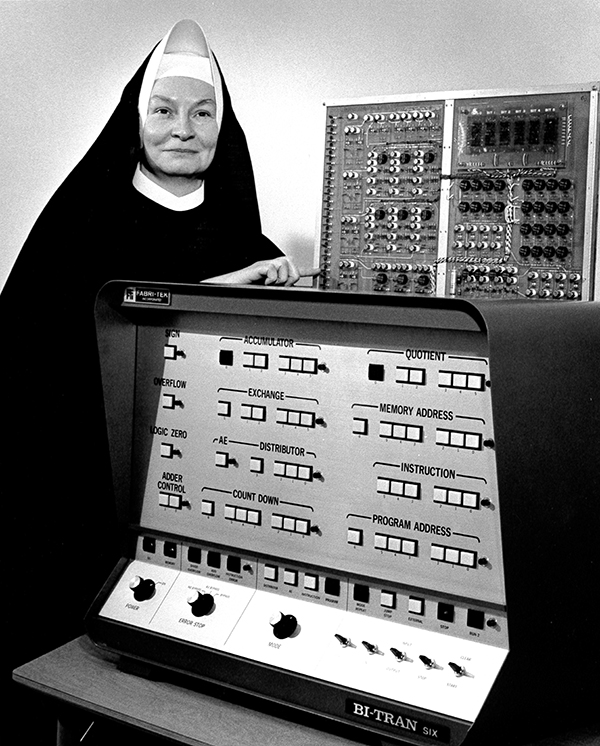
Sister Mary Keller: First Female US Computer Science PhD
By
–
-
Full-text search web app built for all fast.ai courses
By
–
This is very cool – building a full-text search web app for all @fastdotai courses!
-
Fast.ai’s First International Fellow Earns PhD
By
–
We selected @sahilsingla47 as @fastdotai
's first ever international fellow, back in 2017! After 5 years, he now has his PhD. 😀 I'm not at all surprised that Sahil has gone on to great things. We were so impressed by his tenacity and brilliant work. -

Learning Recommendation Systems with Movie Dataset
By
–
Recommendation systems are one of the most widely used topics of machine learning. Some of your favorite applications use a recommendation system at their core. Here is a great dataset to learn: https://
kaggle.com/rounakbanik/th
e-movies-dataset
… 45,000+ movies. 26M ratings from over 270,000 users. -
ChatGPT as a cognitive enhancement tool for the mind
By
–
wait better: ChatGPT is like an e-bike for the mind
-
Building a Career in AI: New Ebook Guide
By
–
New ebook! How can you build a career in AI? This compiles my tips on how to:
∙ Learn technical skills ∙ Choose and build AI projects ∙ Find a job Let me know your feedback! -
Fast.ai Course Becomes MOOC Early 2023 with Book
By
–
Yes the current http://
fast.ai course. You missed doing it live but it'll be a MOOC in early 2023. Also our book has a lot of the same stuff. -

Discover Top Astrophysicists to Follow Online
By
–
Find new users to follow:
"top astrophysicists" https://
perplexity.ai/sql?uuid=1492d
123-dc05-4ea3-bedf-9aea8a918749
… -
Challenge Approach: Reimplementing Techniques from Foundations in Python
By
–
(Oh BTW personally for this challenge I'm following the "from the foundations" rules we're using for our current course: only using techniques I've first reimplemented from scratch in pure Python. But y'all can use external libs and stuff if you like…)
-

Human demonstrations limited early instruction tuning models
By
–
Early attempts at instruction tuning relied entirely on demonstrations from humans. This made the model easier to prompt, but the approach was limited by the inherent difficulty of manufacturing new humans.