Super Study Guide: Transformers & Large Language Models: http://
amzn.to/3SW6YYm by @afshinea & @shervinea Beautifully presented, excellent content, timely, thorough, educational #LLMs #MachineLearning #AI #GenAI #DataScience #DataScientist #GenerativeAI
DATA
-

Super Study Guide for Transformers and Large Language Models
By
–
-
Huawei’s EDCO: Dynamic Curriculum Orchestration for Real-Time LLM Adaptation
By
–
What if fine-tuning a large language model could adapt its training in real-time, not just follow a static plan? Researchers from Huawei introduce EDCO, a dynamic curriculum orchestration framework. Instead of pre-ordering training samples by difficulty, EDCO prioritizes data
-
Schema-First Ingestion for AI Retrieval Systems
By
–
Schema-first at ingestion time is the right framing. Most teams discover this after building the retrieval layer and wondering why structured queries return noise. The 10/10/10 constraint in Graphiti helps too. Forces you to model the 80% that matters rather than attempting
-
AI inference efficiency depends on data movement through memory, chips, and interconnects.
By
–
This matters directly for AI inference. Every AI response depends on data moving through: memory,
chips,
interconnects,
and full systems. If that movement is slow, inference becomes slower, more energy-intensive, and more expensive to scale. -
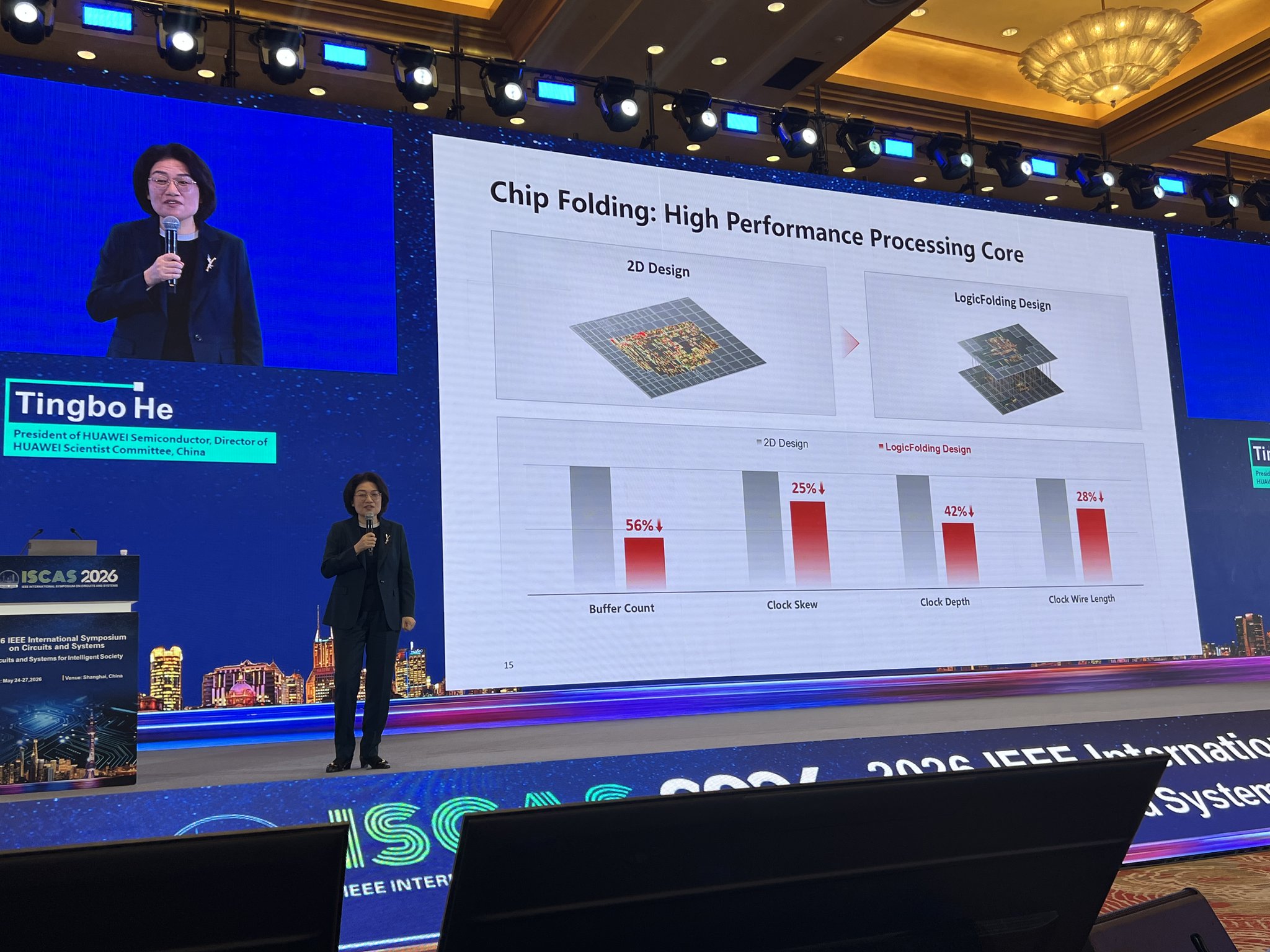
Next AI Bottleneck May Be Data Movement, Not Compute
By
–
The next AI bottleneck may not only be compute power. It may be data movement. Huawei’s Tau Scaling Law (aka Her’s Law) brings this question into focus: How much time can we remove from the system? #HuaweiPartner @Huawei
-
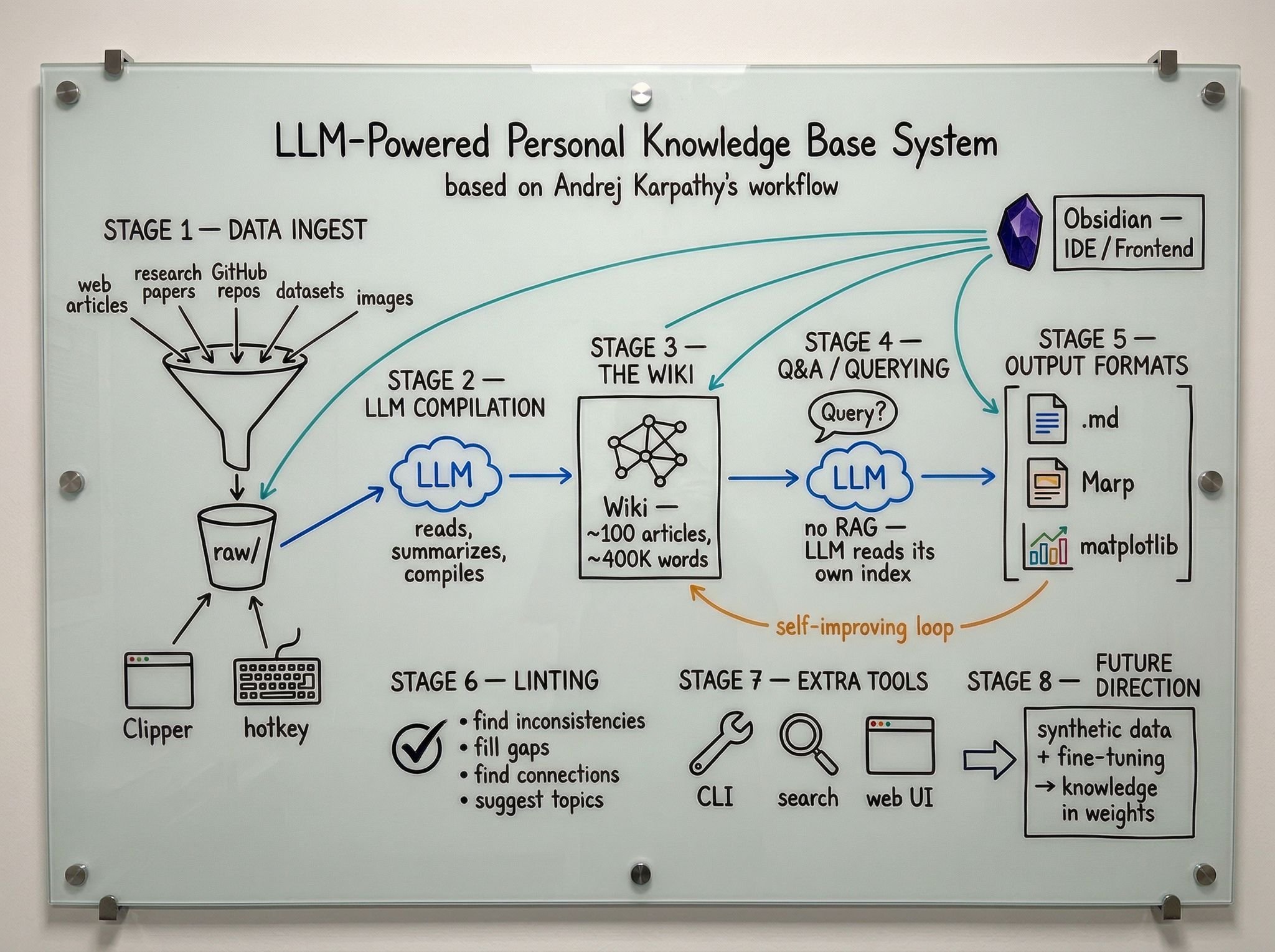
Karpathy ditches RAG for autonomous Obsidian markdown wiki
By
–
@karpathy literally ditched traditional RAG for an autonomous Obsidian file system. Instead of writing code, he dumps raw AI research into a local folder and lets an LLM convert it into an interconnected markdown wiki. He rarely edits the text manually. By relying purely on
-
Knowledge Graph Extraction and Schema Design for AI Systems
By
–
Exactly. The extraction step decides everything downstream, and most systems leave it completely unguided. The moment you add typed entities and constrained edges, the graph stops behaving like a vector store and starts being queryable. Schema should be step one, not an
-
Graphiti hybrid ontology: prescribed and learned schema discovery
By
–
Graphiti supports both prescribed and learned ontology, so it can discover new types alongside your defined schema. The sweet spot is a hybrid, fixed schema for core domain, system proposes new types for patterns outside that boundary. Full auto-schema loops back to the
-
LLM Multi-Hop Retrieval: Schema vs Sequential Queries
By
–
That works when the graph is small and the hops are predictable. At scale, sequential LLM queries for every multi-hop retrieval add latency and token cost per question. The schema lets you answer it in one structured traversal instead of chaining open-ended lookups. Not
-
Books That Teach the Math Behind Machine Learning
By
–
Books That Will Teach You the Math Behind Machine Learning. #BigData #Analytics #DataScience #IoT #IIoT #Python #RStats #TensorFlow #JavaScript #ReactJS #Serverless #DataScientist #Linux #Books #Mathematics #Programming #Coding #100DaysofCode https://
geni.us/Math–Books