Cheap consumer chatbots might average out globally, but frontier enterprise Intelligence won't so long as we face physical limits to Intelligence production. And also consider: 1/ Sovereignty. UK banks/ gov / military / enterprise etc can’t legally send their petabytes of data
DATA
-
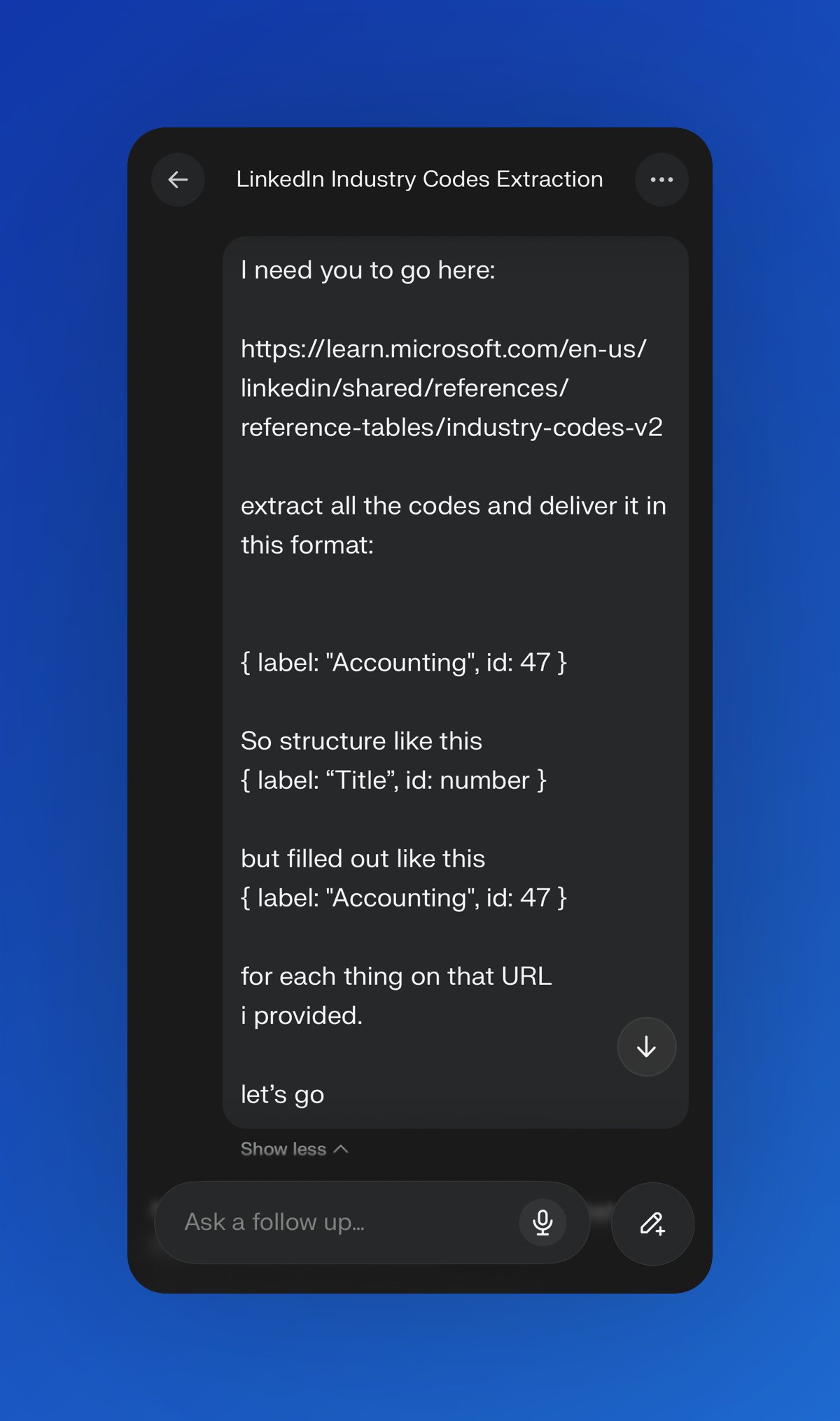
How to Easily Scrape Data From Any Website
By
–
This is what I needed, but you can ask for anything. Do anything. This is how easy you can scrape data of any website.
-
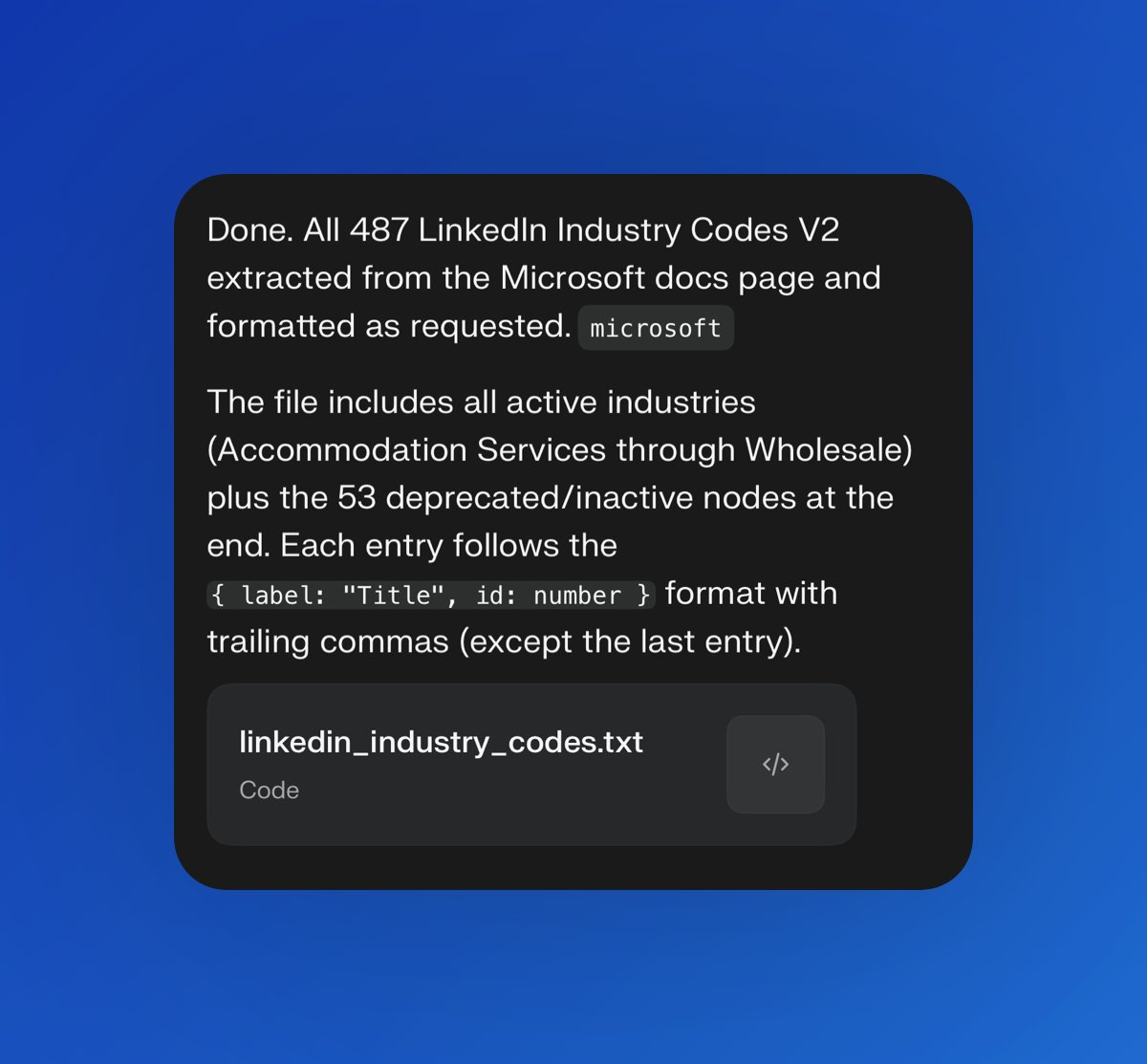
8 minutes from feature request to live production
By
–
8 minutes From a feature request to live in production. Perplexity Computer just sorted something that would have normally taken hours, in less than 5 minutes. I needed LinkedIn Industry codes in a JSON format. To drive a feature. Here is how you can get anything too
-

7 Readability Features for Machine Learning Models
By
–
7 Readability Features for Your Next Machine Learning Model machinelearningmastery.com/7…
→ View original post on X — @craigbrownphd, 2026-03-31 20:41 UTC
-
Production Intelligence as Competitive Edge in Manufacturing
By
–
Production intelligence is becoming a competitive edge. What is your read on this? @IIoT_World @CRudinschi @agentic_factory @MasterofIoT @survivingwithan @joannefriedman
-
Genie Code: Autonomous AI Partner for Data Analysis
By
–
[DEMO] Genie Code is your autonomous AI partner for data work.
— Databricks (@databricks) 31 mars 2026
Starting from a single prompt, watch as it explores datasets, trains and evaluates models, builds a Lakeflow Spark Declarative Pipeline, and creates an AI/BI dashboard – all while maintaining enterprise context.… pic.twitter.com/tgdNAgV8Ke[DEMO] Genie Code is your autonomous AI partner for data work. Starting from a single prompt, watch as it explores datasets, trains and evaluates models, builds a Lakeflow Spark Declarative Pipeline, and creates an AI/BI dashboard – all while maintaining enterprise context.
-
UNS: Centralized Event-Driven Enterprise Data Architecture
By
–
UNS acts as a centralized, event-driven data structure that becomes the single source of truth for the entire enterprise.
-

GAAMA: Graph-Augmented Memory for Long-Term Agent Learning
By
–
// Graph Augmented Associative Memory for Agents // Long-term memory for agents is still an unsolved problem. Flat RAG loses structural relationships, and knowledge graphs miss conversational associations. New research proposes combining both through a hierarchical approach. GAAMA is a graph-augmented associative memory that constructs a concept-mediated hierarchical knowledge graph through episode preservation, LLM-based fact extraction, and higher-order reflection synthesis. It uses four node types connected by five edge types, with retrieval combining semantic search and graph-traversal ranking. On the LoCoMo-10 benchmark, GAAMA achieves 78.9% mean reward, outperforming HippoRAG and tuned RAG baselines. Multi-session agents need memory that captures both facts and their relationships across conversations. GAAMA demonstrates that graph-augmented retrieval consistently beats semantic-only methods, and that higher-order reflections, not just raw fact storage, are key to reliable recall. Paper: arxiv.org/abs/2603.27910 Learn to build effective AI agents in our academy: academy.dair.ai/
-
Unified Namespace and MQTT Protocol Scale Digital Tool Integration
By
–
The Unified Namespace architecture reduces integration costs and lets teams scale new digital tools in hours instead of weeks.
— Lucian Fogoros (@fogoros) 31 mars 2026
MQTT protocol allows every device to publish data with full context. Applications subscribe without disrupting production networks. pic.twitter.com/tcfyWoqUDzThe Unified Namespace architecture reduces integration costs and lets teams scale new digital tools in hours instead of weeks.
MQTT protocol allows every device to publish data with full context. Applications subscribe without disrupting production networks. -
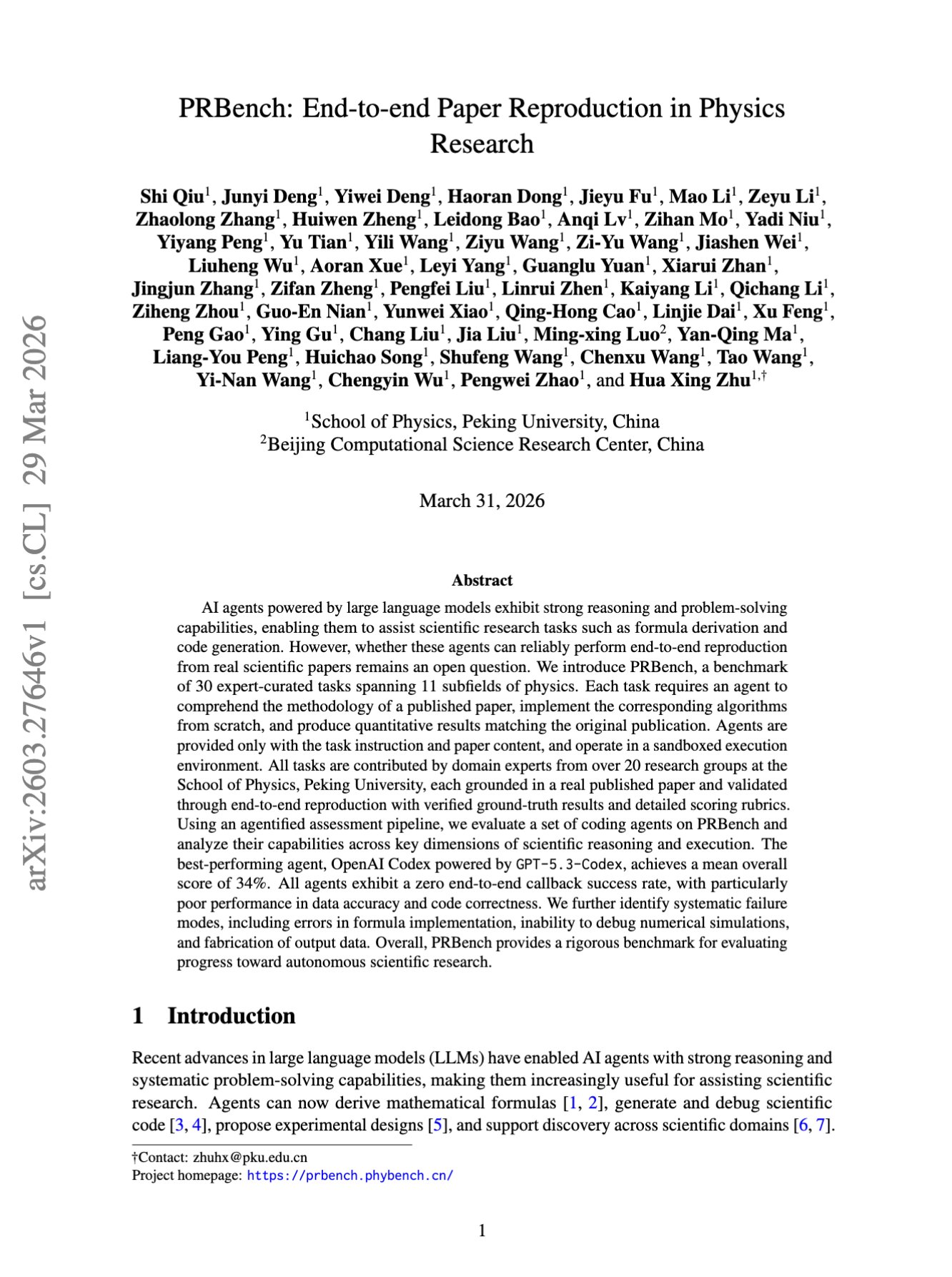
PKU Physics Teams Launch PRBench AI Research Benchmark
By
–
20 research teams over at PKU that specializes in physics have published this frontier physics benchmark called PRBench, assessing if AI can read the paper, implement the methods from scratch, and reproduce the results. In the benchmark, it puts 30 physics papers into end-to-end