Join Domino's Chief Field Data Scientist for a practitioner-led session on what separates demos from production — and how agentic engineering closes the gap. Monday. April 15 @ 1PM ET. Reserve your spot → https://
hubs.ly/Q049B_0h0
DATA
-
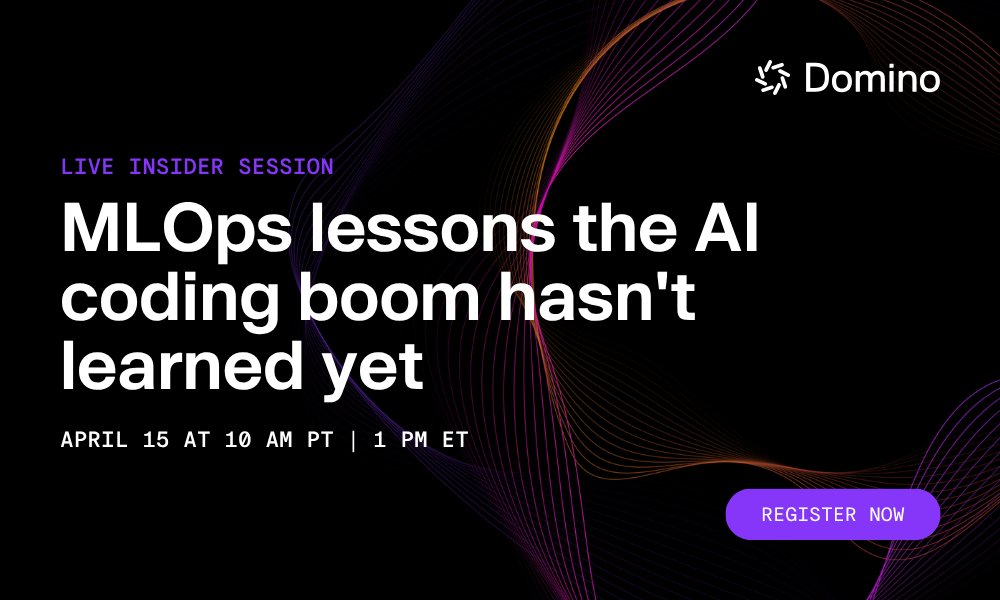
Agentic Engineering: From Demos to Production with Domino
By
–
-

Strait of Hormuz Crisis: Oil Routes Blocked, Prices Surge
By
–
I turned on ship tracking in God's Eye View and watched the Strait of Hormuz go dark.
— Bilawal Sidhu (@bilawalsidhu) 3 avril 2026
Ship crossings went from hundreds a day to a handful. Some days, none. You can see the new route clearly — Iran's tightly run "toll booth."
Built dark vessel detection to track ships going… pic.twitter.com/anYOEmQzpSI turned on ship tracking in God's Eye View and watched the Strait of Hormuz go dark. Ship crossings went from hundreds a day to a handful. Some days, none. You can see the new route clearly — Iran's tightly run "toll booth." Built dark vessel detection to track ships going silent mid-transit. Then I layered in the strikes. Both sides. Vessels getting hit. Oil refineries. Before and after satellite imagery. Synced it all to oil futures — watched Brent crude rip past $100 as the timeline plays out. One chokepoint. A fifth of the world's oil. And almost nothing is getting through.
→ View original post on X — @bilawalsidhu, 2026-04-03 22:44 UTC
-
Integrated Digital Twins Drive 20% PepsiCo Efficiency Gains
By
–
Multiple digital twins operating separately vs one integrated system. Partner content with @Siemens.
— Lucian Fogoros (@fogoros) 3 avril 2026
PepsiCo chose integration and hit 20% efficiency gains in 3 months.
Connection unlocks compound value. #sie_HM #HM26 pic.twitter.com/rWEvDWPHW7Multiple digital twins operating separately vs one integrated system. Partner content with @Siemens
.
PepsiCo chose integration and hit 20% efficiency gains in 3 months.
Connection unlocks compound value. #sie_HM #HM26 -

MLOps and GenAI Production Challenges in Financial Services
By
–
MLOps, model risk, GenAI in production — these are the challenges we help financial institutions solve every day. We're bringing that experience to the AI in Finance Summit in New York, April 15–16. See you there: https://
hubs.ly/Q049BGbL0 -
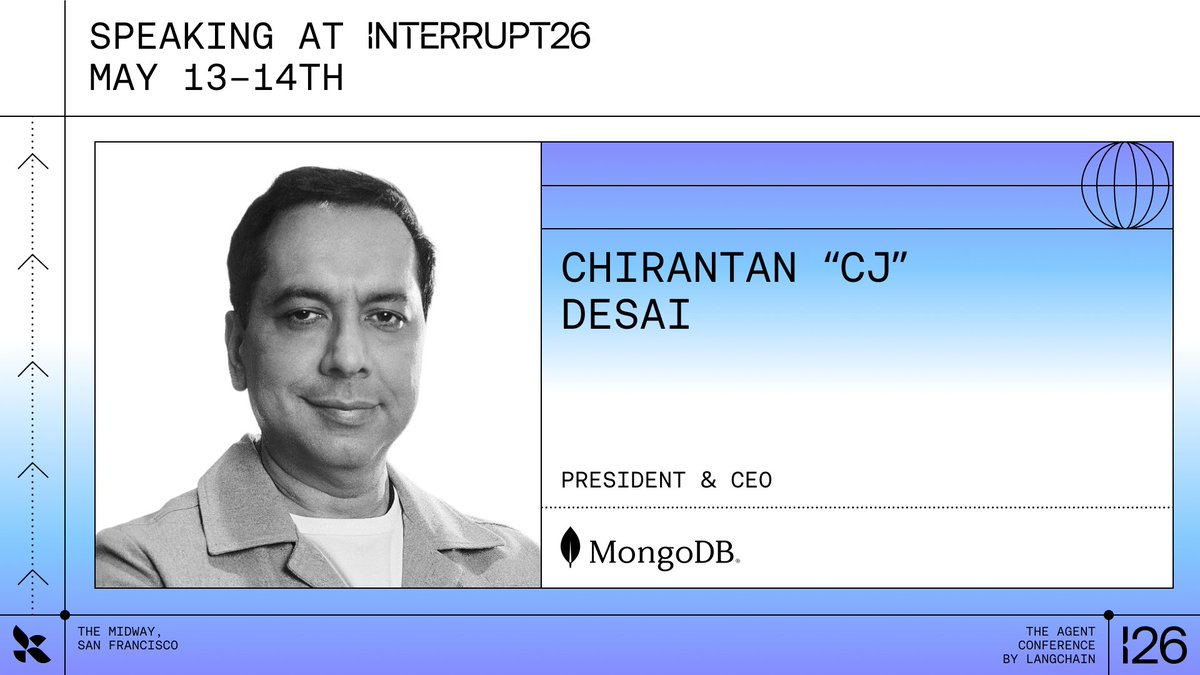
Harrison Chase and MongoDB CEO discuss enterprise agents at Interrupt
By
–
Join @hwchase17 and Chirantan "CJ" Desai, CEO of @MongoDB for a fireside chat at Interrupt — May 13-14 in San Francisco. MongoDB is the company behind one of the most widely used databases for modern applications — used by thousands of teams to power everything from real-time analytics to AI-native workloads. At Interrupt, Harrison and CJ will chat about how teams are building agents at the world's largest enterprises, and what's next for the space. Get your tickets: interrupt.langchain.com/
→ View original post on X — @langchain, 2026-04-03 16:47 UTC
-
Entity extraction and document generation in automated summarization systems
By
–
Yes, it keeps a running list of entities encountered as it does the weekly summaries, then later goes through each entity and generates a document for it in a second pass.
-
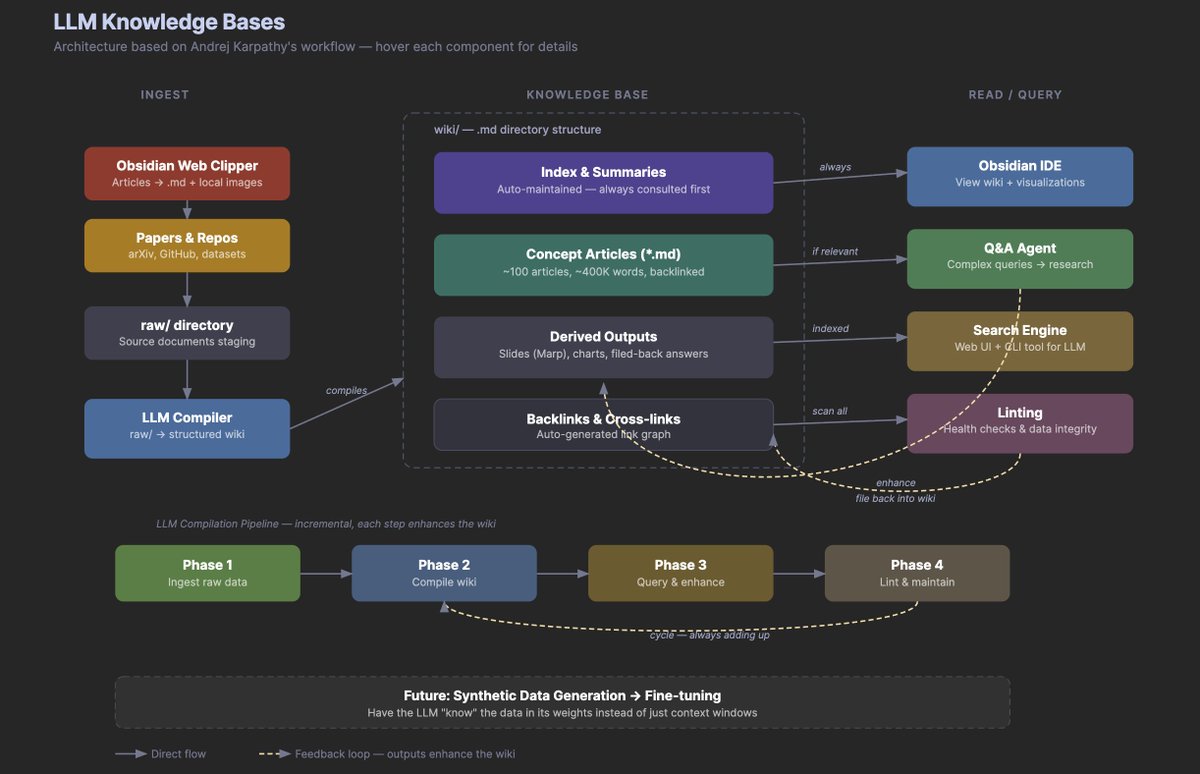
LLM Knowledge Bases: Building Personal Research Wiki Systems
By
–
Diagram of the LLM Knowledge Base system. Feed this to your favorite agent and get your own LLM knowledge base going. Andrej Karpathy (@karpathy) LLM Knowledge Bases Something I'm finding very useful recently: using LLMs to build personal knowledge bases for various topics of research interest. In this way, a large fraction of my recent token throughput is going less into manipulating code, and more into manipulating knowledge (stored as markdown and images). The latest LLMs are quite good at it. So: Data ingest: I index source documents (articles, papers, repos, datasets, images, etc.) into a raw/ directory, then I use an LLM to incrementally "compile" a wiki, which is just a collection of .md files in a directory structure. The wiki includes summaries of all the data in raw/, backlinks, and then it categorizes data into concepts, writes articles for them, and links them all. To convert web articles into .md files I like to use the Obsidian Web Clipper extension, and then I also use a hotkey to download all the related images to local so that my LLM can easily reference them. IDE: I use Obsidian as the IDE "frontend" where I can view the raw data, the the compiled wiki, and the derived visualizations. Important to note that the LLM writes and maintains all of the data of the wiki, I rarely touch it directly. I've played with a few Obsidian plugins to render and view data in other ways (e.g. Marp for slides). Q&A: Where things get interesting is that once your wiki is big enough (e.g. mine on some recent research is ~100 articles and ~400K words), you can ask your LLM agent all kinds of complex questions against the wiki, and it will go off, research the answers, etc. I thought I had to reach for fancy RAG, but the LLM has been pretty good about auto-maintaining index files and brief summaries of all the documents and it reads all the important related data fairly easily at this ~small scale. Output: Instead of getting answers in text/terminal, I like to have it render markdown files for me, or slide shows (Marp format), or matplotlib images, all of which I then view again in Obsidian. You can imagine many other visual output formats depending on the query. Often, I end up "filing" the outputs back into the wiki to enhance it for further queries. So my own explorations and queries always "add up" in the knowledge base. Linting: I've run some LLM "health checks" over the wiki to e.g. find inconsistent data, impute missing data (with web searchers), find interesting connections for new article candidates, etc., to incrementally clean up the wiki and enhance its overall data integrity. The LLMs are quite good at suggesting further questions to ask and look into. Extra tools: I find myself developing additional tools to process the data, e.g. I vibe coded a small and naive search engine over the wiki, which I both use directly (in a web ui), but more often I want to hand it off to an LLM via CLI as a tool for larger queries. Further explorations: As the repo grows, the natural desire is to also think about synthetic data generation + finetuning to have your LLM "know" the data in its weights instead of just context windows. TLDR: raw data from a given number of sources is collected, then compiled by an LLM into a .md wiki, then operated on by various CLIs by the LLM to do Q&A and to incrementally enhance the wiki, and all of it viewable in Obsidian. You rarely ever write or edit the wiki manually, it's the domain of the LLM. I think there is room here for an incredible new product instead of a hacky collection of scripts. — https://nitter.net/karpathy/status/2039805659525644595#m
-
Exporting channels to JSON database for agent queries
By
–
yes, I export all the channels to raw json and media, and I also put all that into a database so the agent can run queries if needed
-
Bilingual AI Interpreter for Data Quality Integration Systems
By
–
Think of it as having a bilingual interpreter who also happens to be a data quality expert working 24/7 between your systems.
-
Automatic Protocol Conversion and Data Quality Management Systems
By
–
The system automatically handles protocol conversion, data formatting, and even adds timestamps and quality flags to every data point.