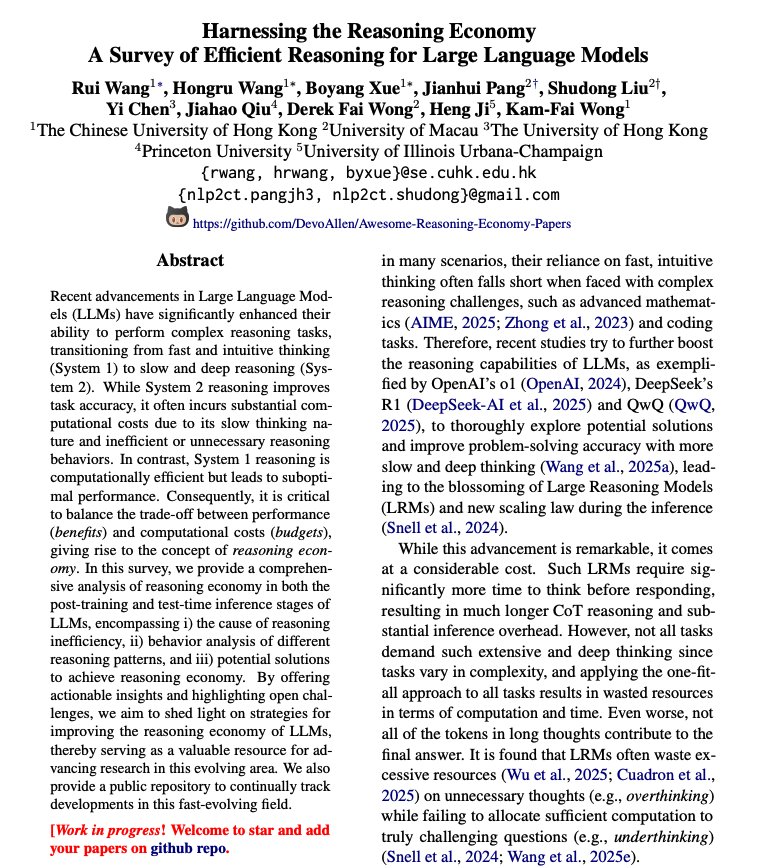
9). A Survey of Efficient Reasoning for LLMs This survey focuses on reasoning economy in LLMs, analyzing how to balance deep reasoning performance with computational cost.
COMPUTING
-
Z1: Dynamic Reasoning Method Makes LLMs More Compute-Efficient
By
–
8). Z1 Z1 is a new method for making LLMs more compute-efficient at test time, especially during reasoning. It train LLMs with short and long code-based reasoning trajectories, and then dynamically adjusts reasoning depth during inference.
-
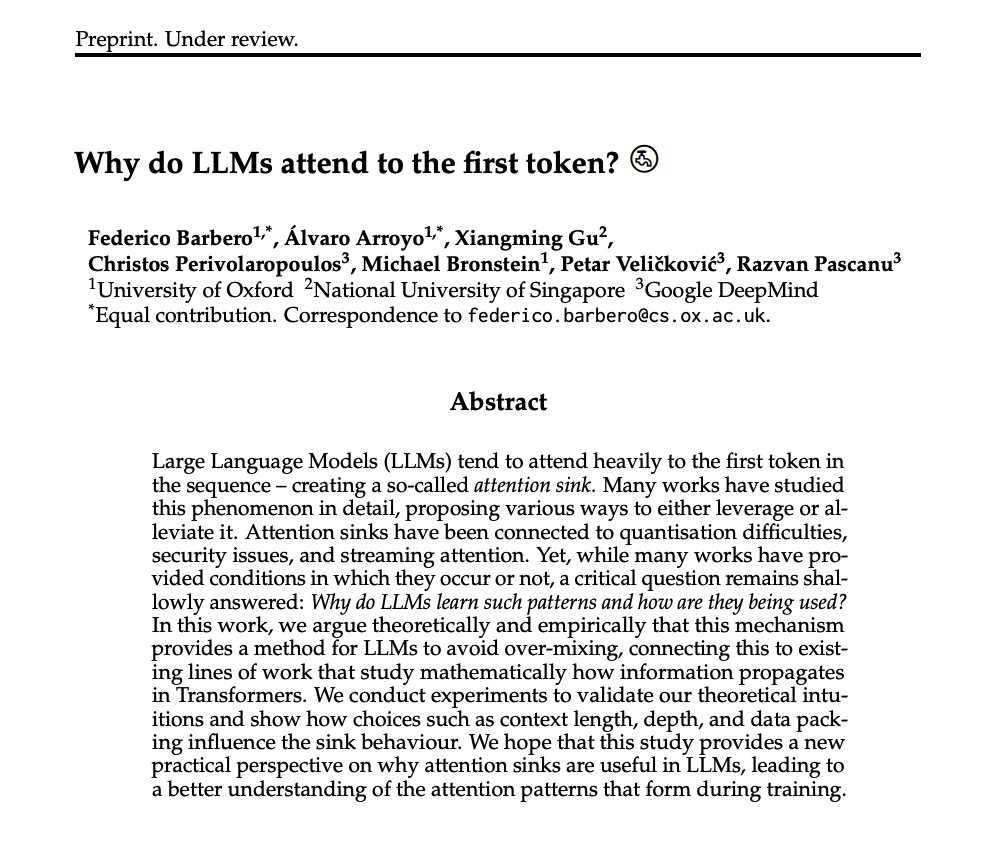
Why LLMs Focus Attention on First Token
By
–
5). Why do LLMs Attend to First Token? This new paper explains why LLMs obsessively focus attention on the first token — a phenomenon known as an attention sink.
-
10M Token Processing and Infinite Context Length Breakthroughs
By
–
Wonder what compute times we will see with 10M input tokens on a rather beefy system. The NiH tests are also insane, It’s hard to believe we are moving towards infinite token context lengths with near perfect retrieval.
-
Running Large Models on Consumer GPUs: Parallelism and Quantization
By
–
I don't really use GPUs, as most of our work uses TPUs. I was just confused by @jeremyphoward 's statement that it wouldn't run on consumer GPUs, when the normal techniques of model parallelism, quantization, right compression, etc. seem like they should work just fine to run it
-
Model Efficiency on Consumer-Grade GPU Hardware
By
–
Why? It seems as though the model can run on 4 consumer-grade GPUs, no?
-
Running AI Models on Consumer GPUs: Feasibility Analysis
By
–
You can probably run the model on 4 (or maybe 8?) consumer GPUs, no?
-
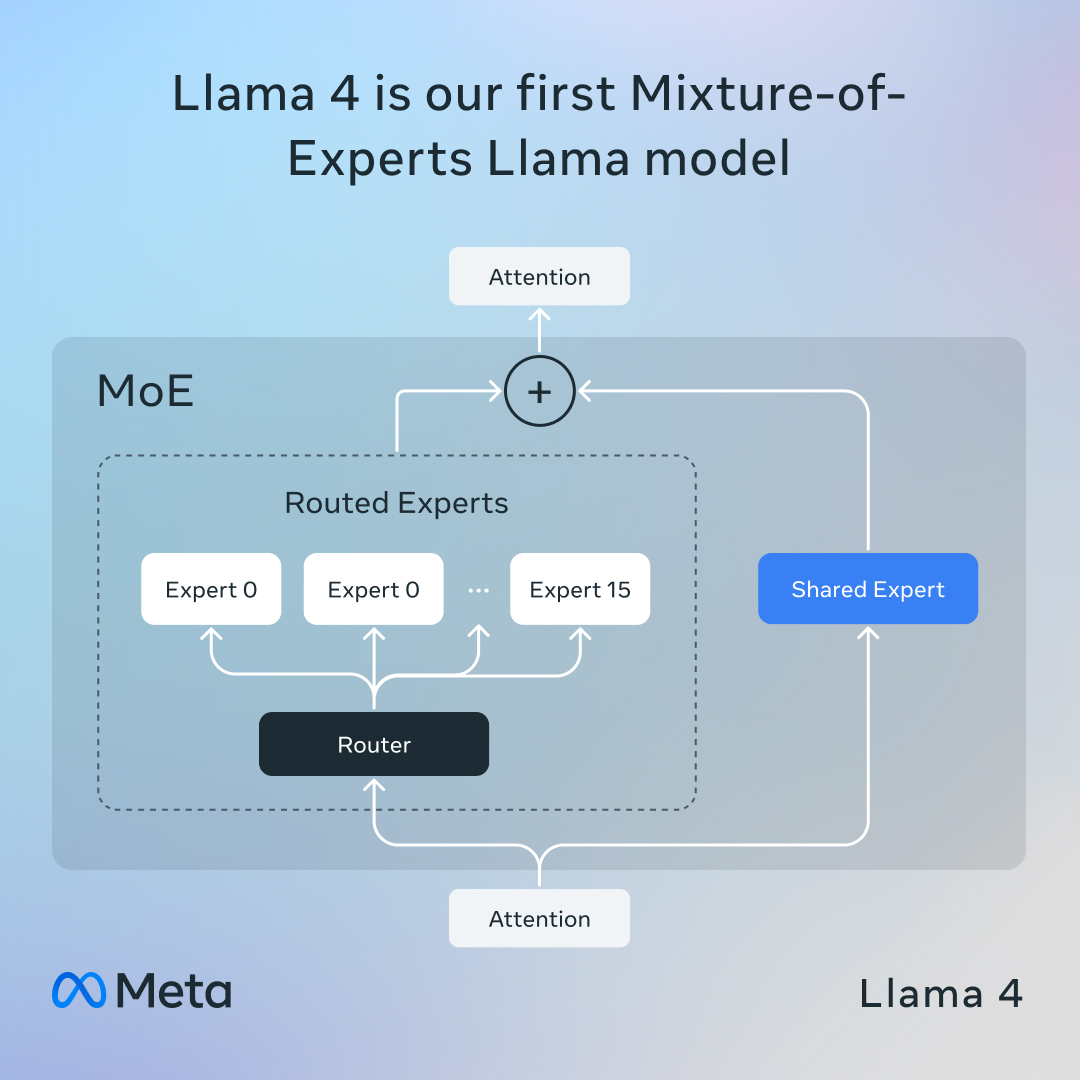
Llama 4: Mixture of Experts Architecture for Efficient Models
By
–
Llama 4 is our first collection of models built using a mixture of experts (MoE) architecture. This architecture is more compute efficient for model training and inference and delivers higher quality models compared to dense architectures.