My takeaway: AI inference is no longer just a model problem. It's a system-level time problem. For enterprise leaders, AI performance and AI economics are becoming inseparable. Learn more about Tau Scaling and what it means for the post-Moore era: https://
chinaxiv.org/abs/202605.002
24?locale=en
… What
COMPUTING
-
Tau Scaling: AI inference as system-level time problem in post-Moore era
By
–
-
AI inference is a latency problem, not throughput
By
–
Why does this matter for AI inference specifically? Training = throughput problem. Inference = latency problem. When a user talks to an AI assistant, tokens have to return fast. Latency, memory access, bandwidth, and interconnect all matter, not just raw compute. In large AI
-
Huawei’s Tau Scaling Law redefines AI inference bottleneck
By
–
Most AI teams are optimizing the model.
— Ronald van Loon (@Ronald_vanLoon) 8 juin 2026
But the real bottleneck in inference is underneath it.
Huawei's Tau Scaling Law (Her's Law) was just introduced at IEEE ISCAS in Shanghai.
It reframes how we think about AI performance entirely.
Here's the breakdown…#HuaweiPartner… pic.twitter.com/MvwfNu7ZisMost AI teams are optimizing the model. But the real bottleneck in inference is underneath it. Huawei's Tau Scaling Law (Her's Law) was just introduced at IEEE ISCAS in Shanghai. It reframes how we think about AI performance entirely. Here's the breakdown… #HuaweiPartner
-
AI Spend Controls Proactive Budget Alerts for Workloads
By
–
AI workloads create new cost management challenges, from runaway retry loops to uncontrolled agent experimentation.
— Databricks (@databricks) 8 juin 2026
AI Spend Controls in Unity AI Gateway introduce proactive budget alerts across users, workspaces, use cases, and entire accounts so organizations can monitor and… pic.twitter.com/2H7OHs5sCiAI workloads create new cost management challenges, from runaway retry loops to uncontrolled agent experimentation. AI Spend Controls in Unity AI Gateway introduce proactive budget alerts across users, workspaces, use cases, and entire accounts so organizations can monitor and
-
SambaNova at Avnet SKO: AI infrastructure and superhero comics
By
–
Premium inference, but make it comics We had a great time at the @Avnet SKO with Harry Ault talking about the future of AI infrastructure and agentic workloads, plus a few SambaNova superheroes making an appearance. Always a fun time partnering with Avnet!
-

Anthropic reports 8x code, 52x optimization, and 64% better decisions
By
–
Recursive self-improvement may no longer be just a theory.
Anthropic reports: 8x more code per engineer 76% success on open-ended coding tasks 52x training optimization Better research decisions than humans 64% of the time
The feedback loop is getting tighter.
#AI -
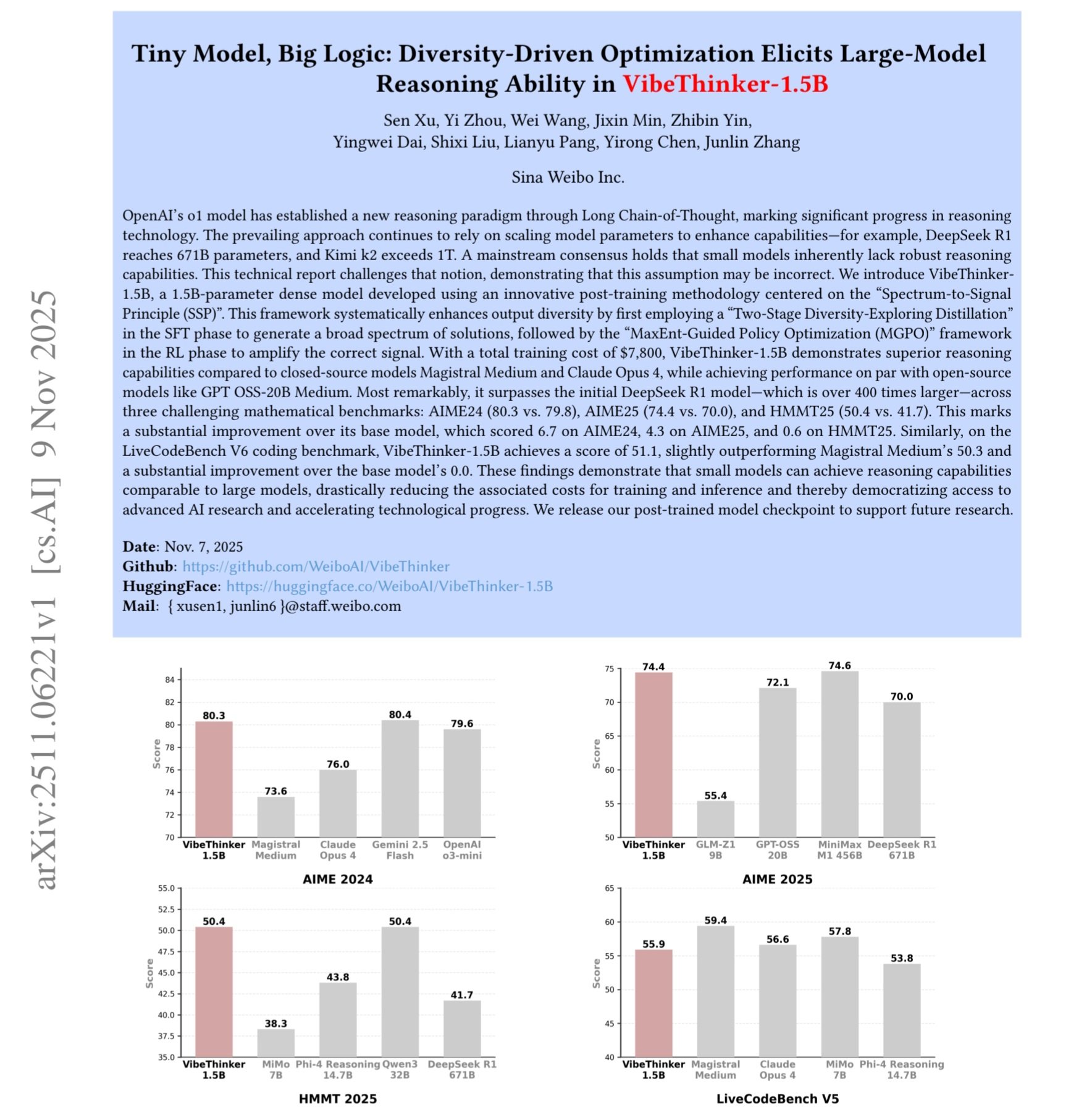
A free AI model trained for $7,800 beats a model 400x larger
By
–
Breaking: A free AI model trained for $7,800 has just outperformed a model 400 times larger in mathematics competitions. It is compact enough to run on a laptop. Weibo's AI lab published the results and put all the
-
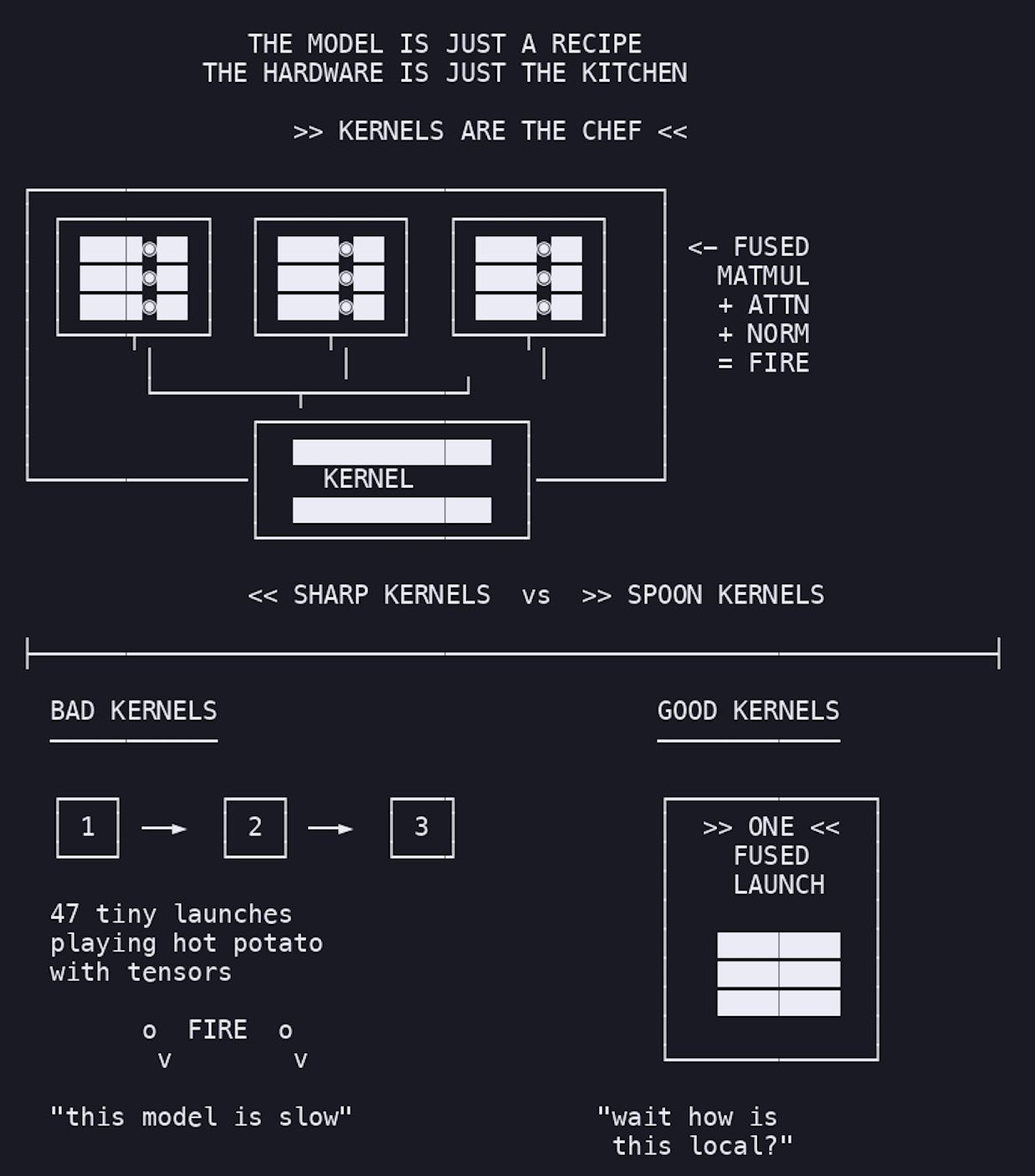
Learning Path for LLM Serving Engines: vLLM, SGLang, TensorRT-LLM
By
–
How to go about learning all of this? 1st: Start with the serving engine view – vLLM: PagedAttention, continuous batching, prefix caching, CUDA graphs – SGLang: RadixAttention/prefix reuse, speculative decoding, MoE, structured/agent workloads – TensorRT-LLM: NVIDIA peak
-

Confirming the growing popularity of edge models
By
–
Can confirm, edge models keep getting more and more popular
-
AI Referees in Beach Volleyball: Enhancing Game or Changing Its Soul?
By
–
#AI Referees the Sand: Real-Time Beach Volleyball Analysis — Enhancing the Game or Changing Its Soul?
— Ronald van Loon (@Ronald_vanLoon) 8 juin 2026
by @measure_plan#ArtificialIntelligence #MachineLearning #ML pic.twitter.com/rlLWq2ZKgc#AI Referees the Sand: Real-Time Beach Volleyball Analysis — Enhancing the Game or Changing Its Soul?
by @measure_plan #ArtificialIntelligence #MachineLearning #ML