Same model. Same workload. Different architecture. According to @ArtificialAnlys
, disaggregating prefill and decode reduced agent trajectory latency from 310 seconds to 162 seconds. The right chip for the right workload changes everything. Read more: https://
sambanova.ai/blog/first-dis
aggregated-inference-demo-for-ai-agents-live?utm_source=x&utm_medium=organic
…
COMPUTING
-
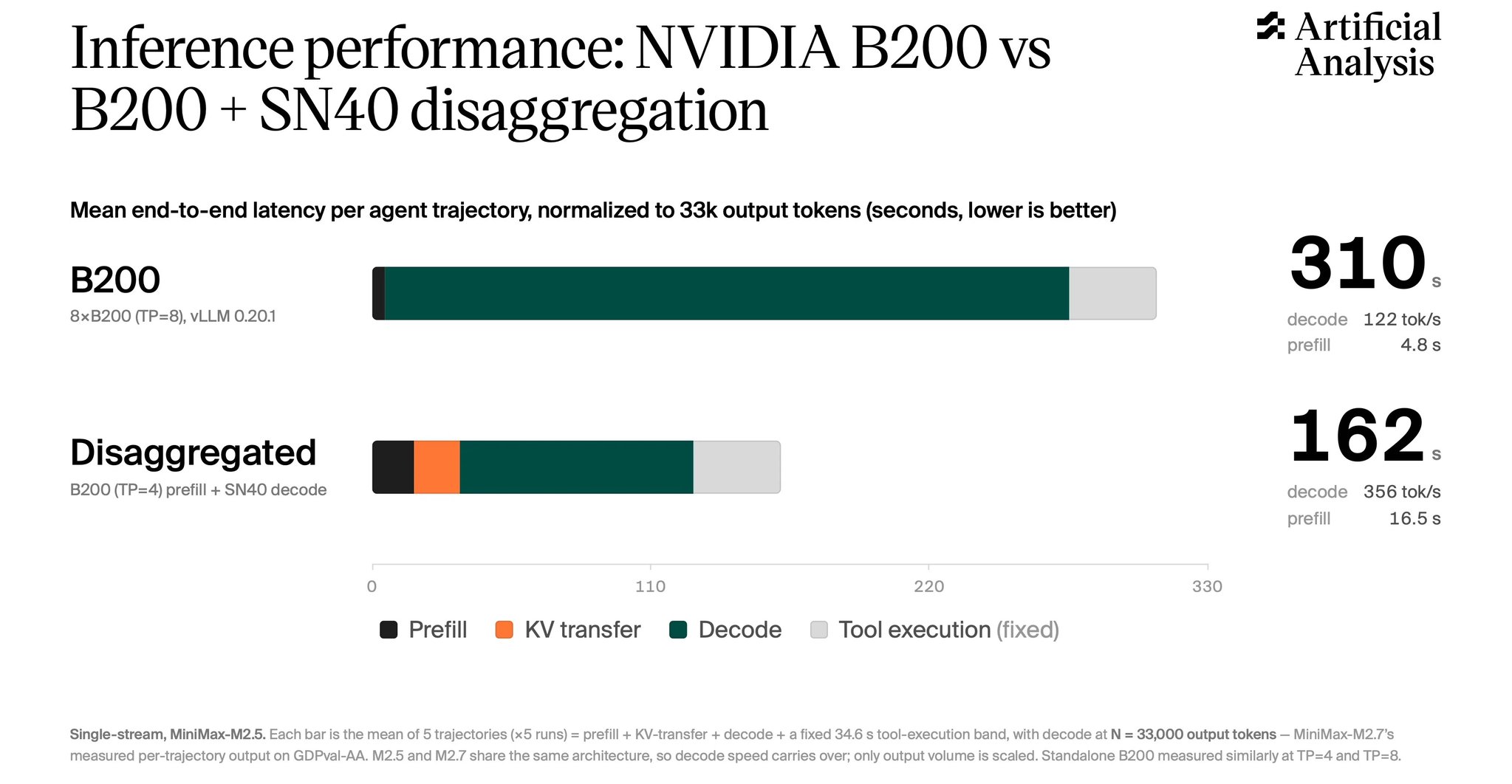
SambaNova’s disaggregated inference cuts agent latency by 48%
By
–
-
Disaggregated Inference: GPU for Prefill, RDU for Decode
By
–
AI agents spend their time doing two very different jobs: understanding context and generating responses.
— SambaNova (@SambaNovaAI) 15 juin 2026
Disaggregated inference sends each stage to the hardware best built for it.
GPUs for prefill. RDUs for decode. Better performance from both. ⚡ pic.twitter.com/KFXRdUBLWxAI agents spend their time performing two very different tasks: understanding context and generating responses. Disaggregated inference sends each step to the hardware best suited for that task. GPU for prefill. RDU for decode. Better.
-
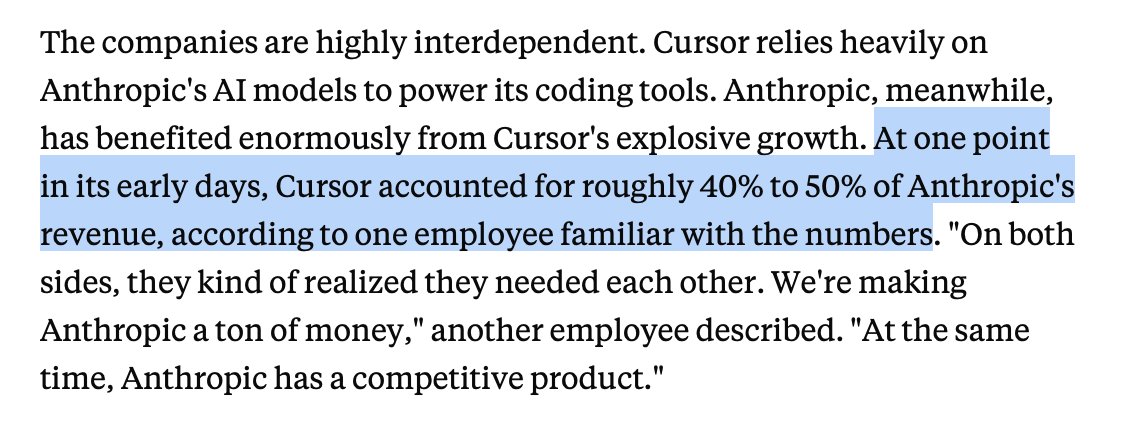
Cursor accounted for 40-50% of Anthropic revenue early on
By
–
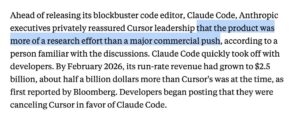
Holy, in its early days, Cursor accounted for roughly 40% to 50% of Anthropic's revenue. And Claude Code was just a reserach project. How quickly everything has changed.
-
Full Analysis of CUA-Bench Benchmark for Computer Use Agents
By
–
Full analysis by @qi_zhengyang
: https://
snorkel.ai/blog/cua-bench
-benchmarking-computer-use-agents-on-professional-software/
… Tasks: https://
cua.ai/cuabench/regis
try/cua-bench-kicad
… -
Frontier computer-use agent fails on 21 of 25 electrical engineering tasks
By
–
New research: we partnered with @francedot and @ddupont808 at @trycua to stress-test a frontier computer-use agent on real electrical engineering tasks.
— Snorkel AI (@SnorkelAI) 15 juin 2026
25 expert-authored KiCad tasks. 4 passed. 0 build-from-scratch tasks succeeded.
The failure modes are concrete and they point… https://t.co/qHDpHC4jFFNew research: we partnered with @francedot and @ddupont808 at @trycua to stress-test a frontier computer-use agent on real electrical engineering tasks. 25 expert-authored KiCad tasks. 4 passed. 0 build-from-scratch tasks succeeded. The failure modes are concrete and they point
-
Planet Labs succeeds in on-board AI image processing
By
–
Planet Labs recently became one of the first companies to successfully run AI image processing directly aboard an Earth observation satellite.
— The Rundown AI (@TheRundownAI) 15 juin 2026
The milestone could shrink the gap between data capture and actionable insight from hours to minutes.
On March 25, the company’s… pic.twitter.com/u5TmHUHYm6Planet Labs has recently become one of the first companies to successfully run AI image processing directly on a Earth observation satellite. This step could narrow the gap between data capture and actionable insights.
-
AI-powered oven toasts bread using camera and NVIDIA Jetson
By
–
My whole life is that way. My toast was toasted by an oven with a camera that looked at the toast, sent that to an NVIDIA Jetson card, and an AI decided how long to toast it. What a world!
-
Gemma 4 31B runs fastest on SambaCloud, over 30% faster
By
–
Gemma 4 31B is running fastest on SambaCloud ⚡
— SambaNova (@SambaNovaAI) 15 juin 2026
As verified by @ArtificialAnlys, SambaCloud delivers Gemma 4 31B over 30% faster than the next provider.
Same model. More speed. Better agent experiences.
Read more: https://t.co/Y61VK1AiOJ pic.twitter.com/QDkY6vpdAMGemma 4 31B is running fastest on SambaCloud As verified by @ArtificialAnlys
, SambaCloud delivers Gemma 4 31B over 30% faster than the next provider. Same model. More speed. Better agent experiences. Read more: https://
sambanova.ai/blog/gemma-4-3
1b-running-fastest-on-sambacloud?utm_source=x&utm_medium=organic&utm_content=blog-announcement
… -
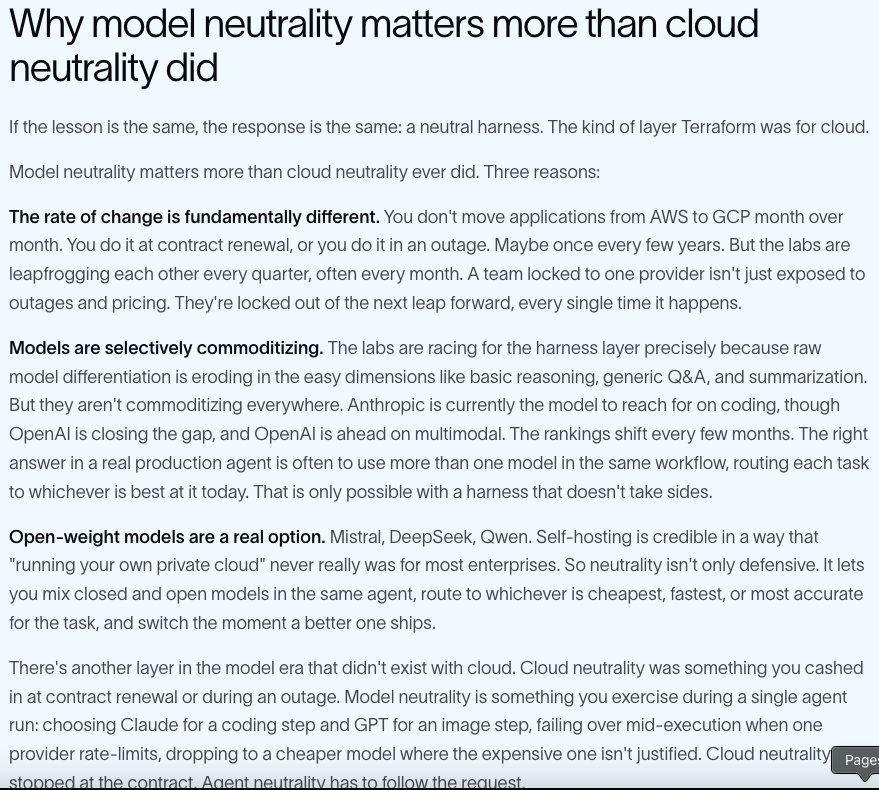
Model neutrality surpasses cloud neutrality as an offensive tool
By
–
Why model neutrality is more important than cloud neutrality was In the cloud era, companies opted for cloud neutrality as a defense mechanism Model neutrality can be an **offensive** mechanism. It is more
-

LEANN: Index millions with 97% less storage via graph recomputation
By
–
Turn your laptop into a powerful RAG system! LEANN can index and search through millions of documents while using 97% less storage than traditional solutions without accuracy loss. LEANN achieves this through graph-based selective recomputation with high-degree preserving